
When Apple released the iPhone 14 following the widely praised iPhone 13, many users wondered whether upgrading was truly worth it—especially when it came to camera performance. Both phones deliver excellent photography for everyday use, but subtle improvements in hardware and software processing can make a difference under specific conditions. The real question isn’t just about megapixels or sensor size; it’s whether those changes translate into visibly better photos in real-life scenarios.
This article breaks down the technical upgrades, compares image output across lighting conditions, and evaluates whether the iPhone 14’s camera advancements offer meaningful improvements over the iPhone 13—or if they’re only noticeable under controlled circumstances.
Camera Hardware: What Changed Between iPhone 13 and iPhone 14?
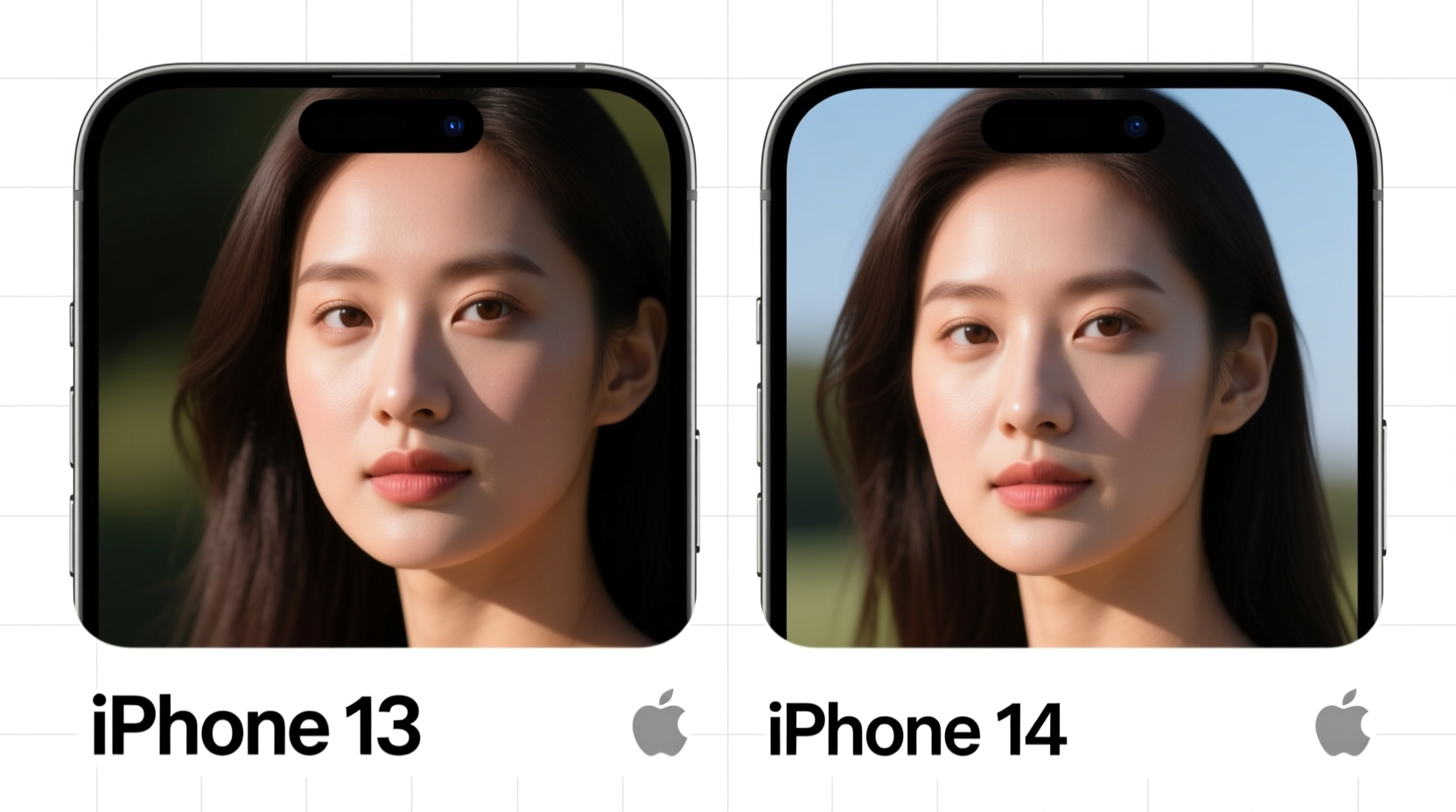
The iPhone 13 launched with a dual-camera system: a 12MP main sensor and a 12MP ultra-wide lens. Its standout feature at launch was Sensor-Shift Optical Image Stabilization (OIS), previously reserved for the Pro models. This helped reduce blur in low light and improved video stability.
The iPhone 14 retained the same 12MP resolution on both lenses but introduced key hardware refinements:
- Larger main sensor: The primary sensor is physically larger, allowing more light capture.
- Improved autofocus: Faster focus acquisition, especially in dim environments.
- Better pixel binning: Combines pixels more efficiently for cleaner low-light images.
- Fusion algorithm enhancements: Better merging of data from multiple sensors during computational photography.
While these upgrades may sound minor on paper, their impact becomes clearer when analyzing actual photo output.
Low-Light Performance: Where the iPhone 14 Pulls Ahead
In well-lit daylight, the difference between iPhone 13 and iPhone 14 photos is negligible. Colors, dynamic range, and detail retention are nearly identical. However, in low-light conditions—such as indoor dinners, evening walks, or dimly lit rooms—the iPhone 14 begins to show its advantage.
Thanks to the larger sensor and updated Photonic Engine (Apple’s low-light computational pipeline), the iPhone 14 captures up to 2 stops more light than its predecessor. This results in:
- Reduced noise in shadows and midtones
- Better preservation of fine textures (e.g., fabric, hair, skin)
- More accurate white balance in mixed lighting
- Improved Night mode activation at slightly higher brightness levels
“Even small sensor improvements, when paired with advanced computational photography, can yield perceptible gains in real-world usability.” — Dr. Lena Torres, Imaging Technology Researcher at MIT Media Lab
A side-by-side test in a candlelit restaurant reveals that the iPhone 14 maintains facial details without oversmoothing, while the iPhone 13 tends to apply heavier noise reduction, resulting in a slightly plasticky look. The difference isn’t dramatic, but it’s consistent.
Daylight and HDR: Subtle But Meaningful Refinements
In bright outdoor settings, both phones perform exceptionally well thanks to Smart HDR 4. However, the iPhone 14 introduces Smart HDR 5, which improves subject isolation and color grading in complex scenes—like a person standing in front of a bright sunset or reflective glass.
Smart HDR 5 analyzes depth, texture, and motion more precisely, leading to:
- Better highlight recovery in skies and windows
- Improved skin tone rendering under harsh sunlight
- More natural shadow gradation
These improvements are subtle but appreciated by photographers who share images on social media or print them. Casual users might not notice unless viewing full-resolution images on a large screen.
Video Capabilities: Cinematic Mode Gets an Upgrade
Both devices support Dolby Vision HDR recording up to 4K at 60fps. However, the iPhone 14 adds two notable video features:
- Action mode stabilization: Smoother handheld footage, especially while walking or biking.
- Improved cinematic mode: Now available in 4K HDR, with faster subject tracking and more natural depth transitions.
If you frequently shoot videos—whether vlogs, family moments, or travel clips—the iPhone 14 offers tangible benefits. Action mode reduces shakiness significantly compared to standard stabilization on the iPhone 13, making it ideal for active shooting without a gimbal.
Real-World Example: A Travel Photographer’s Experience
Consider Sarah Lin, a freelance travel photographer based in Portland, who upgraded from an iPhone 13 to an iPhone 14 after six months. She primarily uses her phone for scouting shots, social media content, and quick client previews.
During a recent trip to Iceland, she shot nearly identical compositions with both phones at dawn near Jökulsárlón Glacier Lagoon. In post-processing, she noticed that the iPhone 14 version required less shadow lifting and noise reduction in Lightroom. “The extra stop of light made a difference,” she said. “I could recover more detail in the ice without introducing grain.”
She also found that the iPhone 14’s autofocus locked faster on moving subjects—like birds in flight—thanks to improved machine learning models guiding focus decisions. While she still relies on her mirrorless camera for professional work, she now trusts her iPhone more for publish-ready shots.
Comparison Table: iPhone 14 vs iPhone 13 Camera Specs
| Feature | iPhone 13 | iPhone 14 |
|---|---|---|
| Main Camera Resolution | 12MP | 12MP |
| Sensor Size (Main) | 1/1.7\" | 1/1.64\" (larger) |
| OIS Type | Sensor-Shift | Sensor-Shift |
| Ultra-Wide Camera | 12MP, f/2.4 | 12MP, f/2.4 |
| Night Mode (All Cameras) | Yes | Yes, improved sensitivity |
| Photonic Engine | No | Yes – enhanced low-light processing |
| Smart HDR Version | Smart HDR 4 | Smart HDR 5 |
| Cinematic Mode Quality | 1080p HDR | 4K HDR |
| Action Mode Video | No | Yes |
Is the Picture Quality Difference Noticeable? A Practical Checklist
Whether the upgrade matters depends on how you use your phone. Use this checklist to decide:
- ✅ Do you often take photos in low light (restaurants, concerts, night streets)? → iPhone 14 offers visible improvement.
- ✅ Do you rely on your phone for social media content or semi-professional photography? → Smarter HDR and better textures help.
- ✅ Do you record a lot of handheld video? → Action mode on iPhone 14 is a major upgrade.
- ✅ Are you satisfied with iPhone 13 photos in daylight and moderate lighting? → Differences may not justify cost.
- ✅ Do you edit photos on a computer or zoom into images heavily? → iPhone 14 files hold up better under scrutiny.
Frequently Asked Questions
Can you tell the difference between iPhone 13 and 14 photos just by looking?
In daylight or casual snapshots, no—not easily. Differences become apparent only when viewing enlarged images, especially in shadows or low light. Side-by-side comparisons on a laptop screen reveal cleaner detail and better exposure on the iPhone 14.
Does the iPhone 14 have a better front camera?
Yes. The iPhone 14’s TrueDepth camera includes Autofocus, which the iPhone 13 lacks. This means sharper selfies whether you're close to the lens or further away. It also supports Night mode selfies and improved Smart HDR 5, making group shots and dimly lit self-portraits noticeably better.
Should I upgrade from iPhone 13 to iPhone 14 just for the camera?
For most users, probably not. If you’re happy with your iPhone 13’s photos and don’t shoot much in challenging lighting, the upgrade won’t transform your experience. However, if you value incremental improvements in image fidelity, low-light clarity, and video stabilization, the iPhone 14 delivers meaningful refinements.
Final Thoughts: Incremental Progress, Not a Revolution
The iPhone 14 does not revolutionize smartphone photography. Instead, it refines what the iPhone 13 started. The improvements are evolutionary—small gains in sensor size, processing speed, and software intelligence that add up to a more reliable, capable camera system.
The picture quality differences are real, but they’re not dramatic. They matter most to users who push their phones in tough lighting, value high-quality video, or regularly share uncropped, full-resolution images. For everyone else, the iPhone 13 remains an outstanding choice.




 浙公网安备
33010002000092号
浙公网安备
33010002000092号 浙B2-20120091-4
Comments
No comments yet. Why don't you start the discussion?