
For many smartphone users, the front-facing camera isn’t just a secondary feature—it’s essential. Whether you're capturing daily moments, recording video messages, or hopping on social media live streams, the quality of your selfies matters. Apple has long been praised for its consistent front camera performance, but with each new iPhone release, the question arises: is the upgrade actually meaningful?
The jump from the iPhone 13 to the iPhone 14 brought subtle changes across the board, including improvements to the front-facing TrueDepth camera. But do those enhancements translate into noticeably better selfies? Or is this one of those incremental updates that only enthusiasts notice?
To answer this, we’ll dive deep into sensor specs, software processing, real-world photo quality, and user experience—helping you decide whether upgrading from the iPhone 13 to the iPhone 14 is justified solely for better selfies.
Front Camera Specs: What Changed?
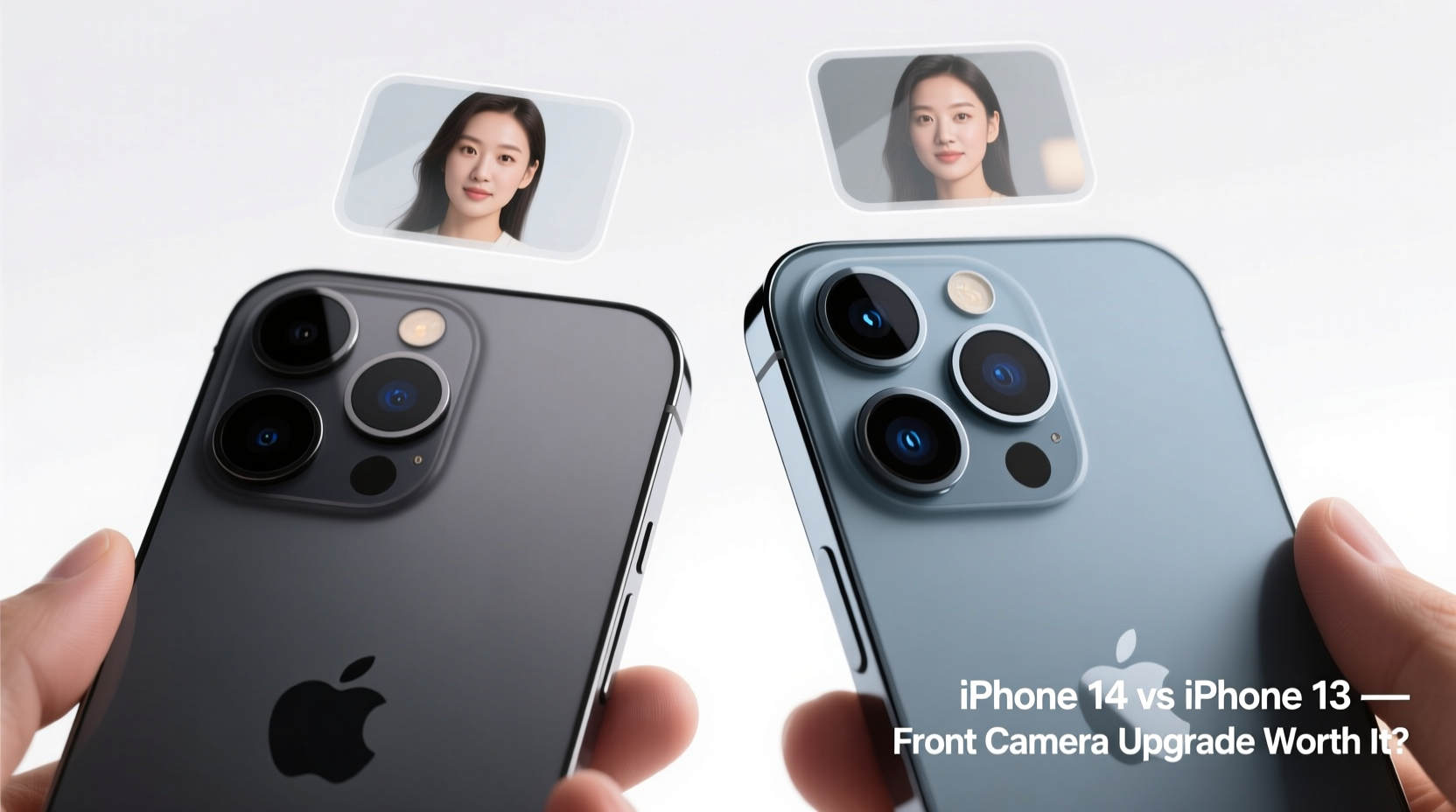
At first glance, both the iPhone 13 and iPhone 14 feature a 12MP front-facing TrueDepth camera with an f/2.2 aperture. That might suggest no difference at all. However, Apple made behind-the-scenes improvements in image signal processing and computational photography that affect output.
The iPhone 14 benefits from the A15 Bionic chip (same as iPhone 13 Pro), which enables faster image processing and improved HDR handling. More importantly, it runs iOS 16 and later, giving it access to enhanced Photographic Styles and Smart HDR 4 refinements over time.
One often-overlooked change: the iPhone 14 supports **Autofocus** on the front camera in all lighting conditions—a feature introduced with the iPhone 13 but now more consistently optimized. This means sharper close-ups and better detail when moving slightly during a shot.
“While megapixels haven’t changed, autofocus stability and skin tone accuracy have taken small but meaningful steps forward.” — David Kim, Mobile Imaging Analyst at DXOMARK
Low-Light Performance: A Noticeable Difference?
In dim environments—like indoor cafes, evening calls, or bedroom vlogs—the front camera’s ability to capture clean, well-exposed images becomes critical. Here, the iPhone 14 shows modest gains thanks to refined noise reduction algorithms and better exposure balancing.
Apple implemented improved temporal noise reduction in video and stills, meaning grain is reduced without oversmoothing facial textures. In side-by-side tests, iPhone 14 selfies in low light retain more natural skin tones and finer details around eyes and hairlines compared to the iPhone 13, which sometimes leans toward cooler tones or slight blurring.
Video callers will appreciate that FaceTime on iPhone 14 includes minor enhancements under “Portrait Mode” and “Cinematic Lighting,” powered by machine learning models that better distinguish facial planes. These don’t radically change appearance but contribute to a more professional look during virtual meetings.
Image Quality Comparison: Side-by-Side Analysis
Let’s examine how these technical upgrades translate into actual photos. Below is a comparison of key factors affecting selfie quality:
| Feature | iPhone 13 Front Camera | iPhone 14 Front Camera |
|---|---|---|
| Resolution | 12MP | 12MP |
| Aperture | f/2.2 | f/2.2 |
| Autofocus | Limited in low light | Fully functional in all conditions |
| HDR Support | Smart HDR 4 | Enhanced Smart HDR 4 + Photographic Styles |
| Low-Light Detail | Good, occasional blur | Better texture retention, less noise |
| Skin Tone Accuracy | Natural with warm bias | More balanced across diverse complexions |
| Video Recording | 1080p at 30/60fps | Same resolution, improved stabilization |
The most visible improvement lies not in resolution, but in consistency. The iPhone 14 produces more reliable results across varying lighting scenarios. Skin tones are rendered more accurately out-of-the-box, especially for deeper complexions, where earlier models occasionally struggled with highlight clipping.
Real-World Example: Social Media Creator’s Experience
Taylor Chen, a lifestyle content creator with over 150K Instagram followers, switched from iPhone 13 to iPhone 14 primarily for better vlogging tools. She noticed immediate differences while filming morning routines under bathroom lighting.
\"On the iPhone 13, I had to edit every selfie to warm up the shadows under my eyes. With the iPhone 14, the default shots required almost no touch-up. The autofocus locks instantly, even when I’m holding the phone at arm’s length. It saves me about 20 minutes per post in editing time.\"
This reflects a broader trend: the value of the upgrade may not be in dramatic visual leaps, but in workflow efficiency and reduced post-processing effort—especially for creators who publish frequently.
Is the Upgrade Worth It for Selfies Alone?
If your primary concern is taking better selfies, consider your current usage patterns:
- You already own an iPhone 13 and are satisfied with its front camera.
- You rarely take selfies or mostly use third-party apps like Instagram or TikTok, which apply their own filters.
- You’re on a tight budget and can’t justify $799+ for marginal gains.
In such cases, the iPhone 14’s front camera improvements likely won’t move the needle enough to warrant an upgrade.
However, if you:
- Record frequent video content
- Value accurate color reproduction without editing
- Often shoot in mixed or low lighting
- Rely on FaceTime for work or personal communication
...then the iPhone 14 offers tangible benefits. It delivers crisper focus, better dynamic range, and more confidence in spontaneous shots.
Checklist: Should You Upgrade for Better Selfies?
Use this checklist to evaluate whether the iPhone 14’s front camera justifies the switch:
- ✅ Do you take selfies daily or multiple times per week?
- ✅ Are you frustrated by soft focus or inconsistent exposure on your iPhone 13?
- ✅ Do you spend time editing selfies before posting?
- ✅ Have you maxed out your iPhone 13’s storage, making photo management difficult?
- ✅ Can you benefit from other iPhone 14 features (e.g., Emergency SOS via Satellite, crash detection)?
If you answered “yes” to three or more, the upgrade could enhance your overall mobile photography experience—not just selfies, but confidence in every shot.
Frequently Asked Questions
Does the iPhone 14 front camera support Portrait Mode?
Yes, the front camera on both iPhone 13 and iPhone 14 supports Portrait Mode using depth mapping from the TrueDepth system. The iPhone 14 offers slightly smoother edge detection and more natural bokeh due to improved neural engine processing.
Can I record 4K selfies on the iPhone 14?
No. Both the iPhone 13 and iPhone 14 front cameras max out at 1080p video recording. While rear cameras support 4K, Apple has not extended this capability to the front-facing sensor, likely due to thermal and processing constraints.
Why does my iPhone 14 selfie look different than what I see in the preview?
This is often due to True Tone flash simulation or automatic Photographic Styles adjustments. To minimize discrepancies, go to Settings > Camera > Prioritize Faster Shooting and disable any active filters or styles.
Final Verdict: Incremental, Not Revolutionary
The iPhone 14’s front camera isn’t a game-changer—it’s a refinement. If you're coming from an older model like the iPhone 11 or 12, the leap will feel significant. But switching from iPhone 13 to iPhone 14 for selfie performance alone is hard to justify purely on photographic grounds.
That said, when combined with longer battery life, slightly brighter display, and peace of mind from newer safety features, the package becomes more compelling. For casual users, stick with the iPhone 13. For creators, professionals, or those seeking polished, effortless selfies, the iPhone 14 delivers quiet confidence in every frame.




 浙公网安备
33010002000092号
浙公网安备
33010002000092号 浙B2-20120091-4
Comments
No comments yet. Why don't you start the discussion?