
When Apple releases a new iPhone, the question isn’t whether it’s better—it almost always is. The real question is whether the improvements justify the cost, especially when upgrading from a high-end predecessor like the iPhone 13 Pro Max. For users sitting on a perfectly capable 13 Pro Max, the jump to the iPhone 14 demands careful evaluation. This isn’t just about specs on paper; it’s about real-world impact, longevity, and value for money.
The iPhone 14 may lack the dramatic redesigns of past years, but it introduces subtle yet meaningful upgrades in camera technology, safety features, and processing efficiency. Meanwhile, the iPhone 13 Pro Max remains one of the most powerful iPhones ever made, with excellent battery life and a top-tier display. So, is the newer model truly worth the upgrade?
Performance: Incremental Gains Over Generational Leaps
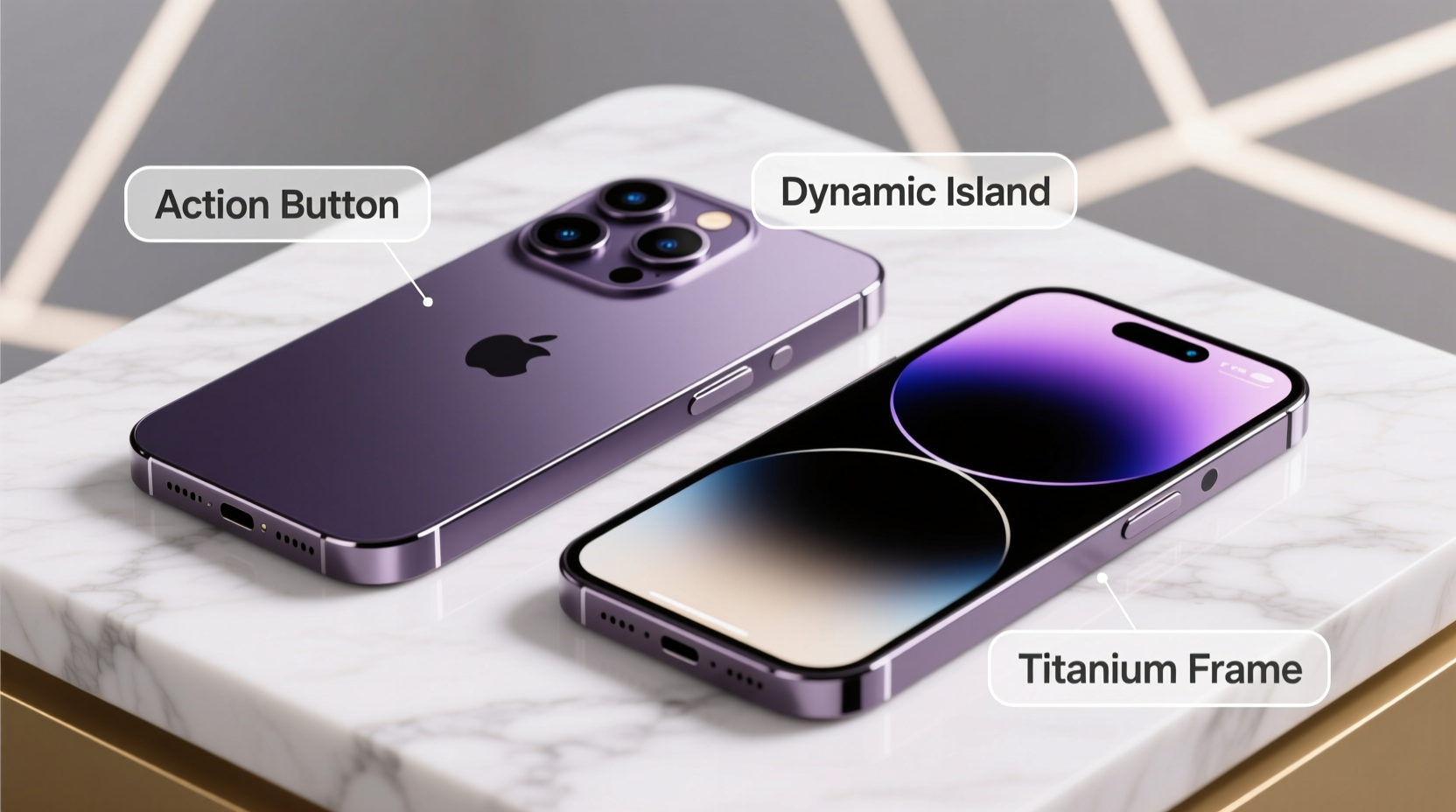
At the heart of both devices lies Apple’s A-series chip. The iPhone 13 Pro Max runs on the A15 Bionic, specifically the enhanced five-core GPU version reserved for Pro models. The iPhone 14, despite being a non-Pro device, steps up with the A15 Bionic as well—but with minor architectural refinements and improved power efficiency.
In everyday use, the difference is nearly imperceptible. Both phones handle multitasking, gaming, and app switching with ease. However, under sustained workloads—such as video editing or extended AR sessions—the iPhone 14 shows slightly better thermal management due to updated power gating and transistor tuning.
Benchmarks tell a similar story. In Geekbench 6 tests, the iPhone 14 scores around 5% higher in multi-core performance and marginally better in GPU tasks. While technically superior, this gain doesn’t translate into noticeable speed differences during routine usage.
Camera System: Evolution, Not Revolution
The camera is where the iPhone 14 makes its strongest case for an upgrade—especially for photography enthusiasts. While the 13 Pro Max already boasts a stellar triple-lens system (wide, ultra-wide, telephoto), the iPhone 14 brings computational photography advancements that improve low-light performance and dynamic range.
The main wide sensor on the iPhone 14 is larger than its predecessor’s, capturing 48% more light. Combined with the new Photonic Engine, which processes images earlier in the pipeline, night mode photos are noticeably cleaner and more detailed. Portrait mode now works across all lenses and at greater distances, thanks to improved depth mapping.
“Apple’s focus has shifted from hardware leaps to smarter software integration. The iPhone 14 proves that sometimes, better algorithms matter more than bigger sensors.” — David Lin, Mobile Imaging Analyst at TechPulse
Video capabilities remain strong on both, supporting Dolby Vision HDR recording. However, the iPhone 14 adds Action mode, a highly effective stabilization feature ideal for walking shots or shaky environments. It’s not available on the 13 Pro Max, even via software update.
Battery Life and Charging: Slight Edge to the Older Model
Despite efficiency gains in the A15 chip, the iPhone 14 falls short of the 13 Pro Max in battery endurance. Apple’s largest iPhone still holds the crown for longest battery life in the lineup, delivering up to 28 hours of video playback. The iPhone 14, while respectable, manages around 20 hours under similar conditions.
This discrepancy stems from the 13 Pro Max’s significantly larger battery (4,352 mAh) compared to the iPhone 14’s 3,279 mAh. Even with optimized power usage, physics wins: more capacity equals longer runtime.
Charging speeds remain unchanged—both support 20W fast charging and MagSafe. Neither includes a charger in the box, so existing accessories can be reused.
| Feature | iPhone 13 Pro Max | iPhone 14 |
|---|---|---|
| Chipset | A15 Bionic (5-core GPU) | A15 Bionic (4-core GPU, refined) |
| Rear Cameras | Triple: 12MP Wide, Ultra-Wide, Telephoto (3x optical zoom) | Dual: 12MP Wide (larger sensor), Ultra-Wide; no telephoto |
| Front Camera | 12MP TrueDepth | 12MP TrueDepth (Improved low-light) |
| Battery Life (Video Playback) | Up to 28 hours | Up to 20 hours |
| Display | 6.7” Super Retina XDR, ProMotion (120Hz) | 6.1” Super Retina XDR (60Hz) |
| Emergency Features | None | Crash Detection, Emergency SOS via Satellite |
| Starting Price (2022–2023) | $1,099 | $799 |
Safety and Connectivity: Where the iPhone 14 Shines
One area where the iPhone 14 clearly outpaces its predecessor is in emergency features. Introduced with the iPhone 14 series, Crash Detection uses advanced motion sensors and GPS to detect severe car accidents and automatically call emergency services if the user is unresponsive. Paired with Emergency SOS via Satellite, this could be a literal lifesaver in remote areas without cellular coverage.
These features are absent on the 13 Pro Max and cannot be added through software updates due to hardware dependencies. If you frequently travel off-grid, go hiking, or drive long distances, this alone might tip the scales in favor of the iPhone 14.
Additionally, the iPhone 14 supports faster Wi-Fi 6E (where available) and improved Bluetooth 5.3, offering better connectivity in dense wireless environments. While not critical for most users, they future-proof the device slightly more than the 13 Pro Max.
Real-World Example: Should Sarah Upgrade?
Sarah is a freelance photographer who bought an iPhone 13 Pro Max in late 2021. Her current phone handles her workflow well—she shoots client previews, edits on Lightroom Mobile, and shares portfolios directly from her device. She travels often, including remote mountain trails where signal drops are common.
She considered the iPhone 14 after hearing about its improved low-light camera and satellite SOS. After testing both side by side, she noticed her night shots were sharper on the iPhone 14, and the Action mode helped stabilize handheld videos. But she missed the 3x optical zoom and preferred the smoother 120Hz display of her current phone.
In the end, Sarah decided against upgrading. The camera gains weren’t significant enough to offset losing the telephoto lens and high-refresh screen. However, she acknowledged that if safety was her top priority, the satellite feature would have changed her decision.
Upgrade Checklist: Answer These Before Deciding
- Are you currently experiencing performance issues with your iPhone 13 Pro Max?
- Do you frequently shoot photos in low light and need better detail?
- Is the lack of a telephoto lens a dealbreaker? (iPhone 14 lacks one.)
- Do you travel to areas with poor or no cellular service?
- Would Crash Detection or Emergency SOS via Satellite provide peace of mind?
- Can you reuse your existing accessories (cases, chargers, docks)?
- Is your current phone under warranty or covered by AppleCare+?
If most of your answers are “no,” staying put is likely the smarter move. The iPhone 13 Pro Max remains a powerhouse in 2024.
Frequently Asked Questions
Can the iPhone 14’s camera beat the 13 Pro Max overall?
No single metric tells the whole story. The iPhone 14 improves low-light performance and portrait flexibility, but loses the 3x optical zoom and sensor-shift stabilization found only in Pro models. For zoom and video stability, the 13 Pro Max still wins.
Does the iPhone 14 support 120Hz like the 13 Pro Max?
No. The iPhone 14 has a standard 60Hz display. Only iPhone 14 Pro and Pro Max models received the ProMotion 120Hz upgrade. This is a major downgrade in smoothness and responsiveness compared to the 13 Pro Max.
Is it worth upgrading just for Crash Detection?
That depends on your lifestyle. For urban users with reliable connectivity, it may never come into play. But for adventurers, frequent drivers, or those with medical concerns, it adds a valuable layer of security.
Final Verdict: Who Should Upgrade?
The iPhone 14 is not a must-upgrade for existing iPhone 13 Pro Max owners. The trade-offs—smaller screen, no telephoto lens, lower refresh rate, shorter battery life—outweigh the benefits for many power users. However, if you prioritize camera quality in dim lighting, value cutting-edge safety tech, or are coming from an older non-Pro model, the iPhone 14 offers tangible improvements.
For those holding a 13 Pro Max, the next logical step might not be the iPhone 14, but rather waiting for a future Pro model that combines the best of both: advanced cameras, high-refresh displays, long battery life, and modern safety features.




 浙公网安备
33010002000092号
浙公网安备
33010002000092号 浙B2-20120091-4
Comments
No comments yet. Why don't you start the discussion?