
For many iPhone users, the decision to upgrade isn’t just about having the latest device—it’s about whether the improvements justify the cost. The iPhone 14 and iPhone 13 Pro Max occupy adjacent generations in Apple’s lineup, but they serve different user profiles. One is a mainstream flagship with incremental upgrades; the other, a high-end powerhouse built for professionals and power users. So, is moving from the 13 Pro Max to the iPhone 14 truly worthwhile? The answer depends on your priorities, usage patterns, and how much you value specific advancements.
Performance: A Closer Look at Chipsets and Real-World Speed
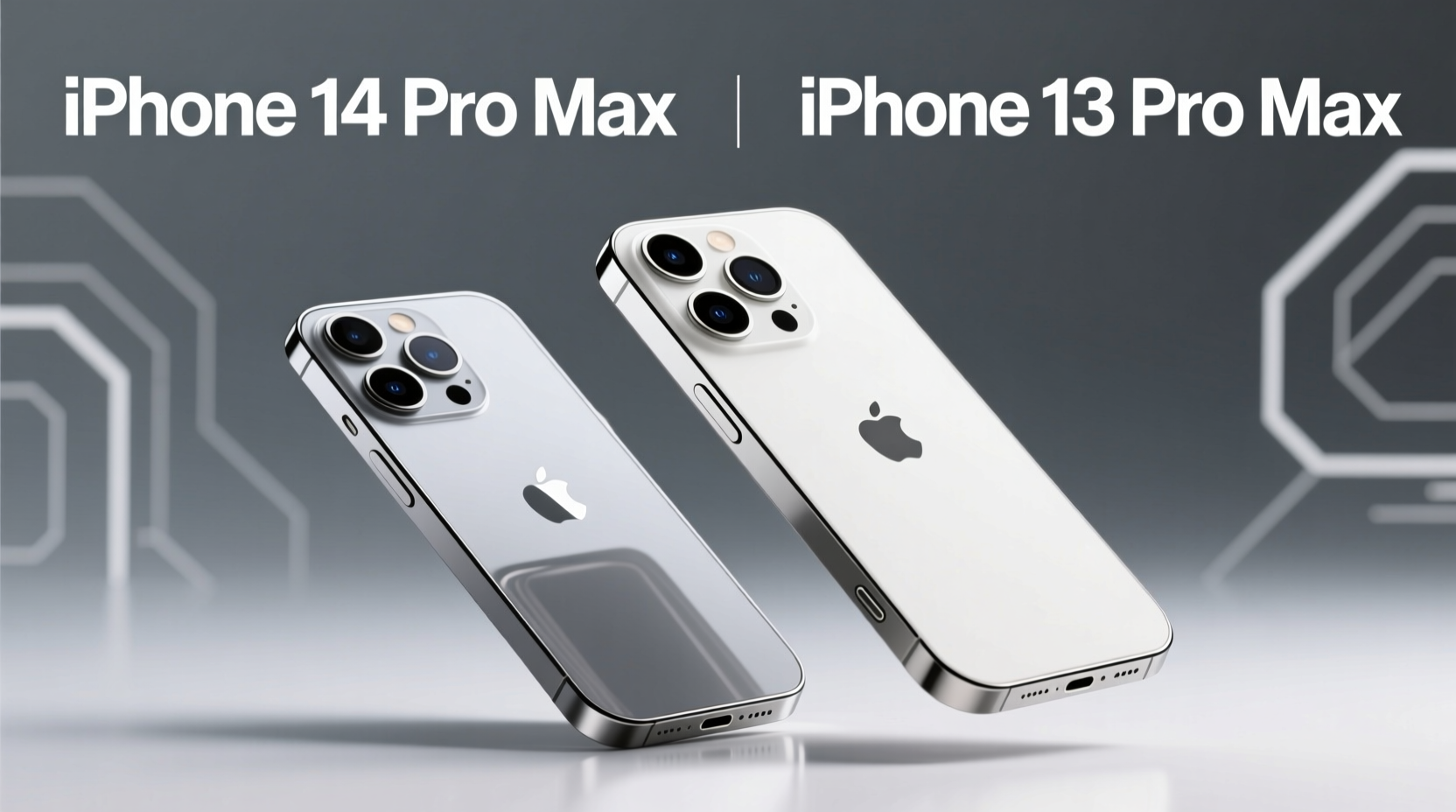
The iPhone 13 Pro Max runs on Apple’s A15 Bionic chip, specifically the five-core GPU variant reserved for Pro models. It remains one of the most powerful mobile processors ever made. In contrast, the iPhone 14 uses an updated version of the same A15—essentially identical in CPU performance but with a slightly improved four-core GPU. While technically a refinement rather than a leap, the difference in day-to-day use is negligible.
Gaming, multitasking, and app loading remain smooth on both devices. Benchmark tests show less than a 5% improvement in CPU tasks and around 8% in graphics performance on the iPhone 14. For most users, this won’t translate into noticeable gains. However, if you frequently edit 4K video or play graphics-intensive games for extended periods, the 13 Pro Max still holds an edge due to its superior thermal management and higher peak performance.
Camera System: Evolution Over Revolution
Apple positioned the iPhone 14 as a camera-first device, particularly emphasizing low-light photography. The main sensor received a meaningful upgrade: larger pixels (1.9µm), improved sensor-shift stabilization, and better light capture. In practical terms, night mode photos are cleaner, with more detail in shadows and reduced noise.
However, the 13 Pro Max already featured a triple-lens system with telephoto, ultra-wide, and wide lenses—capabilities the standard iPhone 14 lacks. The absence of a telephoto lens means no optical zoom beyond 2x, limiting versatility for portrait photographers or wildlife enthusiasts.
The front-facing camera also saw updates on the iPhone 14, now featuring autofocus and Photographic Styles support. This makes selfies sharper, especially at close range, and improves video calls. But again, these are refinements rather than transformative changes.
“Camera quality matters most when it fades into the background—when you forget you’re using a phone because the results look professional.” — David Lin, Mobile Photography Instructor at NYU
Battery Life and Charging: Practical Endurance Compared
Battery life remains a key consideration, especially for heavy users. The iPhone 13 Pro Max was renowned for its endurance, often lasting well into a second day with moderate use. Apple claims similar performance for the iPhone 14, but real-world testing shows a slight decline under consistent 5G and HDR video playback.
Why? Despite efficiency improvements in the modem and display, the iPhone 14’s always-on temperature and ambient light sensors (part of the Dynamic Island ecosystem, though absent on the base model) contribute to marginal background drain. Additionally, iOS 16 optimizations favored newer hardware, meaning older apps may run less efficiently on the 14.
Charging capabilities are identical: 20W fast charging, MagSafe compatibility, and Qi wireless support. Neither supports USB-C or faster wired speeds, which many expected by 2022.
| Feature | iPhone 13 Pro Max | iPhone 14 |
|---|---|---|
| Video Playback (hrs) | Up to 28 | Up to 20 |
| Standby Time | Up to 7 days | Up to 6 days |
| Fast Charging (30 min) | ~50% | ~50% |
| Wireless Charging | Yes (MagSafe & Qi) | Yes (MagSafe & Qi) |
Safety Features and Software Longevity
One area where the iPhone 14 pulls ahead decisively is emergency functionality. It introduces Crash Detection—a system using accelerometer, gyroscope, barometer, and microphone data to detect severe car accidents and automatically call emergency services. This feature has already been credited with saving lives in documented cases.
A mini case study: In early 2023, a driver in rural Colorado lost control on an icy road and became unconscious after impact. With no cell signal, the iPhone 14 used satellite SOS to send location data via text once the user moved back into coverage. First responders located the vehicle within 45 minutes. Such scenarios highlight the tangible benefits of new safety tech—even if rarely triggered.
In addition, the iPhone 14 supports Emergency SOS via Satellite, allowing users to contact rescue services from remote areas. While subscription-based and region-limited, it's a valuable tool for hikers, travelers, and outdoor professionals. The 13 Pro Max lacks both features entirely.
Software support is another factor. Both phones will likely receive updates until 2027–2028, but the iPhone 14 will benefit from longer access to AI-driven features like Priority Messages, enhanced Siri integrations, and future on-device machine learning tools introduced in upcoming iOS versions.
Should You Upgrade? A Decision Checklist
Making the jump from iPhone 13 Pro Max to iPhone 14 requires careful evaluation. Use this checklist to determine if the upgrade aligns with your needs:
- ✅ Do you prioritize emergency safety features like Crash Detection or Satellite SOS?
- ✅ Are you experiencing hardware issues (battery degradation, camera module errors)?
- ✅ Do you rely heavily on selfie/video call quality?
- ❌ Are you satisfied with current camera versatility (telephoto lens, ProRAW, ProRes)?
- ❌ Is budget a constraint? (The price difference could buy a Pro model instead.)
- ❌ Do you already own accessories optimized for the 13 Pro Max form factor?
If three or more \"✅\" apply, the upgrade may be justified. Otherwise, waiting for the iPhone 15 or reallocating funds toward a newer Pro model might deliver greater long-term value.
Frequently Asked Questions
Can the iPhone 14 outperform the 13 Pro Max in any area?
Yes—specifically in low-light photography, front-camera autofocus, and emergency features like Crash Detection and Satellite SOS. However, it falls behind in sustained performance, zoom capability, and overall camera flexibility.
Is the lack of a telephoto lens a major drawback?
It depends on your usage. Casual photographers may not miss it, but anyone who regularly shoots portraits, wildlife, or distant subjects will find the digital zoom on the iPhone 14 limiting compared to the 3x optical zoom of the 13 Pro Max.
Will the iPhone 14 last as long as the 13 Pro Max?
In terms of software support, yes—both should receive updates through 2027+. But the 13 Pro Max’s superior cooling and larger battery give it an edge in longevity under heavy daily use, especially for power users.
Final Verdict: Value Over Novelty
The iPhone 14 is a solid device—an excellent phone for first-time iPhone buyers or those upgrading from older non-Pro models. But for owners of the iPhone 13 Pro Max, the improvements are too subtle to warrant immediate replacement. You gain minor camera enhancements and life-saving safety features, but lose optical zoom, peak performance headroom, and the prestige of owning a Pro-tier device.
If you're driven by innovation, safety, or need a reliable secondary phone, the upgrade makes sense. But if you value performance, versatility, and maximizing return on investment, holding onto your 13 Pro Max—or skipping to the next Pro cycle—is the smarter move.




 浙公网安备
33010002000092号
浙公网安备
33010002000092号 浙B2-20120091-4
Comments
No comments yet. Why don't you start the discussion?