
The iPhone 14 Pro’s noticeably larger camera bump stands out the moment you see it next to the standard iPhone 14. At first glance, that hulking module suggests a significant leap in photographic capability — but does it deliver in practice? Apple markets the Pro model as the definitive choice for mobile photography enthusiasts, but with a steeper price tag and added bulk, consumers are right to ask: is the bigger camera bump on the iPhone 14 Pro actually worth it?
This isn’t just about aesthetics or bragging rights. The camera bump symbolizes a fundamental shift in hardware and image processing. To understand whether that extra size translates into meaningful improvements, we need to look beyond marketing claims and examine real-world performance, sensor technology, software enhancements, and user experience.
Understanding the Camera Bump: More Than Just Size
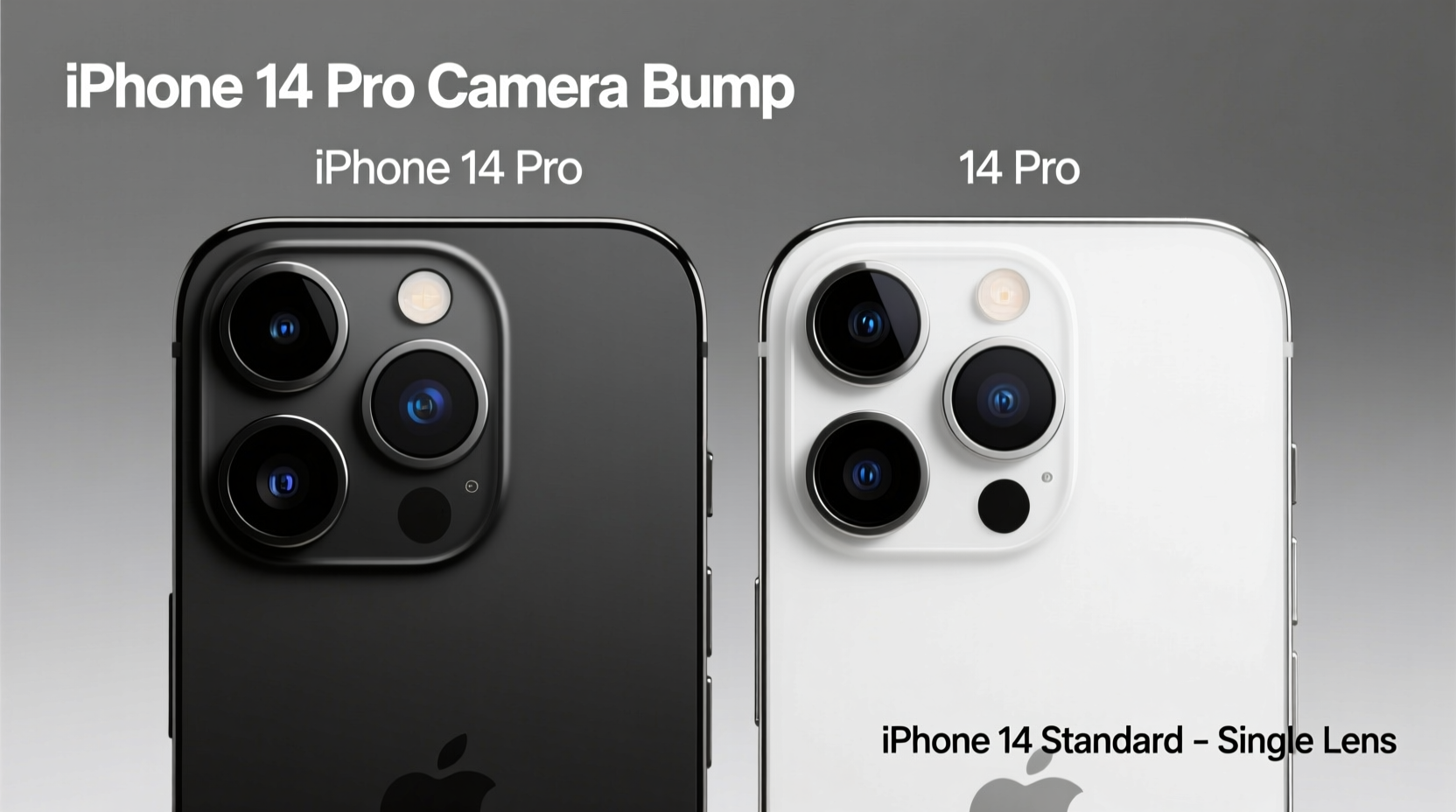
The camera bump on any smartphone exists because advanced lenses and sensors require more depth than the slim profile of modern phones allows. In the case of the iPhone 14 Pro, the bump is significantly taller and wider than the iPhone 14’s. This isn't arbitrary design; it accommodates a new 48MP main sensor — a fourfold increase in resolution over the 12MP sensor in the base model.
Apple refers to this as the “new generation” camera system. Unlike previous upgrades, which were largely software-driven, the 14 Pro introduces a redesigned optical system. The larger physical aperture (f/1.78 vs f/1.5 on the Pro) and improved sensor-shift stabilization allow more light capture and reduce blur from hand movement. These changes necessitate a deeper lens housing — hence the prominent bump.
Hardware Differences That Matter
The most critical distinction lies in the main camera. While both models feature a 12MP ultra-wide lens and a 12MP front-facing TrueDepth camera, only the iPhone 14 Pro includes a third telephoto lens with 3x optical zoom. Combined with the 48MP main sensor, this gives the Pro far greater versatility in framing and cropping without quality loss.
Here’s a breakdown of the key camera specifications:
| Feature | iPhone 14 | iPhone 14 Pro |
|---|---|---|
| Main Sensor Resolution | 12MP | 48MP (Adaptive 12MP default) |
| Aperture (Main) | f/1.5 | f/1.78 |
| Telephoto Lens | No | Yes (3x optical zoom) |
| Ultra-Wide Aperture | f/2.4 | f/2.2 |
| Sensor-Shift Stabilization | Main only | Main and Telephoto |
| Photonic Engine | Yes | Enhanced version |
The 48MP sensor operates in a default “pixel-binning” mode, combining information from multiple pixels to output high-quality 12MP photos with superior dynamic range and low-light performance. However, users can choose to shoot in full 48MP resolution via the ProRAW format, which is exclusive to the Pro model. This provides professional-grade editing flexibility, especially valuable for photographers who process images in apps like Lightroom or Capture One.
Real-World Photo Quality: When the Pro Shines
In daylight conditions, both phones produce excellent results. Colors are natural, exposure is balanced, and detail retention is strong. The differences become apparent in challenging lighting and creative scenarios.
Low-light photography sees the most dramatic improvement on the Pro. Thanks to its larger sensor and second-generation sensor-shift stabilization, it captures up to 2.5 stops more light. Night mode activates faster and produces cleaner shadows with less noise. In indoor settings with dim ambient lighting — such as restaurants or evening events — the Pro consistently delivers sharper, warmer, and more detailed images.
“With the 14 Pro, we’re seeing computational photography mature into a toolset that rivals dedicated cameras in many everyday situations.” — David Nagel, Imaging Analyst at DXOMARK
The telephoto lens also unlocks compositional freedom. On the iPhone 14, digital zoom degrades quality quickly past 2x. The 14 Pro’s 3x optical zoom maintains clarity and allows tighter framing without stepping closer — ideal for portraits, wildlife shots, or capturing details across distances.
A Mini Case Study: Concert Photography
Consider a real-world example: Sarah, a music blogger, attended an indoor concert with mixed stage lighting and rapid movements. Using her iPhone 14, she struggled with motion blur and underexposed backgrounds. When she borrowed a colleague’s iPhone 14 Pro, the difference was immediate. The Pro’s faster shutter response, enhanced stabilization, and ability to isolate subjects with the telephoto lens resulted in publishable shots — even in near-darkness. She later noted, “I didn’t need to edit as much. The raw files had so much more data to work with.”
Software and Computational Advantages
Hardware alone doesn’t define image quality. Apple’s Photonic Engine, introduced across the iPhone 14 lineup, processes images earlier in the pipeline, preserving texture and color accuracy. But on the Pro, this engine works with higher-bandwidth data from the 48MP sensor and applies more aggressive noise reduction algorithms.
Features like ProRAW and ProRes video recording are only available on the Pro model. These formats preserve maximum image data, giving creators control over white balance, exposure, and grading after capture. For casual users, these may seem unnecessary — but for content creators, vloggers, or mobile journalists, they represent a major workflow upgrade.
Additionally, the 14 Pro supports macro photography at closer ranges thanks to improved autofocus tuning on the ultra-wide lens. While the iPhone 14 can take close-up shots, the Pro does so more reliably and with better edge detection.
Is the Bigger Bump Worth It? A Practical Checklist
Deciding whether the iPhone 14 Pro’s camera system justifies its cost and size depends on how you use your phone. Ask yourself the following:
- Do you frequently take photos in low light (e.g., evenings, concerts, indoors)?
- Do you value optical zoom over digital cropping?
- Are you interested in professional editing tools like RAW or manual controls?
- Do you record videos regularly and care about cinematic quality?
- Are you willing to carry a slightly heavier phone for better camera performance?
If you answered “yes” to three or more, the Pro is likely worth the investment. If photography is secondary to calls, browsing, and social media, the iPhone 14 remains an excellent performer.
Frequently Asked Questions
Does the larger camera bump make the iPhone 14 Pro harder to use?
Some users find the bump causes the phone to wobble on flat surfaces. Using a case resolves this issue. Functionally, the bump doesn’t impact usability, though it may feel bulkier in pockets or one-handed operation.
Can the iPhone 14 match the Pro in good lighting?
Yes. In bright daylight and well-lit environments, both phones produce nearly indistinguishable results. The gap widens significantly in low light or when using zoom.
Is the 48MP sensor always active?
No. By default, the iPhone 14 Pro uses pixel binning to output 12MP photos optimized for speed and sharing. Full 48MP shots are available only in ProRAW mode, accessible through the Camera app when enabled.
Final Verdict: Performance Over Profile
The larger camera bump on the iPhone 14 Pro isn’t a gimmick — it’s a necessity born from tangible hardware advancements. The 48MP sensor, telephoto lens, and upgraded stabilization systems demand space, and Apple chose performance over sleekness.
For everyday users who snap occasional photos and rely on automatic settings, the iPhone 14 offers more than enough quality. But for those who push their devices creatively — capturing memories in dim light, experimenting with composition, or editing photos professionally — the Pro’s camera system delivers measurable, lasting benefits.
The bump might catch your eye, but it’s what’s behind it that counts.




 浙公网安备
33010002000092号
浙公网安备
33010002000092号 浙B2-20120091-4
Comments
No comments yet. Why don't you start the discussion?