
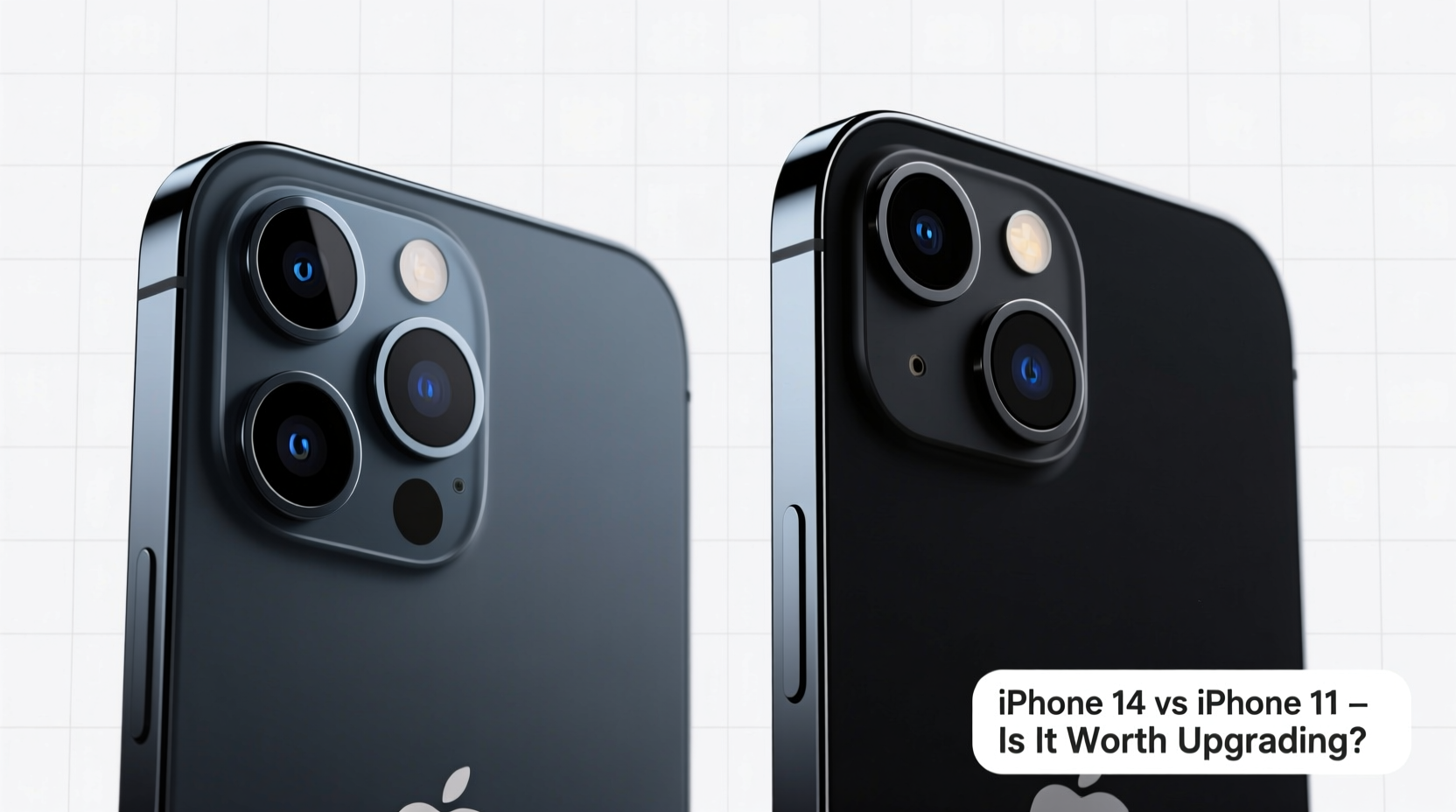
If you're still using an iPhone 11 and considering a jump to the iPhone 14, you're likely weighing real-world benefits against cost. The iPhone 11, released in 2019, was a standout for its time—offering excellent battery life, a solid dual-camera system, and strong performance with the A13 Bionic chip. Fast forward to 2022, and the iPhone 14 arrived with meaningful upgrades in processing power, camera intelligence, display quality, and safety features. But does that translate into a worthwhile upgrade for someone who already owns an iPhone 11?
The answer isn’t universal—it depends on your usage patterns, priorities, and how much longer you expect your current device to last. Let’s break down the key differences and determine whether making the switch delivers enough value to justify the expense.
Performance: Speed and Longevity
The most significant leap between these two models lies in their processors. The iPhone 11 runs on the A13 Bionic chip, which was powerful at launch and still handles everyday tasks well today. However, the iPhone 14 features the A15 Bionic chip (the same as in the iPhone 13 Pro), offering roughly 20–25% better CPU performance and up to 30% better GPU performance.
This improvement translates into smoother multitasking, faster app launches, and better handling of graphics-intensive applications like mobile gaming or augmented reality tools. More importantly, the A15 chip ensures longer software support. Apple typically supports iPhones for five to six years with iOS updates. Since the iPhone 11 launched in 2019, its support window may begin tapering off by 2025. In contrast, the iPhone 14, released in 2022, is expected to receive updates through at least 2028.
Camera Improvements: Low Light and Smart Features
Photography has evolved significantly between the iPhone 11 and iPhone 14. Both devices feature dual-camera setups (wide and ultra-wide), but the hardware and software enhancements in the iPhone 14 make a tangible difference—especially in low-light conditions.
- iPhone 11: 12MP wide + 12MP ultra-wide; Night mode introduced but limited by sensor size and processing speed.
- iPhone 14: Larger sensor on the main camera, improved autofocus, enhanced Night mode, and Photographic Styles for customizable color grading.
The iPhone 14 also introduces Smart HDR 4, which better balances exposure across multiple subjects and skin tones in complex lighting. It handles backlit scenes and high-contrast environments more gracefully than the iPhone 11.
For casual photographers, the difference might seem subtle in daylight. But when shooting indoors, at night, or capturing fast-moving subjects, the iPhone 14 produces sharper images with less noise and more accurate colors.
“Upgrading from iPhone 11 to iPhone 14 feels like moving from standard definition to HD in real-world photo quality.” — Jordan Lee, Mobile Photography Analyst at TechLens Review
Display and Design: Subtle but Meaningful Changes
Externally, both phones share a similar design language with aluminum frames and glass backs. However, the iPhone 14 improves durability with Ceramic Shield front cover, offering better drop resistance than the iPhone 11’s standard glass.
The displays differ slightly:
| Feature | iPhone 11 | iPhone 14 |
|---|---|---|
| Screen Size | 6.1 inches | 6.1 inches |
| Panel Type | LCD (Liquid Retina) | OLED (Super Retina XDR) |
| Brightness (typical) | 625 nits | 1000 nits (HDR) |
| Contrast Ratio | 1400:1 | 2,000,000:1 |
| Always-On Display | No | No (available only on Pro models) |
While both are 6.1-inch screens, the iPhone 14’s OLED panel delivers deeper blacks, richer colors, and superior contrast—making media consumption noticeably more immersive. Brightness improvements also enhance outdoor visibility.
Battery Life and Charging: Real-World Endurance
Battery degradation is common after three years of daily charging cycles. If you’ve had your iPhone 11 since launch, its maximum capacity may now be below 80%, leading to shorter usage times and more frequent charging.
Apple rates the iPhone 14 for slightly better battery life—up to one hour longer under typical use. While not revolutionary, this gain adds up over time, especially when combined with optimized background activity and more efficient components.
Charging remains unchanged: both support 20W fast charging and MagSafe accessories, but neither includes a charger in the box. However, the iPhone 14 benefits from newer power management firmware, which can extend overall battery lifespan with proper care.
Safety and Connectivity Upgrades
One of the standout features of the iPhone 14 is its emergency readiness. It includes Crash Detection, which uses advanced sensors to detect severe car accidents and automatically calls emergency services if the user doesn’t respond. This feature could be life-saving in critical situations.
Additionally, the iPhone 14 supports Emergency SOS via Satellite—a groundbreaking addition allowing users to send messages from remote areas without cellular coverage. While rarely needed, it offers peace of mind for hikers, travelers, and outdoor enthusiasts.
These features aren't available on the iPhone 11 due to hardware limitations. Even with a software update, older devices cannot support satellite connectivity or advanced motion sensing algorithms.
Mini Case Study: Sarah’s Upgrade Decision
Sarah, a freelance photographer based in Colorado, used her iPhone 11 for work and personal life. By late 2023, she noticed slower performance when editing photos in Lightroom and reduced battery life during shoots. She often worked in mountainous regions where signal was weak.
After researching, she upgraded to the iPhone 14 primarily for the improved camera dynamic range and Emergency SOS via Satellite. During a recent hiking trip, her car skidded off a snowy road. The Crash Detection system activated, detected the impact, and connected her to emergency responders—even though there was no cell service. Help arrived within 45 minutes.
“I never thought I’d need those features,” Sarah said later. “But now I can’t imagine going back to a phone without them.”
Checklist: Should You Upgrade?
Use this checklist to evaluate your personal needs:
- Is your iPhone 11 showing signs of battery wear (e.g., dies before bedtime)?
- Do you frequently shoot photos or videos in low light?
- Are you starting to notice app slowness or delays?
- Do you travel to remote areas or engage in outdoor activities?
- Would crash detection or satellite SOS give you peace of mind?
- Are you planning to keep your next phone for 4+ years?
If you answered “yes” to three or more, upgrading to the iPhone 14 is likely a smart investment.
Frequently Asked Questions
Will the iPhone 11 stop working if I don’t upgrade?
No. The iPhone 11 will continue functioning normally and still receives iOS updates. However, future versions may slow it down, and app developers may eventually optimize only for newer hardware.
Can I use my iPhone 11 case with the iPhone 14?
Possibly, but not reliably. While both models have the same 6.1-inch form factor, minor differences in button placement, camera bump size, and port alignment may affect fit and functionality.
Is the iPhone 14 waterproof like the iPhone 11?
Yes—and better. Both have IP68 ratings, but the iPhone 14 can withstand depths up to 6 meters for 30 minutes, compared to 4 meters for the iPhone 11.
Conclusion: Making the Right Choice for Your Lifestyle
Upgrading from the iPhone 11 to the iPhone 14 isn’t essential for everyone, but it brings measurable improvements in performance, camera quality, safety, and long-term usability. If your iPhone 11 still meets your daily needs and holds a charge well, holding off is perfectly reasonable. However, if you’re experiencing slowdowns, poor battery life, or want modern safety features, the iPhone 14 offers compelling reasons to make the change.
Technology evolves not just to impress, but to serve. Sometimes, an upgrade isn’t about wanting something new—it’s about gaining reliability, confidence, and capability when you need it most.




 浙公网安备
33010002000092号
浙公网安备
33010002000092号 浙B2-20120091-4
Comments
No comments yet. Why don't you start the discussion?