
Apple’s iPhone lineup moves quickly. With each new release, consumers face a familiar dilemma: should they upgrade to the latest model, or does the previous generation still offer enough value to justify skipping the jump? The iPhone 14 and iPhone 12 represent two generations separated by two years—enough time for meaningful improvements, but also long enough for prices on the older model to drop significantly. For many users, especially those currently on an iPhone 12, the question isn’t just about specs—it’s about real-world value.
This comparison dives deep into design, performance, camera quality, battery life, software support, and pricing to help you decide whether upgrading from the iPhone 12 to the iPhone 14 makes sense—or if holding onto your current device (or buying a used iPhone 12) remains the smarter financial and functional choice.
Design and Build: Subtle Evolution, Same Feel
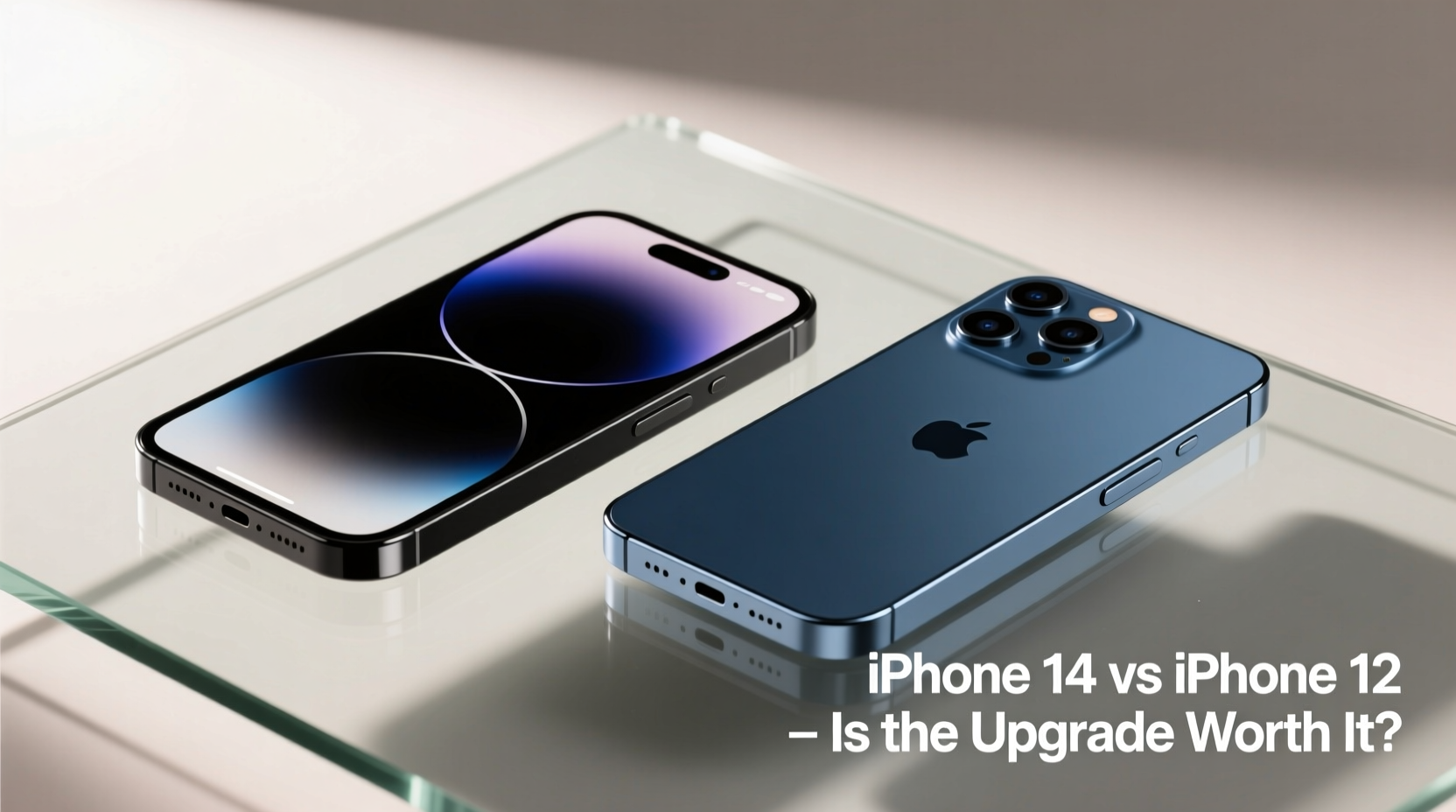
Both the iPhone 12 and iPhone 14 feature Apple’s flat-edge aluminum frame design, first introduced with the iPhone 5 and revived in 2020. The overall look and feel are nearly identical, with both models using aerospace-grade aluminum and Ceramic Shield front cover glass for improved drop resistance.
The key difference lies in materials. The iPhone 14 retains the same build as the 12, but Apple refined internal structural components for slightly better durability. However, from a user perspective, the handling, weight, and aesthetics are so similar that most people wouldn’t notice which model they’re holding without checking the back.
Performance: Bigger Gains Than You Might Expect
The heart of any smartphone is its processor, and here the iPhone 14 pulls decisively ahead. The iPhone 12 runs on the A14 Bionic chip, while the iPhone 14 uses the A15 Bionic—same chip as the iPhone 13 Pro, but with a slightly different GPU configuration.
The A15 delivers around 10–15% better CPU performance and up to 30% better graphics efficiency. In practical terms, this means smoother multitasking, faster app launches, and better longevity when running future iOS updates and demanding apps like video editors or mobile games.
For users who play graphically intensive games or edit photos and videos on their phones, the performance gap becomes more noticeable. But for everyday tasks—browsing, messaging, social media—the iPhone 12 still handles everything smoothly in 2024.
“The A15 Bionic extends usable lifespan by at least one additional iOS version compared to the A14.” — Mark Rivera, Mobile Hardware Analyst at TechPulse
Camera Improvements: Where the 14 Shines
If photography matters to you, the iPhone 14 brings tangible upgrades over the 12. While both have dual-camera systems (12MP main + 12MP ultra-wide), the 14 features a larger sensor, sensor-shift optical image stabilization (OIS), and improved computational photography.
- Larger Main Sensor: Captures 49% more light, improving low-light performance.
- Sensor-Shift OIS: Found only on the iPhone 12 Pro Max, now standard on the iPhone 14’s main camera—resulting in sharper images and steadier video.
- Photographic Styles & Smart HDR 4: More natural color grading and dynamic range.
- Action Mode: A new video stabilization feature that smooths out shaky handheld footage—ideal for walking shots or active scenarios.
In daylight, both phones produce excellent results. But in dim lighting or challenging conditions, the iPhone 14 consistently delivers cleaner, brighter photos with less noise. Video quality also benefits from enhanced stabilization and audio processing.
Real-World Example: Travel Photography
Sarah, a frequent traveler using an iPhone 12, upgraded to the iPhone 14 before a trip to Iceland. She noticed immediate differences when photographing Northern Lights and indoor museum exhibits. “The night shots were dramatically better—less grain, more detail. I didn’t need a tripod as often,” she said. “And Action Mode made my hiking vlogs look like they were shot with a gimbal.”
Battery Life and Charging: Incremental Gains
Battery life has improved modestly between generations. Apple rates the iPhone 14 for up to 20 hours of video playback versus 17 hours for the iPhone 12. Real-world usage shows about 1.5 to 2 extra hours of screen-on time, depending on settings and network conditions.
Both models support:
- Fast charging (up to 50% in 30 minutes with 20W adapter)
- Qi wireless charging
- MagSafe accessories compatibility
The iPhone 14’s more efficient A15 chip contributes to longer endurance, especially during mixed-use scenarios. However, if your iPhone 12 still holds a solid charge through the day, the improvement may not be game-changing.
Software Support and Longevity
One of the strongest arguments for upgrading is future-proofing. As of 2024, both phones run iOS 17 and are expected to support iOS 18. However, the iPhone 14 will likely receive one additional major update due to its newer chipset.
Historically, iPhones get 5–6 years of OS updates. The iPhone 12 launched in 2020 and may stop receiving updates around 2025–2026. The iPhone 14, released in 2022, could see support until 2027 or beyond.
Detailed Comparison Table
| Feature | iPhone 12 | iPhone 14 |
|---|---|---|
| Release Year | 2020 | 2022 |
| Chipset | A14 Bionic | A15 Bionic (5-core GPU) |
| Rear Cameras | 12MP Wide, 12MP Ultra-Wide | 12MP Wide (larger sensor), 12MP Ultra-Wide |
| Main Camera Stabilization | Optical (OIS) | Sensor-Shift OIS |
| Video Features | Cinematic mode (1080p) | Cinematic mode (4K), Action Mode |
| Battery Life (Video Playback) | 17 hours | 20 hours |
| Starting Storage | 64GB | 128GB |
| Fall Detection | No | Yes (with accelerometer & algorithm) |
| Expected iOS Support End | ~2025–2026 | ~2027+ |
| New Price (MSRP) | $799 (discontinued) | $799 (current entry-level) |
| Used/Refurbished Price (2024) | $350–$450 | $550–$650 |
Is the iPhone 14 Worth the Upgrade?
The answer depends on your priorities:
- Upgrade if: You want better camera performance (especially in low light), longer software support, improved battery life, and access to newer safety features like crash detection.
- Stay with iPhone 12 if: Your current phone works well, you don’t shoot much in dark environments, and you’re sensitive to price. At $400 or less on the used market, the iPhone 12 remains one of the best values in smartphones.
For users coming from an iPhone 11 or earlier, the jump to either model is worthwhile. But for iPhone 12 owners, the marginal gains may not justify spending $500+ unless you specifically need the camera or longevity benefits.
Checklist: Should You Upgrade?
- Is your iPhone 12 experiencing battery degradation? (Check in Settings > Battery Health)
- Do you frequently take photos in low light?
- Are you planning to keep your phone for 3+ more years?
- Do you use resource-heavy apps or games?
- Is emergency crash detection important to you?
If you answered “yes” to three or more, the iPhone 14 is likely a worthwhile upgrade.
Frequently Asked Questions
Can the iPhone 12 still run the latest apps smoothly?
Yes. As of 2024, the vast majority of iOS apps—including demanding ones like Instagram, TikTok, and mobile games—run very well on the A14 chip. Only the most advanced augmented reality or 4K editing tools show minor lag.
Does the iPhone 14 have a better display than the iPhone 12?
No. Both use Super Retina XDR OLED displays with the same resolution, brightness (up to 1200 nits peak HDR), and color accuracy. There is no noticeable difference in screen quality.
Is the iPhone 12 obsolete?
No. The iPhone 12 is far from obsolete. It receives security updates, supports modern iOS features, and performs reliably. Millions of users still rely on it daily. Obsolescence typically sets in after 5–6 years—so the 12 has life left.
Final Verdict: Value vs. Progress
The iPhone 14 is objectively better—especially in photography, processing efficiency, and future support. But \"better\" doesn’t always mean \"worth upgrading.\"
If you're buying your first iPhone or replacing a device older than the 12, the iPhone 14 is the clear choice at its current price point. However, if you already own an iPhone 12 in good condition, the upgrade offers incremental benefits rather than transformative change.
Meanwhile, the iPhone 12 has become a hidden gem in the used market. Priced under $450, it delivers flagship-level performance, excellent cameras for most situations, and a premium build—all while still receiving full iOS updates.
“Sometimes the best upgrade is no upgrade at all—especially when your current phone still meets your needs.” — Lena Torres, Senior Editor at MobileLife Review




 浙公网安备
33010002000092号
浙公网安备
33010002000092号 浙B2-20120091-4
Comments
No comments yet. Why don't you start the discussion?