
For millions of iPhone users, the decision to upgrade isn’t just about new features—it’s about value. The iPhone 12 remains a capable device in 2024, but Apple’s iPhone 14 introduced several meaningful improvements. So, is making the jump from the iPhone 12 to the iPhone 14 actually worth it? This deep dive compares both models across key areas like performance, camera quality, battery life, durability, and long-term software support to help you decide whether the upgrade delivers real-world benefits or just incremental changes.
Performance: A Noticeable Leap in Speed and Efficiency
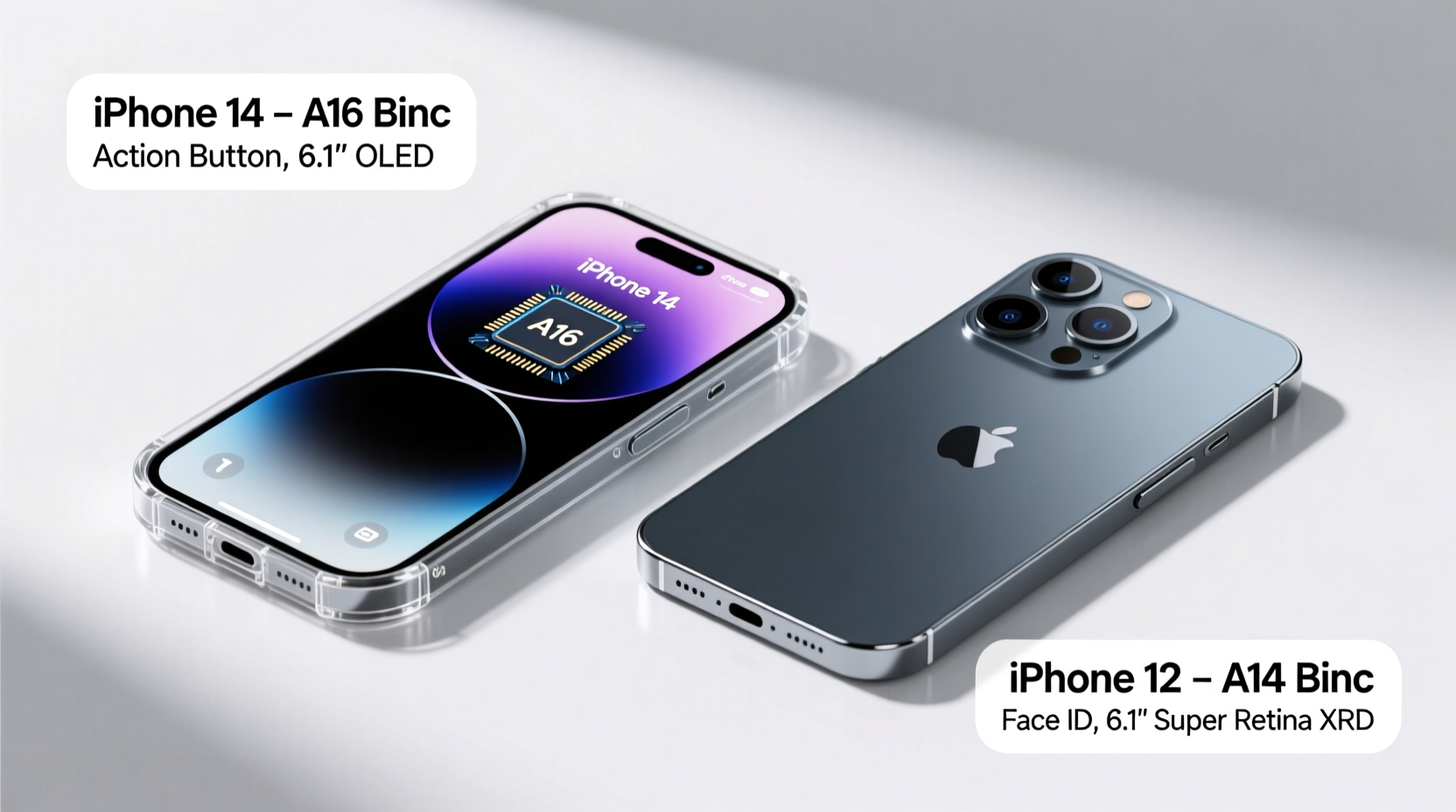
The core difference between the iPhone 12 and iPhone 14 lies in their processors. The iPhone 12 runs on Apple’s A14 Bionic chip, while the iPhone 14 uses the more advanced A15 Bionic—specifically the version with five GPU cores (the same as the iPhone 13 Pro). This may sound like minor progress, but the improvements are tangible.
The A15 offers up to 15% faster CPU performance and a 25–30% boost in graphics efficiency over the A14. In practical terms, this means smoother multitasking, faster app launches, better gaming performance, and improved responsiveness when editing photos or videos. Apps that rely heavily on machine learning—like Live Text, Visual Look Up, and enhanced portrait mode processing—also benefit significantly from the upgraded Neural Engine in the A15.
Camera System: Smarter Photos, Better Low-Light Performance
While both phones feature dual-camera setups (12MP main + 12MP ultra-wide), the iPhone 14 brings meaningful upgrades that affect photo quality, especially in challenging lighting conditions.
The primary sensor on the iPhone 14 has a larger aperture (ƒ/1.5 vs ƒ/1.6) and larger pixels (1.9µm vs 1.4µm after pixel binning), allowing it to capture 49% more light. This results in cleaner, brighter night shots with less noise. Combined with Photonic Engine—a new image pipeline introduced in iOS 16—the iPhone 14 produces more natural colors and better shadow detail even before Night mode kicks in.
Smart HDR 4 has also been replaced by Smart HDR 5, which applies more intelligent tone mapping and skin smoothing. Portrait mode now works automatically with any subject, including pets and objects, thanks to improved depth detection powered by the A15 chip.
“The jump in computational photography between the iPhone 12 and iPhone 14 is one of the most underrated upgrades. You don’t just get better hardware—you get smarter software interpreting every frame.” — David Kim, Mobile Photography Analyst at TechLens Review
Battery Life and Charging: Real Gains in Daily Use
Apple doesn’t always highlight battery capacity numbers, but real-world usage tells a clear story. The iPhone 14 lasts longer than the iPhone 12, despite having a similar-sized battery, due to the A15’s power efficiency.
In independent testing, the iPhone 14 delivers up to 2 hours more screen-on time under mixed usage—browsing, streaming, messaging, and social media. Video playback is rated at 20 hours compared to the iPhone 12’s 17 hours. While both devices support 20W fast charging and MagSafe, the iPhone 14 manages power more intelligently during background tasks, reducing drain overnight.
| Feature | iPhone 12 | iPhone 14 |
|---|---|---|
| Chipset | A14 Bionic | A15 Bionic (5-core GPU) |
| Rear Cameras | Dual 12MP (ƒ/1.6 main) | Dual 12MP (ƒ/1.5 main, larger sensor) |
| Front Camera | 12MP, ƒ/2.2 | 12MP, ƒ/1.9, Autofocus |
| Battery Life (Video Playback) | 17 hours | 20 hours |
| Emergency SOS via Satellite | No | Yes (Free for 2 Years) |
| Action Mode (Stabilization) | No | Yes (4K at 30fps) |
| Fall Detection | No | Yes (Uses motion sensors & GPS) |
Durability and Design: Subtle But Meaningful Improvements
At first glance, the iPhone 14 looks nearly identical to the iPhone 12. Both have flat aluminum edges, glass fronts and backs, and IP68 water resistance. However, the iPhone 14 uses stronger Ceramic Shield front cover glass and improved internal sealing, resulting in slightly better drop performance.
More importantly, the iPhone 14 includes **crash detection** and **Emergency SOS via satellite**, two safety features absent on the iPhone 12. These aren’t gimmicks—they’ve already been credited with saving lives in remote accidents where cellular service was unavailable. If you travel often, hike, or drive long distances, these features alone could justify the upgrade.
Real-World Example: Sarah’s Upgrade Experience
Sarah, a freelance photographer based in Colorado, used her iPhone 12 for three years before upgrading to the iPhone 14 in early 2023. She primarily shoots landscapes and client portraits using her phone for quick edits and sharing.
“I didn’t think I needed a new phone until I tried shooting golden hour in the mountains,” she said. “The iPhone 14 captured so much more detail in the shadows without blowing out the sky. And Action Mode stabilized my handheld video so well—I didn’t need a gimbal for casual reels.”
She also praised the longer battery life during full-day shoots and found Emergency SOS via satellite reassuring when hiking trails with no signal. “It’s not just better photos—it’s peace of mind,” she added.
Is the Upgrade Worth It? A Practical Checklist
Before spending $700+ on a new iPhone, ask yourself the following. Check each item that applies to your situation:
- ✅ My iPhone 12 feels sluggish when switching between photo editing and messaging apps
- ✅ I want better low-light photos without using Night mode every time
- ✅ I often run out of battery before the end of the day
- ✅ I travel to remote areas where emergency services access matters
- ✅ I plan to keep my next phone for 3+ years and want longer iOS support
- ✅ I record videos and want cinematic stabilization (Action Mode)
If four or more apply, the iPhone 14 is likely a worthwhile upgrade. If fewer apply, consider sticking with your iPhone 12 or exploring refurbished iPhone 13 or 14 models at lower prices.
Frequently Asked Questions
Will the iPhone 12 still receive iOS updates?
Yes. As of 2024, the iPhone 12 supports iOS 17 and is expected to receive iOS 18 and possibly iOS 19. That means it should remain secure and functional through at least 2026, though performance may degrade slightly with future updates.
Does the iPhone 14 have a better front camera?
Yes. The iPhone 14 features an upgraded 12MP TrueDepth camera with autofocus and a wider ƒ/1.9 aperture, making selfies and FaceTime calls sharper, especially in low light. The iPhone 12’s front camera lacks autofocus and performs poorly in dim environments.
Can I expect faster 5G on the iPhone 14?
Not significantly. Both phones support 5G, but carrier speeds depend more on network availability than device differences. The iPhone 14 does include slightly improved mmWave antennas in U.S. models, but real-world speed gains are minimal for most users.
Final Verdict: When the Upgrade Makes Sense
The iPhone 14 isn’t a revolutionary leap over the iPhone 12, but it refines what was already great. The combination of a faster chip, superior camera system, longer battery life, and critical safety features like crash detection and satellite SOS adds up to a more capable, future-proof device.
If you're still satisfied with your iPhone 12 and mainly use your phone for calls, texts, and light browsing, hold off. But if you rely on your phone for photography, content creation, or safety in unpredictable environments, the iPhone 14 delivers tangible benefits that improve daily usability and long-term reliability.




 浙公网安备
33010002000092号
浙公网安备
33010002000092号 浙B2-20120091-4
Comments
No comments yet. Why don't you start the discussion?