
The iPhone XR was a landmark device—Apple’s most affordable flagship in years, with a solid design, excellent battery life, and strong performance for its time. Released in 2018, it remains in use by millions today. But now, with the iPhone 14 available since 2022, many XR owners are wondering: is it finally time to upgrade? Or is Apple just pushing incremental changes under the banner of innovation?
This isn’t just about specs on paper. It’s about real-world benefits, longevity, cost, and whether the jump delivers meaningful improvements. Let’s break down the key differences and help you decide if the upgrade is truly worth it—or if the XR still has life left in it.
Design and Build: Evolution, Not Revolution
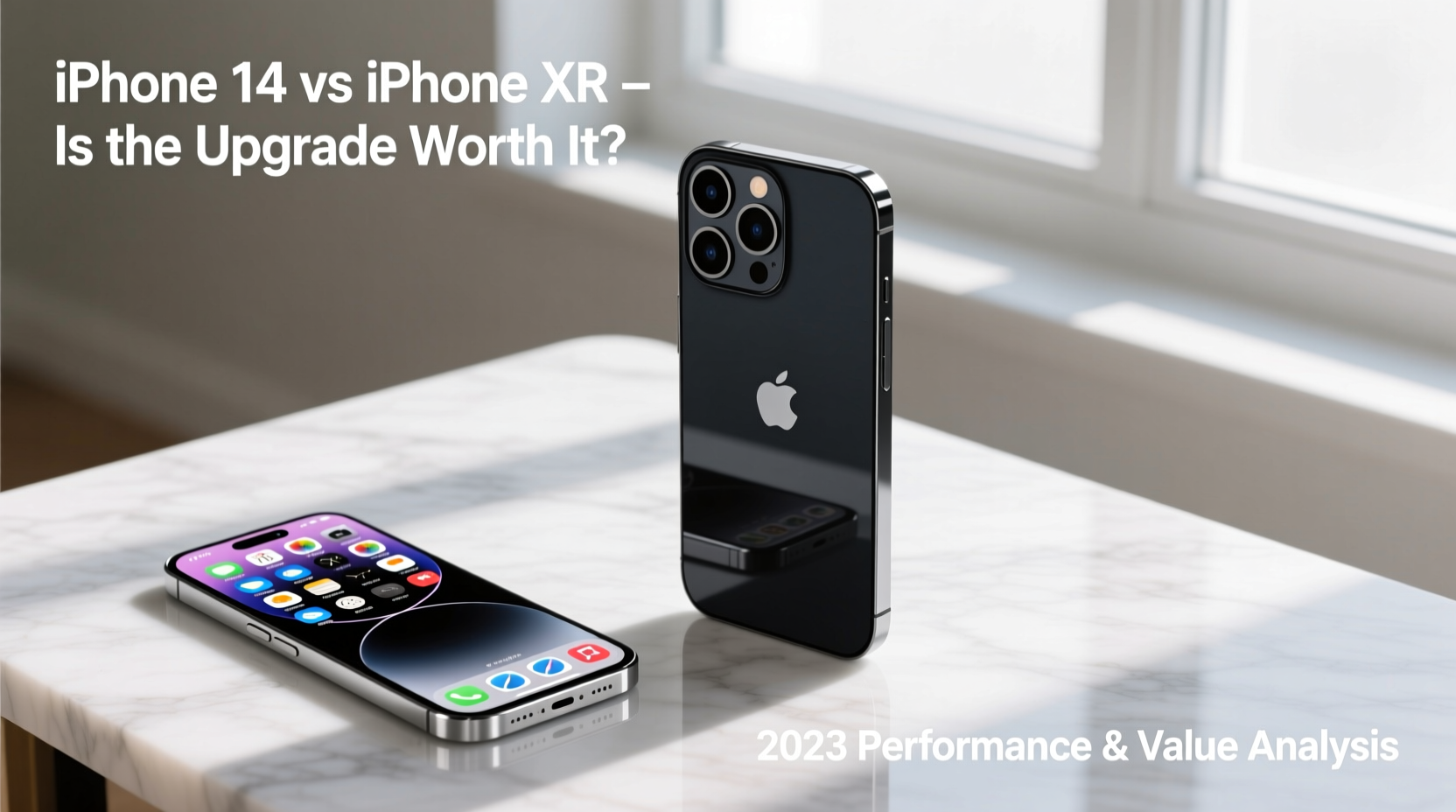
The physical design language between the iPhone XR and iPhone 14 shows how Apple’s approach has evolved. The XR features a single thick bezel at the bottom and thicker edges overall, with a 6.1-inch LCD display. In contrast, the iPhone 14 keeps the same 6.1-inch size but swaps LCD for OLED, offering deeper blacks and better contrast. The front notch remains, though slightly refined, and the aluminum frame on both models gives them a lightweight feel.
Where the iPhone 14 pulls ahead is in durability. It introduces Ceramic Shield front cover glass and improved water resistance (IP68 vs IP67), meaning it can survive submersion up to 6 meters for 30 minutes—double the XR’s 1 meter. For users who’ve cracked screens or had water incidents, this added protection could be a deciding factor.
Performance: A Generational Leap
Under the hood, the difference is stark. The iPhone XR runs on the A12 Bionic chip—a capable processor in its day—but the iPhone 14 uses the A15 Bionic (same as iPhone 13 Pro). This isn’t a minor bump. Benchmarks show the A15 delivering up to 50% faster CPU performance and nearly double the GPU speed.
In practice, this means smoother multitasking, quicker app launches, and far better handling of graphics-intensive apps and games. More importantly, future iOS updates will likely phase out support for A12 devices sooner than A15 ones. Apple typically supports iPhones for around 5–6 years, and the XR may reach its end-of-life around 2024–2025. The iPhone 14, meanwhile, should receive updates into 2028 or beyond.
“Hardware longevity is just as important as software support. Upgrading to a newer chip buys you not just speed, but years of security and feature updates.” — David Lin, Mobile Analyst at TechInsight Weekly
Camera Comparison: Night Mode, Sensors, and Real Results
The camera systems highlight where Apple has focused its innovation. The iPhone XR has a single 12MP rear camera with f/1.8 aperture—solid for daylight shots but limited in low light. It lacks Night Mode, which debuted on the iPhone 11. The iPhone 14 retains the dual-camera setup: 12MP main sensor with larger aperture (f/1.5) and a second 12MP ultra-wide lens.
Night Mode now activates automatically in dark environments, and the larger sensor captures significantly more light. Portrait mode works on any subject, not just people, thanks to improved depth mapping. Smart HDR 4 and Photonic Engine enhance dynamic range and color accuracy across all lighting conditions.
For casual photographers, the improvement might seem subtle in well-lit scenes. But in dim lighting or when capturing fast action, the iPhone 14 consistently produces sharper, cleaner images. Video recording also steps up: the 14 supports cinematic mode in 4K at 30fps, while the XR maxes out at 1080p.
Camera Feature Comparison
| Feature | iPhone XR | iPhone 14 |
|---|---|---|
| Rear Cameras | Single 12MP | Dual 12MP (Main + Ultra-Wide) |
| Night Mode | No | Yes (with tripod detection) |
| Portrait Mode | People only | People, pets, objects |
| Video Recording | 4K@60fps, no stabilization | 4K@60fps, Cinematic Mode, Action Mode |
| Front Camera | 7MP, f/2.2 | 12MP, f/1.9, autofocus |
Battery Life and Charging: Incremental Gains
Battery life on the XR was one of its standout features—often lasting a full day or more with moderate use. The iPhone 14 improves slightly, offering up to two extra hours of video playback according to Apple. In real-world usage, that translates to about 10–15% longer screen-on time.
Charging remains slow compared to Android competitors. Both phones support 20W fast charging and 15W MagSafe wireless, but neither includes a charger in the box. However, the iPhone 14 charges more efficiently due to power management improvements in the A15 chip and iOS 16+ optimizations.
Real-World Example: Sarah’s Upgrade Journey
Sarah has used her iPhone XR since 2019. By 2023, she noticed apps loading slower, occasional crashes in Safari, and her camera struggling in evening settings. She hesitated to upgrade, thinking “it still works.” But after borrowing a friend’s iPhone 14, she tested FaceTime in low light, took night photos of her kids’ soccer game, and opened five apps in quick succession without lag.
The difference was tangible. She upgraded and immediately benefited from better battery consistency, crisper video calls, and peace of mind knowing her phone would stay supported longer. For her, the upgrade wasn’t about chasing trends—it was about regaining reliability and performance she hadn’t realized she’d lost.
Is It Worth It? A Practical Checklist
Before making the move, ask yourself the following. Check off what applies:
- ✅ Does your iPhone XR feel noticeably slow when opening apps or switching tasks?
- ✅ Are you running out of storage or unable to update to the latest iOS version?
- ✅ Do you take photos in low light and wish they were clearer?
- ✅ Have you experienced battery degradation (e.g., drops from 50% to 20% in 30 minutes)?
- ✅ Do you want longer software support (3+ more years of updates)?
- ✅ Are you using a cracked screen or outdated accessories that limit functionality?
If you checked three or more, the iPhone 14 represents a meaningful upgrade. If not, your XR may still serve you well—especially if you’re budget-conscious.
Frequently Asked Questions
Can the iPhone XR still run iOS 17?
Yes, the iPhone XR is compatible with iOS 17. However, some newer features like StandBy mode or advanced autocorrect may be limited or absent due to hardware constraints.
Is the iPhone 14 waterproof enough for beach trips?
The iPhone 14 has IP68 rating (up to 6 meters for 30 minutes), making it resistant to splashes, rain, and brief submersion. However, saltwater exposure isn’t covered under warranty, so rinse with fresh water if exposed.
Should I consider the iPhone 14 if I mostly text and browse social media?
If your usage is light and your XR performs well, the upgrade offers minimal daily benefit. You might prefer saving $700 and investing in AirPods or an iPad instead.
Final Verdict: Beyond the Hype
The iPhone 14 isn’t a revolutionary leap over the XR, but it’s a substantial evolution. For users still relying on a 2018 device, the gains in performance, camera quality, display fidelity, and long-term support are real and impactful. This isn’t just hype—it’s the natural progression of technology catching up to modern demands.
However, if your XR still feels responsive, holds a decent charge, and meets your needs, there’s no urgent reason to upgrade. Apple’s ecosystem ensures older devices remain functional far longer than most smartphones. But if you’re experiencing slowdowns, poor photo quality, or anxiety about obsolescence, stepping up to the iPhone 14 brings peace of mind, improved usability, and several more years of seamless updates.
The decision ultimately hinges on your personal usage, expectations, and budget. Technology should serve you—not pressure you. But when it does elevate your experience meaningfully, that upgrade becomes less about marketing and more about momentum.




 浙公网安备
33010002000092号
浙公网安备
33010002000092号 浙B2-20120091-4
Comments
No comments yet. Why don't you start the discussion?