
Choosing between the iPhone 14 and the Samsung Galaxy S23 Plus isn’t just about brand loyalty—it’s a decision that affects your daily experience. From camera quality to long-term software support, each device has strengths that appeal to different users. With both phones priced in the premium range, the question isn’t just which is better, but whether switching from Apple to Samsung (or vice versa) delivers enough value to justify the change.
This isn’t a spec sheet showdown. It’s a real-world evaluation based on usability, ecosystem integration, longevity, and practical advantages that matter after the first week of ownership.
Design and Build: Subtle Differences, Big Feel
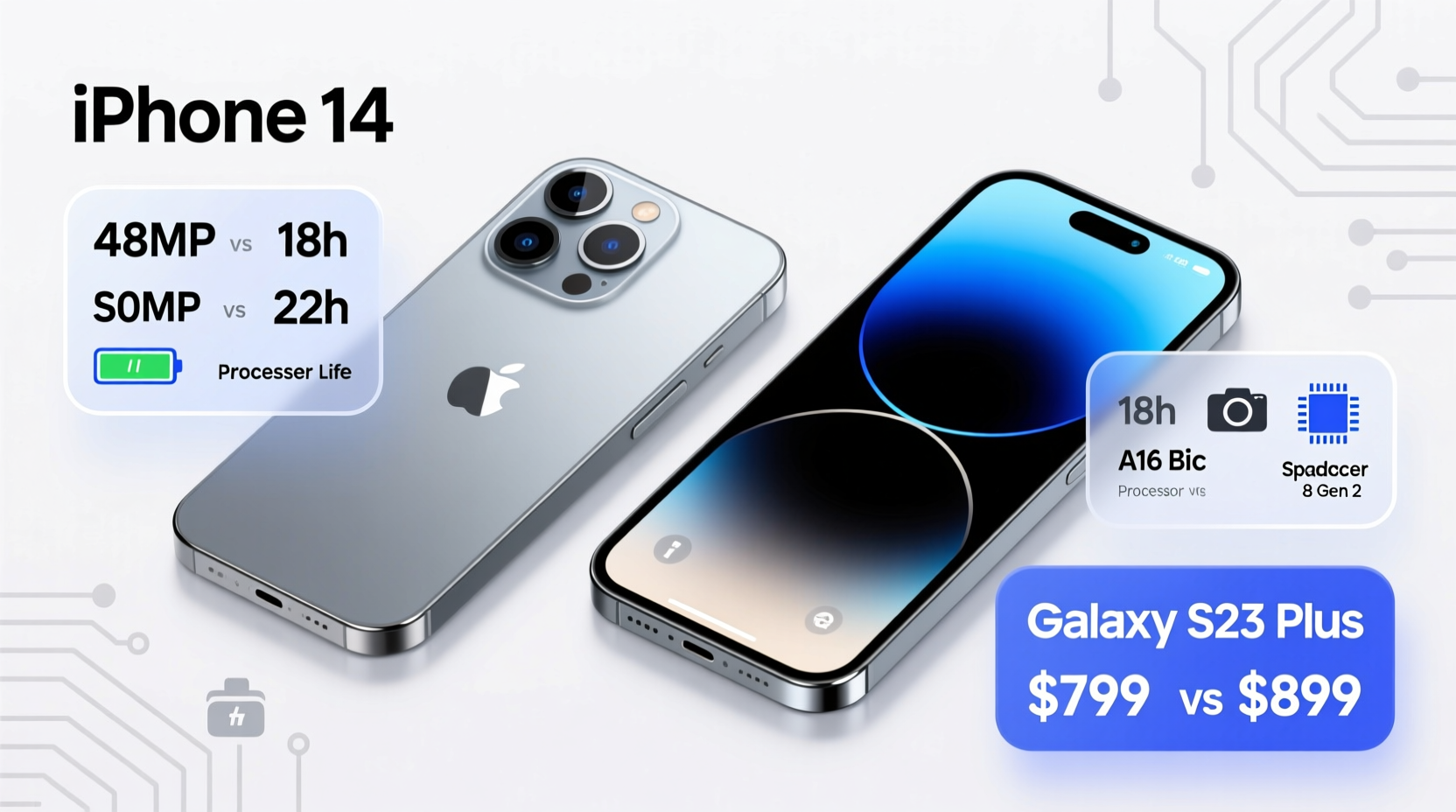
The iPhone 14 sticks with Apple’s familiar aerospace-grade aluminum frame and Ceramic Shield front. It feels solid, compact, and fits comfortably in one hand—especially for users upgrading from older iPhones. The flat edges haven’t changed in years, but they remain functional and recognizable.
The S23 Plus takes a more refined approach. Its Armor Aluminum frame and Gorilla Glass Victus 2 offer similar durability, but the curved display and slimmer bezels give it a more modern aesthetic. At 196g, it’s slightly heavier than the iPhone 14 (172g), but its taller, narrower body makes it easier to grip despite the larger 6.6-inch screen.
Display and Visual Experience
The S23 Plus wins on paper—and in practice. Its Dynamic AMOLED 2X panel supports a 120Hz adaptive refresh rate, meaning smoother scrolling and more responsive touch input. Brightness peaks at 1750 nits, making it far more usable in direct sunlight compared to the iPhone 14’s 1200-nit peak and 60Hz fixed refresh rate.
Apple’s Super Retina XDR display is still excellent—color accuracy and HDR performance are top-tier—but the lack of high refresh rate remains a noticeable omission at this price point. For users who scroll a lot, play games, or consume video content, the S23 Plus offers a visibly smoother experience.
“High refresh rate displays aren’t just a gimmick—they reduce eye strain and improve interaction fluidity over time.” — David Lin, Mobile UX Analyst at TechInsight Group
Performance: Chip Wars and Real-World Speed
The iPhone 14 runs on Apple’s A15 Bionic chip (the same as the iPhone 13 Pro). Despite being a generation behind the A16, it’s still faster in most benchmarks than the Snapdragon 8 Gen 2 inside the S23 Plus. However, raw speed doesn’t tell the full story.
Samsung’s optimization with One UI 5.1 (based on Android 13) ensures the S23 Plus feels snappy and responsive. Multitasking, app switching, and background processing benefit from the extra RAM (8GB vs iPhone’s 6GB). While iOS manages memory efficiently, Android’s flexibility allows for split-screen use, floating windows, and faster app recovery after closing.
In gaming, both devices handle demanding titles like Genshin Impact well, but the S23 Plus sustains performance longer thanks to better thermal management and vapor chamber cooling—a feature absent in the iPhone 14.
Camera Comparison: Philosophy Over Megapixels
Apple and Samsung take different approaches to photography. The iPhone 14 emphasizes natural color science, reliable point-and-shoot performance, and industry-leading video recording. Its 12MP main sensor produces consistent results across lighting conditions, especially in dynamic range and skin tone accuracy.
The S23 Plus counters with a 50MP main sensor, advanced AI processing, and superior zoom capabilities (up to 30x digital, with decent quality up to 10x). Its Night Mode is brighter and more detailed, and the ultra-wide lens captures noticeably less distortion. Video stabilization is excellent, though not quite at iPhone level for handheld vlogging.
| Feature | iPhone 14 | S23 Plus |
|---|---|---|
| Main Sensor | 12MP, f/1.5 | 50MP, f/1.8 |
| Ultra-Wide | 12MP, f/2.4 | 12MP, f/2.2 |
| Zoom | 2x optical, 15x digital | 3x optical, 30x digital |
| Video | 4K@60fps, Dolby Vision | 8K@30fps, HDR10+ |
| Low Light | Good Night mode | Excellent Night mode |
If you shoot a lot of video—especially for social media or professional use—the iPhone 14 remains the safer choice. For still photographers who want more creative control, higher resolution, and better zoom, the S23 Plus pulls ahead.
Battery Life and Charging: Efficiency vs Capacity
The S23 Plus has a 5,000mAh battery versus the iPhone 14’s 3,279mAh. On paper, that’s a massive difference. In reality, both last a full day, but the Samsung consistently outperforms in heavy-use scenarios.
With moderate use—email, browsing, messaging, and an hour of video—the S23 Plus often reaches bedtime with 30–40% remaining. The iPhone 14 typically lands at 15–20%, depending on signal strength and background activity.
Charging is where preferences diverge. The iPhone 14 supports only 20W wired charging (0–100% in ~90 minutes) and MagSafe wireless. The S23 Plus supports 45W fast charging (sold separately), reaching 65% in 30 minutes. However, Samsung no longer includes chargers in the box—so additional cost applies.
Mini Case Study: Alex’s Switch from iPhone to Android
Alex, a freelance designer, used iPhones exclusively for a decade. He switched to the S23 Plus for work flexibility. “I needed split-screen apps for client feedback while editing photos,” he said. “The high refresh rate made my sketching app feel more responsive. And the battery lasted through back-to-back Zoom calls without needing a midday charge.”
But the transition wasn’t seamless. “I missed iMessage group chats—my friends all use iPhone. And some design apps I relied on weren’t updated for Android tablets yet.” After three months, Alex adapted by using cross-platform tools and accepting SMS fallbacks. “It was a trade-off, but the productivity gains were worth it.”
Software and Ecosystem Lock-In
This is the biggest barrier to switching. If you’re deep in Apple’s ecosystem—iCloud, AirPods, Mac, Apple Watch, Messages—the iPhone 14 integrates effortlessly. Handoff, Universal Clipboard, and AirDrop save seconds throughout the day that add up.
Samsung offers strong integration too, especially with Windows PCs via Link to Windows, SmartThings for home automation, and DeX for desktop-like productivity. But it lacks the seamless cohesion Apple delivers across devices.
For users with Android tablets, Galaxy Buds, or Samsung laptops, the S23 Plus becomes a central hub. For everyone else, the advantage is less obvious.
Longevity and Updates
Apple leads in software support. The iPhone 14 will likely receive iOS updates until 2028 or beyond. Security patches are frequent and rolled out globally at once.
Samsung now promises four major Android OS upgrades and five years of security updates for the S23 series—matching Apple’s commitment. This is a significant improvement over past Samsung models and closes a key gap.
However, iOS updates tend to be lighter, more stable, and quicker to adopt. Android fragmentation means new features arrive later, and third-party app optimization can lag.
Checklist: Is the S23 Plus Worth the Switch?
- ✅ You value high refresh rate and brighter display for outdoor use
- ✅ You need multitasking, split-screen, or DeX functionality
- ✅ You prefer faster charging and longer battery life
- ✅ Your accessories and devices are Android-friendly
- ✅ You shoot more photos than videos and want better zoom
- ❌ You rely heavily on iMessage, FaceTime, or AirDrop
- ❌ You use a Mac daily without third-party sync tools
- ❌ You prioritize video recording quality above all
Frequently Asked Questions
Can I transfer data easily from iPhone to S23 Plus?
Yes. Samsung’s Smart Switch app supports direct transfer over Wi-Fi or cable. Contacts, photos, messages, and calendars move smoothly. App data may not carry over due to platform differences.
Does the S23 Plus work well with Apple Watch or AirPods?
AirPods pair via Bluetooth but lose features like automatic switching and spatial audio. Apple Watch cannot replace the Galaxy Watch—it won’t sync health data or control the phone effectively.
Is iOS more secure than Android?
iOS benefits from tighter hardware-software control, reducing vulnerability exposure. However, modern Android (especially Samsung with Knox) offers robust security. User behavior—like downloading apps from unknown sources—is a bigger risk factor than the OS itself.
Conclusion: Making the Right Move for You
The Samsung Galaxy S23 Plus is objectively the more powerful, flexible, and future-ready device on paper. It offers better display technology, longer battery life, superior multitasking, and competitive camera performance. But “better” doesn’t always mean “right.”
If you're entrenched in Apple’s ecosystem, communicate mostly via iMessage, or create video content, the iPhone 14 remains the smarter choice. The consistency, reliability, and long-term support are unmatched.
But if you crave customization, faster performance in daily tasks, and a display that adapts to how you use your phone, the S23 Plus delivers tangible benefits that grow more valuable over time.
The switch isn’t about specs—it’s about lifestyle fit. Evaluate your daily habits, not just the brochure claims. For many, the answer isn’t which phone is better, but which one works better for them.




 浙公网安备
33010002000092号
浙公网安备
33010002000092号 浙B2-20120091-4
Comments
No comments yet. Why don't you start the discussion?