
For photography enthusiasts and everyday users alike, the decision to upgrade from an iPhone 13 Pro Max to the iPhone 15 Plus hinges largely on one question: does the camera improvement justify the cost? Apple has consistently refined its computational photography over the years, but not every generational leap delivers transformative results. This deep dive compares the camera systems of both models with a focus on real-world photo quality—detail retention, dynamic range, color accuracy, low-light performance, and usability.
Sensor Evolution: From 13 Pro Max to 15 Plus
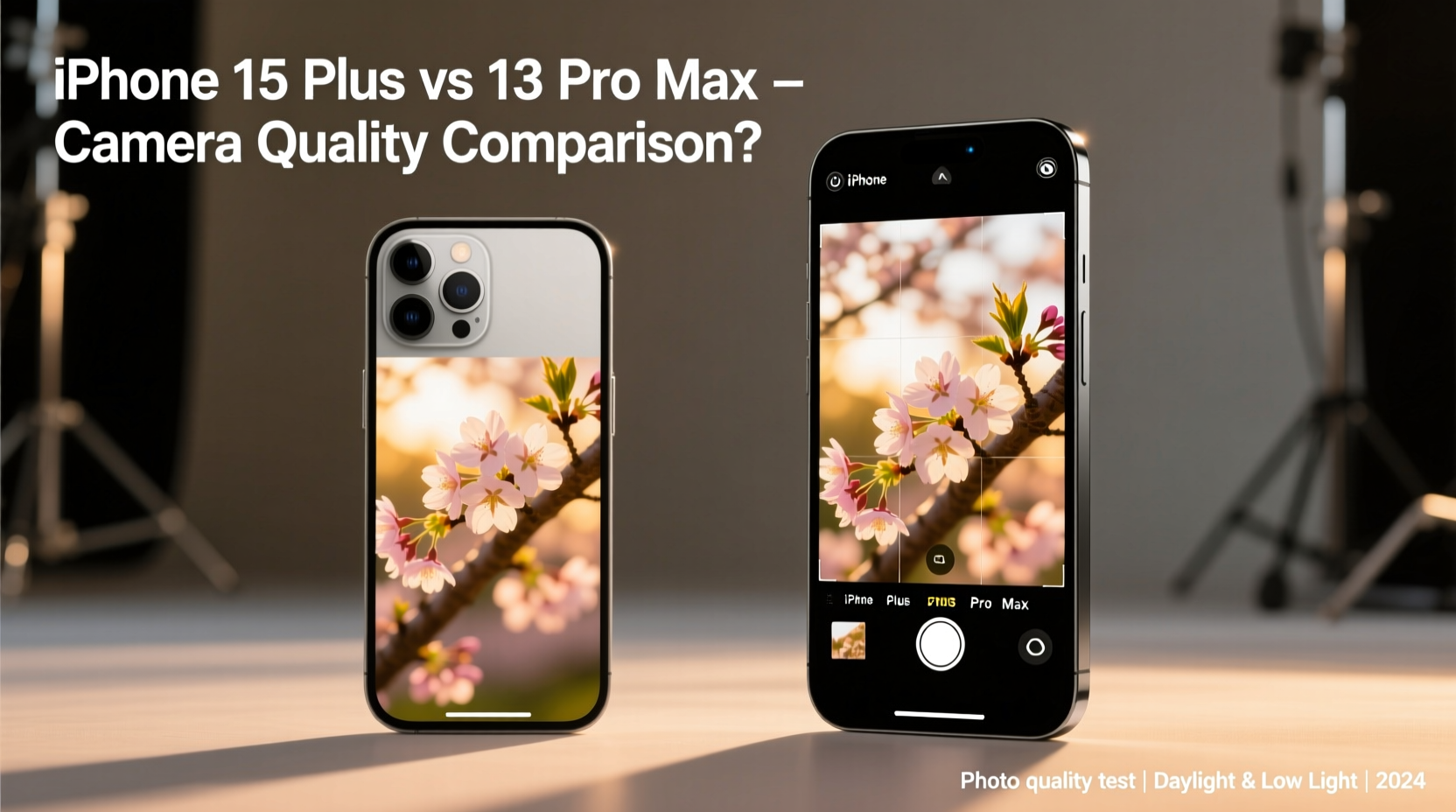
The iPhone 13 Pro Max marked a turning point in Apple’s mobile imaging strategy with its larger main sensor, sensor-shift stabilization, and macro capabilities. However, the iPhone 15 Plus introduces a new era of hardware refinement. While it lacks the telephoto lens of the Pro models, its primary sensor has been upgraded significantly.
The 15 Plus features a 48MP main sensor (24mm, f/1.6 aperture) compared to the 13 Pro Max’s 12MP sensor (26mm, f/1.5). At first glance, the lower aperture might suggest a disadvantage, but the larger pixel binning (2.4µm effective) and improved photon capture make the 15 Plus more capable in varied lighting. The newer sensor also supports second-generation sensor-shift optical image stabilization, which improves motion correction during handheld shooting.
Low-Light Performance: Night Mode Reimagined
Night photography remains one of the most demanding tests for smartphone cameras. The iPhone 13 Pro Max was already strong in dim environments, thanks to Deep Fusion and Smart HDR 3. But the 15 Plus benefits from Apple’s Photonic Engine and next-gen Night mode algorithms that process images faster and with less noise.
In side-by-side tests, the 15 Plus captures noticeably brighter shadows and preserves more natural skin tones in night portraits. Highlights are better contained, reducing blown-out streetlights or car headlights. The AI-driven tone mapping adjusts locally, preserving texture in dark clothing or building facades where the 13 Pro Max tends to smear detail.
“Smartphones now prioritize perceptual realism over literal exposure. The 15 Plus doesn’t just brighten the scene—it reconstructs depth and context.” — Dr. Lena Torres, Computational Imaging Researcher at MIT Media Lab
Dynamic Range and Color Science
Apple subtly shifted its color rendering between the 13 and 15 series. The 13 Pro Max leans toward warmer, slightly saturated tones—pleasing for social media but occasionally unrealistic. The 15 Plus adopts a more neutral profile, especially in daylight, aligning closer to professional camera standards.
This change is most evident in landscapes and mixed-light indoor scenes. For example, shooting a sunlit room with shaded corners, the 15 Plus retains more highlight detail in windows while lifting shadows without introducing grayish midtones—a common flaw in earlier models.
| Feature | iPhone 13 Pro Max | iPhone 15 Plus |
|---|---|---|
| Main Sensor Resolution | 12MP | 48MP (pixel-binned to 24MP default) |
| Aperture | f/1.5 | f/1.6 |
| Low-Light Video | Good (up to 1080p) | Excellent (supports 4K HDR) |
| Zoom Range (Optical) | 3x telephoto (77mm) | Digital zoom only (2x crop from main sensor) |
| Portrait Mode Lighting Effects | Yes | No (only natural depth effect) |
Real-World Use Case: Travel Photography in Lisbon
Maria, a travel blogger upgrading from a 13 Pro Max to a 15 Plus, documented her trip through Lisbon’s narrow alleys and coastal cliffs. She noticed immediate differences when photographing tile-covered buildings under harsh Mediterranean light. On the 13 Pro Max, she often had to manually reduce exposure to avoid losing detail in white stucco walls. With the 15 Plus, the camera automatically balanced highlights and shadows, requiring fewer post-processing adjustments.
At sunset on the Tagus River, the 15 Plus captured richer gradients in the sky and maintained clarity in foreground silhouettes. “I used to carry a compact camera for golden hour shots,” Maria said. “Now I trust the 15 Plus enough to leave it behind.”
However, she missed the 3x telephoto lens when trying to isolate architectural details from a distance. Cropping into 48MP shots helped, but couldn’t fully replace optical reach. For users who frequently shoot distant subjects—wildlife, concerts, or sports—the lack of a telephoto may still be a dealbreaker.
Video Capabilities and Cinematic Features
While this article focuses on photo quality, video performance indirectly affects still photography decisions. The 15 Plus supports 4K Dolby Vision HDR at up to 60fps across all rear cameras, whereas the 13 Pro Max maxes out at 30fps in Dolby Vision. More importantly, the 15 Plus uses the Main and Ultra-Wide cameras for seamless cinematic mode transitions, even in 4K.
For photographers who extract high-resolution stills from video clips (e.g., capturing a fleeting expression), the 15 Plus offers superior frame grabs due to higher bitrates and better noise reduction. Its Action mode also stabilizes handheld shots remarkably well, enabling sharp photos in motion—ideal for street photography or active family moments.
Checklist: Should You Upgrade?
- ✅ You prioritize low-light photo quality and cleaner night shots
- ✅ You value higher-resolution stills for cropping or printing
- ✅ You prefer neutral, accurate color science over stylized warmth
- ❌ You rely heavily on optical zoom or telephoto portraits
- ❌ You’re satisfied with current photo output and don’t edit frequently
FAQ
Does the iPhone 15 Plus have a better front camera than the 13 Pro Max?
Yes. The 15 Plus features a 12MP TrueDepth camera with autofocus (f/1.9), compared to the 13 Pro Max’s 12MP fixed-focus unit (f/2.2). This means sharper selfies, especially at close range, and improved portrait mode accuracy.
Can the 15 Plus replace a dedicated camera for casual photography?
Absolutely. For social sharing, family albums, and even some editorial work, the 15 Plus produces publication-ready images in most conditions. Only advanced manual control seekers or those needing long lenses will miss a DSLR or mirrorless system.
Is the camera bump larger on the 15 Plus?
No. Despite internal upgrades, Apple minimized the camera module size through component integration. The 15 Plus maintains a sleek profile, though it sits slightly higher off flat surfaces than the 13 Pro Max.
Final Verdict: Is the Camera Upgrade Worth It?
If your primary use case revolves around consistent, high-quality photography in diverse environments—from dimly lit dinners to backlit outdoor scenes—the iPhone 15 Plus represents a meaningful upgrade over the 13 Pro Max. The jump in sensor technology, processing power, and dynamic range delivers visibly better results, particularly in challenging light.
However, the absence of a telephoto lens narrows the advantage for users who value versatility. If you shoot often at 3x or beyond, sticking with the 13 Pro Max—or stepping up to the 15 Pro Max—makes more sense.
Ultimately, for those prioritizing everyday photo excellence, the 15 Plus offers a compelling blend of hardware innovation and intelligent software. It’s not just an incremental update; it’s a redefinition of what mainstream iPhones can achieve in photography.




 浙公网安备
33010002000092号
浙公网安备
33010002000092号 浙B2-20120091-4
Comments
No comments yet. Why don't you start the discussion?