
Apple’s annual iPhone release cycle keeps consumers wondering: is this year’s upgrade actually meaningful? For owners of the iPhone 14 Plus, the arrival of the iPhone 15 Plus brings a mix of subtle refinements and one major leap—USB-C. But beyond the headline change, how much has truly improved? Is switching from the 14 Plus to the 15 Plus justified, or is Apple banking on brand loyalty over tangible gains?
This isn’t just about specs on paper. It’s about real-world usability, longevity, photography quality, charging convenience, and whether the cost of upgrading aligns with the benefits gained. Let’s break down the differences where they matter most.
Design and Build: Evolution, Not Revolution
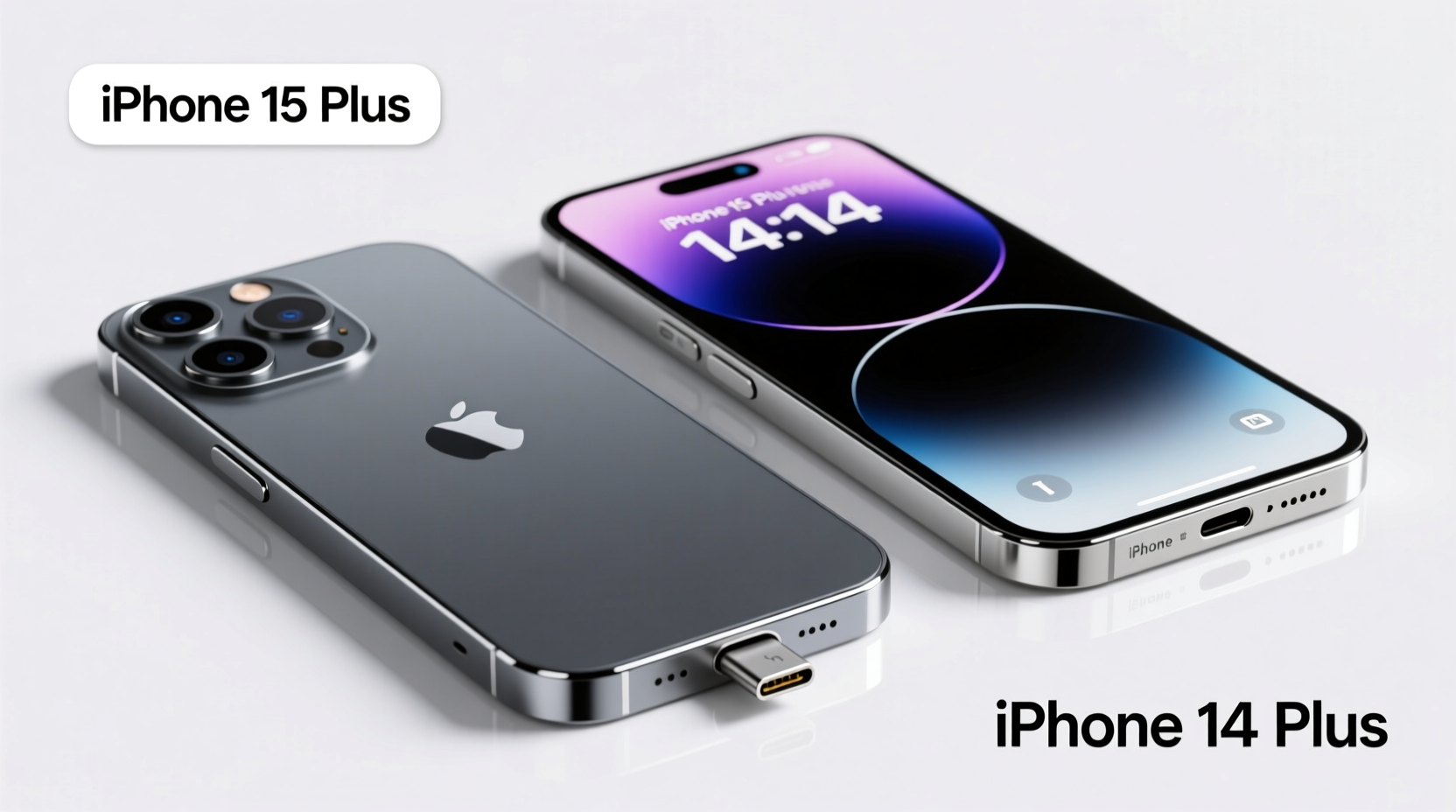
The iPhone 15 Plus retains the same 6.7-inch form factor as its predecessor, making it comfortable for those already used to the larger size. However, Apple has introduced a more refined design language. The edges are slightly curved, offering a smoother feel in hand compared to the sharper rails of the 14 Plus. The back glass is now more durable with a color-infused finish that resists scratches and smudges better.
The most noticeable physical change is the switch to a USB-C port. After years of Lightning dominance, Apple finally conforms to EU regulations—and broader industry standards. While this may seem like compliance rather than innovation, it has practical implications. USB-C enables faster data transfer (up to 10 Gbps with compatible cables) and universal compatibility with laptops, chargers, and accessories.
Performance: Incremental Gains
Under the hood, the iPhone 15 Plus features the A17 Bionic chip, built on a 3nm process, while the 14 Plus runs the A16 Bionic on a 4nm architecture. On paper, the A17 offers roughly 10–15% better CPU performance and up to 20% improved GPU efficiency. In daily use, however, the difference is minimal.
Both phones handle multitasking, gaming, and app launches with ease. You won’t notice lag on either device. Where the A17 shines is in sustained workloads—like extended video editing or AR applications—where thermal management and power efficiency give the 15 Plus a slight edge.
“While the A17 is technically superior, the A16 remains one of the fastest mobile chips ever made. For most users, the performance delta won’t impact their experience.” — David Lin, Mobile Hardware Analyst at TechPulse Insights
Camera System: Smarter, Not Just Sharper
The camera upgrade is arguably the most compelling reason to consider the 15 Plus. Both models feature a dual-camera setup: 12MP main and 12MP ultra-wide. But the 15 Plus introduces a new 48MP main sensor with second-generation sensor-shift stabilization and advanced computational photography.
In daylight, photos from both phones are excellent. The 15 Plus delivers marginally better dynamic range and texture retention, especially when zooming. Its 2x optical-quality zoom (via sensor cropping) is far more useful than digital zoom on the 14 Plus.
Night mode performance sees a meaningful improvement. The larger sensor and smarter tone mapping produce cleaner low-light shots with less noise and more natural color grading. Portrait mode now works at any zoom level thanks to enhanced depth sensing, whereas the 14 Plus restricts portrait capture to the main lens.
| Feature | iPhone 15 Plus | iPhone 14 Plus |
|---|---|---|
| Main Camera | 48MP, f/1.78, sensor-shift OIS | 12MP, f/1.5, sensor-shift OIS |
| Zoom Options | 2x optical-quality, up to 10x digital | Digital only, up to 5x |
| Portrait Mode | All lenses and zoom levels | Main lens only |
| Video Recording | Log encoding, ProRes external | Standard HDR, no ProRes support |
Battery Life and Charging: Practical Trade-offs
Battery endurance remains strong on both devices, with Apple rating them for up to 26 hours of video playback. Real-world usage shows little variation—both last a full day with heavy use and stretch into a second day with moderate settings.
Where the 15 Plus improves is in charging flexibility. With USB-C, you can use higher-wattage third-party chargers more efficiently. While neither phone supports full-speed fast charging out of the box (Apple caps it around 20W), the 15 Plus negotiates power delivery better, reducing charge time by approximately 15 minutes for a full recharge.
Additionally, USB-C opens the door to faster file transfers. Offloading 4K videos to a MacBook or SSD is now significantly quicker, which matters for content creators.
Real-World Example: Sarah’s Upgrade Dilemma
Sarah, a freelance photographer based in Portland, upgraded from the iPhone 14 Plus to the 15 Plus three months after launch. Her decision wasn’t driven by marketing but by workflow needs.
“I was tired of carrying extra cables,” she explained. “My iPad, MacBook, and even my drone charger all use USB-C. Having one cable for everything simplifies travel. And honestly, the 48MP sensor lets me crop images without losing detail—something I do constantly when shooting events.”
She noted that the improved Night mode helped her capture usable shots during dimly lit indoor gigs, reducing her reliance on external lighting. For her, the combination of better cameras and unified charging made the $100 price jump worthwhile.
Is the Upgrade Worth It? A Decision Checklist
If you’re still on the fence, ask yourself the following questions. Check off each item that applies to your situation:
- ✅ Do you frequently transfer large files (photos, videos) between devices?
- ✅ Are you tired of managing multiple charging cables?
- ✅ Do you shoot in low light or rely heavily on digital zoom?
- ✅ Is your current phone showing signs of wear or performance lag?
- ✅ Do you plan to keep your phone for 3+ years and want the latest durability features?
If you checked three or more, the iPhone 15 Plus likely offers enough value to justify the upgrade. If not, the 14 Plus remains an outstanding device—one that Apple continues to support with iOS updates through at least 2028.
Frequently Asked Questions
Should I upgrade if I have an iPhone 14 Plus?
Only if you value USB-C, improved low-light photography, or need better file transfer speeds. For general use, the differences are subtle and may not outweigh the cost unless you're due for a hardware refresh.
Does the iPhone 15 Plus charge faster than the 14 Plus?
Not dramatically. Both support similar peak charging rates, but the 15 Plus benefits from more consistent power negotiation via USB-C, resulting in slightly faster full-cycle charges—around 15–20 minutes quicker.
Can I use my old Lightning accessories with the iPhone 15 Plus?
You’ll need adapters or updated accessories. Apple sells a USB-C to Lightning adapter ($19), but long-term, transitioning to USB-C peripherals is recommended for convenience and sustainability.
Final Verdict: Hype vs. Reality
The iPhone 15 Plus isn’t a revolutionary leap—it’s a refinement. The shift to USB-C marks a significant turning point in Apple’s design philosophy, signaling greater interoperability. The camera upgrades are meaningful for enthusiasts and creatives, but casual users may not notice the improvements.
If you bought the iPhone 14 Plus in 2023, upgrading now feels premature. You’d be trading a top-tier device for marginal gains. However, if you're coming from an older model (iPhone 13 or earlier) or prioritize connectivity and photo quality, the 15 Plus delivers a polished, future-ready experience.
Ultimately, the hype is partially justified—not because of radical changes, but because Apple is finally aligning with modern standards while quietly enhancing what matters: image quality, ecosystem cohesion, and long-term usability.




 浙公网安备
33010002000092号
浙公网安备
33010002000092号 浙B2-20120091-4
Comments
No comments yet. Why don't you start the discussion?