
For years, the battle between Apple and Samsung has defined the premium smartphone landscape. The iPhone 15 Plus and Galaxy S24 Plus represent the latest front lines in this rivalry — both are large, powerful, feature-rich devices aimed at users who want flagship performance without stepping into ultra-premium territory. But with Samsung’s aggressive improvements in AI, software longevity, and hardware design, a pressing question emerges: is Samsung finally closing the gap on Apple?
This isn’t just about specs on paper. It’s about daily usability, long-term value, ecosystem integration, and how each device holds up under real-world demands. Let’s dissect the competition across key categories to see where each excels — and whether Samsung has truly reached parity.
Design and Build: Refinement vs Flexibility
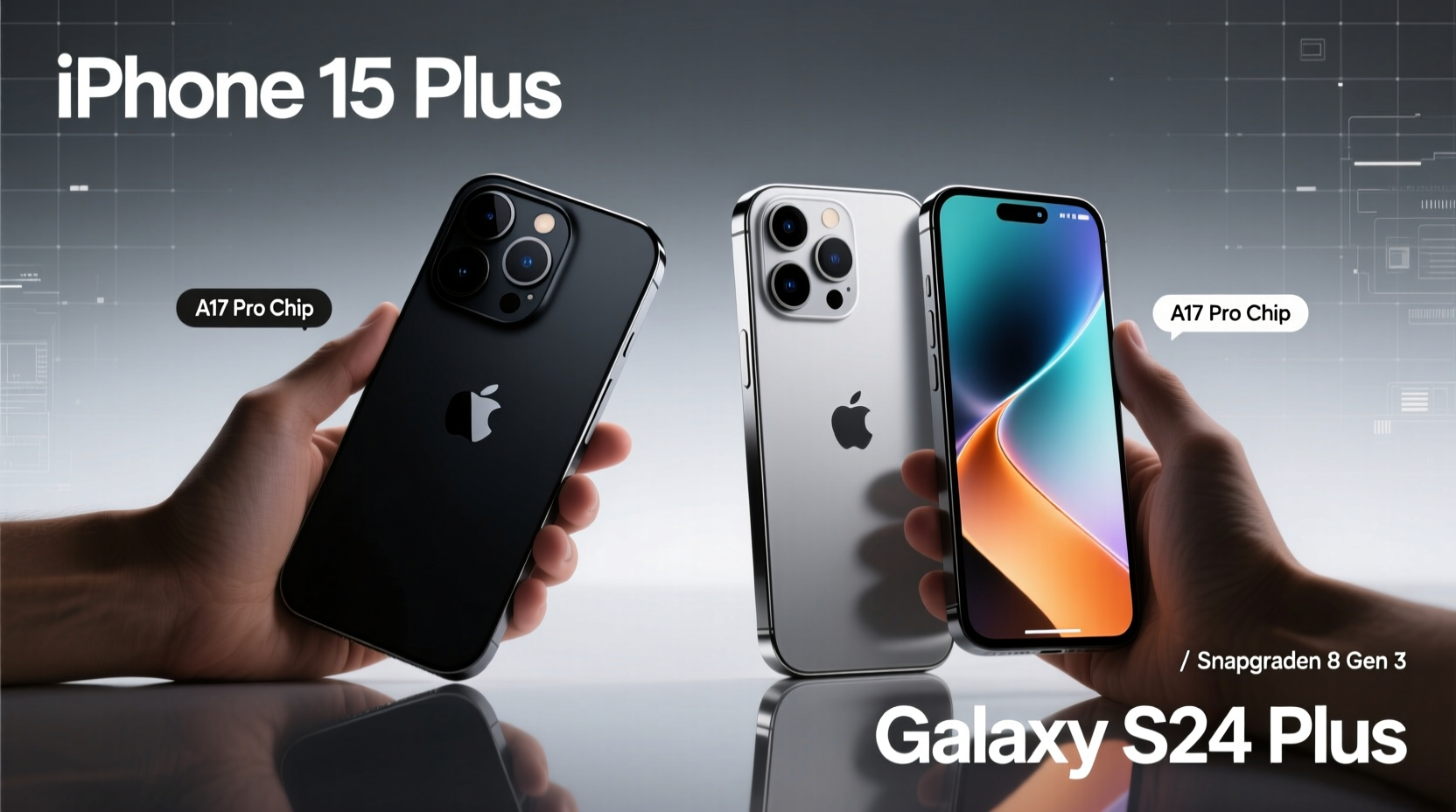
The iPhone 15 Plus continues Apple’s tradition of minimalist, durable design. With its aerospace-grade aluminum frame and Ceramic Shield front, it feels solid in hand. The Dynamic Island replaces the notch, offering a more modern look while integrating system alerts and live activities. However, the design language remains largely unchanged from previous generations, which some may find predictable.
Samsung’s Galaxy S24 Plus takes a bolder approach. It features a titanium frame (on select models), Gorilla Glass Armor, and a flatter display that enhances usability. The bezels are thinner, giving it a more immersive screen-to-body ratio. While both phones are IP68-rated for dust and water resistance, the S24 Plus offers a slightly more contemporary aesthetic with its flush camera housing and symmetrical layout.
Display and Usability: Brightness Meets Adaptability
The iPhone 15 Plus uses a 6.7-inch Super Retina XDR OLED with a 60Hz refresh rate. While color accuracy and HDR performance are industry-leading, the lack of high refresh rate remains a notable omission compared to competitors. Peak brightness hits 2000 nits, making it exceptionally readable in direct sunlight.
In contrast, the Galaxy S24 Plus boasts a 6.7-inch QHD+ Dynamic AMOLED 2X panel with a variable 1–120Hz refresh rate. This means smoother scrolling, more responsive touch input, and better power efficiency when static content is displayed. Its peak brightness reaches 2600 nits, setting a new benchmark for outdoor visibility.
While Apple’s display calibration is superb for creatives, Samsung’s adaptive refresh rate gives it an edge in fluidity and responsiveness — especially for gamers or multitaskers.
Performance and Software: iOS Efficiency vs Android Intelligence
Under the hood, the iPhone 15 Plus runs on the A16 Bionic chip — a powerhouse known for exceptional single-core performance and energy efficiency. Paired with iOS 17, it delivers buttery-smooth animations, tight app optimization, and minimal lag even after years of use. Apple’s control over hardware and software ensures consistent performance and rapid security updates.
The Galaxy S24 Plus, however, marks a turning point: it’s the first non-Apple phone powered by a custom silicon enhancement via Qualcomm’s Snapdragon 8 Gen 3 for Galaxy. This chip delivers faster AI processing, improved GPU performance, and better thermal management. Combined with One UI 6.1 and Samsung’s new Galaxy AI suite, the experience feels more proactive — think real-time call translation, AI-powered note summarization, and generative photo editing.
“Samsung’s AI integration in the S24 series isn’t gimmicky — it’s practical, privacy-conscious, and genuinely useful.” — Mark Liu, Senior Mobile Analyst at TechInsight Asia
Where Samsung gains ground is in software innovation. While iOS remains the gold standard for stability, Samsung is leveraging AI to enhance productivity in ways Apple hasn’t yet matched. That said, iOS still leads in long-term software support consistency, with Apple guaranteeing five to six years of OS updates.
Camera Comparison: Consistency vs Versatility
The iPhone 15 Plus features a dual-camera system: a 48MP main sensor and a 12MP ultrawide. The main sensor uses pixel binning to deliver sharp 12MP photos with excellent dynamic range and true-to-life colors. Low-light performance is strong, and computational photography ensures reliable results across conditions. The addition of 2x optical zoom (via sensor cropping) improves portrait flexibility.
The Galaxy S24 Plus ups the ante with a triple-lens array: 50MP main, 12MP ultrawide, and a 10MP 3x telephoto lens. The dedicated telephoto enables lossless zoom up to 3x and digital zoom up to 30x with surprising clarity. Samsung’s AI-enhanced processing brightens shadows, reduces noise, and enhances textures — sometimes at the cost of naturalism. Colors can appear oversaturated, but manual mode offers greater control.
| Feature | iPhone 15 Plus | Galaxy S24 Plus |
|---|---|---|
| Main Sensor | 48MP (pixel-binned to 12MP) | 50MP |
| Telephoto | No optical zoom (digital only) | 3x optical zoom |
| Video Recording | 4K@60fps, Dolby Vision HDR | 4K@60fps, no native HDR |
| Low-Light Performance | Excellent | Very good, AI-enhanced |
| Front Camera | 12MP, autofocus | 12MP, fixed focus |
For videographers, the iPhone remains unmatched. Its Dolby Vision HDR recording, cinematic mode, and seamless editing integration with Final Cut Pro make it the preferred tool for content creators. Samsung’s video quality is solid but lacks the same level of polish and post-production ecosystem.
Battery Life and Charging: Endurance vs Speed
The iPhone 15 Plus shines in battery life. Apple claims up to 26 hours of video playback, and real-world usage often exceeds a full day with heavy use. However, charging remains frustratingly slow: 20W wired max, with no charger included. MagSafe wireless charging is convenient but inefficient, typically topping out at 15W.
The Galaxy S24 Plus packs a 4,900mAh battery — slightly smaller on paper — yet manages comparable endurance thanks to efficient software tuning. What sets it apart is 45W fast charging, which can replenish 65% in 30 minutes. Wireless charging is also faster at up to 15W, and reverse wireless charging allows you to power accessories like earbuds or smartwatches.
Ecosystem and Longevity: Lock-In vs Choice
Apple’s ecosystem remains its strongest selling point. Seamless Handoff, AirDrop, iMessage, FaceTime, and iCloud integration create a frictionless experience across iPhone, iPad, Mac, and Apple Watch. Continuity features like Universal Clipboard and Personal Voice enhance accessibility and convenience.
Samsung counters with SmartThings, Multi Control, and improved Windows integration via Link to Windows. You can mirror your phone screen, sync notifications, and even drag-and-drop files between devices. While not as tightly woven as Apple’s ecosystem, it offers greater interoperability — especially if you use non-Samsung devices.
On software updates, Apple still leads. iPhones receive major iOS updates for 5–6 years. Samsung now promises seven years of OS and security updates for the S24 series — matching Apple for the first time. This shift signals Samsung’s commitment to long-term value and sustainability.
Mini Case Study: Travel Photographer’s Dilemma
Lena, a freelance travel photographer based in Lisbon, recently upgraded her phone. She used an iPhone 13 Pro Max for three years and loved the video quality and iCloud backup. But on a recent trip to Morocco, she found herself frustrated by the lack of optical zoom when shooting distant architecture. She borrowed a friend’s Galaxy S24 Plus and was impressed by the 3x telephoto clarity and AI-enhanced night shots.
She also appreciated the 45W charging at airports. However, she missed iMessage for staying in touch with clients and family in the U.S. After two weeks, she returned to her iPhone but admitted: “Samsung is closer than ever. If they improve their video tools and messaging, I might switch.”
Frequently Asked Questions
Is the Galaxy S24 Plus better than the iPhone 15 Plus overall?
It depends on priorities. For camera versatility, fast charging, and AI features, the S24 Plus wins. For video recording, ecosystem integration, and consistent software experience, the iPhone 15 Plus holds the edge.
Can Samsung’s 7-year update promise compete with Apple’s track record?
On paper, yes. Samsung has historically delivered 4–5 years of updates. The 7-year pledge for the S24 series is ambitious and unproven, but if fulfilled, it levels the playing field significantly.
Which phone is better for gaming?
The Galaxy S24 Plus has a slight advantage due to its 120Hz display and superior heat dissipation. However, the iPhone 15 Plus benefits from optimized game titles on the App Store and longer peak performance during extended sessions.
Final Verdict: Samsung Is Catching Up — Fast
The iPhone 15 Plus remains a top-tier device: reliable, polished, and deeply integrated within Apple’s ecosystem. It’s ideal for users who value simplicity, longevity, and content creation.
But the Galaxy S24 Plus represents a leap forward for Samsung. With cutting-edge AI, faster charging, a superior display, and a bold update commitment, it’s no longer playing catch-up — it’s setting the pace in several areas. Samsung hasn’t surpassed Apple across the board, but for the first time, it’s offering compelling reasons to consider switching.
The era of Apple’s unquestioned dominance in the premium segment may be ending. Samsung isn’t just catching up — it’s redefining what a flagship phone can do.




 浙公网安备
33010002000092号
浙公网安备
33010002000092号 浙B2-20120091-4
Comments
No comments yet. Why don't you start the discussion?