
The iPhone 15 lineup presents a compelling dilemma for Apple fans and first-time upgraders alike. On one side, the iPhone 15 Plus offers strong performance, excellent battery life, and a large display at a more accessible price point. On the other, the iPhone 15 Pro Max delivers premium materials, advanced camera systems, and exclusive features—none of which come cheap. With a price difference that can exceed $300 depending on storage, the question isn't just about specs—it's about value. Is the jump from the Plus to the Pro Max actually worth it for most users?
Design and Build Quality: A Clear Divide
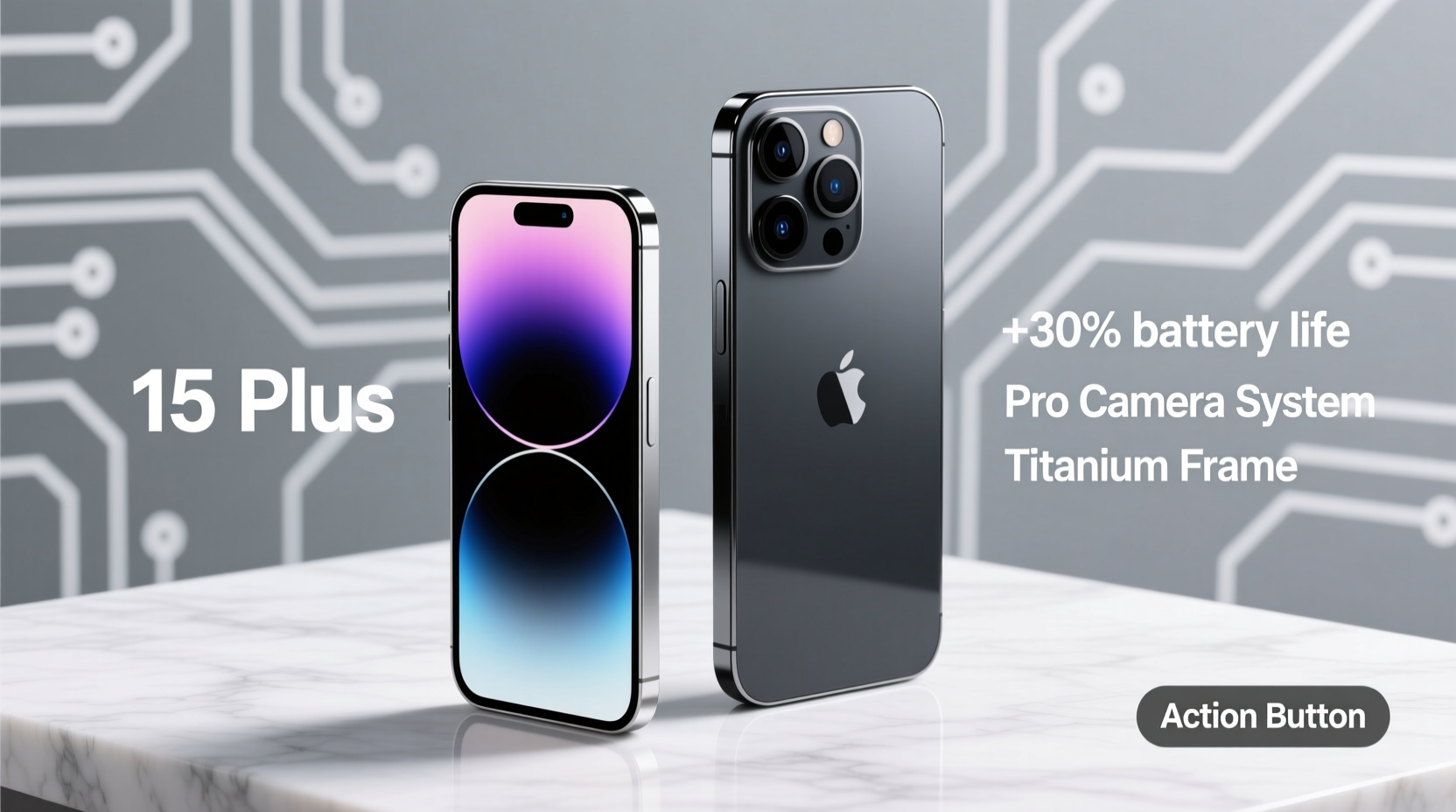
The most immediate difference between the iPhone 15 Plus and Pro Max lies in their construction. The Plus sticks with aluminum and recycled aerospace-grade materials, offering durability and a familiar Apple feel. It’s solid, lightweight, and available in vibrant colors like pink, yellow, and blue.
In contrast, the Pro Max steps into luxury territory with a titanium frame—Apple’s lightest Pro design ever. This reduces weight by nearly 20 grams despite similar dimensions, making it noticeably easier to hold for extended use. The matte finish resists fingerprints better than the glossy Plus, and the overall craftsmanship feels more refined.
While both phones are IP68-rated for water and dust resistance, the Pro Max’s build suggests a longer lifespan, especially for users who tend to keep devices for four years or more.
Display Differences: Brightness and Responsiveness
Both models feature Super Retina XDR OLED displays with 6.7-inch screens, but the Pro Max gains a significant edge in brightness and adaptive refresh rate. The Pro Max supports ProMotion technology with a 120Hz refresh rate, meaning smoother scrolling, faster touch response, and better performance in games and drawing apps.
The standard Plus is limited to a 60Hz refresh rate. While this doesn’t make the phone feel sluggish, the difference becomes apparent when switching between the two—especially in animation-heavy tasks like web browsing or using Apple Pencil with Notes.
In peak brightness, the Pro Max reaches up to 2000 nits outdoors (HDR), compared to 1000 nits on the Plus. In direct sunlight, this translates to significantly improved visibility on maps, outdoor photos, or reading text messages on a sunny beach.
Display Comparison Table
| Feature | iPhone 15 Plus | iPhone 15 Pro Max |
|---|---|---|
| Screen Size | 6.7 inches | 6.7 inches |
| Refresh Rate | 60Hz | 120Hz (ProMotion) |
| Peak Brightness (HDR) | 1000 nits | 2000 nits |
| Always-On Display | No | Yes |
“The 120Hz display isn’t just a gimmick—it changes how responsive your phone feels day-to-day.” — David Kim, Mobile UX Analyst at TechPulse
Camera Capabilities: Where the Pro Max Shines
For photography enthusiasts, the gap widens dramatically. Both phones have dual-camera setups, but the Pro Max includes a telephoto lens with 5x optical zoom via a tetraprism design—a first for iPhones. This allows for tighter framing on distant subjects without losing clarity.
The Pro Max also benefits from:
- Next-gen Photonic Engine for better low-light processing
- ProRAW and ProRes video recording (up to 4K HDR)
- Cinematic Mode available in 4K HDR
- Improved Smart HDR 5 with deeper tone mapping
The iPhone 15 Plus captures excellent photos in daylight and handles portraits well, but lacks the versatility of the Pro Max’s zoom range and manual controls. For example, shooting a child’s soccer game from the sidelines or capturing wildlife requires reach the Plus simply can’t match.
Real Example: Travel Photographer’s Dilemma
Sophie, a travel blogger based in Iceland, upgraded from an iPhone 14 Plus to the 15 Pro Max before a month-long Nordic tour. She found herself relying heavily on the 5x zoom to capture geysers, glaciers, and birds without getting too close. “I didn’t bring my DSLR because the Pro Max handled 90% of what I needed,” she said. “The ability to shoot ProRAW gave me flexibility in post, and the low-light shots inside ice caves were shockingly clean.”
For casual users who mostly share photos on social media, the Plus’s camera is more than sufficient. But professionals, creatives, or serious hobbyists will find the Pro Max’s imaging suite indispensable.
Performance and Future-Proofing
Under the hood, the distinction is clear: the iPhone 15 Plus runs on the A16 Bionic chip, while the Pro Max uses the newer A17 Pro. The A17 Pro is built on a 3nm process, offering up to 20% faster CPU performance, 25% faster GPU, and hardware-accelerated ray tracing for console-quality gaming.
This isn’t just about speed—it’s about longevity. Apple typically supports iPhones with software updates for five to six years. The A17 Pro’s architecture ensures smoother performance over time, especially as future iOS versions demand more from hardware.
If you plan to keep your phone beyond three years, the Pro Max’s processor provides a tangible advantage in app responsiveness, multitasking, and emerging technologies like AR and AI-powered features.
Should You Upgrade? A Practical Checklist
Before deciding, consider your usage patterns. Use this checklist to evaluate whether the Pro Max’s premium is justified for your needs:
- ✅ Do you regularly shoot in low light or need professional-grade photo/video output?
- ✅ Are you keeping your phone for 4+ years and want maximum future-proofing?
- ✅ Do you value a smoother, more responsive screen for gaming or productivity?
- ✅ Do you travel often and need superior zoom capabilities without carrying extra gear?
- ✅ Is budget flexible, and does the titanium design and reduced weight matter to you?
If you answered “yes” to three or more, the Pro Max likely makes sense. If not, the iPhone 15 Plus remains an outstanding device with flagship-level performance for everyday use.
Frequently Asked Questions
Is the battery life better on the iPhone 15 Plus or Pro Max?
The iPhone 15 Plus has slightly better battery life due to its larger capacity and less power-hungry 60Hz display. Apple rates it for up to 26 hours of video playback, compared to 29 hours on the Pro Max—though real-world usage shows the Pro Max lasting nearly as long despite higher demands, thanks to the efficiency of the A17 Pro chip.
Can the iPhone 15 Plus record in ProRes video?
No. ProRes video recording is exclusive to the Pro models and requires the additional storage and processing power only available in the Pro Max. The Plus supports 4K HDR at 60fps but lacks the codec options and external drive support of the Pro version.
Does the Pro Max justify its price for average users?
For most average users—those who browse, message, take occasional photos, and stream content—the answer is no. The iPhone 15 Plus delivers nearly identical core experiences at a lower cost. The Pro Max excels in niche areas that don’t impact daily usability for everyone.
Final Verdict: Value Over Hype
The iPhone 15 Pro Max is undeniably the best iPhone Apple has ever made. Its titanium body, 120Hz display, 5x zoom lens, and A17 Pro chip represent meaningful advancements. But excellence doesn’t always equate to necessity.
The iPhone 15 Plus stands out as one of the smartest choices in the lineup. It offers the same core experience—excellent cameras (for most scenarios), long battery life, USB-C, Dynamic Island, and iOS integration—at a price that feels fair. For the majority of users, the $300+ premium for the Pro Max won’t translate into proportional gains in satisfaction.
However, if you're a mobile photographer, content creator, or someone who keeps phones for years and demands top-tier performance, the Pro Max isn’t just justified—it’s essential.




 浙公网安备
33010002000092号
浙公网安备
33010002000092号 浙B2-20120091-4
Comments
No comments yet. Why don't you start the discussion?