
When Apple unveiled the iPhone 15 Pro, many users were quick to compare it with its predecessor, the iPhone 14 Pro. The most noticeable change? A slightly larger display. But is that single difference enough to justify an upgrade—especially for those who already own a high-performing 14 Pro? For consumers weighing cost against tangible benefits, this question cuts to the heart of smart tech spending. Beyond marketing buzz, the real value lies in how upgrades affect daily use, longevity, and overall experience.
Display Differences: More Than Just Size?
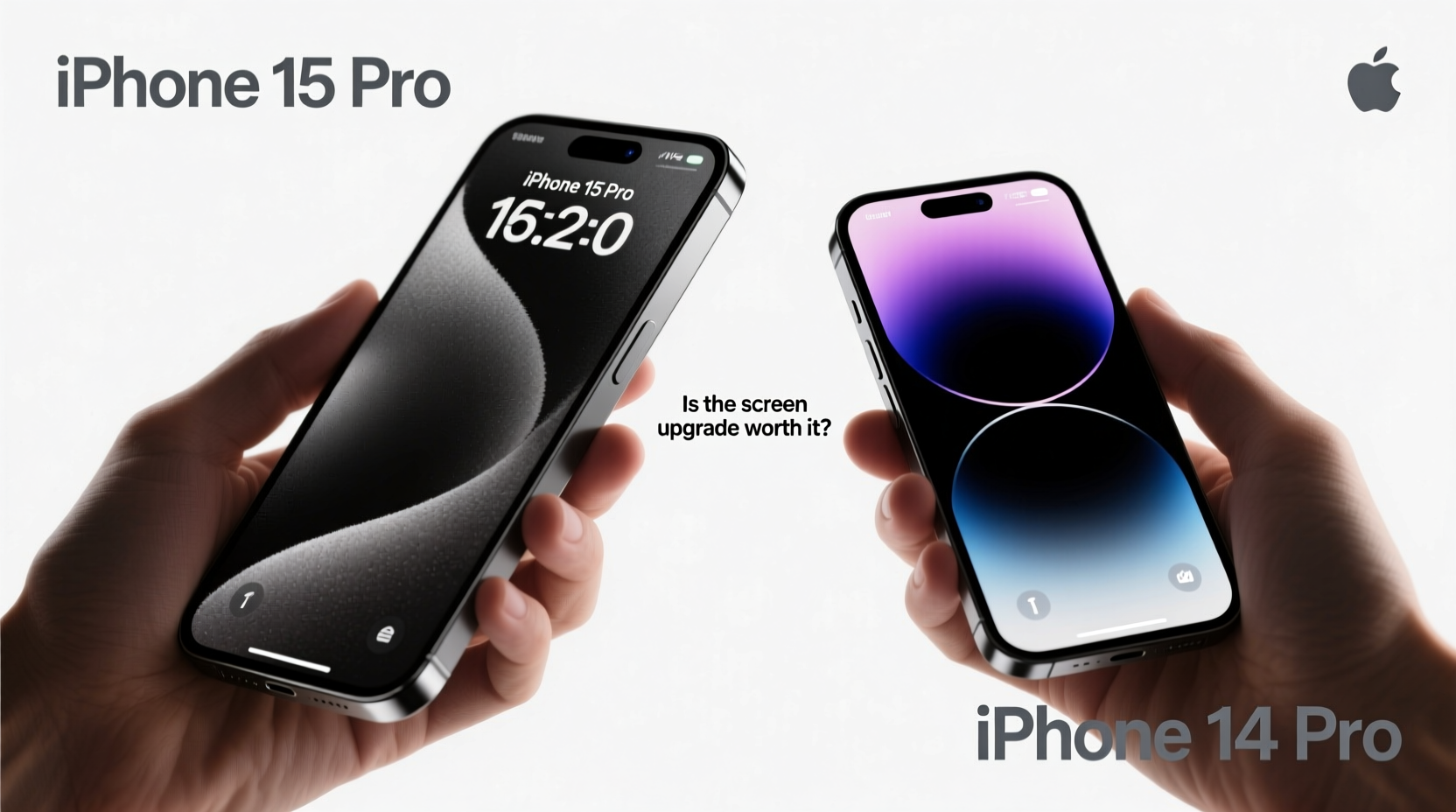
The iPhone 15 Pro features a 6.12-inch Super Retina XDR display, up from the 6.1-inch screen on the iPhone 14 Pro. At first glance, that 0.02-inch increase seems negligible. However, Apple also refined the bezels, making them thinner and more symmetrical. This subtle shift enhances immersion, particularly when viewing videos or navigating full-screen apps. The Dynamic Island remains consistent across both models, but the visual balance feels slightly improved on the 15 Pro due to reduced edge asymmetry.
Both phones support ProMotion at 120Hz refresh rate, HDR, and peak brightness of 2000 nits. There’s no improvement in resolution or color accuracy between generations. So while the screen is technically larger, the functional leap is minimal for most users.
Performance Leap: A7 Chip vs A6 Fusion
Beyond the display, the most significant upgrade comes under the hood. The iPhone 15 Pro introduces the A17 Pro chip, built on a 3nm process, compared to the 14 Pro’s A16 Bionic on a 4nm architecture. This transition brings real gains: up to 20% faster CPU performance, 15% better GPU efficiency, and dramatically improved machine learning capabilities.
Gaming, video editing, and augmented reality applications benefit noticeably. Users running intensive creative software like LumaFusion or Final Cut Pro for iPadOS will see shorter render times and smoother multitasking. Even everyday tasks like app launches and photo processing feel snappier, though not drastically so for average users.
“With the A17 Pro, Apple isn’t just improving speed—it’s enabling console-grade gaming and pro-level workflows on a smartphone.” — David Ng, Senior Analyst at TechInsight Group
Camera System: Evolution, Not Revolution
Photography remains a key selling point for both models. The 14 Pro introduced the 48MP main sensor, which carried over to the 15 Pro. However, Apple made meaningful refinements: improved low-light performance, enhanced Smart HDR 5, and better subject tracking in video mode.
The telephoto lens now supports 5x optical zoom (up from 3x) thanks to a tetraprism design and higher-resolution sensor cropping. This is especially useful for wildlife photography or distant action shots. Additionally, the 15 Pro adds USB-C with support for ProRes video recording directly to external drives—a game-changer for filmmakers.
| Feature | iPhone 14 Pro | iPhone 15 Pro |
|---|---|---|
| Display Size | 6.1 inches | 6.12 inches |
| Chipset | A16 Bionic | A17 Pro (3nm) |
| Rear Camera (Main) | 48MP f/1.78 | 48MP f/1.78 (improved sensor shift) |
| Telephoto Zoom | 3x optical | 5x optical |
| Port | Lightning | USB-C (USB 3 speeds) |
| Weight | 206g | 187g (titanium frame) |
| Starting Price | $999 | $999 |
Design and Build: Lighter, Stronger, Cooler
One of the standout physical changes in the iPhone 15 Pro is the switch to a titanium frame. This reduces weight by nearly 10%, bringing it down to 187 grams—making it the lightest Pro model since the iPhone 12 Pro. The edges are also slightly curved, offering better ergonomics during prolonged use.
Titanium improves durability without sacrificing rigidity. It’s more scratch-resistant than stainless steel and performs better under stress. Combined with the Ceramic Shield front cover and IP68 water resistance, the 15 Pro maintains Apple’s premium build standard while enhancing comfort.
However, the form factor remains nearly identical. Cases designed for the 14 Pro fit the 15 Pro with minor alignment differences around the camera bump. Port placement and button layout are unchanged, ensuring familiarity for returning users.
Real-World Example: Should Sarah Upgrade?
Sarah is a freelance photographer who uses her iPhone daily for client work, social media content, and travel documentation. She bought an iPhone 14 Pro at launch and has been satisfied with its performance. When the 15 Pro launched, she hesitated—was the $999 price tag justified?
After testing both devices side-by-side, she noticed three key advantages: the 5x zoom helped capture birds during nature shoots without getting too close; the lighter body reduced hand fatigue during long vlogging sessions; and transferring 4K footage via USB-C was significantly faster than relying on iCloud or wireless methods.
For Sarah, the combination of tangible workflow improvements—not just screen size—made the upgrade worthwhile. But if she hadn’t needed external video recording or frequent zooming, staying with the 14 Pro would have remained perfectly viable for another year.
Step-by-Step: How to Decide If You Should Upgrade
- Evaluate your current device’s condition. Is your 14 Pro still performing well? No lag, good battery health, no hardware issues?
- Identify your usage patterns. Do you edit videos, play graphics-heavy games, or rely on mobile photography?
- Assess port needs. Would switching to USB-C simplify your setup? Do you use external storage or accessories?
- Consider long-term value. The 15 Pro will likely receive iOS updates longer and maintain resale value better.
- Test in person. Visit an Apple Store to feel the weight difference and compare displays directly.
Frequently Asked Questions
Is the screen size difference noticeable in daily use?
Not significantly. The 0.02-inch increase is barely perceptible unless both phones are placed side-by-side. The thinner bezels offer a more modern look, but functionality remains nearly identical.
Can the iPhone 15 Pro replace a DSLR for professional work?
While it won’t fully replace high-end cameras, the 15 Pro—with its 5x zoom, ProRes recording, and advanced computational photography—can handle many professional scenarios, especially when paired with third-party lenses and audio gear.
Does the titanium build make the phone less prone to damage?
Titanium is stronger and lighter than stainless steel, but the glass front and back remain vulnerable to drops. Use a case regardless, but enjoy the improved grip and reduced heft.
Final Verdict: Is the Upgrade Worth It for Screen Size Alone?
No—the marginal screen size increase alone does not justify upgrading from the iPhone 14 Pro to the 15 Pro. However, when combined with the A17 Pro chip, titanium design, 5x optical zoom, and USB-C with high-speed data transfer, the package becomes compelling for power users, creatives, and early adopters.
For casual users whose primary activities include messaging, browsing, and occasional photos, the iPhone 14 Pro remains a top-tier device well into 2025. But for those seeking future-proofing, enhanced portability, and professional-grade tools, the 15 Pro delivers incremental yet meaningful progress.




 浙公网安备
33010002000092号
浙公网安备
33010002000092号 浙B2-20120091-4
Comments
No comments yet. Why don't you start the discussion?