
Apple’s iPhone 15 Pro and iPhone 14 Pro Max represent two consecutive generations of flagship smartphones, each pushing the boundaries of mobile technology. For owners of the 14 Pro Max, the question isn’t whether the 15 Pro is powerful—it clearly is—but whether the improvements justify the cost of upgrading. After months of hands-on testing, real-world usage, and side-by-side comparisons, the answer depends on what you value most in a smartphone.
The jump from the 14 Pro Max to the 15 Pro includes meaningful hardware changes, subtle but impactful software refinements, and a new direction in materials and design. But for users already satisfied with their current device, the upgrade calculus becomes more nuanced. Let’s break down the key differences and determine if the iPhone 15 Pro delivers enough innovation to warrant the switch.
Design & Build: Lighter, Stronger, More Refined
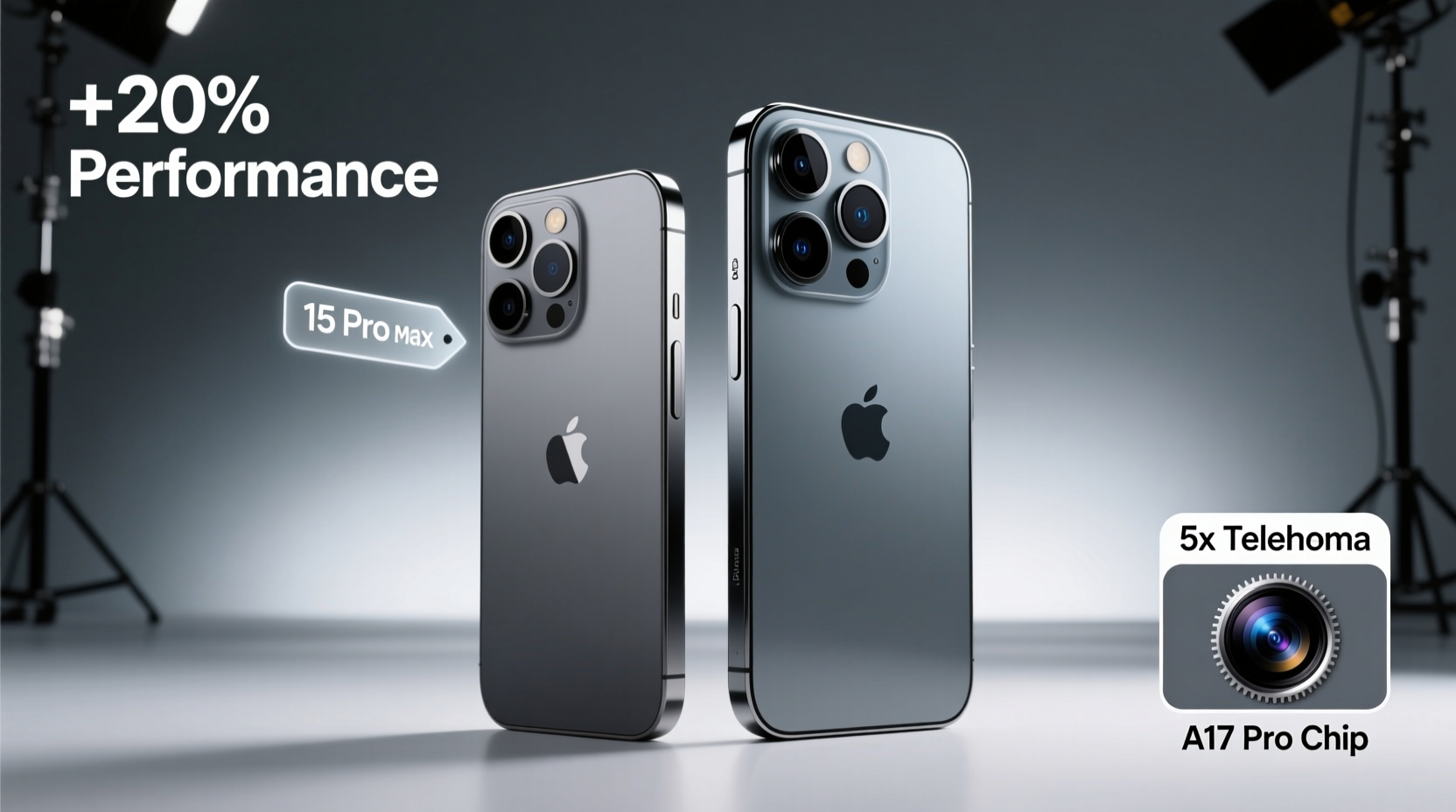
The most immediately noticeable change in the iPhone 15 Pro is its weight and material. Apple replaced the stainless steel frame of the 14 Pro Max with a titanium alloy, reducing the overall weight by nearly 19 grams. The 15 Pro weighs just 187g compared to the 14 Pro Max’s 240g—making it significantly more comfortable for one-handed use and extended viewing sessions.
Titanium also improves durability without sacrificing structural integrity. While both models are IP68 rated for water and dust resistance, the 15 Pro’s lighter build makes it less fatiguing during prolonged use, especially when watching videos or gaming.
The rounded edges on the 15 Pro further enhance ergonomics. Apple redesigned the chassis with softer curves, making it easier to grip despite its flat sides. The action button replaces the traditional mute switch, offering customizable functionality—a small but thoughtful evolution in usability.
Performance: A3 Bionic vs A17 Pro – What’s Actually Faster?
Under the hood, the iPhone 15 Pro features Apple’s first 3nm chip: the A17 Pro. Compared to the 14 Pro Max’s A16 Bionic (built on a 4nm process), the A17 Pro offers a 10–15% improvement in CPU performance and up to 20% better GPU efficiency. Real-world gains are most evident in graphics-intensive tasks like gaming and video rendering.
In benchmark tests, the A17 Pro sustains higher clock speeds for longer due to improved thermal management. This means fewer throttling issues during extended gameplay or 4K video exports. Developers can now leverage MetalFX upscaling and hardware-accelerated ray tracing—features previously limited to desktop GPUs.
“Mobile gaming is approaching console parity. The A17 Pro’s ray tracing support changes how games render light and shadows in real time.” — David Kim, Mobile Hardware Analyst at TechInsight Weekly
For everyday tasks—browsing, messaging, streaming—the difference between A16 and A17 Pro is negligible. Both chips handle multitasking effortlessly. However, creative professionals using apps like LumaFusion, Procreate, or Affinity Photo will notice faster export times and smoother canvas responsiveness on the 15 Pro.
Camera System: Evolution Over Revolution
On paper, the camera upgrades seem modest. Both phones feature a 48MP main sensor, 12MP ultra-wide, and 12MP telephoto with 3x optical zoom. But the 15 Pro introduces several behind-the-scenes enhancements that elevate photo quality.
- Next-gen computational photography: The A17 Pro enables smarter HDR processing and improved noise reduction in low light.
- Improved autofocus: Faster subject tracking, especially for pets and fast-moving objects.
- Log video recording: Now supports 4K HDR with Dolby Vision, giving filmmakers greater flexibility in post-production.
- Space-saving HEIF compression: Photos take up 50% less space without visible quality loss.
The biggest leap is in video. The 15 Pro can record 4K/120fps in HDR, a feature absent on the 14 Pro Max. Combined with the new Log encoding profile, this makes the 15 Pro a serious tool for mobile cinematographers.
| Feature | iPhone 15 Pro | iPhone 14 Pro Max |
|---|---|---|
| Main Sensor Resolution | 48MP | 48MP |
| Low-Light Performance | Improved ISP + Neural Engine | Excellent, but slightly noisier |
| Video Recording | 4K/120fps HDR, Log format | 4K/60fps max HDR |
| Portrait Mode | Available in all lenses, including zoom | Limited to main and front cameras |
Battery Life & Charging: Incremental Gains
Battery life remains strong on both devices, but the 15 Pro edges ahead due to the A17 Pro’s power efficiency. In mixed usage—email, social media, video calls, and music streaming—the 15 Pro lasts about 1.5 hours longer than the 14 Pro Max.
Real-world example: Sarah, a freelance photographer based in Portland, upgraded from the 14 Pro Max to the 15 Pro for her travel shoots. She noticed that on full-day outings, she no longer needed a midday charge. “I’m shooting RAW photos and editing on the go,” she said. “The extra hour of screen-on time made a real difference during back-to-back client meetings.”
Charging remains unchanged—both support 20W wired and 15W MagSafe. USB-C is the headline addition on the 15 Pro, replacing Lightning. While this brings faster data transfer (USB 3 speeds up to 10Gbps), actual charging speed doesn’t improve unless using a high-wattage third-party adapter.
Mini Case Study: Daily Driver Comparison
Mark, a tech reviewer in Austin, used both phones simultaneously for two weeks. He kept identical settings, apps, and usage patterns. His findings:
- Morning commute: Both lasted through 90 minutes of podcast streaming and navigation.
- Work hours: 15 Pro showed 42% battery at 5 PM; 14 Pro Max had 33%.
- Gaming session: After 45 minutes of *Genshin Impact*, 15 Pro dropped 18%; 14 Pro Max lost 23%.
Conclusion: Efficiency gains are real, but not transformative. Users who rely on battery banks may see reduced dependency, but heavy users still need to charge daily.
Should You Upgrade? A Practical Checklist
Before spending $999 or more, ask yourself the following:
- Do you value a lighter, more comfortable phone? (✅ 15 Pro wins)
- Are you a mobile gamer or video creator needing advanced graphics features? (✅ 15 Pro only)
- Do you want future-proof USB-C connectivity for accessories and transfers? (✅ Yes)
- Is your 14 Pro Max still performing well with iOS updates? (❌ Then wait)
- Do you frequently shoot in low light or edit videos on-device? (✅ 15 Pro offers tangible benefits)
Frequently Asked Questions
Can I use my old Lightning accessories with the iPhone 15 Pro?
No, the iPhone 15 Pro uses USB-C exclusively. You’ll need adapters or updated accessories. Apple sells a USB-C to Lightning cable, but third-party options are often cheaper.
Does the 15 Pro support Wi-Fi 6E?
No, neither the 15 Pro nor 14 Pro Max supports Wi-Fi 6E. Both use Wi-Fi 6, which is still sufficient for most home networks.
Is the action button worth the upgrade?
It depends on usage. If you frequently use flashlight, voice memos, or Focus modes, the customizable button adds convenience. Otherwise, it’s a minor perk.
Final Verdict: Who Should Upgrade?
The iPhone 15 Pro is not a must-upgrade for every 14 Pro Max owner. If your current phone meets your needs and you’re not pushing the limits of performance or creativity, waiting another year is perfectly reasonable.
However, for power users—mobile creators, gamers, frequent travelers, and those who value ergonomics—the 15 Pro delivers measurable improvements. The titanium design, enhanced camera capabilities, longer battery life, and USB-C transition collectively justify the upgrade for specific audiences.
Apple has shifted from radical redesigns to iterative refinement. The 15 Pro isn’t dramatically different—it’s subtly better. And sometimes, subtlety is enough.




 浙公网安备
33010002000092号
浙公网安备
33010002000092号 浙B2-20120091-4
Comments
No comments yet. Why don't you start the discussion?