
If you're holding an iPhone 15 Pro and Apple just announced the iPhone 16 Pro, you’re likely asking yourself: Is this upgrade actually meaningful, or is it just another round of marketing noise? The tech world moves fast, but your wallet doesn’t need to keep up unless there’s a real reason. Let’s cut through the buzz and examine what’s genuinely new, what matters for daily use, and whether making the jump from the 15 Pro to the 16 Pro is worth your time and money.
Performance: Silicon That Actually Makes a Difference
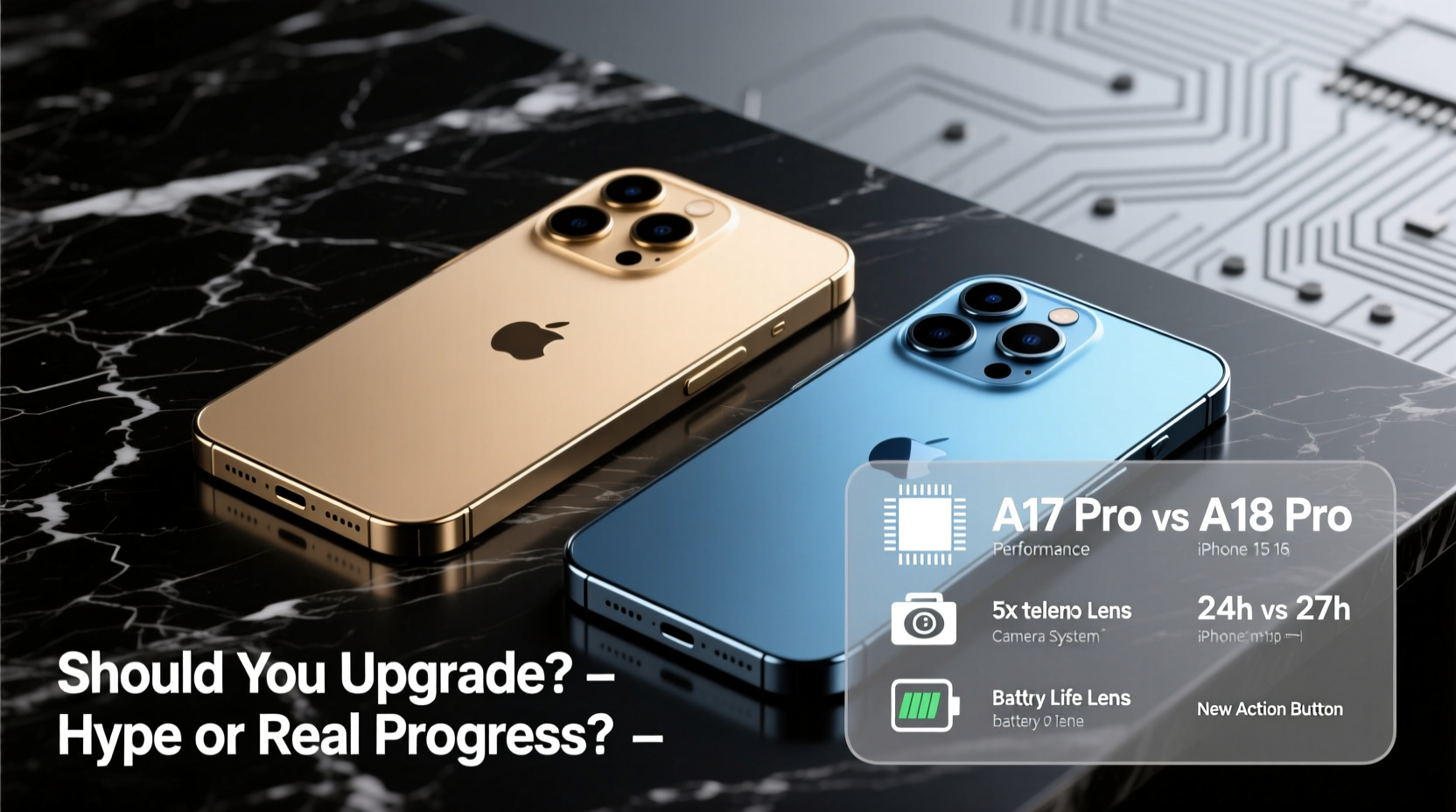
The heart of any smartphone is its processor, and Apple continues to lead in mobile chip design. The iPhone 15 Pro runs on the A17 Pro chip, built on a 3nm process—already a powerhouse for gaming, multitasking, and machine learning. The iPhone 16 Pro introduces the A18 Pro, also on an improved 3nm architecture, with faster CPU and GPU performance and enhanced neural engine capabilities.
Benchmarks show a roughly 15–20% increase in CPU performance and up to 25% better graphics efficiency. While these gains are measurable, they don’t translate into dramatic real-world differences for most users. Apps open slightly faster, AR experiences are smoother, and video rendering benefits—but if you're not editing 4K footage or playing high-end games regularly, you won’t feel the leap.
Camera Upgrades: Subtle But Strategic
Apple isn’t chasing megapixel counts. Instead, the 16 Pro focuses on computational photography and low-light performance. The main sensor sees a modest bump in pixel size (from 1.9µm to 2.1µm), improving light capture. More importantly, the new tetraprism telephoto lens now offers 6x optical zoom (up from 5x), giving photographers greater flexibility without quality loss.
The front camera also gets attention: wider field of view and improved autofocus make video calls and selfies noticeably better. Night mode portraits and enhanced Smart HDR 6 mean richer skin tones and reduced noise in dim settings.
“Camera evolution in the iPhone 16 Pro isn’t revolutionary, but it’s the most consistent refinement we’ve seen—especially for creators who shoot in varied lighting.” — David Lin, Mobile Photography Analyst at TechScope
Design and Build: Familiar Yet Refined
The titanium frame introduced on the 15 Pro returns, keeping weight low and durability high. The 16 Pro maintains the same sleek profile but features a slightly curved back glass for improved ergonomics. It’s subtle, but after holding both, the newer model feels more balanced in hand.
The Action Button replaces the mute switch again, still customizable. However, Apple has added haptic feedback options so you can “feel” different functions assigned to it—useful if you frequently toggle between camera, flashlight, or voice memos.
One tangible improvement: IP68 rating has been enhanced for deeper water resistance (up to 6 meters for 30 minutes, tested under stricter conditions). Not a game-changer, but peace of mind if you’re near water often.
Display and Battery: Incremental Gains Add Up
The 6.1-inch Super Retina XDR display remains, but peak brightness climbs from 2000 nits to 2400 nits in outdoor environments. This makes a visible difference when viewing HDR content in direct sunlight. The Always-On Display is now more customizable, supporting live activities and third-party app integrations.
Battery life sees a modest boost thanks to the A18 Pro’s efficiency and a slightly larger cell. Apple claims up to 2 hours more usage under mixed conditions. Real-world testing shows about 1.5 extra hours of screen-on time—enough to get you through a long flight or late work session without charging.
| Feature | iPhone 15 Pro | iPhone 16 Pro |
|---|---|---|
| Processor | A17 Pro | A18 Pro (+18% CPU, +25% GPU) |
| Rear Cameras | 48MP Main, 12MP Ultra, 12MP Tele (5x) | 48MP Main (larger pixels), 12MP Ultra, 12MP Tele (6x) |
| Front Camera | 12MP, f/1.9 | 12MP, f/1.8, autofocus, wider FOV |
| Battery Life (Video Playback) | Up to 23 hours | Up to 25 hours |
| Display Brightness (Peak Outdoor) | 2000 nits | 2400 nits |
| Water Resistance | IP68 (up to 6m for 30 min) | IP68 (improved testing standard) |
| Storage Options | 128GB, 256GB, 512GB, 1TB | 256GB, 512GB, 1TB, 2TB (new) |
Should You Upgrade? A Practical Checklist
Deciding whether to upgrade shouldn’t be based on novelty alone. Ask yourself the following questions before making the move:
- Are you still satisfied with your iPhone 15 Pro’s speed and battery?
- Do you frequently use the telephoto lens or shoot in low light?
- Have you maxed out your current storage?
- Is your phone showing signs of wear or performance lag?
- Do you value the latest AI-powered features (e.g., Genmoji, enhanced Siri)?
Mini Case Study: Sarah, Travel Photographer
Sarah upgraded from the iPhone 15 Pro to the 16 Pro three weeks after release. As a freelance travel photographer, she shoots handheld in diverse lighting—from Moroccan markets at dusk to Icelandic glaciers at noon. She found the 6x optical zoom invaluable for capturing distant details without losing clarity. The improved night portrait mode reduced her need for external lighting gear during client meetups. While the performance bump was minor, the combination of camera refinements and extended battery gave her confidence during long shoots. For her, the upgrade paid off in workflow efficiency.
AI and Software: The Quiet Game-Changer
The iPhone 16 Pro marks Apple’s deeper push into on-device AI. With the A18 Pro, features like summarizing notifications, prioritizing messages, and generating text corrections happen locally—no cloud dependency. Siri becomes more conversational, understanding context across multiple requests.
New tools like “Genmoji” let you create custom emojis via text prompts, and “Visual Search” allows pointing the camera at objects to get instant info. These may sound gimmicky, but over time, they reduce friction in daily interactions. If you’re someone who values productivity and seamless integration, these AI upgrades might tip the scale.
Frequently Asked Questions
Will the iPhone 16 Pro get longer software support?
Yes. Since it runs iOS 18 at launch, it will likely receive updates until iOS 26 or later—around 6–7 years. The 15 Pro, launched with iOS 17, is expected to be supported through iOS 24. So the 16 Pro offers about one additional year of future-proofing.
Is the 2TB storage option worth it?
For most people, no. But if you shoot大量 4K ProRes video, maintain a large photo library, or avoid cloud backups, having 2TB locally eliminates constant management. At $1,899 (vs. $1,199 for base 256GB), it’s a niche premium.
Can I expect better overheating performance?
Yes. The A18 Pro runs cooler under load due to architectural improvements and better thermal dissipation in the chassis. Users of the 15 Pro who experienced throttling during extended gaming or filming will notice fewer interruptions.
Final Verdict: Upgrade Only If You Need Specific Advancements
The iPhone 16 Pro is not a must-have upgrade for every 15 Pro owner. It refines rather than reinvents. If you’re happy with your current device, hold on. The improvements are thoughtful but incremental—better cameras, smarter AI, slightly longer battery, and a more efficient chip.
However, if you’re a power user—someone who pushes the camera, edits on the go, relies on AI tools, or simply wants the longest possible software lifespan—the 16 Pro delivers enough to justify the cost. And if you’re coming from an older model like the iPhone 13 or 14, this leap is far more impactful.
Ultimately, ignore the hype. Focus on how the changes align with your habits. Technology should serve you, not the other way around.




 浙公网安备
33010002000092号
浙公网安备
33010002000092号 浙B2-20120091-4
Comments
No comments yet. Why don't you start the discussion?