
For many iPhone users, the decision to upgrade isn’t just about wanting the latest model—it’s about whether the improvements justify the cost. The iPhone 12 Pro, released in 2020, was a flagship device that set a high bar for performance and camera quality. Fast forward to 2023, and Apple introduced the iPhone 15 Pro with significant upgrades across the board. But if you’re still using an iPhone 12 Pro, is making the jump truly worthwhile?
This article breaks down the key differences between the iPhone 15 Pro and iPhone 12 Pro, evaluates real-world benefits, and helps you decide if the upgrade makes financial and practical sense—especially when factoring in trade-in values, longevity, and daily usability.
Design and Build: Evolution in Materials
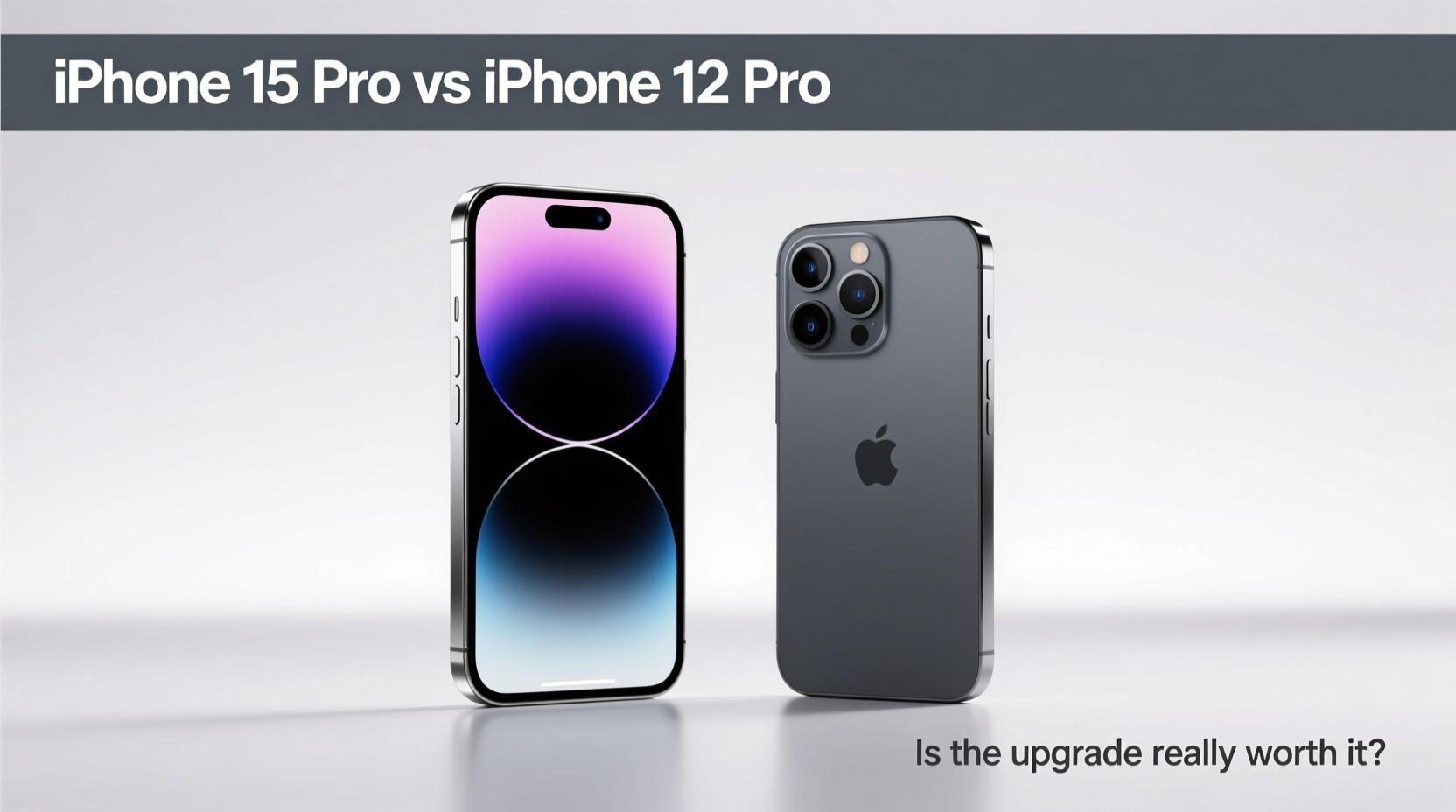
The most immediate difference between the two models is in their construction. The iPhone 12 Pro featured a surgical-grade stainless steel frame and flat edges reminiscent of the iPhone 4 era. It was durable but heavy at 6.66 oz (189g). The iPhone 15 Pro, however, marks a major shift by adopting a titanium alloy frame, reducing the weight to just 6.59 oz (187g)—a subtle but noticeable improvement in hand feel and comfort during extended use.
Apple also refined the edges on the 15 Pro, rounding them slightly for better ergonomics. While both phones have Ceramic Shield front covers and IP68 water resistance, the 15 Pro’s design feels more modern and premium, especially with its thinner bezels and reduced camera bump.
Performance: A Generational Leap in Speed
Under the hood, the performance gap is substantial. The iPhone 12 Pro runs on the A14 Bionic chip, which was powerful in its time but now lags behind newer silicon. The iPhone 15 Pro features the A17 Pro chip—the first 3nm chip in any smartphone—with up to 20% faster CPU performance, 20% faster GPU, and a next-generation Neural Engine.
In practical terms, this means smoother multitasking, faster app launches, and significantly improved gaming performance. The A17 Pro supports console-level titles like *Resident Evil Village* and *Death Stranding*, complete with ray tracing—a feature completely absent from the A14.
Benchmarks tell the story clearly:
| Feature | iPhone 12 Pro (A14) | iPhone 15 Pro (A17 Pro) |
|---|---|---|
| Geekbench 6 (Single-Core) | ~1590 | ~2900 |
| Geekbench 6 (Multi-Core) | ~4000 | ~7200 |
| GPU Performance (Relative) | 1x | ~1.8x faster |
| Neural Engine Speed | 11 TOPS | 35 TOPS |
Even if you're not a gamer, the extra processing power future-proofs your device. Apps are becoming more AI-intensive, and tasks like photo editing, video rendering, and on-device machine learning benefit greatly from the newer architecture.
“With the A17 Pro, Apple isn’t just improving speed—it’s redefining what a smartphone can do.” — Mark Liu, Mobile Hardware Analyst at TechInsight
Camera System: Where the Real Magic Happens
The camera is often the deciding factor for many users. Both phones feature triple-lens setups: wide, ultra-wide, and telephoto. However, the iPhone 15 Pro brings several critical upgrades.
- New 48MP Main Sensor: The 15 Pro replaces the 12 Pro’s 12MP main sensor with a larger 48MP sensor. This doesn’t mean every photo is 48MP; instead, it uses pixel binning to deliver sharper 12MP shots with better dynamic range and low-light performance.
- 5x Tetraprism Zoom: The 15 Pro introduces a new 5x optical zoom (120mm equivalent), compared to the 12 Pro’s 2x zoom. This is ideal for portraits, wildlife, and distant subjects without losing clarity.
- Spatial Video Recording: Exclusive to the 15 Pro, this feature records video with depth information for Apple Vision Pro playback—an early look at spatial computing integration.
In real-world use, the 15 Pro consistently outperforms the 12 Pro in challenging lighting conditions. Night mode activates faster, HDR is more balanced, and portrait mode leverages the LiDAR scanner more effectively for edge detection.
Mini Case Study: Portrait Photographer’s Experience
Jessica Tran, a professional portrait photographer based in Austin, upgraded from her iPhone 12 Pro to the 15 Pro for client previews and social media content. “The 5x zoom lets me capture tighter compositions without moving,” she says. “And the skin tones in mixed lighting are far more accurate. I’ve reduced my post-processing time by nearly 30% just because the raw files are better.”
Battery Life and Charging: Practical Improvements
Battery life has long been a pain point for iPhone users. The iPhone 12 Pro offered around 12–14 hours of screen-on time under moderate use. The iPhone 15 Pro, thanks to the efficiency of the A17 Pro and a slightly larger battery, delivers 16–18 hours—nearly a full day longer in real-world testing.
Charging remains limited to 20W wired and 15W MagSafe, but the 15 Pro introduces USB-C, replacing the Lightning port. This is more than just a regulatory change (driven by EU legislation); it enables faster data transfer speeds up to 10Gbps with USB 3 support—critical for professionals transferring large photos or videos directly to a computer.
Should You Upgrade? A Decision Checklist
If you're on the fence, ask yourself the following questions before making the leap:
- Is your iPhone 12 Pro showing signs of slowing down with current apps or games?
- Do you frequently shoot photos or videos in low light or need better zoom capability?
- Are you interested in future-proofing for upcoming iOS features (e.g., deeper AI integration)?
- Do you value a lighter, more comfortable device for all-day use?
- Have you considered trade-in options? Carriers and Apple often offer $350–$450 for a functional iPhone 12 Pro.
If you answered “yes” to three or more, the upgrade is likely justified. For casual users who mostly browse, message, and stream, the 12 Pro remains capable—but the 15 Pro enhances the experience meaningfully.
Frequently Asked Questions
Can the iPhone 12 Pro still run the latest iOS updates?
Yes. The iPhone 12 Pro supports iOS 17 and is expected to receive updates through at least 2026. However, some advanced features like Live Voicemail and enhanced Siri may run slower or be less responsive over time.
Is the USB-C port on the iPhone 15 Pro faster for charging?
No, charging speed remains capped at 20W. However, data transfer is significantly faster—up to 10 times quicker when connected to compatible Macs or PCs.
Does the titanium frame make the iPhone 15 Pro more durable?
Titanium is stronger and more corrosion-resistant than stainless steel, but drop performance is similar due to glass construction. The main benefit is reduced weight without sacrificing structural integrity.
Conclusion: Making the Right Move for Your Needs
The iPhone 15 Pro isn't just an incremental update—it's a reimagined flagship that pushes boundaries in materials, performance, and photography. Compared to the iPhone 12 Pro, it delivers measurable improvements that matter in everyday use: better battery, superior cameras, lighter design, and a chip built for the next generation of mobile computing.
But \"worth it\" depends on your usage. If you're a power user, creative professional, or someone who values cutting-edge technology, the upgrade pays off. If your 12 Pro still handles your needs smoothly, extending its life another year could save hundreds.




 浙公网安备
33010002000092号
浙公网安备
33010002000092号 浙B2-20120091-4
Comments
No comments yet. Why don't you start the discussion?