
Smartphone cameras have evolved from simple point-and-shoot tools into serious imaging devices capable of rivaling dedicated compact cameras. Apple’s iPhone 15 Pro and Samsung’s Galaxy S24 represent the pinnacle of current mobile photography—but with both devices commanding premium prices, it’s fair to ask: is the camera hype justified, or are we overlooking key differences that could sway a decision?
This isn’t just about megapixels or zoom ranges. It’s about how these phones perform in real life—how they handle dynamic lighting, color accuracy, stabilization, and ease of use. Let’s dissect the truth behind the marketing and see which device truly delivers under pressure.
Sensor Specs and Hardware: Beyond the Numbers
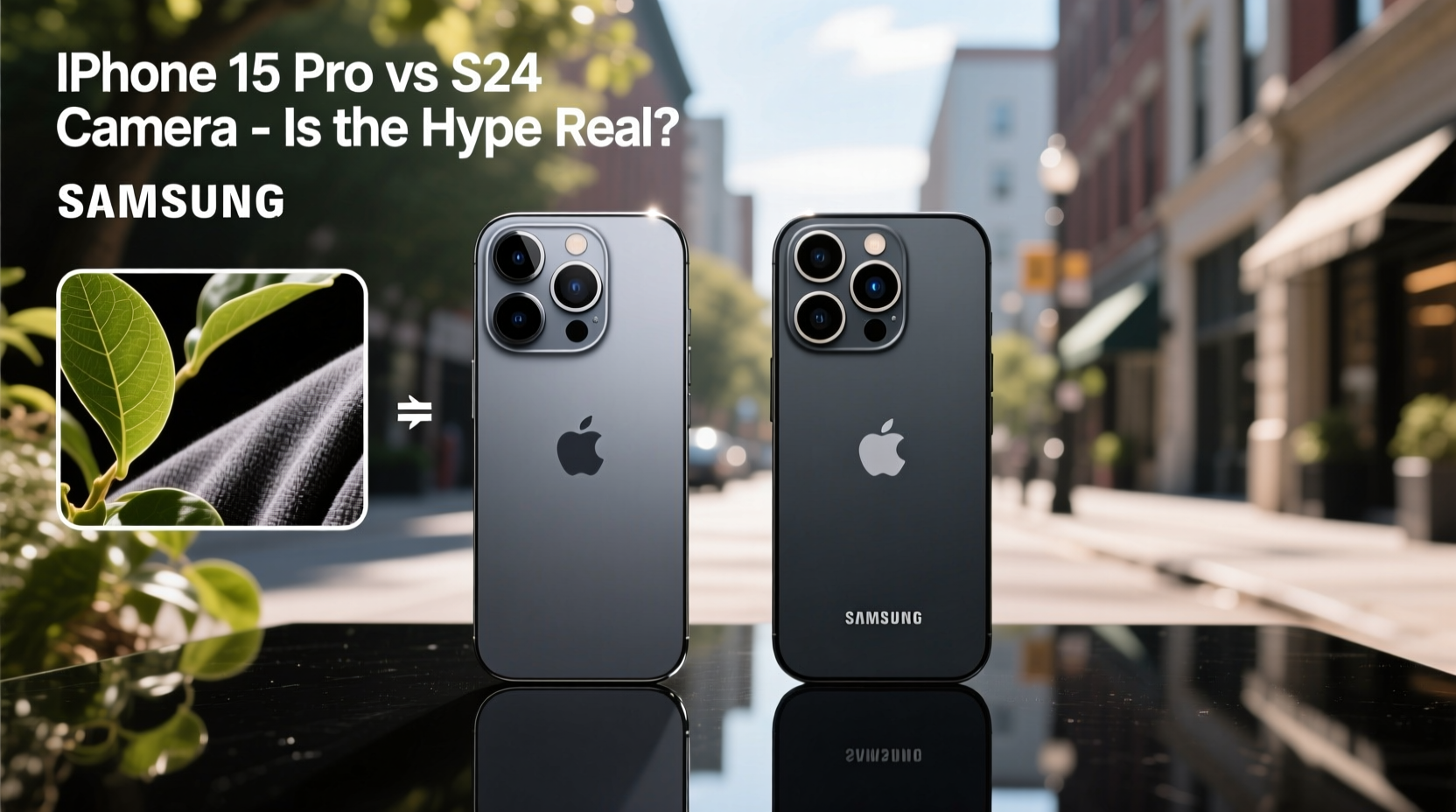
At first glance, both phones boast impressive hardware. The iPhone 15 Pro features a 48MP main sensor (24mm equivalent, f/1.78 aperture), supported by a 12MP ultrawide (f/2.2) and a 12MP telephoto (f/2.8) with 3x optical zoom. Apple emphasizes sensor-shift stabilization and computational photography via its A17 Pro chip.
The Galaxy S24 counters with a 50MP main sensor (f/1.8), a 12MP ultrawide (f/2.2), and a 10MP telephoto (f/2.4) offering 3x hybrid and up to 10x “Space Zoom.” Samsung leans heavily on AI processing through its Snapdragon 8 Gen 3 chipset and proprietary Vision Booster engine.
On paper, the S24 has a slight edge in resolution and flexibility. But hardware alone doesn’t determine image quality. How each brand processes light, handles noise, and balances color plays a far bigger role—especially when shooting in less-than-ideal environments.
Image Quality: Daylight, Low Light, and Dynamic Range
In bright daylight, both phones produce sharp, detailed images. However, their philosophies diverge. The iPhone 15 Pro favors natural color reproduction, preserving skin tones and environmental hues without oversaturation. Highlights are preserved well, and shadows retain detail thanks to Apple’s Photonic Engine and Smart HDR 5.
The S24, by contrast, applies a more aggressive tone curve and boosts saturation slightly. Greens appear lusher, skies bluer—pleasing for social media but sometimes at the cost of realism. Samsung also tends to over-sharpen edges, which can create halos around high-contrast subjects.
| Metric | iPhone 15 Pro | Galaxy S24 |
|---|---|---|
| Main Sensor Resolution | 48MP | 50MP |
| Aperture (Main) | f/1.78 | f/1.8 |
| Optical Zoom | 3x | 3x |
| Digital Zoom (Effective) | Up to 15x | Up to 30x (AI-enhanced) |
| Low-Light Performance | Natural, minimal noise | Brighter but grainier |
| Color Accuracy | Conservative, true-to-life | Vibrant, stylized |
Where the gap widens is in low-light scenarios. The iPhone excels with Night mode, producing clean, balanced exposures with accurate white balance. Noise is suppressed intelligently, and details remain intact even in dim street lighting.
The S24 pushes brightness aggressively in dark scenes, often resulting in washed-out highlights and a loss of texture. While the AI-enhanced Nightography mode improves visibility, it sometimes fabricates details—edges that weren’t there, textures that look painted on. This “hallucination” effect, while impressive initially, undermines authenticity.
“Samsung prioritizes visibility over fidelity in low light. Apple chooses restraint. Neither is wrong, but photographers valuing truth should lean toward the iPhone.” — David Lin, Mobile Imaging Analyst at DXOMARK
Video Capabilities: Hollywood Hype vs Real-World Use
Apple continues to dominate mobile videography. The iPhone 15 Pro supports 4K Dolby Vision HDR at 60fps across all lenses, with cinematic mode now extending to 4K30. Its sensor-shift stabilization rivals gimbals in smoothness, especially when walking or filming from moving vehicles.
Log recording and ProRes support make the iPhone a favorite among indie filmmakers and content creators who want maximum post-production flexibility. These features aren’t gimmicks—they’re used on actual film sets.
The S24 offers solid 4K60 video with Super Steady mode and HDR10+ support. However, it lacks professional-grade codecs and doesn’t match Apple’s dynamic range. In high-contrast scenes, such as backlit interviews, the S24 often clips highlights faster, losing detail in skies or windows.
Real Example: Urban Vlogging Test
A freelance creator filmed a day-in-the-life vlog in downtown Seoul using both devices simultaneously. The route included subway stations (low light), neon-lit alleys (high contrast), and outdoor markets (mixed lighting).
The iPhone footage required minimal grading. Skin tones stayed consistent, shadows lifted cleanly, and motion remained stable even during handheld shots. The S24 clip looked punchier straight out of camera, but upon closer inspection, fine details in fabrics and signage were smeared due to over-processing. When graded side-by-side, the iPhone retained more usable data in shadows and highlights.
Software and Usability: Who Makes Photography Easier?
Apple keeps its Camera app minimalist. There’s no clutter, no confusing icons—just intuitive access to modes like Portrait, Photo, Video, and Cinematic. The new Capture Button on the 15 Pro allows quick launch and haptic feedback for shutter confirmation, reducing accidental taps.
Samsung’s interface is feature-rich but complex. Modes like Expert RAW, Single Take, and Director’s View offer versatility but require learning. For casual users, this can be overwhelming. That said, Android’s openness allows third-party apps like Adobe Lightroom Mobile to unlock manual controls more seamlessly than iOS.
- iPhone Advantage: Simplicity, consistency, deep integration with Photos app and iCloud.
- S24 Advantage: More customization, better multitasking with split-screen camera modes.
Checklist: Choosing Based on Your Needs
- Are you a casual shooter? → iPhone 15 Pro (point-and-shoot excellence)
- Do you love editing photos? → S24 (larger RAW files, Android flexibility)
- Shoot lots of video? → iPhone 15 Pro (Dolby Vision, ProRes, superior stabilization)
- Need long zoom often? → S24 (AI-enhanced 10x zoom performs better than iPhone’s 3x)
- Value natural colors? → iPhone 15 Pro
- Prefer vibrant, social-ready shots? → S24
Frequently Asked Questions
Is the iPhone 15 Pro camera better than the S24 overall?
For most users, yes—especially in video, low-light accuracy, and color fidelity. However, the S24 wins in zoom reach and photo vibrancy for social sharing. The “better” camera depends on your priorities.
Does the S24’s AI zoom actually work?
It works surprisingly well up to 10x in good light, using machine learning to reconstruct distant subjects. Beyond that, results become speculative. It’s useful for capturing license plates or distant signs, but don’t expect DSLR-level clarity.
Can I tell the difference in everyday photos?
Not always. Both phones produce excellent snapshots in daylight. Differences emerge in challenging conditions—backlit portraits, night streets, fast action—where processing strategies diverge significantly.
Conclusion: The Hype Is Real—But It Depends on What You Value
The camera hype surrounding the iPhone 15 Pro and Galaxy S24 isn’t manufactured—it’s rooted in genuine technological advancement. Both devices represent the state of the art in mobile imaging. But the narrative isn’t binary. One isn’t universally better.
If you value authenticity, reliable video, and a seamless experience, the iPhone 15 Pro delivers with quiet confidence. It doesn’t shout; it performs. For creators, travelers, and anyone who wants consistent results without tweaking settings, it’s the smarter default.
If you enjoy tinkering, want maximum zoom, and prefer vivid, poppy photos for Instagram or TikTok, the S24 caters to that instinct. Its AI-driven enhancements dazzle at first glance, though they occasionally sacrifice truth for impact.
You’re not missing something—the differences are subtle but meaningful. The real question isn’t which camera is “better,” but which philosophy aligns with how you see the world and want to capture it.




 浙公网安备
33010002000092号
浙公网安备
33010002000092号 浙B2-20120091-4
Comments
No comments yet. Why don't you start the discussion?