
The iPhone 13 Mini and iPhone 15 represent two very different philosophies in Apple’s smartphone lineup. The 13 Mini is a compact powerhouse, beloved by those who value one-handed usability and pocketability. The iPhone 15, on the other hand, brings modern upgrades—especially in its camera system—that appeal to photographers and everyday users alike. But if you're clinging to your 13 Mini for its size, is upgrading to the iPhone 15 truly worth it just for the camera improvements?
This isn’t just about megapixels or zoom range. It’s about real-world performance, low-light photography, video capabilities, and whether those gains justify trading in a phone that fits comfortably in your palm.
Design and Size: The Heart of the Dilemma
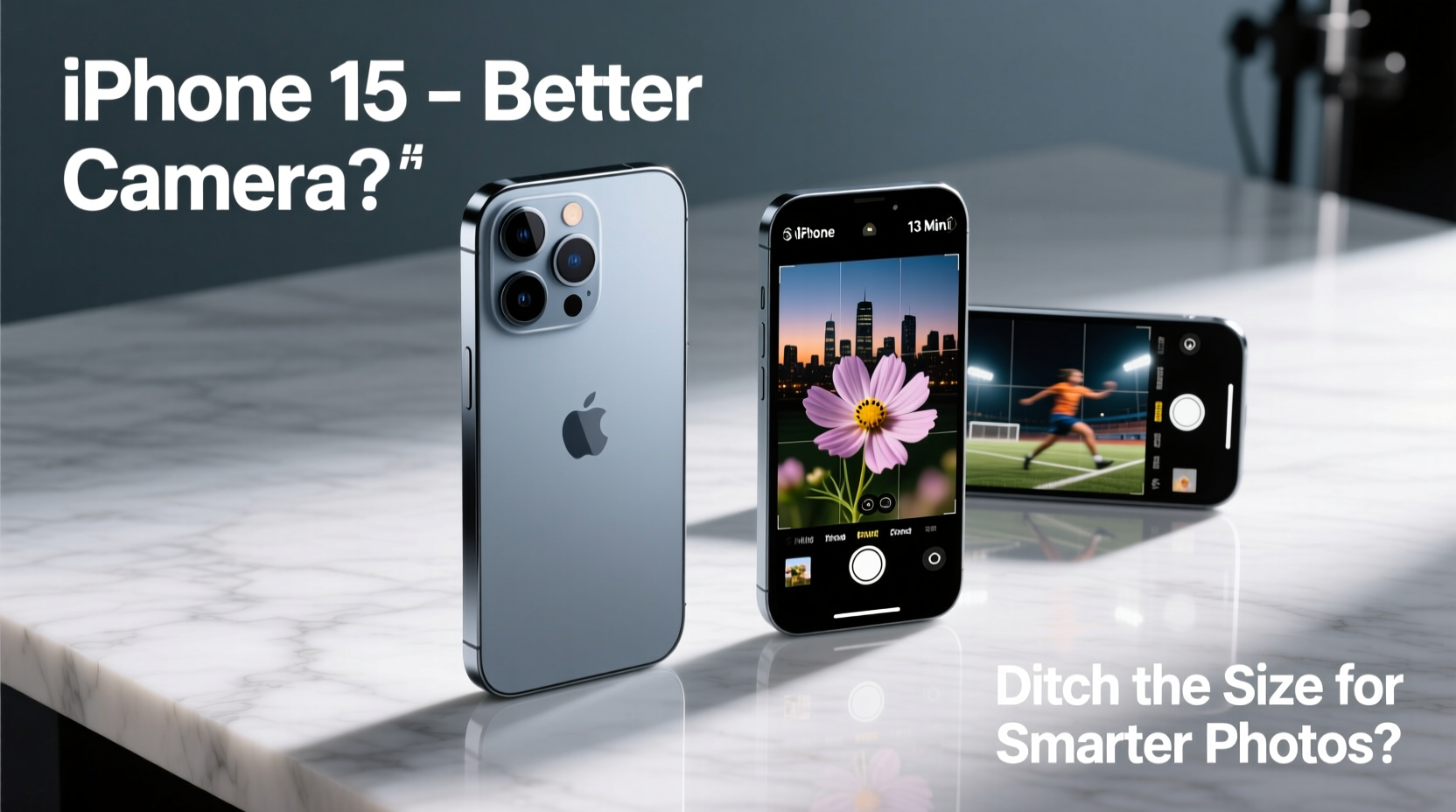
The most immediate difference between the iPhone 15 and iPhone 13 Mini is physical presence. The 13 Mini measures 131.5 x 64.2 x 7.65 mm and weighs just 140 grams. It’s among the last true small phones Apple has made. In contrast, the iPhone 15 is larger at 147.6 x 71.6 x 7.8 mm and tips the scales at 171 grams—over 20% heavier.
For many users, this isn't just a preference—it's a necessity. Smaller hands, tight pockets, or simply a desire to reduce digital fatigue make the 13 Mini a cherished device. But Apple has largely moved away from mini models, betting that consumers prefer larger screens and longer battery life.
If you’ve grown attached to the 13 Mini’s form factor, switching to the iPhone 15 means adapting to a significantly bulkier phone. You’ll likely need two hands for navigation, and it won’t slip as easily into slim jeans or small bags.
Camera Comparison: Evolution, Not Revolution
Apple markets the iPhone 15 with a \"vastly improved\" camera system. Let’s break down what actually changed compared to the 13 Mini.
| Feature | iPhone 13 Mini | iPhone 15 |
|---|---|---|
| Main Sensor | 12MP, f/1.6 aperture | 48MP, f/1.6 aperture |
| Ultra-Wide Camera | 12MP, f/2.4 | 12MP, f/2.2 |
| Telephoto Zoom | No optical zoom | Digital 2x–3x via sensor cropping |
| Night Mode | Supported on main and front cameras | Enhanced night mode with deeper noise reduction |
| Photonic Engine | A15 Bionic-based processing | Next-gen Photonic Engine with improved HDR and color accuracy |
| Video Recording | 4K at 30fps (main), Cinematic Mode 1080p | 4K at 30fps (all cameras), Cinematic Mode now supports 4K HDR |
The jump to a 48MP main sensor on the iPhone 15 is the headline upgrade. But don’t be misled—most photos are still captured as 12MP by default using pixel binning for better dynamic range and low-light performance. However, you can now shoot full-resolution 48MP ProRAW images in the Camera app, giving creative control previously limited to Pro models.
In practical terms, iPhone 15 photos show more detail in textures—think fabric patterns, tree bark, or distant signage. Low-light shots are cleaner, with less grain and more accurate skin tones. The improved ultra-wide lens captures brighter images with fewer edge distortions, especially useful in indoor group shots or architectural photography.
“While the hardware leap is real, the biggest gains come from computational photography refinements. The iPhone 15 doesn’t just take sharper photos—it understands scenes better.” — David Kim, Mobile Imaging Analyst at TechSight
Real-World Photography: When the Upgrade Matters
Consider Sarah, a travel blogger who used her iPhone 13 Mini for two years. She loved its portability while hiking or navigating narrow European alleys. But she began noticing limitations: her Instagram posts lacked the depth and clarity of peers using newer devices. In dimly lit cafés or sunset vistas, her images required heavy editing to match competitors’ out-of-camera results.
After switching to the iPhone 15, she found her workflow simplified. Nighttime street photography now retained ambient lighting without blown-out highlights. Portrait mode produced more natural hair separation, even in backlit conditions. Most importantly, she could crop into 48MP shots and still post high-resolution images without losing quality—something impossible with the 13 Mini’s sensor.
But there was a trade-off: the larger phone was harder to stabilize one-handed, and she missed the ease of pulling it out quickly. For spontaneous moments—like capturing a street performer or a sudden rainbow—the 13 Mini’s agility had been unmatched.
If your photography involves social media, professional sharing, or printing, the iPhone 15’s camera delivers measurable benefits. But if you mostly share casual snapshots over text or Instagram Stories, the 13 Mini still produces excellent results—just with less flexibility.
Beyond the Camera: Other Factors to Consider
The decision isn’t solely about photography. Several supporting features influence whether the upgrade makes sense:
- Battery Life: The iPhone 15 offers noticeably longer endurance—up to 20 hours video playback vs. 17 on the 13 Mini. This matters for day-long outings.
- Charging: The iPhone 15 uses USB-C, aligning with EU regulations and simplifying cable management. The 13 Mini’s Lightning port is increasingly outdated.
- Performance: Both use powerful chips (A15 vs A16), but the iPhone 15 runs cooler under load and supports future iOS updates longer.
- Display: The iPhone 15 has a brighter display (2000 nits peak vs. 1200), making outdoor visibility far superior.
FAQ
Can the iPhone 13 Mini still take great photos in 2024?
Absolutely. The 13 Mini’s camera remains capable for everyday use. Its portraits, daylight shots, and 4K video are still impressive. It just lacks the advanced processing, low-light finesse, and resolution headroom of newer models.
Is the iPhone 15 too big for small hands?
It depends on your grip and usage habits. Many users adapt within a week, especially if they use lighter cases or enable Reachability. However, if you prioritize comfort over features, the size difference may never feel right.
Does the 48MP sensor make a difference without editing?
For standard viewing (social media, texts, prints under 8x10”), the difference is subtle. The real advantage emerges when cropping, enlarging, or editing RAW files where extra data preserves quality.
Checklist: Should You Upgrade?
- ✅ Do you regularly shoot in low light or challenging conditions?
- ✅ Do you edit photos or share them professionally?
- ✅ Are you frustrated by short battery life on the 13 Mini?
- ✅ Can you adapt to a larger, heavier phone?
- ✅ Do you want USB-C for charging and file transfers?
If you answered yes to three or more, the iPhone 15 is a worthwhile upgrade. If not, the 13 Mini still holds up remarkably well.
Conclusion
The iPhone 15’s camera is objectively better than the 13 Mini’s—but whether it’s *meaningfully* better depends on your lifestyle. For enthusiasts, creators, or anyone who values photographic versatility, the upgrade delivers tangible benefits. The richer detail, improved night performance, and 48MP flexibility open new creative doors.
Yet, the loss of compactness is real. There’s no denying the joy of a phone that disappears in your pocket and responds effortlessly to one-handed control. If that ergonomics matter more than marginal photo gains, sticking with the 13 Mini isn’t settling—it’s choosing balance over specs.
In the end, technology should serve your life, not dictate it. Weigh what you actually need against what sounds impressive on paper. Whether you keep the mini or embrace the modern, make the choice that keeps your experience joyful—not just up-to-date.




 浙公网安备
33010002000092号
浙公网安备
33010002000092号 浙B2-20120091-4
Comments
No comments yet. Why don't you start the discussion?