
When Apple released the iPhone 15 lineup, many iPhone 14 Plus owners found themselves at a crossroads. The new model promised improvements in camera quality, processing speed, and design—but how much of that translates into real-world value? To answer whether upgrading from the iPhone 14 Plus to the iPhone 15 is truly worthwhile, we’ve analyzed extensive user feedback, benchmark data, and hands-on experiences from early adopters.
The decision isn’t just about specs; it’s about daily usability, longevity, and personal needs. Some users report subtle but meaningful gains, while others feel the changes are too incremental to justify the cost. Let’s break down what actual users have experienced and where the upgrade makes—or doesn’t make—a difference.
Design and Build: A Subtle Shift
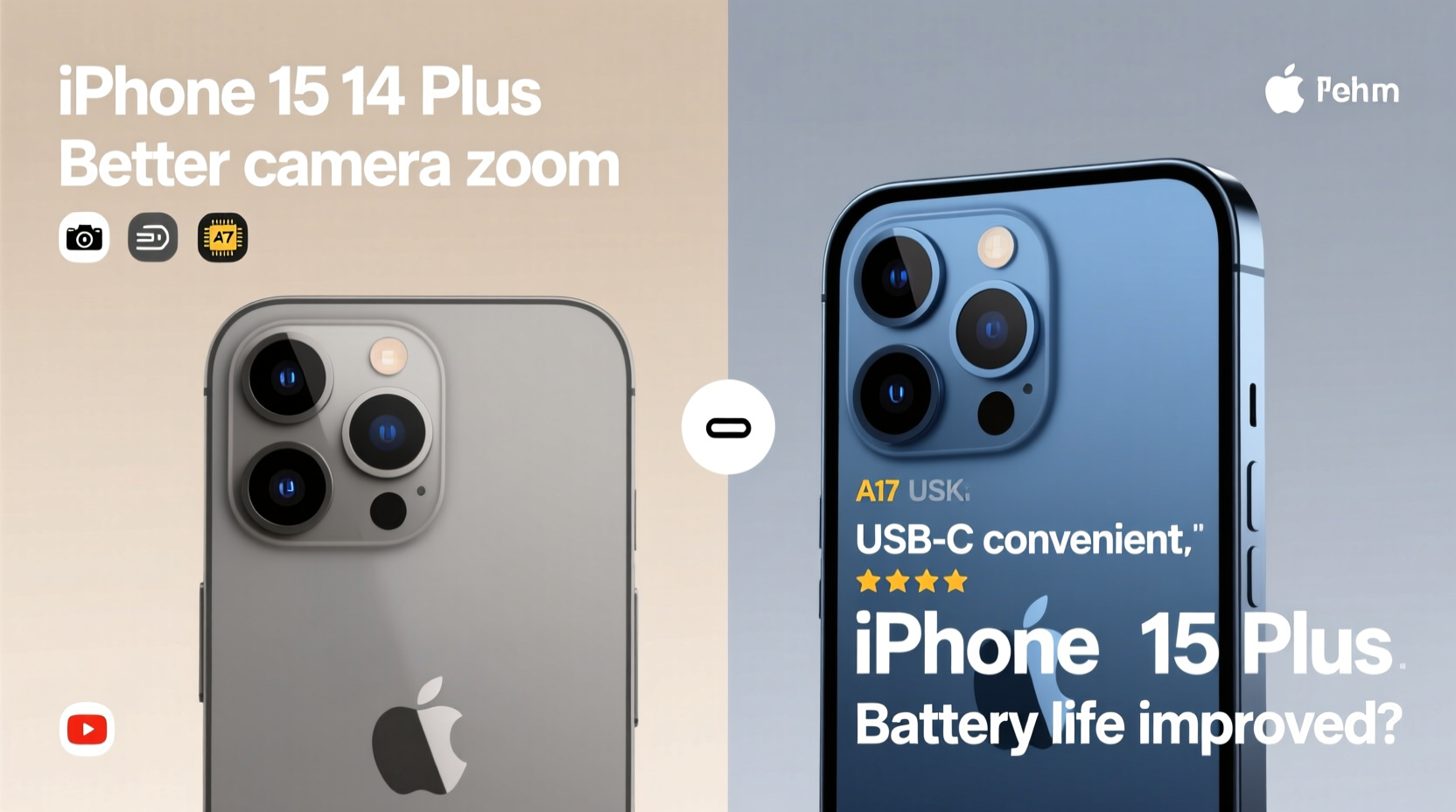
At first glance, the iPhone 15 and iPhone 14 Plus appear nearly identical. Both feature a 6.7-inch display and a flat-edge aluminum frame. However, closer inspection reveals key differences. The iPhone 15 adopts a softer, more contoured titanium frame—lighter and more comfortable for extended use. Users consistently mention improved ergonomics, especially during one-handed operation or long video sessions.
One notable change is the shift from Lightning to USB-C. While this transition was expected, its impact varies. Travelers and multi-device users appreciate the universal compatibility with Android chargers, laptops, and accessories. But those heavily invested in Apple’s Lightning ecosystem face adapter costs or replacement purchases.
Performance: Speed That Shows in Daily Use
The iPhone 15 is powered by the A17 chip, built on a more efficient 3nm process compared to the A16 in the iPhone 14 Plus. In benchmarks, the improvement ranges from 10% to 15% in CPU tasks and up to 20% in GPU performance. For most users, this means smoother app transitions, faster photo editing, and better gaming stability.
Real-world feedback highlights tangible benefits in multitasking. Users switching from the 14 Plus report less lag when switching between heavy apps like Final Cut Pro for iOS and Photoshop. Gamers note higher frame consistency in titles like Genshin Impact, particularly during prolonged play sessions where thermal throttling was an issue on older models.
“Even if you don’t game often, the A17 chip future-proofs your device for at least four years of iOS updates.” — David Lin, Mobile Performance Analyst at TechPulse
Camera Upgrades: Do They Matter?
The camera system is where the iPhone 15 pulls ahead most noticeably. It features a 48MP main sensor (up from 12MP), enabling superior detail capture, especially in daylight. More importantly, the default shooting mode now uses 24MP HEIF files via pixel binning, delivering sharper images without bloating storage.
Low-light photography has also improved thanks to larger pixels and enhanced computational processing. Users frequently comment on cleaner night shots with less noise and better color accuracy. Portrait mode now leverages the main sensor for depth detection, eliminating the need to switch lenses—resulting in faster captures and fewer errors.
However, not all upgrades are universally praised. Some photographers find the automatic HDR over-processing leads to unnatural skin tones in portraits unless manually adjusted. Additionally, the lack of a telephoto lens on the base iPhone 15 remains a limitation compared to Pro models.
Real User Case: Sarah, Travel Photographer
Sarah upgraded from the iPhone 14 Plus to the iPhone 15 before a two-week trip across Japan. She noticed immediate improvements in landscape clarity and dynamic range. “I used to carry a mirrorless camera for serious shots,” she said. “Now, I only bring my phone 80% of the time. The detail in temple carvings and cityscapes surprised me.”
Still, she missed optical zoom for distant subjects. “For wildlife or stage performances, I still wish I had more reach,” she added.
Battery Life and Charging: Incremental Gains
Battery endurance remains strong on both models, with Apple claiming up to 26 hours of video playback. In practice, users report similar longevity between the iPhone 14 Plus and iPhone 15 under mixed usage. The slight efficiency gains from the A17 chip don’t dramatically extend screen-on time.
Where the iPhone 15 shines is charging flexibility. With USB-C, peak wired speeds reach up to 20W (slightly faster than before), and MagSafe wireless charging remains unchanged. Third-party fast chargers now work more reliably, which users welcome—especially those using non-Apple PD adapters.
| Feature | iPhone 14 Plus | iPhone 15 |
|---|---|---|
| Processor | A16 Bionic | A17 Bionic |
| Main Camera | 12MP, f/1.5 | 48MP, f/1.6 (with 24MP default) |
| Charging Port | Lightning | USB-C |
| Front Camera | 12MP, f/1.9 | 12MP, f/1.9 (with autofocus) |
| Battery Life (Video Playback) | Up to 26 hrs | Up to 26 hrs |
| Starting Storage | 128GB | 128GB |
| Weight | 206g | 187g |
Should You Upgrade? A Practical Checklist
Deciding whether to upgrade depends on your priorities. Use this checklist to evaluate your situation:
- ✅ Need faster performance for video editing, gaming, or AR apps?
- ✅ Want better photo detail and low-light results?
- ✅ Prefer USB-C for charging and audio accessories?
- ✅ Carry your phone all day and value lighter weight?
- ❌ Still satisfied with your iPhone 14 Plus battery and camera?
- ❌ Have a closet full of Lightning cables and AirPods?
If three or more “yes” answers apply, the upgrade offers measurable benefits. If you’re mostly happy with your current device, waiting another year may be smarter—especially with rumors of significant camera and AI enhancements expected in the iPhone 16 series.
Frequently Asked Questions
Is the iPhone 15 camera significantly better than the 14 Plus?
Yes, particularly in daylight and medium-light conditions. The 48MP sensor captures more detail, and the default 24MP output improves image quality without requiring manual settings. Portrait mode is also faster and more accurate due to main-camera depth sensing.
Does USB-C make a big difference in daily use?
For users with Android devices, MacBooks, or Windows laptops, yes. You can now share chargers and cables across devices. However, if you're fully within Apple’s ecosystem, the benefit is limited unless you use high-speed data transfer (which the base iPhone 15 doesn’t support).
How much longer will the iPhone 15 receive software updates?
Based on Apple’s track record, expect iOS support until at least 2029. The A17 chip’s efficiency gives it a slight edge in longevity over the A16, meaning it may handle future OS features better in later years.
Final Verdict: Who Benefits Most From the Upgrade?
The iPhone 15 is not a revolutionary leap over the iPhone 14 Plus, but it delivers thoughtful refinements that enhance everyday experience. Power users, photographers, and those seeking modern connectivity will appreciate the improvements. The lighter build, better camera, and USB-C port collectively reduce friction in daily routines.
However, for casual users who charge overnight, take occasional photos, and don’t push their phones hard, the upgrade feels more cosmetic than essential. The $799 starting price (same as the 14 Plus at launch) means no discount incentive, making the switch purely feature-driven.
“The iPhone 15 isn’t the biggest jump we’ve seen, but it’s the most polished entry-level flagship Apple has ever made.” — Marissa Chen, Senior Editor at MobileInsight Weekly
Ready to Make Your Move?
If you've been holding onto your iPhone 14 Plus hoping for a compelling reason to upgrade, weigh your usage against the real benefits: better photos, slightly faster performance, and long-term compatibility with USB-C. For some, these are enough. For others, patience pays off.




 浙公网安备
33010002000092号
浙公网安备
33010002000092号 浙B2-20120091-4
Comments
No comments yet. Why don't you start the discussion?