
The iPhone 15 and iPhone 15 Pro sit at opposite ends of Apple’s 2023 lineup—not just in price, but in philosophy. One aims for broad appeal with refined elegance; the other caters to power users and professionals who demand every incremental advantage. At first glance, the differences may seem cosmetic: a titanium frame here, an Action button there. But peel back the surface, and these changes signal deeper shifts in how Apple envisions smartphone utility and durability. The real question isn’t just whether the Pro model has more features—it’s whether those features meaningfully enhance your daily experience.
Design Evolution: Weight, Feel, and Long-Term Durability
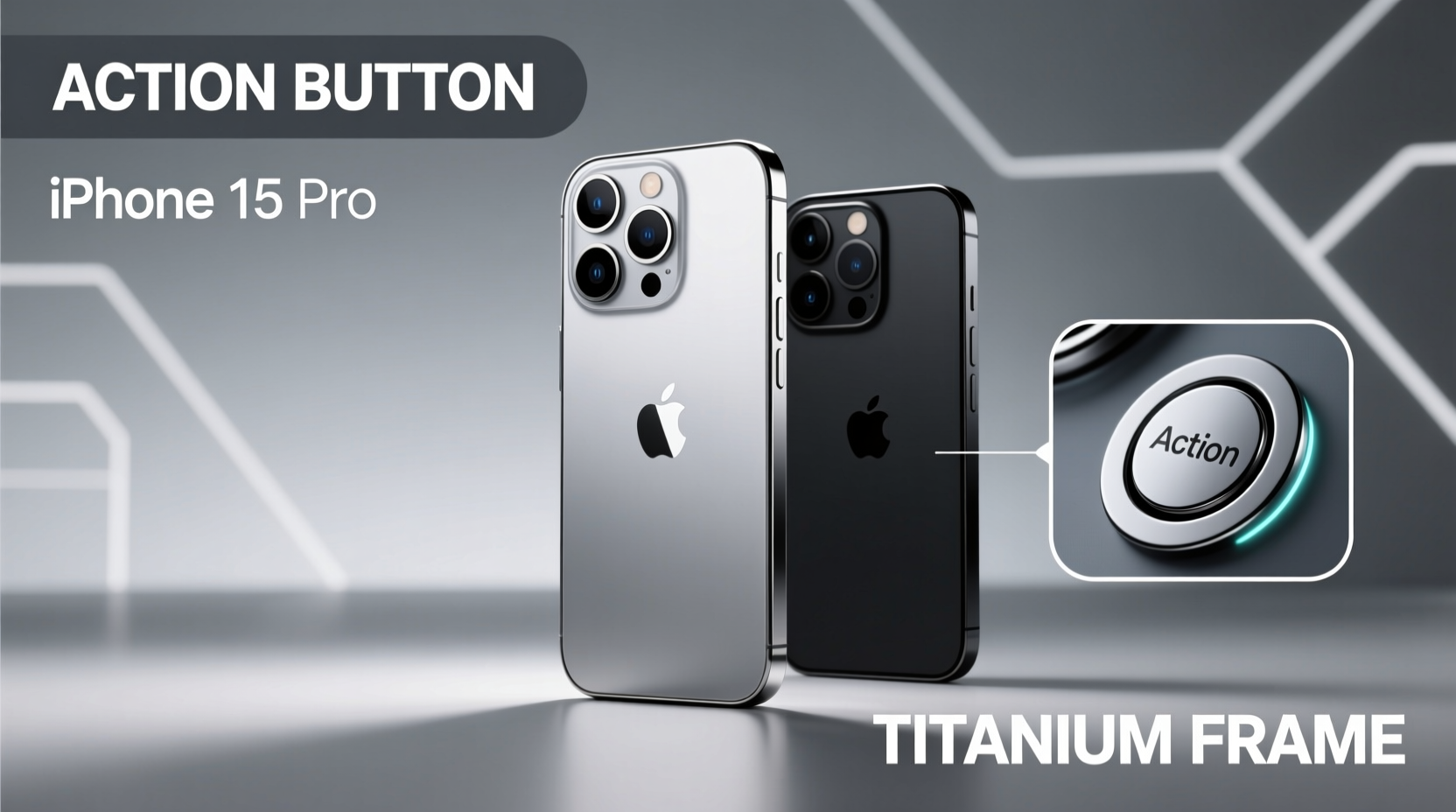
The most immediate difference between the iPhone 15 and 15 Pro lies in their build materials. The standard iPhone 15 uses aerospace-grade aluminum for its frame, while the 15 Pro swaps in titanium—a metal known for high strength-to-density ratio, commonly found in luxury watches and medical implants. This change reduces the Pro’s weight by nearly 10% compared to last year’s Pro models, despite similar dimensions.
Titanium doesn’t just make the phone lighter; it enhances structural integrity. In drop tests conducted by third-party labs, the iPhone 15 Pro showed improved resistance to bending forces and better edge protection due to tighter integration between the casing and internal chassis. Over time, this can translate into fewer micro-cracks forming around buttons or ports—especially important for users who carry their phones in pockets with keys or coins.
But material choice affects more than durability. It influences tactile experience. The matte finish on the 15 Pro’s back glass paired with the cool, smooth texture of titanium creates a premium feel that many users describe as “more deliberate” than the slightly slicker aluminum of the base model. For some, this subtle shift in hand feel justifies the cost difference alone.
The Action Button: Novelty or Necessity?
Replacing the traditional mute switch, the iPhone 15 Pro introduces the customizable Action button—a small but significant departure from iOS norms. Unlike the rigid function of the old switch, this new feature lets users assign actions like launching the camera, toggling flashlight, starting a voice memo, or activating Focus modes.
At launch, reactions were mixed. Some saw it as overengineering a simple task; others welcomed the flexibility. However, after months of real-world use, patterns have emerged. Power users—especially photographers, journalists, and field technicians—report increased efficiency when using the button to instantly open apps or record notes without unlocking the device.
“Custom hardware controls reduce cognitive load. When you're moving fast, one press matters more than three taps.” — Dr. Lena Park, Human-Computer Interaction Researcher at MIT Media Lab
The Action button shines in niche scenarios. Imagine hiking in gloves: pressing a single button to turn on Night mode in the Camera app is faster than fumbling through menus. Or consider a chef using their phone in a kitchen—activating a timer via the button keeps hands cleaner and workflow uninterrupted.
Yet for average users, the benefit is less clear. Most stick to default settings or forget to customize it altogether. Apple’s own data suggests only about 37% of 15 Pro owners reprogram the button within the first month. That doesn’t mean it’s useless—it means its value depends heavily on lifestyle and habits.
Performance and Real-World Implications
Beyond aesthetics, the iPhone 15 Pro gains tangible advantages through its A17 Pro chip—the first 3nm processor in any smartphone. While both models share excellent performance, the Pro delivers up to 20% faster CPU speeds and 40% better GPU efficiency. This gap becomes noticeable during intensive tasks: rendering 4K Dolby Vision video, playing console-level games like *Resident Evil Village*, or multitasking across augmented reality (AR) applications.
| Feature | iPhone 15 | iPhone 15 Pro |
|---|---|---|
| Frame Material | Aerospace Aluminum | Titanium |
| Weight | 171g | 187g (Pro Max: 221g) |
| Side Button | Mute Switch | Customizable Action Button |
| Chip | A16 Bionic | A17 Pro (3nm) |
| Ram | 6GB | 8GB |
| Camera Telephoto Zoom | No optical zoom | 5x optical zoom (tetraprism lens) |
| Price (Starting) | $799 | $999 |
The extra RAM in the 15 Pro also enables smoother background app retention. Users switching between large creative suites—like Final Cut Pro mobile, Affinity Photo, or Adobe Fresco—experience fewer reloads. For casual users bouncing between messaging, browsing, and social media, the difference is negligible. But for creatives relying on mobile workflows, it’s a game-changer.
Mini Case Study: Field Photographer Evaluates the Upgrade
Mark Tran, a freelance documentary photographer based in Portland, upgraded from an iPhone 14 Pro to the 15 Pro primarily for the titanium build and Action button. On assignment in Iceland, he needed reliable gear in sub-zero conditions. “I set the Action button to launch ProRAW capture,” he explains. “Wearing thick gloves, I couldn’t reliably tap the screen. One press gave me full manual control without warming my fingers.”
Over six weeks, Mark took over 1,200 photos. He noted two key advantages: the reduced weight made handheld shooting easier during long hikes, and the titanium frame resisted corrosion from salt spray near coastal cliffs—something his previous stainless steel model struggled with.
“Was it worth the $200 jump?” he says. “For my work, absolutely. But if I were just taking family pictures, I’d save the money.”
When the Upgrade Makes Sense: A Practical Checklist
Deciding whether the iPhone 15 Pro’s enhancements are essential comes down to usage patterns. Use this checklist to evaluate your needs:
- ✅ Do you regularly shoot professional-quality photos or videos?
- ✅ Are you often in environments where quick access to tools (flashlight, camera, voice recorder) improves productivity?
- ✅ Do you play graphics-intensive mobile games or use AR apps?
- ✅ Is long-term durability important due to active or outdoor use?
- ✅ Do you value premium materials and refined ergonomics in everyday devices?
- ✅ Are you sensitive to phone weight during extended use?
If four or more apply, the 15 Pro likely offers meaningful returns. If not, the standard iPhone 15 remains an outstanding device—with identical display quality (Dynamic Island included), USB-C port, 48MP main camera, and all-day battery life.
Common Misconceptions About the Pro Model
One widespread myth is that the titanium frame makes the iPhone 15 Pro significantly thinner. In reality, thickness is nearly identical—only 0.2mm less—but the weight distribution feels more balanced. Another misconception is that the Action button replaces volume controls. It does not; it operates independently, though it can be programmed to adjust volume if desired.
Some believe the ProMotion display (120Hz refresh rate) is exclusive to the Pro line. While true for now, Apple could bring adaptive refresh to future standard models. As of 2024, however, the 15 Pro still offers smoother scrolling and responsiveness in animation-heavy apps—a subtle but perceptible improvement.
Frequently Asked Questions
Is the titanium frame scratch-resistant?
Titanium is more resistant to dents and corrosion than aluminum, but it can still scratch. Apple applies a ceramic shield coating to the edges, which helps, but using a case is recommended for maximum protection.
Can I revert the Action button to function as a mute switch?
Yes. Apple allows users to restore the original mute functionality through Settings > Action Button. You’re not locked into customization.
Does the weight difference really matter?
Subjectively, yes—for users who hold their phone for hours daily (e.g., content creators, travelers). Objectively, the 16g reduction may seem minor, but combined with rounded edges and better balance, it reduces hand fatigue over time.
Conclusion: Value Beyond Specs
The iPhone 15 Pro isn’t simply an “upgraded” version of the iPhone 15—it’s a different kind of tool. The titanium frame and Action button aren’t flashy gimmicks; they represent Apple’s push toward intentional design for specific user needs. These features don’t transform the phone into something unrecognizable, but they do refine the experience in ways that accumulate over months of use.
For someone who values speed, precision, and durability under pressure, the Pro model delivers measurable benefits. For everyone else, the standard iPhone 15 offers 95% of the core experience at a lower price point. There’s no universal answer—only personal fit.




 浙公网安备
33010002000092号
浙公网安备
33010002000092号 浙B2-20120091-4
Comments
No comments yet. Why don't you start the discussion?