
The smartphone market in 2024 remains fiercely competitive, with Apple’s iPhone 15 and Samsung’s Galaxy S23 standing as flagship representatives of their respective ecosystems. While Apple continues to dominate headlines and consumer sentiment with its annual release cycle, Samsung counters with aggressive innovation and feature-packed hardware. But beneath the marketing buzz and brand loyalty, a critical question emerges: Is the widespread enthusiasm for the iPhone 15 truly warranted when placed side by side with the Galaxy S23?
This isn’t just about specs on paper—it’s about real-world performance, longevity, user experience, and value. Let’s dissect both devices across key categories to determine whether the iPhone 15 lives up to its reputation or if the Galaxy S23 offers a smarter, more balanced alternative.
Design and Build Quality: Subtle Differences, Big Implications
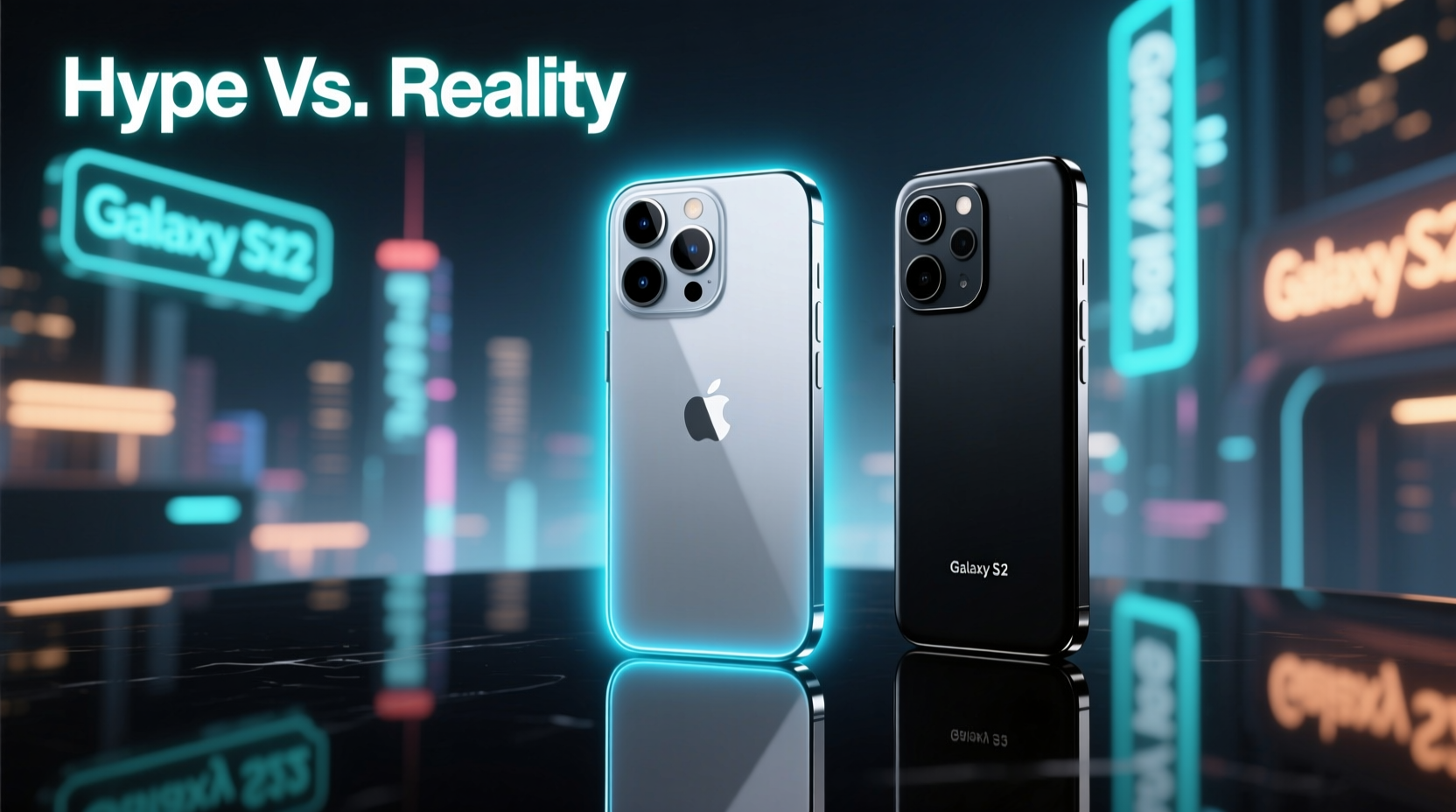
Both phones boast premium materials—stainless steel and aerospace-grade aluminum on the iPhone 15 Pro models, while the Galaxy S23 Ultra features Armor Aluminum and Gorilla Glass Victus 2. The iPhone 15 maintains Apple’s minimalist aesthetic, with a slightly curved back and flat edges that feel familiar but can be slippery without a case.
The Galaxy S23, particularly the Ultra variant, leans into functionality with a more angular design, flatter display, and built-in S Pen—a standout feature for creatives and note-takers. Its slightly heavier build gives it a substantial, premium feel, though some may find it less pocket-friendly.
Performance: Chip Wars and Real-World Speed
Apple’s A17 Bionic chip, built on a 3nm process, leads in raw CPU performance and efficiency. Benchmarks consistently show it outperforming the Snapdragon 8 Gen 2 (used in the U.S. version of the Galaxy S23) in single-core tasks. This translates to snappier app launches, smoother multitasking, and superior optimization within iOS.
However, Samsung’s device compensates with higher RAM options—up to 12GB compared to the iPhone’s 6GB—even if iOS manages memory more efficiently. Android users who frequently switch between apps or use heavy productivity tools may appreciate the extra headroom.
Thermals also play a role. The iPhone 15 tends to throttle under sustained load (e.g., gaming or video editing), whereas the S23’s larger chassis allows for better heat dissipation, maintaining consistent performance over time.
“While the A17 Bionic is technically superior, Samsung’s thermal management gives the S23 an edge in prolonged workloads.” — David Lin, Mobile Hardware Analyst at TechPulse Insights
Camera Comparison: Philosophy Over Megapixels
Apple emphasizes computational photography and natural color science. The iPhone 15 features a 48MP main sensor, improved low-light performance, and next-gen Smart HDR. Its portrait mode is seamless, and video recording—especially in Dolby Vision HDR—remains unmatched for creators.
Samsung takes a different approach: versatility. The S23 Ultra packs a 200MP main sensor, 10x optical zoom, and dual telephoto lenses. It excels in daylight detail capture and offers unparalleled flexibility for zoom photography. However, its processing can oversharpen images or oversaturate skies, appealing to some but feeling artificial to others.
In low light, both perform admirably, but the iPhone produces more consistent, balanced results. For social media sharing or casual photography, the difference is negligible. For enthusiasts who want creative control, the S23’s Pro Mode and RAW support offer deeper customization.
| Feature | iPhone 15 | Galaxy S23 Ultra |
|---|---|---|
| Main Sensor | 48MP (f/1.6) | 200MP (f/1.7) |
| Telephoto Zoom | 3x optical | 3x & 10x optical |
| Video Recording | 4K Dolby Vision HDR | 8K@30fps |
| Low-Light Performance | Excellent, natural tone | Very good, slight noise at high zoom |
| Front Camera | 12MP (f/1.9) | 12MP (f/2.2) |
Battery Life and Charging: Efficiency vs Flexibility
The Galaxy S23 Ultra holds a 5,000mAh battery, significantly larger than the iPhone 15’s 3,349mAh. In real-world usage, this translates to longer screen-on time—often exceeding 12 hours for moderate users. The iPhone 15, while optimized through iOS power management, typically lasts 8–10 hours under similar conditions.
Charging is another divergence. The S23 supports 45W fast wired charging and 15W wireless, reaching 70% in 30 minutes. The iPhone 15 maxes out at 20W wired and 15W MagSafe, taking nearly twice as long to charge. Neither includes a charger in the box, but third-party options are widely available.
If you’re someone who forgets to charge overnight or travels frequently, the S23’s endurance and rapid recharge capability provide tangible advantages.
Ecosystem and Software Experience
This is where personal preference becomes decisive. iOS offers simplicity, long-term software support (5+ years of updates), and tight integration with Macs, iPads, and Apple Watches. iMessage, FaceTime, and AirDrop remain compelling for users already invested in the ecosystem.
Android, particularly Samsung’s One UI 6, provides greater customization, split-screen multitasking, native file management, and support for expandable storage (though not on the S23). Features like Samsung DeX transform the phone into a desktop computer, a functionality absent from iOS.
Updates are less predictable on Android, though Samsung now guarantees four major OS upgrades and five years of security patches—closing the gap with Apple.
Mini Case Study: Sarah, Freelance Photographer
Sarah upgraded from an iPhone 12 to the Galaxy S23 Ultra for her travel photography business. She needed better zoom for wildlife shots and faster charging during long days. While she missed iMessage initially, she adapted using WhatsApp and found the 200MP sensor and Pro Mode invaluable for capturing detail-rich landscapes. “The ability to shoot at 10x without losing clarity changed how I work,” she says. “And charging from 20% to 90% in 40 minutes? That’s peace of mind.”
Value for Money: Price vs Longevity
The iPhone 15 starts at $799; the S23 Ultra begins at $1,199. However, comparing base models isn’t fair—the S23+ ($999) is a more direct competitor to the iPhone 15 Pro. At that level, the S23 offers more storage options, faster charging, and advanced camera features.
Yet, Apple’s resale value remains superior. After two years, an iPhone typically retains 60–70% of its value; Samsung phones average 40–50%. This makes the iPhone a better financial choice if you upgrade every few years.
Checklist: Choosing Between iPhone 15 and Galaxy S23
- ✅ Prioritize seamless ecosystem integration? → iPhone 15
- ✅ Need advanced zoom or S Pen functionality? → Galaxy S23 Ultra
- ✅ Want faster charging and longer battery life? → Galaxy S23
- ✅ Prefer natural photo colors and best-in-class video? → iPhone 15
- ✅ Value long-term resale and consistent updates? → iPhone 15
- ✅ Desire greater customization and multitasking? → Galaxy S23
Frequently Asked Questions
Is the iPhone 15 worth the hype over the Galaxy S23?
It depends on your priorities. The iPhone 15 excels in ecosystem cohesion, video quality, and long-term support. If those matter most, the hype is justified. But if you value hardware flexibility, zoom capability, and charging speed, the S23 may be the better overall device.
Does the Galaxy S23 outperform the iPhone 15 in daily use?
For most everyday tasks—browsing, messaging, streaming—both perform flawlessly. The S23 pulls ahead in multitasking and battery endurance, while the iPhone feels more responsive in app transitions due to iOS optimization.
Which phone will last longer?
Apple typically supports iPhones with software updates for 5–6 years, often making them usable longer. However, the S23’s superior battery and repairability (modular components) can extend its physical lifespan. Longevity isn’t just about updates—it’s about how well the device holds up over time.
Conclusion: Beyond the Hype
The hype around the iPhone 15 isn’t unfounded—it’s a polished, powerful device with industry-leading video capabilities, strong resale value, and unmatched ecosystem synergy. But calling it objectively “better” than the Galaxy S23 ignores significant strengths on Samsung’s side: superior zoom, faster charging, longer battery life, and greater functional versatility.
The truth is, the best phone isn’t determined by brand loyalty or marketing momentum. It’s shaped by how you use technology. If your life revolves around Apple’s ecosystem and you value simplicity and longevity, the iPhone 15 delivers. But if you crave control, adaptability, and cutting-edge hardware features, the Galaxy S23 proves that Android isn’t just catching up—it’s leading in areas that matter.




 浙公网安备
33010002000092号
浙公网安备
33010002000092号 浙B2-20120091-4
Comments
No comments yet. Why don't you start the discussion?