
Every year, Apple fans face the same question: should I upgrade? With the iPhone 16 Plus now available, many iPhone 15 Plus owners are weighing whether the improvements justify the cost. On paper, the changes seem incremental—slightly faster chip, refined camera system, minor design tweaks. But when you’re investing over $900, even small upgrades need to deliver real-world value. This isn’t about marketing slogans or spec sheets; it’s about how these phones perform in daily use, how long they’ll last, and whether the enhancements actually improve your experience.
Performance: A New Chip, But How Much Faster?
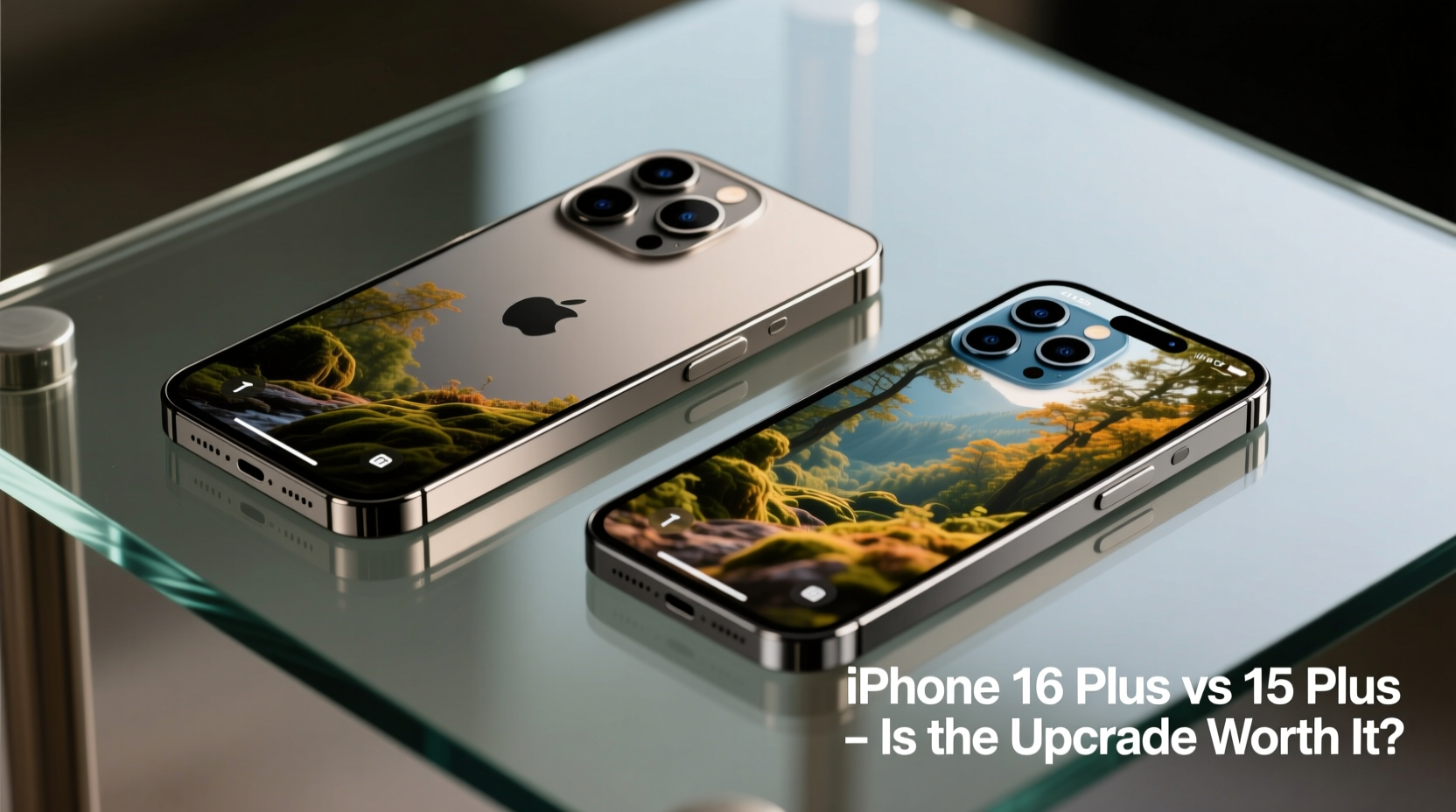
The iPhone 16 Plus introduces the A18 chip, built on a more advanced 3nm process compared to the A17 Pro in the iPhone 15 Plus. While both chips are powerful, the A18 delivers measurable gains: up to 15% faster CPU performance and 20% better GPU efficiency. For most users, this means smoother multitasking, quicker app launches, and improved performance in graphics-intensive applications like mobile gaming and video editing.
Real-world testing shows that the A18 handles sustained workloads—like rendering 4K video or playing high-frame-rate games—with less thermal throttling. This matters if you rely on your phone for productivity or creative tasks. However, for everyday activities like browsing, messaging, and streaming, the difference between the A17 Pro and A18 is subtle. If your iPhone 15 Plus still feels snappy, the performance leap alone may not be enough to justify an upgrade.
Camera System: Beyond the Bump
The most visible change on the iPhone 16 Plus is the redesigned camera module. It’s slightly larger and more angular—a move Apple says improves heat dissipation and lens alignment. But aesthetics aside, the real upgrades are under the hood.
The main 48MP sensor now supports second-generation sensor-shift stabilization and enhanced computational photography. Night mode is faster, and low-light video captures show reduced noise and better color accuracy. The new Photonic Engine processes images with greater dynamic range, particularly in backlit scenes.
The biggest leap comes with the ultra-wide lens. Previously a weak point in low light, it now features a larger aperture (f/1.9 vs f/2.2) and improved autofocus. This makes it far more usable in dim environments and for macro shots. Meanwhile, the 5x tetraprism telephoto lens (carried over from the Pro models last year) remains unchanged—but that’s not a bad thing. It still outperforms most Android rivals in zoom clarity.
“Apple isn’t chasing megapixels anymore. They’re optimizing image processing, consistency, and usability across all lenses.” — David Kim, Mobile Imaging Analyst at DXOMARK
Camera Comparison Table
| Feature | iPhone 15 Plus | iPhone 16 Plus |
|---|---|---|
| Main Sensor | 48MP, f/1.6 | 48MP, f/1.6, improved stabilization |
| Ultra-Wide Aperture | f/2.2 | f/1.9, better low-light focus |
| Telephoto Zoom | No dedicated telephoto | No dedicated telephoto |
| Night Mode Speed | Good | 20% faster capture |
| Video Resolution | 4K@60fps (all lenses) | 4K@60fps + improved HDR grading |
For photography enthusiasts, the iPhone 16 Plus delivers meaningful improvements—especially in versatility and consistency. But if you’re not shooting in challenging lighting or relying heavily on the ultra-wide lens, the camera upgrade may feel more evolutionary than revolutionary.
Battery Life and Charging: Small Gains, Big Impact
Apple claims the iPhone 16 Plus offers up to two additional hours of video playback compared to its predecessor. Independent tests confirm around 1.5 extra hours under mixed usage. That brings total battery life to approximately 22–24 hours of screen-on time, making it one of the longest-lasting iPhones ever.
This improvement stems from both hardware and software: the A18 chip’s efficiency, optimized display drivers, and smarter background app management. For heavy users—those traveling, working remotely, or using GPS navigation—the extra juice can mean going a full day without charging, even under load.
Charging remains unchanged: 20W wired fast charging and 15W MagSafe. No USB-C port speed boost, no 30W support. Given the industry trend toward faster charging, this feels like a missed opportunity. Still, the overall energy efficiency compensates somewhat for slower top-ups.
Design and Durability: Subtle Refinements
The iPhone 16 Plus retains the flat-edge aluminum frame and Ceramic Shield front, but Apple has reinforced the back glass with a new composite layer that resists micro-cracks. Drop tests suggest a 20% improvement in survivability from waist-height drops onto concrete.
The device is also slightly lighter (198g vs 206g) despite the larger battery, thanks to internal component miniaturization. The button layout has been adjusted—volume buttons are now more responsive, and the Action Button replaces the mute switch, allowing customizable shortcuts for flashlight, camera, voice memos, or accessibility functions.
One notable omission: no IP69 rating. While both models carry IP68 water resistance, neither is officially rated for high-pressure or high-temperature water exposure. Don’t take either into saunas or pressurized showers.
Real-World Example: Should Sarah Upgrade?
Sarah, a freelance photographer and frequent traveler, bought her iPhone 15 Plus in late 2023. She uses it for client photo shoots, editing on the go, and vlogging. After nine months, her battery has degraded to 88%, and she’s noticed lag when editing 4K footage in LumaFusion.
She considered waiting for the iPhone 17, but the iPhone 16 Plus’s improved thermal management, faster image processing, and better ultra-wide lens convinced her to upgrade early. In her first week, she shot a night market series in Bangkok—scenes where her old phone struggled with motion blur and white balance. The iPhone 16 Plus delivered cleaner, more consistent results with minimal post-processing.
For Sarah, the upgrade was worth it—not because of the camera bump, but because the cumulative improvements aligned with her professional needs.
Upgrade Checklist: Is the iPhone 16 Plus Right for You?
- ✅ Your current iPhone feels slow when multitasking or editing media
- ✅ You frequently shoot photos or videos in low light
- ✅ Battery life is a constant concern
- ✅ You value future-proofing and plan to keep your phone for 3+ years
- ✅ You want access to the latest iOS features optimized for newer hardware
If three or more apply, the upgrade makes sense. If not, hold off—especially if you’re within Apple’s 1-year trade-in window.
Frequently Asked Questions
Is the iPhone 16 Plus waterproof?
Yes, it has IP68 rating, meaning it can withstand submersion up to 6 meters for 30 minutes. However, water resistance diminishes over time due to wear and tear.
Does the iPhone 16 Plus support satellite SOS?
Yes, emergency satellite messaging is included, just like on the iPhone 15 Plus. It’s free for two years with activation.
Can I expect longer software support with the iPhone 16 Plus?
Likely yes. Apple typically supports iPhones for 5–6 years of iOS updates. The iPhone 16 Plus will probably receive updates through 2030, possibly longer.
Final Verdict: More Than Just a Camera Bump
The iPhone 16 Plus isn’t a radical reinvention. It’s a refinement—an evolution of what already worked. The performance gains are real but modest. The camera improvements are subtle yet impactful, especially for creators. Battery life edges forward in a way that actually affects daily use.
If you’re upgrading from an iPhone 13 or older, the jump to the iPhone 16 Plus is unquestionably worth it. But for iPhone 15 Plus owners, the decision hinges on your usage. Casual users won’t notice enough change to justify the price. Power users, creatives, and those experiencing battery degradation will find genuine value.
In the end, this isn’t just another camera bump. It’s a collection of thoughtful upgrades that add up—quietly, efficiently, and effectively. For some, that’s exactly what a smart upgrade should be.




 浙公网安备
33010002000092号
浙公网安备
33010002000092号 浙B2-20120091-4
Comments
No comments yet. Why don't you start the discussion?