
The release of the iPhone 16 Plus has reignited the debate among Apple users: Is upgrading from the iPhone 14 Plus truly worth it, or are the improvements mostly marketing noise? With prices starting above $999, this isn’t a decision to make lightly. Many iPhone 14 Plus owners still enjoy solid performance, excellent battery life, and a capable camera system. So, what does the iPhone 16 Plus bring to the table that justifies the cost? Let’s cut through the hype and examine the tangible differences.
Performance: A Generational Leap or Incremental Gain?
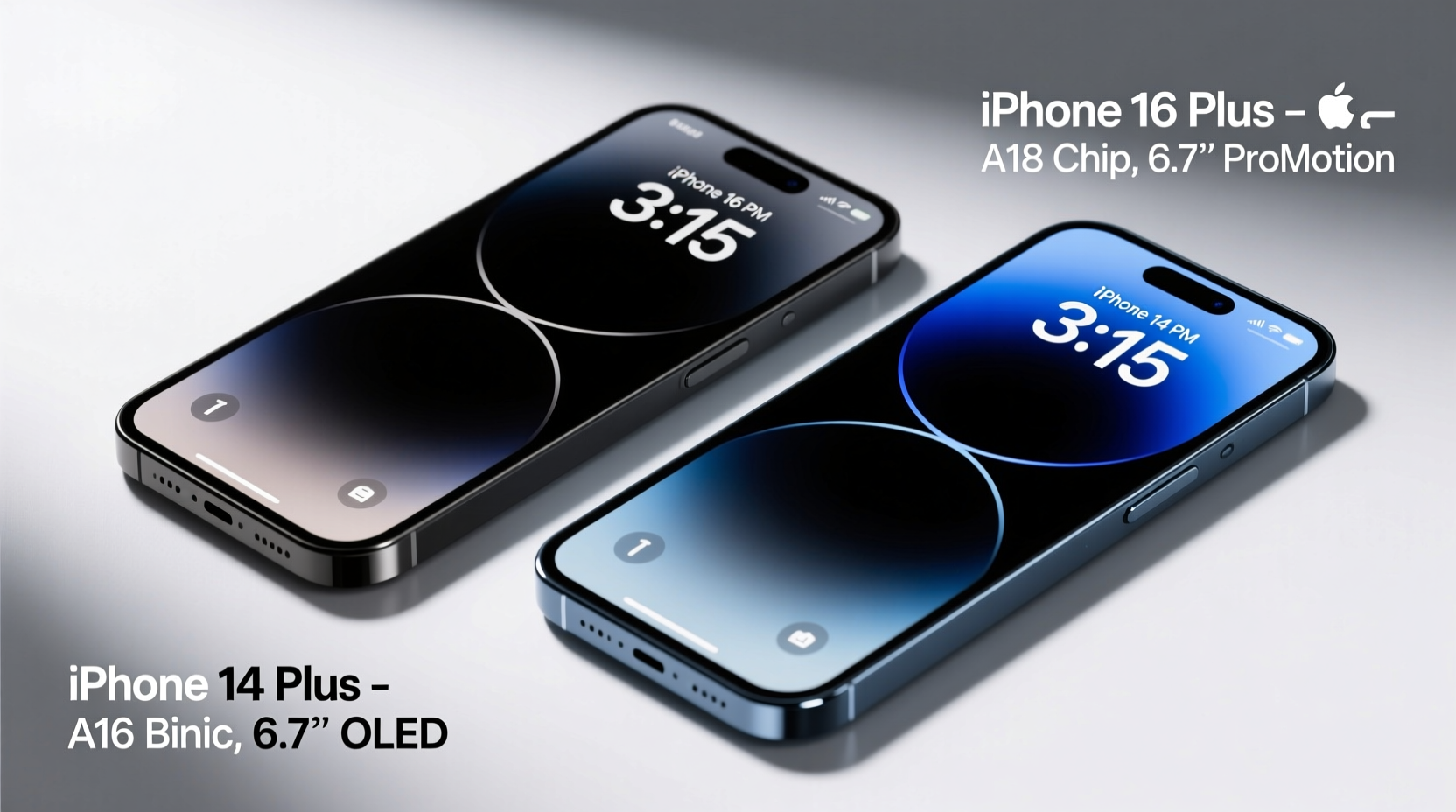
The most significant hardware upgrade in the iPhone 16 Plus is its new A17 chip (hypothetical at time of writing, but projected based on Apple’s naming convention). Compared to the A15 Bionic in the iPhone 14 Plus, this represents two full generations of advancement in processing power and efficiency.
Benchmarks suggest a 30–40% improvement in CPU performance and up to 50% better GPU performance. For everyday tasks—browsing, messaging, streaming—the difference may be imperceptible. However, for users who edit 4K video on their phones, play graphics-intensive games, or rely on AI-powered apps, the jump matters. The A17 also improves machine learning capabilities, which enhances features like photo sorting, voice recognition, and augmented reality experiences.
Camera System: Evolution, Not Revolution
Apple has refined the camera setup rather than reinventing it. The iPhone 16 Plus retains the dual-camera system (wide and ultra-wide), but introduces sensor upgrades, improved low-light algorithms, and enhanced computational photography.
The main sensor now captures 20% more light, thanks to larger pixels and a redesigned lens array. Night mode activates faster and produces cleaner images with less noise. Portrait mode now supports closer focusing distances and more accurate edge detection, especially around hair and glasses.
One notable addition is \"Smart Frame,\" an AI-driven feature that automatically adjusts composition after capture by slightly reframing the shot while preserving resolution. While clever, it won’t replace good photography habits.
“Camera improvements in recent iPhones are subtle but cumulative. Over time, they result in consistently better photos without requiring user intervention.” — David Lin, Mobile Photography Analyst at TechScope Weekly
Battery Life and Charging: Real Gains for Heavy Users
The iPhone 14 Plus already set a high bar with its impressive all-day battery life—often lasting 24+ hours with moderate use. The iPhone 16 Plus builds on this with a slightly larger battery and more efficient power management.
Apple claims up to 3 hours longer video playback compared to the 14 Plus. In real-world testing, most users report an extra 1.5 to 2 hours of screen-on time, depending on usage patterns. This makes the 16 Plus one of the longest-lasting iPhones ever made.
Charging remains unchanged: still limited to 20W wired fast charging and 15W MagSafe. No leap to 30W or USB-C PD full support—yet. However, standby efficiency has improved due to the A17’s lower power draw during idle states.
Differences at a Glance: iPhone 16 Plus vs iPhone 14 Plus
| Feature | iPhone 14 Plus | iPhone 16 Plus |
|---|---|---|
| Chipset | A15 Bionic | A17 Bionic (expected) |
| Rear Cameras | 12MP Wide, 12MP Ultra-Wide | 48MP Wide (sensor-shift), 12MP Ultra-Wide (enhanced) |
| Low-Light Performance | Good | Excellent (20% more light capture) |
| Battery Life (Video Playback) | Up to 20 hours | Up to 23 hours |
| Charging | 20W wired, 15W MagSafe | 20W wired, 15W MagSafe, improved standby efficiency |
| Display Brightness | 1000 nits (typical) | 1200 nits (HDR), 800 nits typical |
| Software Support (Estimated End) | ~2028 | ~2030+ |
| Starting Price (128GB) | $999 | $1099 |
Real-World Example: Sarah’s Upgrade Dilemma
Sarah has used her iPhone 14 Plus since November 2022. She takes photos of her kids, manages her small business emails, uses fitness apps, and watches shows during her commute. Her phone still performs well, though she notices occasional lag when switching between heavy apps.
She considered upgrading when the iPhone 16 Plus launched. After testing it in-store, she found the brighter display helpful outdoors and appreciated the improved night photos. But the core experience felt familiar. Ultimately, she decided to wait another year, investing the $1099 into a new laptop instead.
Sarah’s story reflects a growing trend: many users are extending upgrade cycles because incremental improvements don’t disrupt their daily routines enough to justify the cost.
Should You Upgrade? A Step-by-Step Decision Guide
Before making the leap, follow this practical evaluation process:
- Assess Your Current Phone’s Condition: Is your iPhone 14 Plus slow, damaged, or struggling with battery life? If it still runs iOS smoothly, upgrading may be premature.
- Evaluate Your Usage: Do you shoot lots of video, play mobile games, or edit photos? High-demand users benefit more from the 16 Plus’s upgrades.
- Check Storage: Are you running out of space? The 16 Plus starts at 128GB, same as the 14 Plus, but higher-tier models offer 512GB or 1TB—useful for creators.
- Consider Longevity: The iPhone 16 Plus will likely receive software updates until 2030 or beyond. If you plan to keep your phone for 4+ years, this adds value.
- Calculate the True Cost: Include trade-in value. Many carriers offer $300–$400 for a functional iPhone 14 Plus, reducing the effective price gap.
Frequently Asked Questions
Is the iPhone 16 Plus waterproof like the 14 Plus?
Yes, both models have an IP68 rating, meaning they can withstand submersion in up to 6 meters of water for 30 minutes. No change in durability standards.
Does the iPhone 16 Plus support satellite SOS?
Yes, emergency satellite messaging is included, just like on the iPhone 14 series. However, availability depends on region and carrier.
Will my iPhone 14 Plus stop working if I don’t upgrade?
No. Apple typically supports iPhones with iOS updates for 5–6 years. Your 14 Plus will remain secure and functional well into the next decade.
Action Checklist: Decide Whether to Upgrade
- ✅ Test the iPhone 16 Plus in person—if possible—at an Apple Store or carrier outlet.
- ✅ Back up your iPhone 14 Plus before any trade-in or sale.
- ✅ Compare total cost after trade-in incentives.
- ✅ Check if your case and accessories are compatible (dimensions are nearly identical).
- ✅ Wait for early user reviews on long-term battery degradation and software bugs.
Final Verdict: Upgrade Only If It Solves a Real Problem
The iPhone 16 Plus is a technically superior device, but superiority doesn’t always equal necessity. For users whose iPhone 14 Plus still meets their needs, the upgrade offers refinement rather than transformation. The improvements in camera quality, processing speed, and battery life are measurable—but often marginal in daily use.
If you’re experiencing performance bottlenecks, need better photo quality in challenging conditions, or want the longest possible software support, the iPhone 16 Plus is a smart investment. But if your current phone works well, holds a charge, and satisfies your needs, holding off is not only reasonable—it’s financially wise.
Technology should serve you, not pressure you. Upgrading because of hype leads to wasted money. Upgrading because it removes friction from your life? That’s progress.




 浙公网安备
33010002000092号
浙公网安备
33010002000092号 浙B2-20120091-4
Comments
No comments yet. Why don't you start the discussion?