
As the smartphone arms race accelerates into 2025, all eyes are on Cupertino and Seoul. The upcoming iPhone 16 Plus and Samsung Galaxy S25 represent not just new devices, but pivotal moments for their respective brands. For years, Samsung has led in display technology, AI integration, and hardware innovation—features that often redefined what a flagship phone could do. Apple, meanwhile, has relied on ecosystem strength, long-term software support, and refined design. But with increasing pressure from Android competitors and consumer demand for faster innovation, the question arises: will Apple finally close the gap?
Rumors, supply chain leaks, and analyst forecasts suggest that the iPhone 16 Plus may be Apple’s boldest leap forward in years. From advanced AI capabilities to redesigned form factors and next-gen chip performance, Apple appears to be responding to criticism that it’s been playing catch-up. Meanwhile, Samsung isn’t standing still—the S25 series is expected to push the boundaries of computational photography, foldable-inspired UX, and on-device intelligence.
The Innovation Gap: Where Samsung Has Led
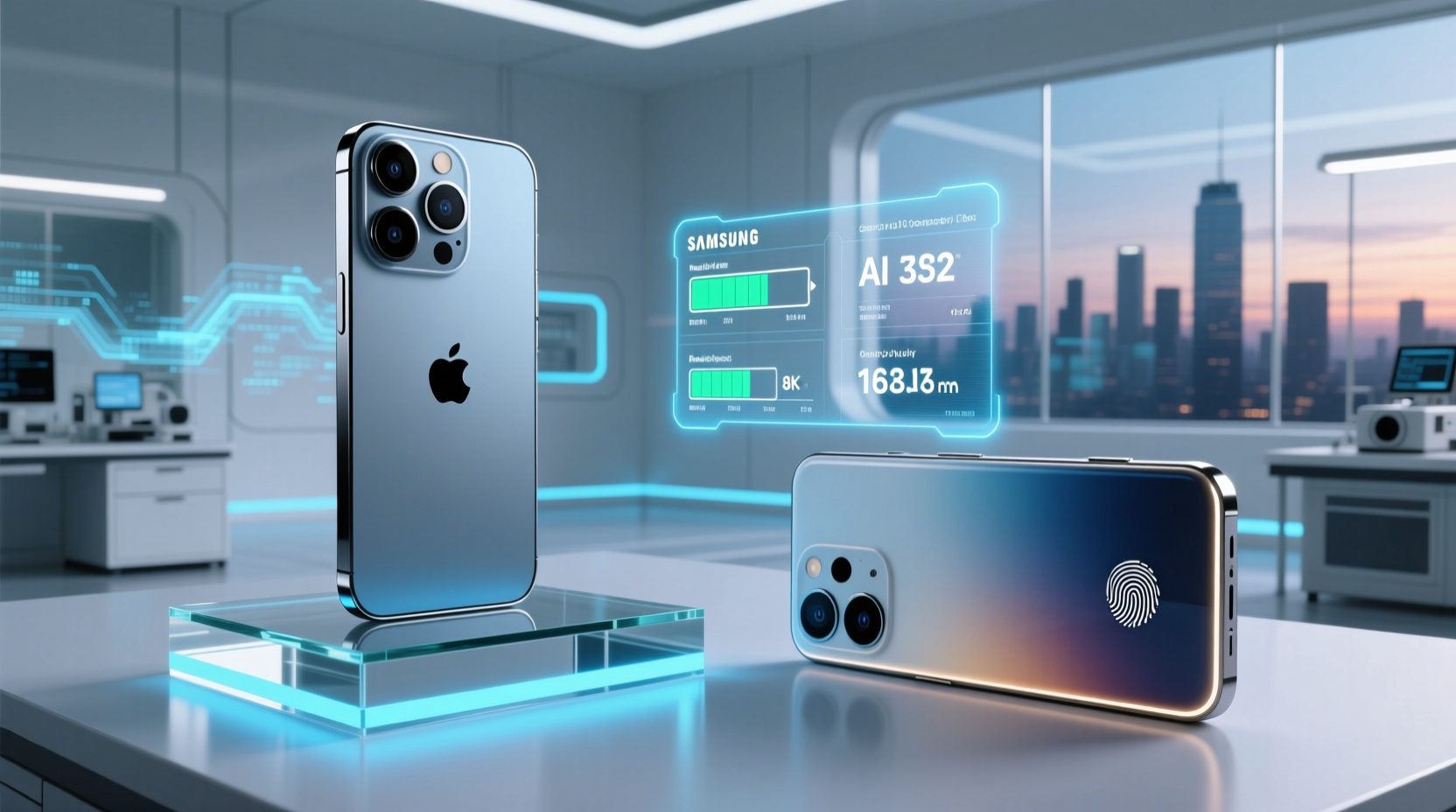
Samsung has consistently introduced features years before Apple adopted them. Wireless charging? Samsung had it in 2015 with the Galaxy S6. High refresh rate displays? Galaxy Note 20 in 2020. Under-display cameras, ultra-wideband precision tracking, and multi-microphone noise suppression—all debuted on Samsung flagships well before similar tech appeared on iPhones.
In recent years, Samsung’s biggest advantage has been its vertical integration. By manufacturing its own displays, memory, and sensors, Samsung can innovate rapidly across hardware layers. This agility allowed the Galaxy S24 series to launch with Galaxy AI—an on-device artificial intelligence suite that enables real-time call translation, message summarization, and photo enhancement without relying on cloud processing.
“Samsung’s AI-first strategy in 2024 forced Apple to accelerate its machine learning roadmap. The S25 won’t just be a phone—it’ll be a personal assistant with contextual awareness.” — Dr. Lena Park, Senior Analyst at TechInsight Asia
Apple, by contrast, has prioritized privacy and seamless ecosystem integration over bleeding-edge feature adoption. While this approach has earned loyalty, critics argue it has come at the cost of technological leadership.
iPhone 16 Plus: Signs of a Strategic Shift
Leaks from reliable sources like Mark Gurman (Bloomberg) and Ross Young (Display Supply Chain Consultants) suggest the iPhone 16 Plus will feature several firsts for Apple:
- A vertically aligned camera module to accommodate larger sensors and improved periscope zoom.
- A dedicated “AI button” on the side rail for instant access to Siri-powered intelligent actions.
- Increased screen real estate with slimmer bezels and a slightly larger 6.9-inch OLED display.
- Next-generation A18 Pro chip with enhanced neural engine performance for on-device AI processing.
Most significantly, Apple is reportedly restructuring iOS 18 around AI-driven automation. Features like predictive app launching, smart replies across third-party apps, and AI-generated wallpapers could signal a fundamental shift in how users interact with the iPhone.
Performance & Hardware Comparison
To understand whether Apple is catching up, we need to compare key specs and capabilities. Based on current projections, here's how the iPhone 16 Plus and Samsung S25 stack up:
| Feature | iPhone 16 Plus (Expected) | Samsung S25 (Expected) |
|---|---|---|
| Chipset | A18 Pro (3nm+) | Exynos 2500 / Snapdragon 8 Gen 4 |
| Display | 6.9\" LTPO OLED, 120Hz | 6.8\" QHD+ Dynamic AMOLED 3X, 120Hz |
| Rear Cameras | 48MP main + 48MP ultrawide + 5x periscope zoom | 200MP main + 12MP ultrawide + 10x optical zoom |
| AI Capabilities | On-device Siri+, AI writing tools, image generation | Galaxy AI 2.0, real-time translation, generative edit, voice avatars |
| Battery | ~4,500 mAh | ~5,000 mah |
| Charging | 27W wired, 15W MagSafe | 45W wired, 15W wireless |
| Software Support | 6–7 years | 7 years (One UI 7.0+) |
The numbers reveal a mixed picture. While Apple’s A18 Pro will likely outperform in raw CPU efficiency and thermal management, Samsung maintains an edge in charging speed, camera resolution, and display brightness. However, where Apple may surprise is in AI usability—leveraging its tight hardware-software integration to deliver more natural, context-aware experiences than fragmented Android implementations.
Real-World Example: Travel Photography & AI Assistance
Consider a traveler navigating Tokyo. With the Samsung S25, they use Live Translate during a taxi ride—the phone listens and subtitles the conversation in real time. They take a photo of a menu, and the phone instantly translates and recommends dishes based on dietary preferences. Later, using Generative Edit, they remove a passerby from a shrine photo and enhance low-light details.
On the iPhone 16 Plus, the experience is different but equally powerful. As the user approaches a train station, Siri proactively opens the transit app and displays the next departure. The camera uses AI to detect text in Japanese and overlays translated signs through the viewfinder. After capturing a blurry night shot, the Photos app suggests an AI-enhanced version with improved clarity and color balance—processed entirely on device.
Both phones achieve high utility, but Samsung leans into visible, interactive AI tools, while Apple emphasizes invisible, anticipatory intelligence. The winner depends on user preference: overt functionality versus subtle seamlessness.
Action Plan: How to Decide Which Flagship Fits You
If you're deciding between these future flagships, follow this checklist to align your choice with your lifestyle:
- Evaluate your need for AI features: Do you want real-time translation, AI editing, and voice summarization as core tools? Choose S25. Prefer discreet, proactive assistance? Lean toward iPhone 16 Plus.
- Assess charging habits: If fast top-ups matter, Samsung’s 45W charging gives a clear advantage.
- Consider ecosystem ties: Are you invested in iCloud, AirPods, or MacBook? Apple’s continuity features remain unmatched. Using Windows or Galaxy Watch? Samsung offers smoother cross-device sync.
- Prioritize camera versatility: The S25’s 10x optical zoom and 200MP sensor win for detail; iPhone 16’s improved dynamic range and cinematic mode appeal to videographers.
- Think long-term: Both promise 7 years of updates, but Apple’s App Store consistency and resale value still lead.
Frequently Asked Questions
Will the iPhone 16 Plus have a USB-C port?
Yes. Following EU regulations, all iPhone 15 models and later use USB-C. The iPhone 16 Plus will feature a USB-C port with faster data transfer speeds (likely USB 3.0).
Can the Samsung S25 run AI features offline?
Yes. Galaxy AI in the S24 already supports many on-device functions, and the S25’s upgraded NPU will expand offline capabilities, including voice transcription and photo enhancement.
Is Apple’s AI as advanced as Samsung’s in 2025?
Not in breadth, but possibly in integration. Samsung offers more visible AI tools today, but Apple’s focus on privacy and ecosystem cohesion may result in more reliable, secure, and personalized experiences over time.
Conclusion: Catching Up—or Redefining the Race?
Will Apple finally catch up to Samsung in 2025? In some areas—AI interface design, charging speed, and camera reach—Samsung still holds the edge. But Apple is no longer trailing aimlessly. The iPhone 16 Plus represents a focused effort to integrate intelligence deeply into the user experience without sacrificing performance or privacy.
More than catching up, Apple may be redefining what leadership means in smartphones. Instead of chasing specs, it’s betting that seamless, private, and intuitive AI will resonate more with mainstream users than flashy features that drain battery or confuse casual users.
The competition is no longer about who has the most megapixels or fastest processor. It’s about who can make technology disappear while making life easier. In that race, both Apple and Samsung are now leading—not because one copied the other, but because they’re pushing each other toward smarter, more human-centric devices.




 浙公网安备
33010002000092号
浙公网安备
33010002000092号 浙B2-20120091-4
Comments
No comments yet. Why don't you start the discussion?