
Every year, Apple fans face the same dilemma: should I upgrade now or hold out for next year’s model? With whispers about the iPhone 16 Pro Max already circulating in tech circles, many current users are pausing before buying the latest release. The question isn’t just about new features—it’s about value, timing, and whether rumored upgrades will truly enhance your daily experience.
Rumors suggest Apple is preparing its most ambitious leap yet in smartphone design, performance, and AI integration with the iPhone 16 Pro Max. But how much of that is speculation, and how much can you realistically expect? More importantly, does waiting six to nine months make sense if you’re due for an upgrade today?
What We Know (and Don’t Know) About the iPhone 16 Pro Max
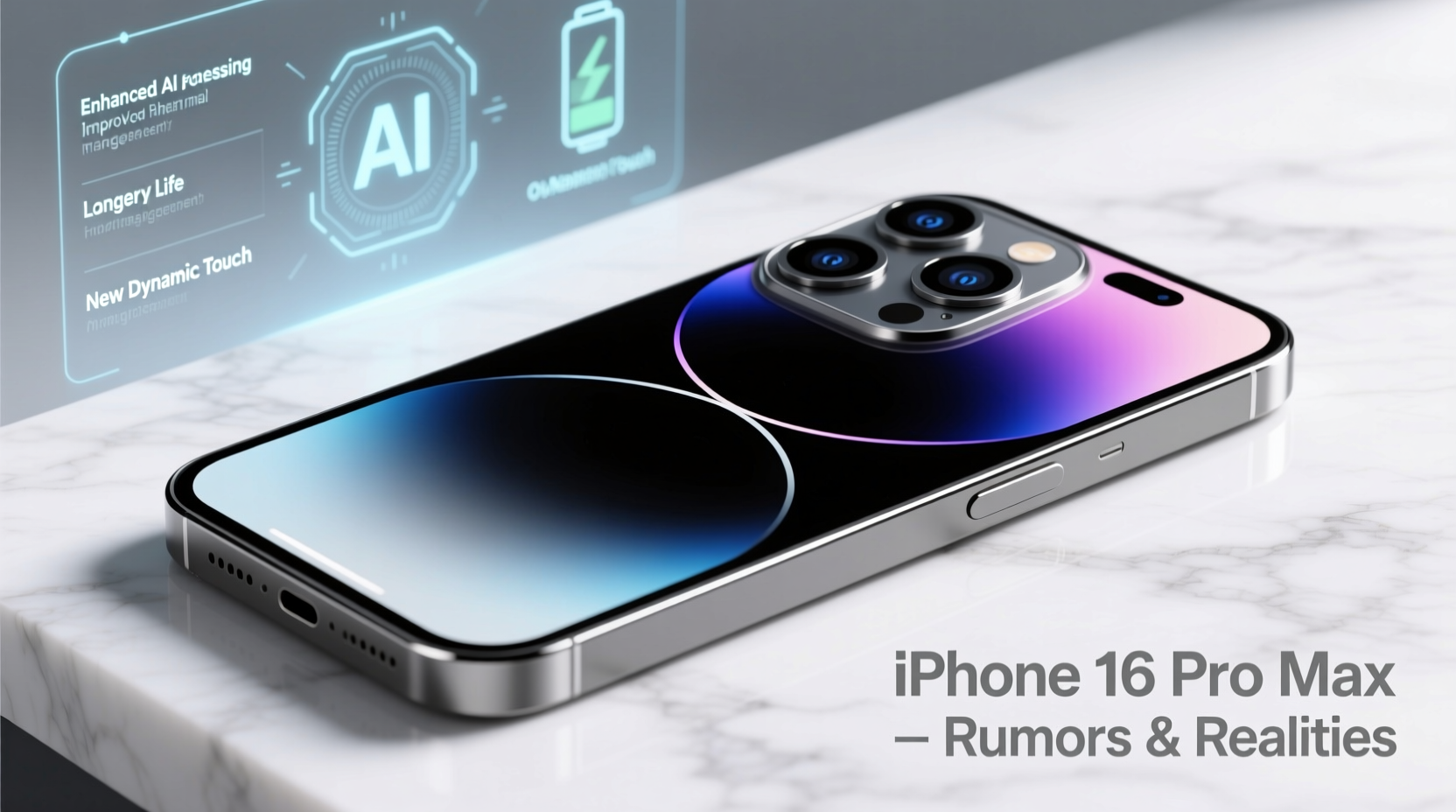
As of early 2025, Apple has not officially confirmed any details about the iPhone 16 series. However, supply chain reports, analyst forecasts, and historical trends have given rise to a consistent set of predictions. While none are guaranteed, they offer a compelling preview of what might come.
Key rumored upgrades include a redesigned form factor with a slightly taller display, a next-generation A18 Pro chip built on a more efficient 3nm+ process, and significant advancements in thermal management—addressing long-standing complaints about overheating during intensive tasks.
Perhaps most intriguing is the focus on artificial intelligence. Unlike previous models, which added AI features through software updates, the iPhone 16 Pro Max may be designed from the ground up to support on-device generative AI capabilities. This could enable real-time language translation, smarter photo editing, contextual assistants, and predictive app behavior—all without relying on cloud processing.
“Apple is reportedly investing heavily in neural engine improvements. If the rumors hold, the iPhone 16 Pro Max could be the first truly AI-native iPhone.” — Mark Thompson, Senior Analyst at TechInsight Group
Rumored Upgrades vs. Real-World Impact
Not every spec bump translates into meaningful improvements for everyday users. It’s essential to separate marketing hype from practical benefits. Below is a breakdown of the most talked-about rumored features and their potential impact.
| Rumored Feature | Potential Benefit | Practical Consideration |
|---|---|---|
| 6.9-inch OLED Display (taller aspect ratio) | Better multitasking, improved video viewing | Larger size may reduce one-handed usability |
| A18 Pro Chip with Enhanced NPU | Faster AI processing, longer battery efficiency | Most users won’t notice speed gains unless using AI-heavy apps |
| Thermal Vent System (active cooling) | Sustained performance during gaming or 4K recording | May add slight bulk; unproven durability over time |
| Titanium Frame with Curved Edges | More comfortable grip, premium feel | Minimal functional improvement; mostly aesthetic |
| Triple Camera Array with Periscope Zoom (5x optical) | Sharper long-range photos, better low-light zoom | Useful for photography enthusiasts; casual users may not need it |
| On-Device Generative AI Features | Smarter Siri, real-time summarization, enhanced privacy | Depends on app developer adoption and user habits |
The table highlights a crucial point: many of these upgrades cater to niche use cases. For example, professional photographers will appreciate improved zoom optics, while mobile gamers may benefit from better heat dissipation. But average users who primarily browse, message, and take occasional photos may find the current iPhone 15 Pro Max already exceeds their needs.
When Waiting Makes Sense: A Decision Framework
Deciding whether to wait depends on three factors: your current device condition, your usage patterns, and your budget cycle. Here’s a step-by-step guide to help you evaluate your situation.
- Assess Your Current iPhone’s Performance
If your iPhone is still running smoothly—apps open quickly, battery lasts a full day, and iOS updates install without issues—there’s little urgency to upgrade. iPhones typically remain usable for 4–5 years. - Evaluate Your Use Case
Are you a power user who relies on your phone for creative work, travel photography, or mobile productivity? Or do you mainly use it for calls, social media, and streaming? The former group stands to gain more from cutting-edge features. - Consider Your Budget Timing
If you’re due for an upgrade under a carrier plan or Apple’s trade-in program, delaying could mean missing out on savings. Conversely, if you pay upfront, waiting avoids locking into a cycle just before a major refresh. - Weigh the Opportunity Cost
By waiting for the iPhone 16 Pro Max, you’ll go without a new device for up to a year. Is the anticipated improvement worth that delay? For some, yes. For others, upgrading now means enjoying better performance today. - Monitor Official Announcements
Rumors shift. Apple could surprise everyone by skipping certain features or launching them later. Set calendar reminders for June (WWDC) and September (launch event) to stay informed.
Mini Case Study: Sarah’s Upgrade Dilemma
Sarah, a freelance travel writer, uses her iPhone 13 Pro Max for everything—from capturing destination photos to editing blog posts on the go. Her phone is two years old, and she’s noticed slower performance when exporting 4K videos. She also struggles with limited zoom capability in landscape shots.
She considered upgrading to the iPhone 15 Pro Max but hesitated after reading rumors about the iPhone 16 Pro Max’s improved camera system and AI-powered photo enhancement tools. After analyzing her workflow, she realized that better zoom and faster rendering would save her hours per week. She decided to wait, extending her current phone’s life with a battery replacement and external SSD for storage.
Sarah’s case illustrates how specific professional needs can justify waiting—even if it means short-term inconvenience.
Common Mistakes When Deciding to Wait
- Overestimating Rumored Features: Just because a feature is rumored doesn’t mean it will be polished or widely supported at launch.
- Ignoring Diminishing Returns: Each new generation offers smaller improvements. Going from iPhone 14 to 15 brought noticeable changes; going from 15 to 16 may not.
- Misjudging Personal Needs: Falling for marketing hype without aligning upgrades to actual usage leads to wasted spending.
- Waiting Too Long: Some users delay so long they miss multiple upgrade cycles, ending up with severely outdated hardware.
Checklist: Should You Wait for the iPhone 16 Pro Max?
Answer the following questions honestly to determine your best move:
- ✅ Is my current iPhone experiencing battery degradation or performance lag?
- ✅ Do I regularly use resource-intensive apps (video editing, gaming, AR)?
- ✅ Am I excited about on-device AI features like live transcription or smart photo organization?
- ✅ Would a larger screen or better zoom significantly improve my experience?
- ✅ Can I afford to wait until late 2025 without compromising my daily routine?
- ✅ Will I likely get a better trade-in value this year than next?
If you answered “yes” to the first three, upgrading now with the iPhone 15 Pro Max may suffice. If the last three resonate more, waiting could be worthwhile.
FAQ
When will the iPhone 16 Pro Max be released?
Based on Apple’s historical schedule, the iPhone 16 Pro Max is expected to launch in mid-September 2025. Pre-orders typically open a week before release.
Will the iPhone 16 Pro Max have a USB-C port with faster data transfer?
Yes, rumors indicate the Pro models will feature USB 3.0 speeds over USB-C, enabling faster file transfers—especially useful for photographers and videographers moving large media files.
Can I trust the rumors about AI features?
While AI is a confirmed focus for Apple in 2025, exact implementation remains uncertain. Early AI tools may be limited to select apps or require iOS 19. Full functionality could roll out gradually via updates.
Final Verdict: To Wait or Not to Wait?
The answer depends entirely on your circumstances. For users with aging devices—iPhone 12 or older—an immediate upgrade brings tangible benefits in speed, battery, and camera quality. The iPhone 15 Pro Max is already a powerful device, and for most people, it will remain future-proof for at least three years.
However, if you’re on an iPhone 14 Pro or newer, the incremental gains of the iPhone 16 Pro Max may not justify the wait. Unless you’re deeply invested in mobile photography, video creation, or emerging AI workflows, you’re likely better off upgrading later in your natural cycle.
That said, if Apple delivers on its promise of a true AI-first smartphone—one that anticipates your needs, enhances creativity, and operates seamlessly across devices—the iPhone 16 Pro Max could mark a turning point in mobile computing. In that scenario, patience pays off.
“The iPhone 16 could be less about hardware and more about intelligence. It’s not just a new phone—it’s a new kind of assistant.” — Leila Chen, Mobile Futurist at Gadget Futures Lab
Conclusion
Upgrade decisions shouldn’t be driven by hype, but by alignment with your lifestyle and needs. The iPhone 16 Pro Max rumors paint an exciting picture, but excitement alone isn’t a reason to wait. Evaluate your current device, define what matters in a smartphone, and make a choice based on facts—not speculation.




 浙公网安备
33010002000092号
浙公网安备
33010002000092号 浙B2-20120091-4
Comments
No comments yet. Why don't you start the discussion?