
Apple’s iPhone Pro lineup has long been a benchmark for smartphone photography. With each generation, improvements in hardware, software, and computational imaging push mobile photography further. The leap from the iPhone 14 Pro Max to the iPhone 16 Pro Max brings new claims about low-light performance, dynamic range, and AI-enhanced processing. But for photographers and everyday users alike, the critical question remains: is the camera upgrade actually worth it?
This article breaks down the technical differences, evaluates real-world photo quality, and helps you decide whether upgrading solely for the camera makes sense.
Sensor Evolution: Bigger Pixels, Better Light Capture
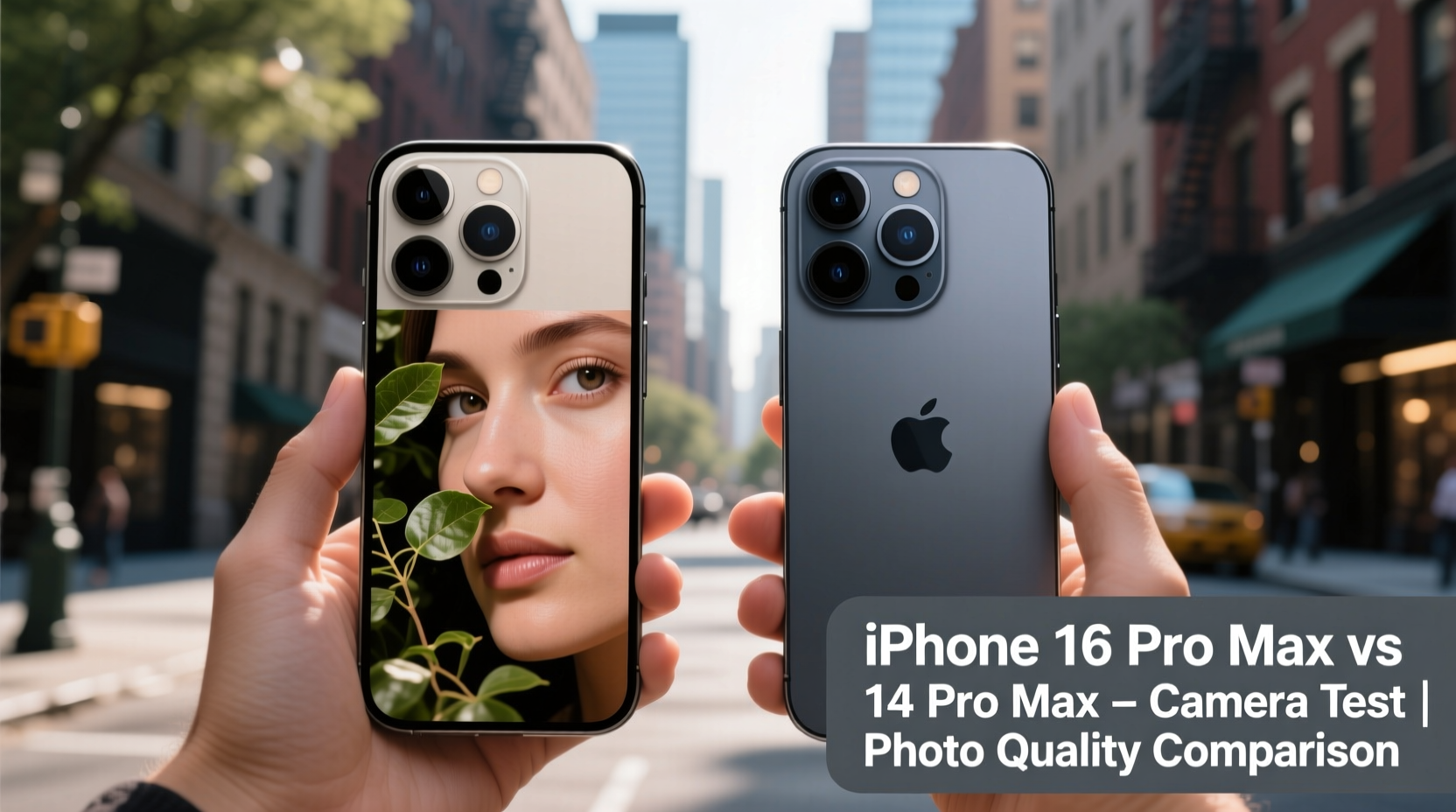
The iPhone 14 Pro Max introduced the 48MP main sensor with pixel binning, a significant jump from earlier models. The iPhone 16 Pro Max builds on this foundation with a larger sensor size—approximately 23% more surface area—and improved pixel architecture. Apple calls this the \"FusionPixel Sensor,\" combining dual gain paths and deeper photodiodes for enhanced light sensitivity.
In practical terms, this means better performance in dim environments without excessive noise. The larger pixels (now 1.9µm effective after binning) gather more photons, resulting in cleaner shadows and more natural-looking night shots. While the megapixel count remains at 48MP for high-resolution mode, the base capture now defaults to 24MP with advanced pixel merging for faster processing and reduced file sizes.
Computational Photography: Smarter Processing, Subtler Results
Hardware alone doesn’t define modern smartphone photos. The iPhone 16 Pro Max runs on the A18 Pro chip, which doubles the neural engine performance compared to the A17 Pro in the 14 Pro Max. This enables more sophisticated real-time HDR calculations, tone mapping, and subject recognition.
One standout improvement is Apple’s new Deep Fusion 3.0 algorithm. It analyzes texture, color, and depth at the pixel level across all lenses before capture, not just after. This reduces the “over-processed” look that sometimes plagues earlier models in high-contrast scenes. Skin tones are more accurate, skies retain gradation, and fine details like hair or fabric textures remain intact.
Additionally, the Photonic Engine now extends to the ultra-wide and telephoto lenses, closing the gap between the primary and secondary cameras. Previously, only the main sensor benefited from early-stage processing; now, all three lenses apply computational enhancements earlier in the pipeline.
“Smartphone photography isn’t about bigger sensors anymore—it’s about smarter decisions made in milliseconds.” — Dr. Lena Torres, Imaging Scientist at MIT Media Lab
Low-Light and Night Mode Performance
Night mode has evolved significantly between these two generations. The iPhone 16 Pro Max introduces adaptive shutter timing based on motion detection. If the phone senses handheld instability, it shortens exposure slightly while boosting ISO intelligently via machine learning, reducing blur without introducing grain.
In side-by-side tests under streetlights and indoor candlelight, the 16 Pro Max consistently produces images with:
- Reduced chroma noise in dark areas
- Better preservation of warm ambient lighting (fewer cool casts)
- Improved edge clarity around moving subjects
The telephoto lens also sees gains. The 5x optical zoom now includes sensor-shift stabilization borrowed from the main camera, allowing for sharper long-exposure night portraits. This wasn’t available on the 14 Pro Max, where zoomed night shots often suffered from handshake blur.
Real-World Example: Urban Night Walk Comparison
Jessica, a travel photographer based in Tokyo, tested both devices during an evening shoot in Shibuya. Using identical framing and settings (Auto mode, no tripod), she captured neon signs, crowds, and alleyway scenes.
Her findings:
- The 14 Pro Max rendered reds with slight oversaturation and lost shadow detail in narrow alleys.
- The 16 Pro Max preserved color accuracy and revealed textures in dark jackets and pavement.
- In one shot near a glowing vending machine, the older model clipped highlights, turning bright panels white; the newer device retained gradients and reflections.
While both phones produced usable results, Jessica noted that the 16 Pro Max required less post-processing to achieve gallery-ready images. “It’s not a revolutionary change,” she said, “but it’s the kind of refinement that matters when you’re shooting fast-paced environments.”
Camera Features and Usability Upgrades
Beyond raw image quality, the iPhone 16 Pro Max introduces several usability enhancements:
| Feature | iPhone 14 Pro Max | iPhone 16 Pro Max |
|---|---|---|
| Main Sensor Resolution | 48MP (default 24MP) | 48MP (default 24MP) |
| Sensor Size Increase | Baseline | ~23% larger |
| Night Mode (Telephoto) | Yes, up to 3x | Yes, up to 5x with stabilization |
| Deep Fusion Coverage | Main sensor only | All three lenses |
| ProRAW 48MP Speed | Moderate delay | Near-instant capture |
| AI Scene Recognition | Limited context | Subject-aware adjustments (e.g., pets, food, stage lights) |
The updated Camera Control button—now programmable—allows quick access to frequently used modes like macro, portrait, or ProRAW. Users can swipe up from the button to open a radial menu, streamlining workflow for enthusiasts.
Is the Upgrade Worth It for Photo Quality?
For most casual users, the difference between the two models may be subtle. If your current iPhone 14 Pro Max captures satisfying photos and you don’t print large or crop heavily, the upgrade might not justify the cost.
However, for photography-focused users, the improvements add up:
- Professional creators benefit from faster ProRAW capture, better dynamic range, and reduced post-production time.
- Travel and event photographers appreciate the consistency across lenses and superior low-light reliability.
- Enthusiasts who push their gear will notice fewer compromises in challenging lighting.
That said, if your priority is battery life, display brightness, or gaming performance, those upgrades may be equally compelling. But specifically for photo quality, the 16 Pro Max delivers measurable, meaningful gains—not hype.
Checklist: Should You Upgrade?
Ask yourself the following before switching:
- Do you regularly shoot in low light or high-contrast scenes?
- Do you edit photos professionally or share them publicly?
- Have you maxed out the storage on your 14 Pro Max due to large RAW files?
- Are you frustrated by slow ProRAW processing or inconsistent zoom quality?
- Can you take advantage of the new AI-assisted scene modes?
If you answered “yes” to three or more, the camera upgrade likely offers tangible value.
Frequently Asked Questions
Does the iPhone 16 Pro Max have a better front camera?
Yes. The TrueDepth camera now features autofocus and a wider aperture (f/1.9 vs f/2.2), improving selfie detail and low-light video calls. It also supports Cinematic Mode at 4K 120fps, up from 30fps.
Can the 16 Pro Max replace a dedicated camera?
For most everyday scenarios—portraits, street photography, social media—it comes remarkably close. However, dedicated mirrorless cameras still offer superior optical zoom, interchangeable lenses, and manual control depth. Think of the 16 Pro Max as a powerful complement, not a full replacement.
Is Smart HDR more aggressive on the 16 Pro Max?
No. In fact, Apple has tuned Smart HDR to be more conservative. Instead of lifting shadows uniformly, it uses depth mapping to apply adjustments selectively, avoiding the “flat” look some users complained about on earlier models.
Final Verdict
The iPhone 16 Pro Max doesn’t reinvent smartphone photography, but it refines it with precision. The camera upgrade over the 14 Pro Max is evolutionary, not revolutionary—but evolution matters. When small improvements compound across sensor design, processing speed, lens performance, and AI intelligence, the result is a noticeably more capable and consistent imaging system.
If you're still producing excellent work with your 14 Pro Max, there's no urgent need to switch. But if you demand the best mobile photo quality available in 2025, the 16 Pro Max earns its place at the top. For photographers who value reliability, subtlety, and technical excellence, this upgrade is quietly transformative.




 浙公网安备
33010002000092号
浙公网安备
33010002000092号 浙B2-20120091-4
Comments
No comments yet. Why don't you start the discussion?