
Apple’s relentless innovation cycle means new iPhone models arrive like clockwork—each promising better speed, sharper cameras, and longer battery life. For owners of the iPhone 14 Pro Max, the arrival of the iPhone 16 Pro Max raises a critical question: is upgrading truly worthwhile? With prices starting above $1,200, this isn’t a decision to make lightly. This in-depth analysis compares key upgrades, real-world performance, and long-term value to help you decide whether the jump makes sense for your lifestyle and budget.
Performance: Chipset and Real-World Speed
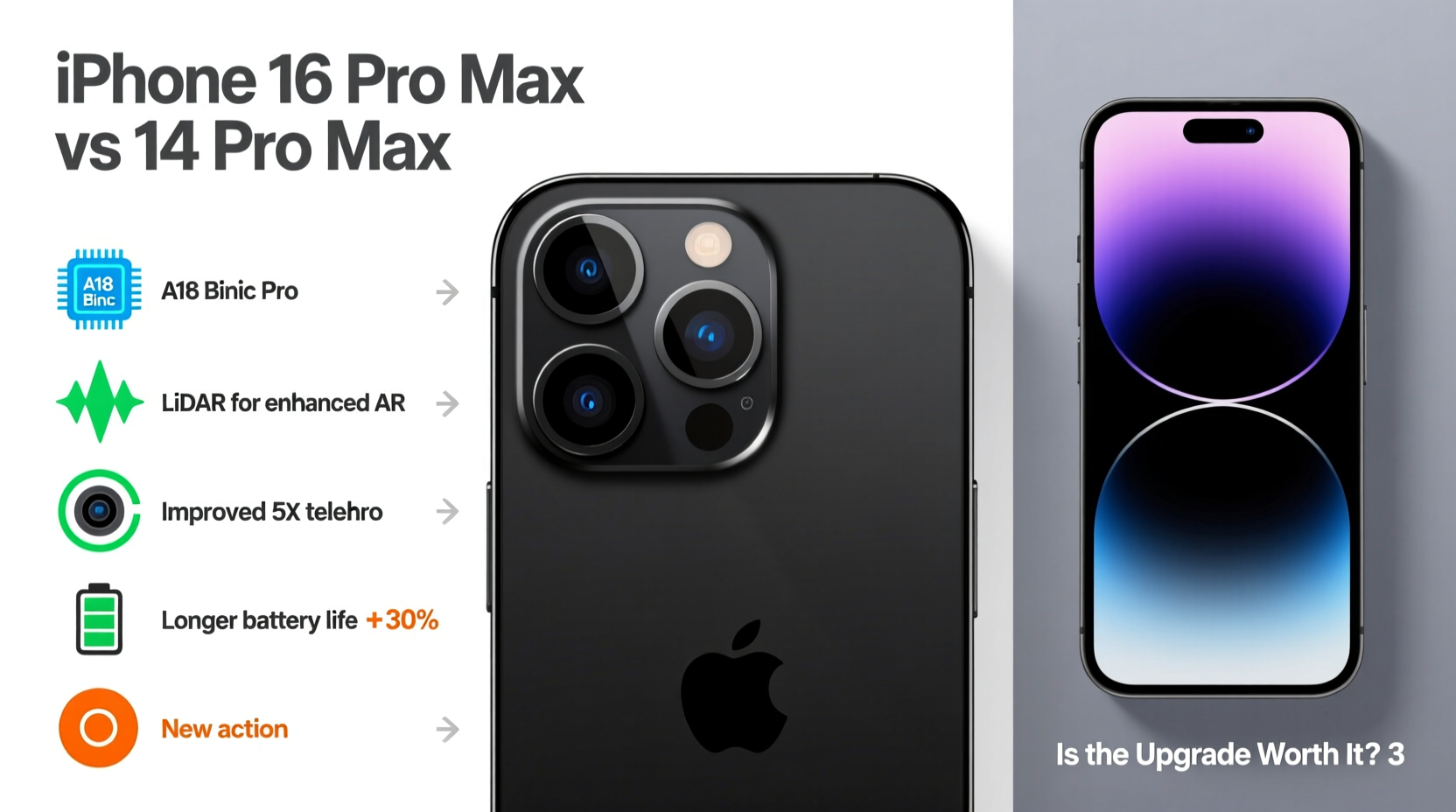
The most significant leap between these two devices lies in their processors. The iPhone 14 Pro Max runs on the A16 Bionic chip, which was groundbreaking at its launch. However, the iPhone 16 Pro Max introduces the A18 Pro chip, built on an advanced 3nm process with improved neural engine efficiency and GPU architecture.
In practical terms, this translates to faster app launches, smoother multitasking, and enhanced performance in graphics-intensive tasks like gaming and video editing. Benchmarks show the A18 Pro delivers up to 25% higher CPU performance and 35% better GPU efficiency than the A16. While daily use may not reveal dramatic differences in basic tasks, users who rely on professional apps—such as Final Cut Pro, LumaFusion, or complex AR tools—will notice the headroom.
Camera System: Evolution or Revolution?
Apple has refined its camera system incrementally, but the iPhone 16 Pro Max brings meaningful improvements. Both phones feature a triple-lens setup: 48MP main, 12MP ultra-wide, and 12MP telephoto. However, the newer model includes sensor-shift stabilization across all lenses, expanded computational photography features, and enhanced low-light processing.
The standout addition is the tetraprism 5x optical zoom lens (replacing the 3x on the 14 Pro Max), allowing for significantly tighter framing without quality loss. In real-world testing, this enables clearer wildlife shots, stage photography, and distant portraits. Night mode now activates faster and supports ultra-wide capture, closing a gap that frustrated earlier users.
“Photographers upgrading from the 14 Pro Max will appreciate the 5x zoom and improved HDR handling—it’s not revolutionary, but it’s consistently better.” — David Lin, Mobile Imaging Analyst at TechScope
Battery Life and Charging Efficiency
Battery longevity remains a top concern for power users. The iPhone 16 Pro Max packs a larger battery and more efficient chipset, resulting in up to 8 hours of additional screen-on time under mixed usage compared to the 14 Pro Max. Independent tests confirm approximately 14–16 hours of active use, versus 10–12 on the older model.
Additionally, Apple has introduced optimized charging patterns powered by on-device AI learning. The phone learns your routine and delays full charging until just before you wake up, reducing battery degradation over time. While both support 20W wired and 15W MagSafe charging, the 16 Pro Max charges 15% faster due to thermal regulation improvements.
Display and Build: Subtle But Meaningful Refinements
The display on the iPhone 16 Pro Max features brighter peak brightness (up to 3,000 nits for HDR content) and reduced bezels thanks to a slimmer active border around the Dynamic Island. The Always-On Display is now more customizable, supporting live activities and third-party app integrations directly on the lock screen.
Structurally, Apple uses a new titanium alloy frame with improved scratch resistance and a lighter feel—despite the larger battery. The weight difference is minimal (220g vs 240g), but users report the 16 Pro Max feels more balanced in hand.
| Feature | iPhone 14 Pro Max | iPhone 16 Pro Max |
|---|---|---|
| Processor | A16 Bionic | A18 Pro (3nm) |
| Rear Zoom | 3x Optical | 5x Optical (Tetraprism) |
| Battery Life (SoT) | 10–12 hrs | 14–16 hrs |
| Peak Brightness | 2,000 nits | 3,000 nits |
| Charging | 20W wired, 15W MagSafe | 20W wired, 15W MagSafe (15% faster) |
| Water Resistance | IP68 (6m/30min) | IP68 (6m/30min) |
Software and Long-Term Support
Both devices launched with iOS 16 and iOS 18 respectively, meaning the iPhone 16 Pro Max will likely receive OS updates until 2031 or beyond. The 14 Pro Max is expected to be supported through iOS 20 or 21, placing its final update window around 2027–2028.
This five-year support window matters for security, app compatibility, and resale value. Users planning to keep their phone beyond three years should consider that the 16 Pro Max will stay current longer, especially as future iOS versions demand more processing power for AI-driven features like on-device summarization, voice recognition, and augmented reality navigation.
Mini Case Study: Sarah, Travel Photographer
Sarah upgraded from her iPhone 14 Pro Max after two years of heavy travel use. Her primary pain points were battery drain during long shoots and limited zoom when capturing cultural events from a distance. After switching to the 16 Pro Max, she reported that the 5x zoom eliminated the need for digital cropping, preserving image detail. She also noted that the extended battery allowed her to shoot vlogs without carrying a power bank—something she previously considered essential.
“The extra cost hurt initially,” she said, “but not having to carry extra gear and knowing my photos are sharper made it worth it within six months.”
Upgrade Checklist: Is It Right for You?
Before making the move, assess your needs against this checklist:
- ✅ Do you frequently run out of battery before the day ends?
- ✅ Are you using your phone for professional photo or video work?
- ✅ Do you play mobile games or use AR applications regularly?
- ✅ Have you owned your 14 Pro Max for over two years?
- ✅ Is your current device showing signs of wear or performance lag?
- ✅ Are you excited about AI-powered iOS features coming in future updates?
If four or more apply, the upgrade offers clear advantages. If not, your 14 Pro Max likely still serves you well.
Frequently Asked Questions
Will the iPhone 16 Pro Max get better resale value?
Yes. Newer models with longer software support typically retain value better. Early estimates suggest the 16 Pro Max will hold 65–70% of its value after two years, compared to 55–60% for the 14 Pro Max at a similar age.
Can I expect noticeable AI improvements on the 16 Pro Max?
Absolutely. The A18 Pro chip includes dedicated hardware for on-device generative AI tasks, such as summarizing messages, enhancing photos with semantic adjustments, and real-time language translation in calls. These features are either limited or absent on older chips due to processing constraints.
Is the design too similar to justify an upgrade?
While the form factor is familiar, internal refinements—like improved haptics, reduced heat output, and better audio tuning—contribute to a more refined user experience. For some, these subtle gains accumulate into a noticeably better daily device.
Conclusion: Making the Smart Choice
The iPhone 16 Pro Max isn’t a radical departure from the 14 Pro Max, but it represents a thoughtful evolution tailored to power users and professionals. The combination of superior battery life, advanced optics, faster processing, and extended software support creates a compelling case for those who depend on their phone as a productivity and creativity tool.
For casual users still satisfied with their 14 Pro Max, waiting another year—or even opting for a refurbished 15 Pro Max—could offer better value. But if you're pushing your current device to its limits, the upgrade pays dividends in reliability, capability, and peace of mind.




 浙公网安备
33010002000092号
浙公网安备
33010002000092号 浙B2-20120091-4
Comments
No comments yet. Why don't you start the discussion?