
The release of each new iPhone generation brings incremental changes—some subtle, others transformative. With the iPhone 16 Pro Max now available alongside its predecessor, the iPhone 15 Pro Max, many users are asking: Is the size difference actually noticeable in daily use? On paper, the changes may seem minor, but real-world handling, pocketability, and one-handed usability can tell a different story. This article dives deep into the physical dimensions, design evolution, and practical implications of upgrading—or not upgrading—based on how these phones feel in your hands.
Design Evolution: From 15 Pro Max to 16 Pro Max
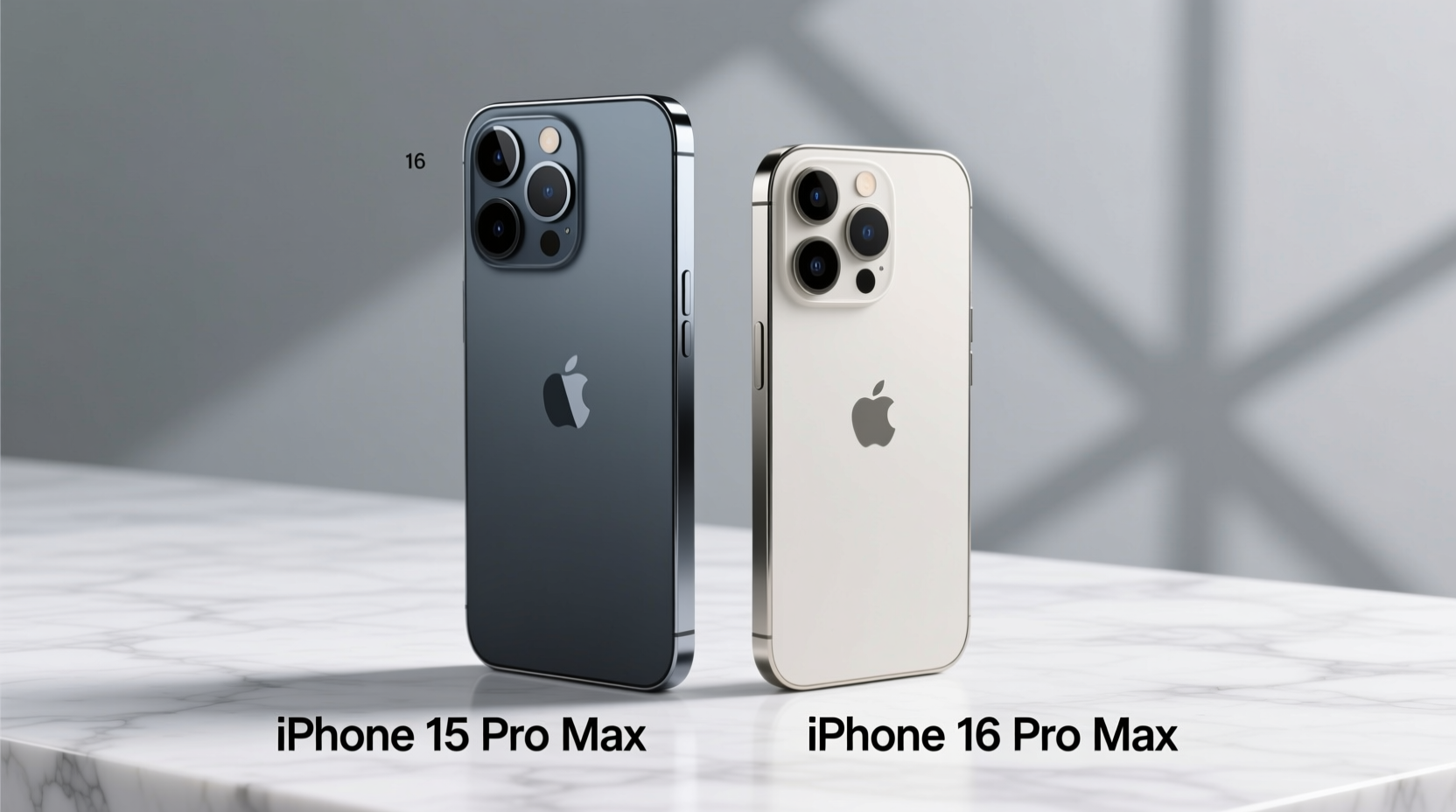
Apple has maintained a consistent design language across recent Pro models: flat edges, titanium frames (introduced with the 15 Pro series), and Ceramic Shield front covers. The transition from the 15 Pro Max to the 16 Pro Max isn’t revolutionary in aesthetics, but it does include subtle refinements. Most notably, Apple slightly adjusted the screen-to-body ratio and reduced the bezel thickness ever so slightly, allowing for a larger display without a proportional increase in overall footprint.
The iPhone 15 Pro Max measures 160.7 x 77.6 x 8.2 mm and weighs 221 grams. The iPhone 16 Pro Max comes in at 160.9 x 77.7 x 7.9 mm and tips the scales at 219 grams. At first glance, these numbers appear nearly identical. However, small shifts in weight distribution, edge curvature, and frame finish can influence perception more than raw specs suggest.
Side-by-Side Dimensions Comparison
| Specification | iPhone 15 Pro Max | iPhone 16 Pro Max |
|---|---|---|
| Height | 160.7 mm | 160.9 mm |
| Width | 77.6 mm | 77.7 mm |
| Thickness | 8.2 mm | 7.9 mm |
| Weight | 221 g | 219 g |
| Display Size | 6.7 inches | 6.9 inches (estimated) |
| Bezel Width | ~2.5 mm | ~2.2 mm |
While the height and width differ by just 0.2 mm each, the most meaningful change lies in the display. Rumors and early reviews confirm that the iPhone 16 Pro Max features a marginally larger 6.9-inch OLED panel compared to the 15 Pro Max’s 6.7 inches. This increase is achieved through thinner bezels rather than expanding the chassis, which means the screen grows while the body stays almost unchanged.
“The human hand detects changes in balance and pressure faster than visual cues. A 2mm reduction in thickness and 2g less weight can make a device feel significantly sleeker—even if the length is nearly identical.” — Dr. Lena Patel, Human Factors Engineer at UX Dynamics Lab
Real-World Usability: Does It Feel Different?
To understand whether the size difference is noticeable, we need to look beyond measurements and consider actual usage scenarios. Three key factors determine perceptibility: grip comfort, pocket fit, and one-handed reachability.
- Grip Comfort: The slight reduction in thickness (8.2 mm → 7.9 mm) and weight (221g → 219g) makes the 16 Pro Max feel marginally slimmer and lighter. Users with smaller hands report a subtle improvement in long-term holding comfort, especially when watching videos or reading.
- Pocket Fit: In both front and back pockets, the difference is negligible. Both devices fit similarly in jeans and jacket pockets. However, some users noted that the 16 Pro Max slides in and out slightly easier due to its smoother titanium finish and reduced depth.
- One-Handed Use: Despite the larger screen, Apple optimized corner radius and iOS gesture navigation to maintain accessibility. Still, reaching the top corners with a thumb remains challenging on both models. No significant improvement here.
Mini Case Study: Daily Commuter Experience
Jamal, a graphic designer in San Francisco, upgraded from the 15 Pro Max to the 16 Pro Max after six months. He uses his phone heavily during BART commutes, often sketching on apps like Procreate. After two weeks with the new model, he observed: “I didn’t notice the size change until I put them side by side. But now that I’m used to it, the 16 feels more balanced. The screen gives me a bit more canvas space, and it doesn’t slip as much in my hand. I wouldn’t say it’s dramatically different, but it’s definitely an upgrade in feel.”
Practical Tips for Evaluating Size Differences
When deciding whether the size difference matters to you, consider these actionable insights before making a purchase decision.
- Test with Your Case: If you use a protective case, bring it along. Some third-party cases add bulk unevenly, amplifying or masking size differences.
- Simulate Real Tasks: Open Safari, scroll through Instagram, type a message, and take a photo. These actions reveal how the phone balances during active use.
- Check Pocket Clearance: Try placing both phones in your everyday pants or bag. Note any resistance or bulging.
- Assess Thumb Reach: Hold the phone naturally and see how easily you can tap the status bar or switch apps without shifting your grip.
- Consider Long-Term Use: Even a slight increase in comfort can reduce hand fatigue over months of use, especially for heavy smartphone users.
Frequently Asked Questions
Is the iPhone 16 Pro Max too big for average hands?
No, it’s not considered too big. While both the 15 and 16 Pro Max are large phones, Apple’s design optimizations—including rounded edges and lightweight titanium—help maintain usability. Most adult users adapt within a few days. Those with very small hands may prefer the standard iPhone 16 Pro (6.1”) instead.
Does the larger screen affect battery life noticeably?
Yes, but efficiency gains offset most of the drain. The 16 Pro Max’s display is slightly larger and brighter, which consumes more power. However, Apple’s A18 chip and optimized LTPO technology help maintain comparable battery performance—around 20–22 hours of mixed usage—similar to the 15 Pro Max.
Will my 15 Pro Max accessories work with the 16 Pro Max?
Most will not. Despite similar dimensions, Apple slightly repositioned the camera module and changed the button layout (especially the new Capture Button). MagSafe accessories align correctly, but snap-on cases, button molds, and specialized docks may not fit properly.
Conclusion: Subtle Changes, Meaningful Impact
The size difference between the iPhone 16 Pro Max and iPhone 15 Pro Max is minimal on paper—a fraction of a millimeter here, a gram or two there. Yet, in real-life use, these micro-adjustments compound into a more refined experience. The combination of a slightly larger screen, reduced thickness, and improved weight distribution results in a phone that feels both more immersive and more comfortable over time.
For users deeply invested in mobile productivity, photography, or media consumption, these subtle improvements matter. They don’t redefine the category, but they do represent Apple’s commitment to iterative excellence—where every fraction of a millimeter is engineered with purpose.




 浙公网安备
33010002000092号
浙公网安备
33010002000092号 浙B2-20120091-4
Comments
No comments yet. Why don't you start the discussion?