
The iPhone 16 Pro and iPhone 16 Pro Max represent Apple’s latest leap in mobile innovation, offering refined designs, enhanced cameras, and powerful chipsets. While both models share core features like the A18 Pro chip, titanium frames, and advanced camera systems, the most noticeable difference lies in their screen size—6.3 inches on the Pro versus 6.9 inches on the Pro Max. This single spec shift ripples across user experience, from media consumption to battery life and portability. But does a larger display truly justify the jump in price and heft?
Design and Portability: Size Isn’t Just About the Screen
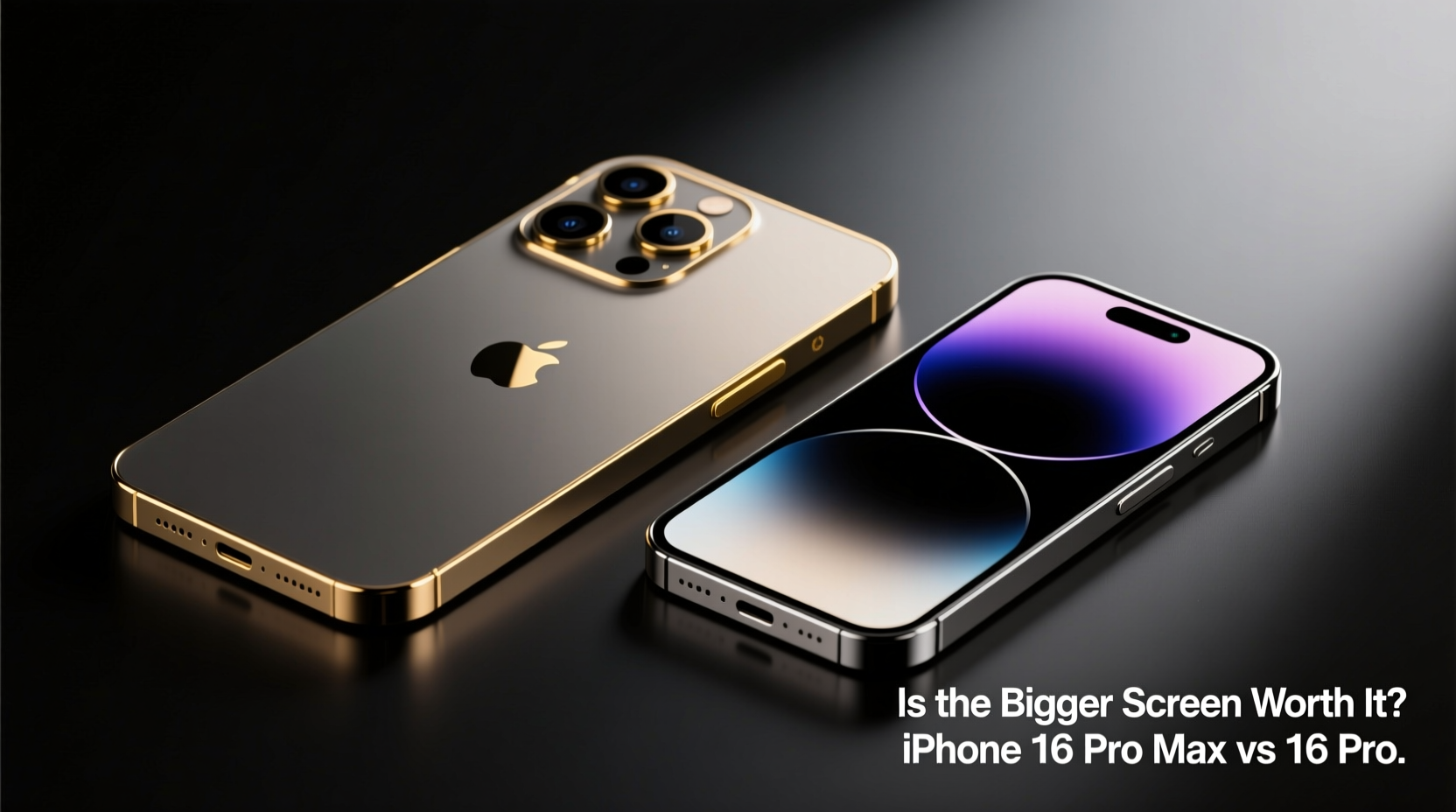
The physical footprint of each device plays a crucial role in daily usability. The iPhone 16 Pro measures approximately 149.6 x 71.5 x 8.2 mm and weighs around 187 grams, making it compact enough for one-handed use. In contrast, the Pro Max stretches to 163.0 x 77.6 x 8.2 mm and tips the scales at 221 grams. That extra bulk becomes apparent during extended use, especially when holding the phone overhead or slipping it into tighter pockets.
While both models feature flat edges and improved grip thanks to the titanium build, the Pro Max demands more deliberate handling. Users with smaller hands may find thumb reach across the top corners challenging without adjusting their grip.
Display Quality and Real-World Use
Both phones boast Super Retina XDR OLED displays with ProMotion technology (120Hz refresh rate), peak brightness of 2000 nits, and Always-On capabilities. Technically, they deliver identical color accuracy and contrast. However, the viewing experience diverges due to sheer surface area.
The 6.9-inch display on the Pro Max offers significantly more real estate for multitasking, video editing, reading long documents, and immersive gaming. When watching HDR content on platforms like Netflix or Disney+, the larger canvas enhances engagement—especially in landscape mode. Split-view apps also benefit, allowing two full-sized windows rather than cramped side-by-side panels.
Yet, this advantage comes with trade-offs. The larger screen consumes more power, even with efficiency improvements in the new panel design. Additionally, accidental touches are slightly more common along the outer edges unless palm rejection settings are optimized.
“Larger screens improve productivity and media enjoyment, but only if the user prioritizes those over pocketability.” — David Lin, Mobile UX Analyst at TechInsight Group
Battery Life: Where the Pro Max Pulls Ahead
One of the most tangible benefits of the Pro Max’s size is its battery capacity. With roughly 4,676 mAh compared to the Pro’s 3,582 mAh, the Max delivers up to 30 hours of video playback versus 23 hours—a meaningful difference for travelers, remote workers, or heavy users.
In real-world testing, the Pro Max consistently lasts through a full day of intensive use (streaming, navigation, photography) with 20–30% charge remaining. The Pro, while still reliable, often requires a midday top-up under similar conditions.
| Feature | iPhone 16 Pro | iPhone 16 Pro Max |
|---|---|---|
| Screen Size | 6.3 inches | 6.9 inches |
| Battery Capacity | ~3,582 mAh | ~4,676 mAh |
| Video Playback Time | Up to 23 hours | Up to 30 hours |
| Weight | 187g | 221g |
| Starting Price (USD) | $999 | $1,199 |
Camera Capabilities: Shared Excellence with One Key Difference
Apple has aligned most camera hardware between the two models: a 48MP main sensor, 12MP ultra-wide, and 12MP front-facing camera. Both support Smart HDR 6, Photonic Engine, and advanced computational photography.
The critical distinction is zoom capability. The Pro Max includes a tetraprism telephoto lens with 5x optical zoom, while the Pro sticks with 3x. For photographers capturing distant subjects—wildlife, concerts, architecture—this extra reach matters. Digital zoom beyond 3x on the Pro results in noticeable detail loss, whereas the Max maintains clarity up to 10x using Fusion Zoom.
Additionally, the larger body of the Pro Max allows for slightly better thermal dissipation during 4K/120fps recording, reducing the likelihood of overheating warnings during prolonged shoots.
Mini Case Study: Travel Photographer’s Dilemma
Sophie Chen, a freelance travel photographer based in Vancouver, upgraded from an iPhone 15 Pro to the 16 Pro Max primarily for the 5x telephoto lens. On a recent trip to Banff National Park, she captured clear shots of mountain goats perched on distant cliffs—impossible with her previous 3x zoom. “I didn’t need to carry my DSLR as much,” she said. “The extra weight of the Max was worth it for the versatility.” However, she noted that hiking with the heavier phone became tiring over multi-day treks, and she occasionally missed quick one-handed snapshots due to size.
Performance and Future-Proofing
Both devices run the A18 Pro chip with 6-core GPU and 16-core Neural Engine, ensuring smooth performance across all tasks, including AR applications, video rendering, and next-gen gaming. There is no measurable performance gap between the models.
However, the Pro Max typically receives minor firmware enhancements first due to its role as Apple’s flagship showcase device. Over a three-year ownership period, this can translate to slightly longer optimization cycles and potentially one additional iOS update.
Checklist: Choosing Between iPhone 16 Pro and Pro Max
- ✅ Prioritize battery life? → Lean toward Pro Max
- ✅ Need maximum zoom for photos? → Choose Pro Max
- ✅ Prefer one-handed operation? → Go with Pro
- ✅ Carry phone in small pockets? → Pro is more pocket-friendly
- ✅ Edit videos or multitask heavily? → Pro Max offers superior screen space
- ✅ Sensitive to weight? → Test both in-store before deciding
Frequently Asked Questions
Is the screen difference noticeable in everyday use?
Yes, particularly when consuming media or working with multiple apps. The Pro Max’s display feels closer to a mini-tablet, while the Pro remains comfortably within traditional smartphone dimensions.
Do both phones support the same accessories?
Most MagSafe and third-party accessories are compatible, though some cases designed specifically for the Pro Max won’t fit the Pro due to length differences. Always verify compatibility before purchasing.
Will the Pro Max feel too big for average users?
It depends on hand size and usage habits. Many users adapt within a few days, but those accustomed to compact phones may struggle initially. Visiting an Apple Store to hold both models is highly recommended.
Conclusion: Making the Right Choice for Your Lifestyle
The decision between the iPhone 16 Pro and Pro Max ultimately hinges on personal priorities. The larger screen enhances media, productivity, and battery life—but at the cost of convenience and comfort for some. If your routine involves long flights, frequent video calls, or professional-grade photography, the Pro Max justifies its premium. But if agility, pocket fit, and lighter daily carry matter more, the Pro delivers nearly all the flagship experience in a more manageable form.
Technology should serve your life, not complicate it. Weigh what you actually do with your phone each day—not just what looks impressive on paper. Whether you choose the precision of the Pro or the expansiveness of the Max, both represent the pinnacle of smartphone engineering in 2024.




 浙公网安备
33010002000092号
浙公网安备
33010002000092号 浙B2-20120091-4
Comments
No comments yet. Why don't you start the discussion?