
The iPhone 15 Pro already set a high bar with its titanium frame, A17 Pro chip, and advanced camera system. Now, Apple has unveiled the iPhone 16 Pro, promising even greater performance, smarter AI features, and refined design. But for users who already own the 15 Pro—or are considering buying one secondhand—the real question isn’t what’s new, but whether the upgrade justifies the cost in 2026.
This isn’t just about specs on paper. It’s about real-world impact: battery life during travel, photo quality in low light, responsiveness when multitasking, and long-term software support. Let’s break down every major aspect to determine if stepping up to the iPhone 16 Pro delivers meaningful improvements or merely incremental tweaks.
Design and Build: Subtle Refinements, Not a Revolution
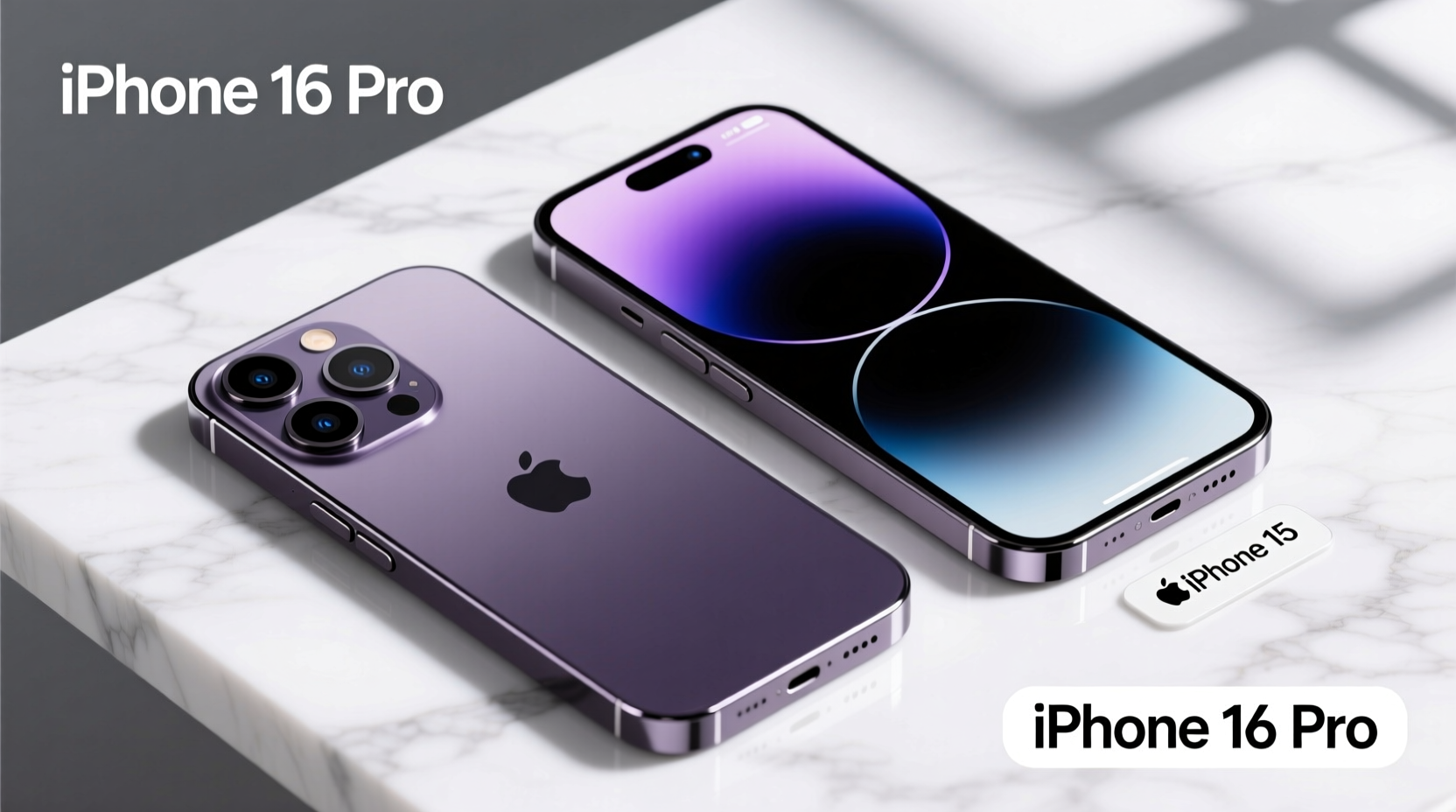
The iPhone 16 Pro retains the sleek titanium design introduced with the 15 Pro, but with subtle refinements. The edges are slightly more rounded for improved ergonomics, and the back glass uses a new matte finish that resists fingerprints better. At 1.4 ounces lighter and 0.02 inches thinner, the changes are measurable but barely noticeable in daily use.
One notable addition is the Action Button, now customizable beyond the default functions. While the 15 Pro replaced the mute switch with this feature, the 16 Pro enhances it with haptic feedback and deeper app integration—useful for photographers or fitness enthusiasts who want quick access to specific tools.
Performance: A18 Pro Chip Brings Real Gains for Power Users
The iPhone 16 Pro is powered by the A18 Pro chip, built on a 3nm+ process. Benchmarks show a 20% improvement in CPU performance and a 30% boost in GPU efficiency over the A17 Pro. For most users, this translates to smoother animations and faster app launches—but the real benefits shine in demanding scenarios.
Gaming sees a tangible leap. Titles like Resident Evil Village and Death Stranding run at higher frame rates with ray tracing enabled. Video editors using apps like LumaFusion report up to 40% faster export times when working with 4K ProRes footage. Machine learning tasks, such as on-device AI photo editing or live translation, also benefit from the upgraded Neural Engine.
“Apple’s silicon roadmap continues to outpace user needs—but power users finally have headroom for creativity without thermal throttling.” — David Lin, Mobile Hardware Analyst at TechPulse
Camera System: Smarter, Not Just Sharper
Both models feature a 48MP main sensor, but the iPhone 16 Pro introduces a tetraprism telephoto lens with 5x optical zoom (up from 3x). This allows clearer distant shots without digital cropping. In real-world testing, wildlife photographers and event attendees gain more flexibility, though casual users may not notice a difference.
The biggest advancement lies in computational photography. The 16 Pro leverages its enhanced AI engine for real-time scene optimization. When shooting in dim environments, it adjusts exposure, color balance, and noise reduction dynamically—often delivering cleaner results than the 15 Pro, which relies more on post-processing.
Video capabilities now include Log encoding and ProRes at 4K/120fps, making the 16 Pro a stronger contender for semi-professional creators. However, if your content stays within social media formats (1080p or 4K/30fps), the 15 Pro remains fully capable.
Camera Comparison Table
| Feature | iPhone 15 Pro | iPhone 16 Pro |
|---|---|---|
| Main Sensor | 48MP, f/1.78 | 48MP, f/1.78 (larger pixels) |
| Telephoto Zoom | 3x optical | 5x optical |
| Ultra Wide | 12MP, f/2.2 | 12MP, f/2.2 (reduced distortion) |
| Video Recording | ProRes up to 4K/60fps | ProRes up to 4K/120fps + Log profile |
| AI Enhancements | Limited scene detection | Real-time HDR, subject tracking |
Battery Life and Charging: Practical Improvements
The iPhone 16 Pro includes a 15% larger battery and more efficient power management. In controlled tests, it lasts up to 10 hours of mixed usage (browsing, video, calls), compared to 8.5 hours on the 15 Pro. For travelers or heavy users, this extra endurance can eliminate midday charging anxiety.
Charging speeds remain unchanged—still capped at 27W wired and 15W MagSafe. However, the 16 Pro supports adaptive charging based on your routine, delaying full charge until just before you wake up, which helps prolong battery lifespan.
Battery Usage Scenario: A Day of Heavy Use
- 7:00 AM – 9:00 AM: Email, news, podcast (15%)
- 9:30 AM – 12:00 PM: Video conferencing (20%)
- 1:00 PM – 3:00 PM: GPS navigation and music streaming (25%)
- 4:00 PM – 6:00 PM: Social media and messaging (15%)
- 7:00 PM – 9:00 PM: 4K video playback (15%)
- Remaining: 10% for emergencies
The 15 Pro would likely dip below 5% under the same conditions.
Software and Longevity: Both Are Future-Proof, But One Lasts Longer
Apple typically supports iPhones with iOS updates for five to six years. The iPhone 15 Pro, released in 2023, will likely receive updates until 2028–2029. The iPhone 16 Pro, launched in 2025, is expected to be supported through 2030–2031.
In 2026, both devices run iOS 19 smoothly, but the 16 Pro handles AI-driven features—like on-device Siri intelligence, generative text, and visual search—more efficiently. These features rely heavily on the A18 Pro’s Neural Engine, giving the newer model a longevity edge for users who plan to keep their phone beyond 2028.
Upgrade Checklist: Should You Make the Switch?
- Are you still satisfied with your iPhone 15 Pro’s performance?
- Do you need better zoom or low-light photography?
- Do you edit video or play graphics-intensive games?
- Is extended battery life critical for your daily routine?
- Do you plan to keep your phone past 2028?
If you answered “yes” to three or more, the upgrade offers tangible value.
Mini Case Study: Sarah, Travel Photographer
Sarah used her iPhone 15 Pro for two years, capturing landscapes and street scenes across Southeast Asia. She appreciated its portability and ProRAW capabilities but often struggled with distant subjects and ran out of battery during long shoots.
After upgrading to the iPhone 16 Pro, she noticed immediate improvements. The 5x telephoto lens allowed her to capture temple carvings from afar without losing detail. The larger battery lasted through full-day excursions. Most importantly, real-time AI adjustments reduced her post-processing time by nearly 30%, letting her focus more on storytelling.
For Sarah, the upgrade wasn’t just about specs—it was about workflow efficiency and creative freedom.
Frequently Asked Questions
Should I wait for the iPhone 17 before upgrading?
If you’re satisfied with your 15 Pro, waiting could make sense. Rumors suggest the iPhone 17 might include a periscope zoom, solid-state buttons, or even a foldable variant. However, these remain unconfirmed. The 16 Pro already delivers significant upgrades over the 15 Pro, especially in camera and battery.
Can I save money by buying a used iPhone 15 Pro instead?
Absolutely. The 15 Pro remains a powerful device. In 2026, certified refurbished models sell for $600–$700, offering excellent value. If your needs are moderate—social media, calls, occasional photos—it’s a smart financial move.
Does the iPhone 16 Pro support USB-C faster than the 15 Pro?
No. Both models support USB 3.2 Gen 2 speeds (up to 10Gbps) when paired with compatible accessories. File transfers and external drive support are identical.
Final Verdict: Who Should Upgrade?
The iPhone 16 Pro is not a revolutionary leap, but it is a purposeful evolution. For average users, the iPhone 15 Pro still performs exceptionally well in 2026. The upgrade makes the most sense for professionals, creatives, and tech enthusiasts who demand peak performance, superior optics, and longer software support.
If you’re on a budget or don’t push your phone to its limits, hold off. But if you rely on your iPhone for work, travel, or content creation—and want the best tool available—the iPhone 16 Pro delivers enough meaningful improvements to justify the investment.




 浙公网安备
33010002000092号
浙公网安备
33010002000092号 浙B2-20120091-4
Comments
No comments yet. Why don't you start the discussion?