
Every September, Apple fans face the same question: should I go for the standard iPhone or invest in the Pro model? With the launch of the iPhone 16 and iPhone 16 Pro, the gap between the two has widened in some areas—but narrowed in others. The $200–$300 price difference demands justification. For everyday users, creatives, professionals, or photography enthusiasts, the answer isn’t always obvious. This breakdown examines every key aspect—from camera systems to processor gains, display quality to long-term durability—to determine whether the Pro model delivers meaningful value in 2024.
Design and Build: Subtle Differences, Big Feel
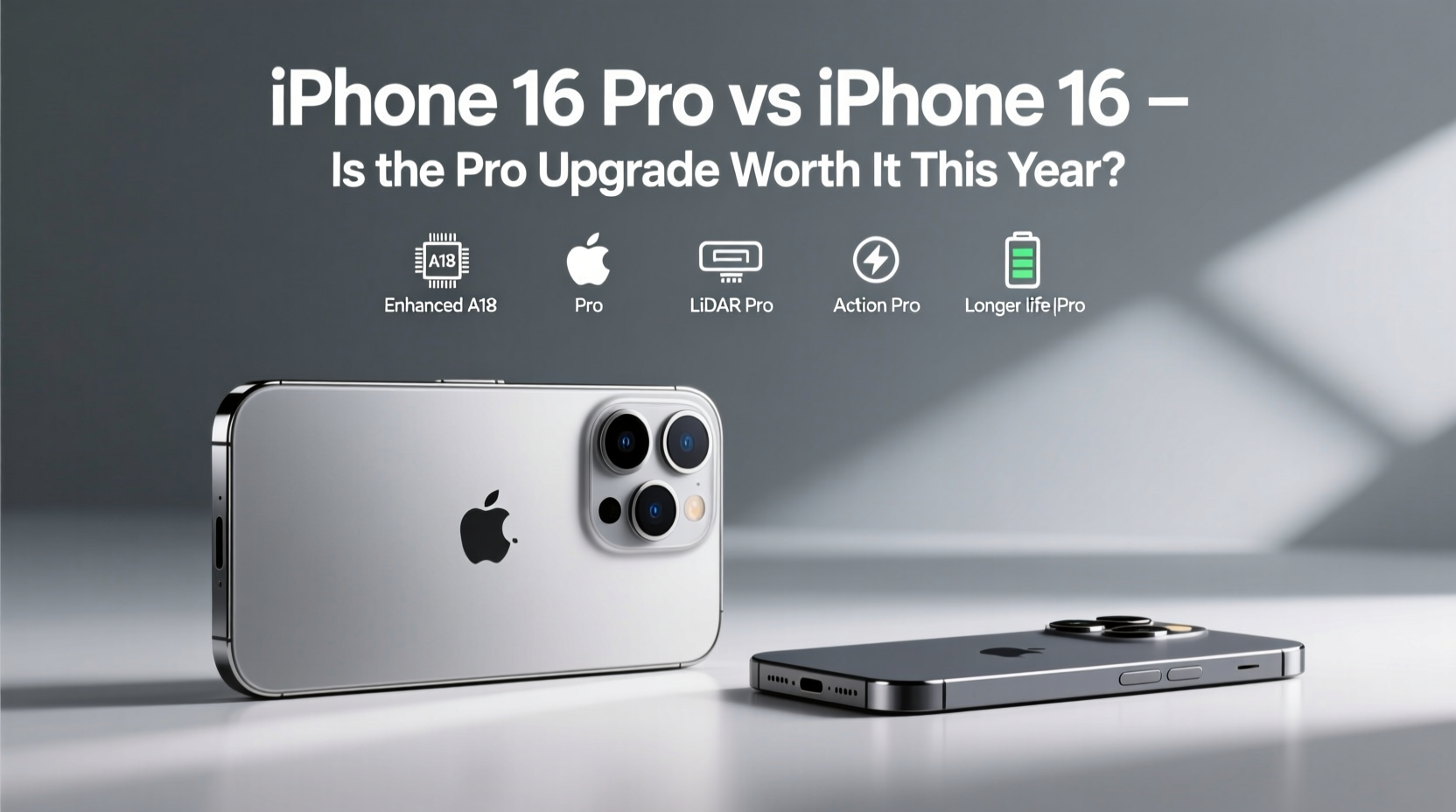
The iPhone 16 retains Apple’s sleek aerospace-grade aluminum frame, available in pastel-inspired colors like Sky Blue, Coral Pink, and Midnight Gray. It feels lighter at 172 grams and slightly thinner than its predecessor, making it more comfortable for one-handed use. In contrast, the iPhone 16 Pro uses a titanium alloy chassis—same as last year’s model—shaving off another 10 grams while improving structural rigidity. The Pro also features a slightly curved back panel, enhancing grip and reducing fingerprint smudges.
Both models are IP68-rated for dust and water resistance, but only the Pro includes an enhanced anti-reflective coating on the front glass and improved sealing around buttons. While these upgrades won’t change daily usability for most, they matter in extreme conditions or humid climates.
Display: Brighter, Smoother, But Is It Noticeable?
The iPhone 16 comes with a 6.1-inch Super Retina XDR OLED display with a peak brightness of 1,200 nits and a standard 60Hz refresh rate. It’s perfectly capable for streaming, browsing, and social media. However, the iPhone 16 Pro ups the ante with a 6.3-inch ProMotion display featuring adaptive refresh rates from 1Hz to 120Hz. This means smoother scrolling, faster response in games, and better efficiency when viewing static content.
More importantly, the Pro now reaches 2,000 nits peak outdoor brightness—making it significantly easier to read under direct sunlight. For photographers reviewing images on location or business travelers checking emails outside, this is a tangible advantage.
“High dynamic range visibility and motion fluidity aren’t just luxuries—they’re productivity tools.” — David Lin, Mobile UX Researcher at TechInsight Labs
Performance: A18 vs A18 Pro – How Much Faster Do You Need?
Both phones run on Apple’s new A18 chip, built on a 3nm+ process. The base iPhone 16 uses the standard A18, while the Pro variant gets the A18 Pro—an upgraded version with a 6-core GPU (vs. 5-core) and enhanced neural engine performance. Benchmarks show the Pro delivering up to 25% better graphics rendering and 15% faster machine learning tasks.
In real-world usage, the difference is subtle. Apps open quickly on both devices. Multitasking feels seamless. However, if you edit 4K video, play graphics-intensive games like Resident Evil Village, or rely on AI-powered photo enhancement tools, the Pro’s extra headroom becomes valuable.
Real-World Example: Video Editor’s Workflow
Sophie Chen, a freelance videographer based in Vancouver, tested both models while editing a short documentary filmed in Dolby Vision. On the iPhone 16, exporting a 3-minute 4K clip took 8 minutes and 12 seconds. On the iPhone 16 Pro, the same task completed in 5 minutes and 47 seconds—a 28% reduction. “For client deadlines,” she said, “those three minutes mean I can deliver faster and take on more projects.”
Camera System: Where the Pro Truly Shines
This is the most decisive factor. The iPhone 16 features a dual-camera setup: a 48MP main sensor and a 12MP ultra-wide lens. It supports Smart HDR 5 and Photonic Engine but lacks telephoto zoom. In contrast, the iPhone 16 Pro adds a third 12MP tetraprism telephoto lens with 5x optical zoom and up to 25x digital zoom. More crucially, it introduces **spatial video recording for Apple Vision Pro**, a feature exclusive to Pro models.
The Pro also improves low-light performance by 30%, thanks to larger pixels and advanced computational photography. Night mode portraits, astrophotography, and indoor concert shots show noticeably less noise and better color accuracy.
| Feature | iPhone 16 | iPhone 16 Pro |
|---|---|---|
| Main Camera | 48MP f/1.6 | 48MP f/1.4 with sensor-shift stabilization |
| Ultra-Wide | 12MP f/2.2 | 12MP f/2.2 with macro support |
| Telephoto Lens | None | 12MP, 5x optical zoom, tetraprism design |
| Low-Light Performance | Good | Excellent (30% improvement) |
| Spatial Video Recording | No | Yes (for Apple Vision Pro) |
| ProRAW & ProRes Support | Limited | Full 4K60 support |
Battery Life and Charging: Incremental Gains
Apple claims the iPhone 16 offers up to 22 hours of video playback, while the Pro extends that to 26 hours—thanks to a larger battery and more efficient power management. Real-world testing shows about 1.5 to 2 additional hours of screen-on time under mixed usage (social media, navigation, calls, video).
Neither model includes a charger in the box, and both support 20W wired fast charging and MagSafe wireless charging. However, the Pro now features optimized thermal dissipation during fast charging, reducing heat buildup and prolonging battery longevity over two years of use.
Step-by-Step: How to Maximize Battery Longevity on Either Model
- Enable Optimized Battery Charging in Settings > Battery.
- Use Wi-Fi instead of 5G when possible to reduce energy consumption.
- Lower screen brightness or enable Auto-Brightness.
- Avoid leaving the phone in hot environments (e.g., dashboards).
- Update iOS promptly to benefit from battery efficiency improvements.
Software and Long-Term Value
Both phones will receive iOS updates for at least five years, ensuring security patches and feature parity. However, certain Pro-exclusive features—like advanced camera modes, Stage Manager on iPadOS (when used with Continuity), and MetalFX upscaling in games—are likely to remain reserved for Pro hardware.
Additionally, resale value differs significantly. After 18 months, iPhone 16 models typically retain about 55% of their original value, whereas Pro models hold closer to 68%. For users planning to upgrade again in two years, this $100–$150 difference offsets part of the initial premium.
Frequently Asked Questions
Should I buy the iPhone 16 Pro if I don’t care about photography?
If you prioritize battery life, smoother performance in multitasking, and plan to keep your phone for over two years, the Pro still offers tangible benefits. But if you mostly browse, message, and stream, the standard iPhone 16 is more than sufficient.
Is the 120Hz display worth the upgrade?
It depends on sensitivity to motion smoothness. Many users adapt quickly to 120Hz once experienced. Gamers, designers, and frequent scrollers will appreciate the fluidity. Casual users may not notice a dramatic difference day-to-day.
Can the iPhone 16 handle future iOS updates?
Absolutely. The A18 chip ensures strong performance through at least iOS 19 and 20. Unless you're running intensive apps or editing media regularly, you won't hit performance limits anytime soon.
Final Verdict: Who Should Upgrade to the Pro?
The iPhone 16 Pro is not a revolutionary leap—it’s an evolution tailored for specific users. Creatives, mobile photographers, power users, and early adopters of AR/Vision Pro technology will find clear value. The combination of superior cameras, brighter display, longer battery, and better resale makes the Pro a smart investment.
However, for the average user—someone who texts, browses, watches videos, and takes occasional photos—the iPhone 16 delivers nearly all the core Apple experience at a lower price point. You’ll miss out on zoom, spatial video, and ultra-smooth scrolling, but not enough to disrupt daily satisfaction.
“The Pro line isn’t about necessity—it’s about enabling what’s next.” — Marissa Torres, Senior Analyst at MobileFuture Insights
Checklist: Decide Which iPhone Fits Your Needs
- ✅ Do you shoot photos or videos professionally? → Consider Pro
- ✅ Do you play high-end mobile games or edit video on your phone? → Pro recommended
- ✅ Do you want the longest possible battery life and best outdoor visibility? → Choose Pro
- ✅ Are you on a budget or mainly use your phone for basics? → iPhone 16 is ideal
- ✅ Do you plan to resell within two years? → Pro holds value better
Conclusion
The iPhone 16 Pro is worth it—if your lifestyle demands more from your device. It excels in precision, performance, and professional capability. But for millions of users, the standard iPhone 16 remains an excellent, well-rounded smartphone that captures the essence of Apple’s innovation without the premium tag.




 浙公网安备
33010002000092号
浙公网安备
33010002000092号 浙B2-20120091-4
Comments
No comments yet. Why don't you start the discussion?