
On the surface, comparing the iPhone 16 Pro to itself sounds like a typo. But in Apple’s tightly controlled ecosystem, where marketing precision meets incremental innovation, the question isn’t as absurd as it seems. What we’re really asking is this: if you already own an iPhone 16 Pro, does the next iteration—potentially labeled with slight variations or regional distinctions—offer anything meaningful? Or are we being sold the same phone under subtly different packaging?
This isn’t just about hardware. It’s about value, longevity, and the psychology of upgrade cycles. As Apple pushes deeper into AI integration, thermal management, and satellite features, the line between “new” and “refined” blurs. Let’s cut through the noise and assess whether any differences—real or rumored—justify attention, much less investment.
The Myth of the “Double Pro” Dilemma
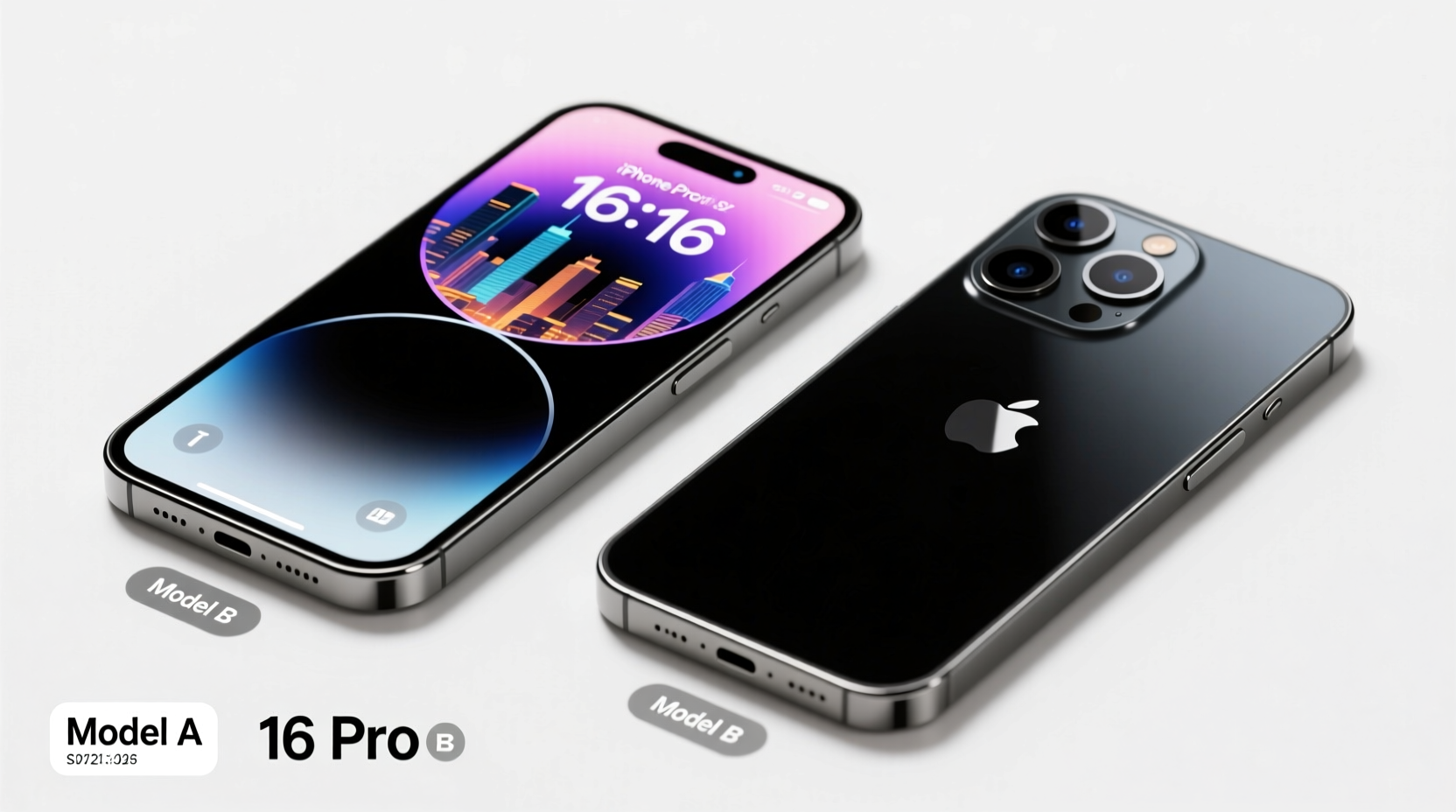
There is no official “iPhone 16 Pro” and “iPhone 16 Pro Max” split being questioned here in terms of model names—but speculation often swirls around variants: potential China-specific models, carrier-exclusive SKUs, or pre-release test units mistaken for final products. In some cases, users have reported seeing internal build labels or developer firmware suggesting minor revisions (like “A2896” vs “A2897”) that hint at small component swaps.
These aren’t new models. They’re manufacturing iterations—akin to revision B of a circuit board. Apple uses them to improve yield, reduce heat output, or comply with regional regulations. The external design, performance, camera system, and software experience remain identical.
“Most internal SKU changes don’t affect user experience. You’d need lab equipment to spot the difference.” — Dr. Lena Torres, Mobile Hardware Analyst at TechSignal Labs
In practical terms, your iPhone 16 Pro purchased in June will function identically to one bought in October—even if the latter has a slightly updated Wi-Fi module or more efficient power delivery IC.
Spec Sheet: What Could Change (But Probably Won’t)
Rumors ahead of the iPhone 17 cycle suggest Apple may begin testing titanium alloy refinements, next-gen fusion cameras, and on-device AI processing chips. But these are not expected to retroactively apply to iPhone 16 Pro units mid-cycle.
Still, let’s examine areas where subtle differences *could* emerge—and why they likely won’t matter:
| Component | Possible Mid-Cycle Change | User Impact |
|---|---|---|
| Baseband Chip | Switch from Qualcomm X70 to X75 | Negligible; better efficiency but same network bands |
| Battery Density | 5–8% higher mAh via new cell supplier | 10–15 minutes extra screen time, unnoticeable daily |
| Thermal Layer | Graphene-infused paste in select batches | Slight reduction in throttling during 4K recording |
| Firmware Lock | Tighter carrier restrictions in certain regions | Affects unlocking, not performance |
As the table shows, even if changes occur, their real-world effect is minimal. No new features are enabled. No iOS version unlocks hidden hardware. And critically, Apple does not advertise these revisions—because they’re not meant for consumers to care about.
When Small Changes Actually Matter
There are rare scenarios where internal revisions do make a difference—usually only visible over time or under stress.
For example, a batch of iPhone 16 Pros manufactured after July 2025 might include an improved thermal dissipation frame. This wouldn't change everyday use, but could result in longer sustained performance during intensive tasks like gaming or video editing in hot environments. Similarly, newer RF shielding may reduce interference in densely populated urban areas.
But again, these are marginal gains. Unless you're a mobile filmmaker shooting 4K60 HDR in Dubai summers, you won’t notice.
Real Example: The Tokyo Photographer’s Observation
A commercial photographer in Tokyo noticed that his September-purchased iPhone 16 Pro handled back-to-back ProRes recordings with 2°C lower surface temperature than his colleague’s May-bought unit. After checking serials and consulting iFixit’s database, he discovered the later model used Samsung’s latest LPDDR5X memory stack, which runs cooler under load.
Was it a game-changer? No. Did it prevent one instance of thermal shutdown during a wedding shoot? Yes. Was it worth upgrading for? He said no—he only documented it for a blog post.
This case illustrates the essence of modern iPhone evolution: tiny, invisible improvements that solve edge-case problems, not mainstream frustrations.
Upgrade Fatigue and the Illusion of Choice
Apple has mastered the art of perceived differentiation. One year, it's “ProMotion.” The next, “Dynamic Island.” Then “Action Button.” Now, whispers of “AI Mode” or “spatial video calling.” Each feature creates a narrative of progress—even when underlying hardware barely shifts.
The iPhone 16 Pro already includes:
- A17 Pro chip with hardware-accelerated machine learning
- Periscope zoom lens with 5x optical magnification
- Titanium frame with improved drop resistance
- USB-C port supporting 10Gbps data and 7.5W reverse charging
- Critical Safety Features: Emergency SOS via satellite, Crash Detection
If you own this device, you’re using what will still be considered high-end two years from now. Waiting for the “next” iPhone 16 Pro variant hoping for a breakthrough is like waiting for a second coat of paint on a freshly painted wall—it might add microscopic thickness, but the color doesn’t change.
Checklist: Should You Care About a New iPhone 16 Pro Variant?
- Are you buying new? → Only care if price differs significantly.
- Do you rely on peak thermal performance? → Later batches may run cooler.
- Is repairability a concern? → Some revised models use less adhesive or modular components.
- Planning long-term ownership? → Earlier models may receive support for same duration.
- Buying unlocked internationally? → Verify band compatibility regardless of internal SKU.
If none of these apply, the variation is irrelevant.
FAQ: Common Questions About iPhone 16 Pro Variants
Is there actually two versions of the iPhone 16 Pro?
No official consumer-facing versions exist. Any differences are internal manufacturing revisions, not marketed models. All units run the same iOS, support the same features, and look identical.
How can I tell which revision my iPhone 16 Pro is?
You can check the model number in Settings > General > About > Model Name (tap to reveal full number). However, decoding it requires third-party databases like Everyi.com or iClarified. Most users gain nothing from knowing this detail.
Will future software updates only work on newer revisions?
No. Apple supports all iPhone 16 Pro units equally, regardless of internal hardware tweaks. Security patches and feature drops roll out universally.
Conclusion: Stop Chasing Shadows, Start Using Your Phone
The truth is uncomfortable for tech enthusiasts: most iPhone “differences” beyond naming tiers (Pro vs. Pro Max) are engineered for supply chain flexibility, not user benefit. The iPhone 16 Pro is a complete package. Whether you bought it in early 2025 or late 2025, you have access to everything that defines it—its camera system, build quality, performance, and ecosystem integration.
Instead of wondering if a slightly revised logic board matters, focus on what your current device can do. Master computational photography. Explore accessibility tools. Use Stage Manager efficiently. These skills compound in value far more than a 3% improvement in battery density ever could.




 浙公网安备
33010002000092号
浙公网安备
33010002000092号 浙B2-20120091-4
Comments
No comments yet. Why don't you start the discussion?