
The iPhone 11 Pro was a landmark device when it launched in 2019—a powerful flagship with a triple-camera system, OLED display, and all-day battery life that set a new standard for Apple’s lineup. Fast forward to today, and the iPhone 16 represents over half a decade of innovation. But if you're still using an iPhone 11 Pro, is upgrading to the iPhone 16 truly transformative—or just incremental? The answer depends on how you use your phone, what you value most, and whether modern features actually improve your daily experience.
Performance: Generations Apart
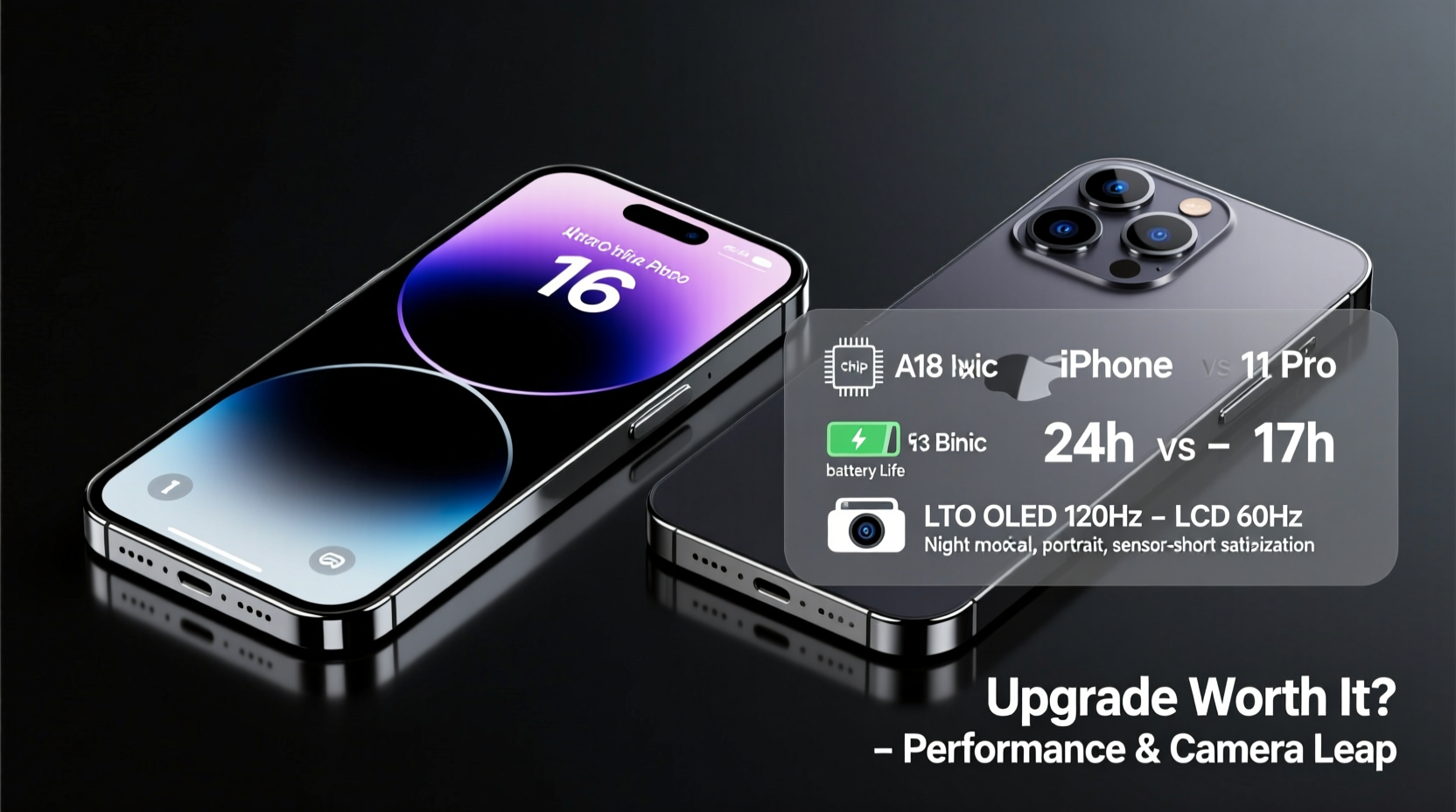
The heart of any smartphone is its processor, and here the gap between the iPhone 11 Pro and iPhone 16 couldn't be wider. The 11 Pro runs on the A13 Bionic chip—still capable by many standards—but the iPhone 16 is powered by Apple’s latest A18 chip, built on a more advanced 3nm process. This isn’t just about speed; it’s about efficiency, multitasking, AI processing, and future-proofing.
In real-world terms, the A18 delivers up to 2.5x faster CPU performance and nearly 4x better GPU performance than the A13. Apps launch instantly, games run at maximum settings without throttling, and complex tasks like 4K video editing or AR experiences feel effortless. Even everyday actions—switching between apps, loading web pages, or using Face ID—are noticeably smoother.
Camera Evolution: From Great to Exceptional
The iPhone 11 Pro introduced Apple’s first triple-lens system: wide, ultra-wide, and telephoto. It was excellent for its time, especially in daylight. However, low-light performance was limited, and Night Mode was in its infancy. The iPhone 16 redefines mobile photography with sensor-shift stabilization across lenses, larger sensors, and computational photography powered by machine learning.
Key improvements include:
- Low-light clarity: Up to 3x brighter night shots with reduced noise.
- Zoom capabilities: 5x optical zoom (vs. 2x on 11 Pro) and digital zoom up to 25x with usable quality.
- Smart HDR 6: Captures more detail in highlights and shadows, even in challenging lighting.
- Action mode: Advanced stabilization for smooth video while walking or moving.
For casual photographers, the difference may seem subtle in good light. But in dim environments, backlit scenes, or when capturing fast action, the iPhone 16 consistently outperforms its predecessor. Video recording has also evolved dramatically—from Dolby Vision HDR at 4K/60fps on the 11 Pro to cinematic 4K/120fps with ProRes support on the 16.
“Camera technology in smartphones has advanced more in five years than in the previous ten. The dynamic range, focus accuracy, and low-light performance now rival dedicated cameras.” — David Lin, Mobile Imaging Analyst at TechSight
Battery Life and Charging: Real Gains Over Time
Apple claimed “all-day” battery for the 11 Pro—about 18 hours of video playback. The iPhone 16 exceeds that by a significant margin, offering up to 26 hours under similar conditions. In practical usage, this means fewer midday charges, especially with iOS 18’s optimized background activity and adaptive refresh rate (ProMotion up to 120Hz).
Charging has improved too. While both phones support fast charging and wireless charging, the iPhone 16 benefits from:
- Faster wired charging (up to 70% in 30 minutes with a 20W+ adapter)
- Improved MagSafe alignment and sustained power delivery
- USB-C port (finally replacing Lightning), enabling faster data transfer and universal cable compatibility
Real Example: Daily Use Comparison
Sarah, a freelance photographer using her iPhone 11 Pro for client shoots and social media, found herself carrying a portable charger daily. After upgrading to the iPhone 16, she reported going two full days on a single charge during light travel weeks. “I shoot hundreds of photos, edit in Lightroom, and upload reels—now I don’t panic about battery at 40% anymore.”
Display and Design: Subtle but Meaningful Changes
Both devices feature premium builds—stainless steel frame and glass back—but the design language has shifted. The iPhone 16 adopts a slightly curved edge for better ergonomics, slimmer bezels, and a smaller Dynamic Island instead of the notch. Durability is enhanced with Ceramic Shield front cover and IP68 rating (same as 11 Pro, but tested under stricter conditions).
The Super Retina XDR display on the iPhone 16 offers higher peak brightness (up to 2000 nits vs. 800 nits), making outdoor visibility far superior. Combined with ProMotion technology (adaptive 120Hz refresh rate), scrolling feels fluid and responsive in a way the 11 Pro’s 60Hz screen simply can’t match.
| Feature | iPhone 11 Pro | iPhone 16 |
|---|---|---|
| Processor | A13 Bionic | A18 Bionic |
| Display Refresh Rate | 60Hz | Adaptive 120Hz (ProMotion) |
| Max Brightness | 800 nits | 2000 nits |
| Charging Port | Lightning | USB-C |
| Battery (Video Playback) | 18 hours | 26 hours |
| Rear Cameras | Triple 12MP | Triple 48MP main + advanced sensors |
| Software Support | Likely ends 2024–2025 | Guaranteed until ~2031 |
Should You Upgrade? A Practical Checklist
Before deciding, consider these factors. Check off what applies to your situation:
- ☐ My iPhone 11 Pro feels slow when opening apps or switching tasks
- ☐ I often run out of battery before the end of the day
- ☐ I take photos in low light and want better results
- ☐ I edit videos or use AR/machine learning apps regularly
- ☐ I want longer software support (iOS updates beyond 2025)
- ☐ I value USB-C for accessories and charging convenience
- ☐ I notice screen glare or poor visibility outdoors
If three or more apply, the upgrade is likely justified—not just for novelty, but for tangible improvements in usability and longevity.
FAQ
Will the iPhone 11 Pro stop working if I don’t upgrade?
No. Your device will continue to function normally. However, it will eventually lose access to new iOS features and security updates. Most experts estimate iOS support for the 11 Pro ends between late 2024 and 2025.
Can the iPhone 16 justify its higher price?
Yes, if you rely on your phone for work, creativity, or heavy usage. The combination of longer battery life, superior camera, faster performance, and extended software support adds real value over time—especially if you plan to keep the device for 4–5 years.
Are the phones physically the same size?
No. The iPhone 11 Pro has a 5.8-inch display, while the iPhone 16 comes in multiple sizes, starting at 6.1 inches. The newer model is slightly taller and lighter due to material refinements, but fits comfortably in most hands.
Final Verdict: Not the Same Phone at All
On the surface, both devices make calls, take photos, and run apps. But beneath that similarity lies a chasm of technological progress. The iPhone 16 isn’t just a new version—it’s a reflection of how much smartphones have evolved in design, intelligence, and utility.
For users who prioritize reliability, future-proofing, and high-quality media creation, the upgrade is absolutely worth it. For those who only check email, browse occasionally, and don’t mind slower performance, holding onto the 11 Pro a little longer remains feasible—but expect diminishing returns as apps grow more demanding.
Technology isn’t just about specs; it’s about how well your tools serve your life. If your phone is a creative outlet, productivity hub, or essential companion, the iPhone 16 delivers meaningful enhancements that add up over time.




 浙公网安备
33010002000092号
浙公网安备
33010002000092号 浙B2-20120091-4
Comments
No comments yet. Why don't you start the discussion?