
Apple’s annual iPhone releases make upgrading a ritual for many users. But when you're on an iPhone 13—still a capable device in 2024—and the iPhone 16 arrives, the decision becomes more complex. Is jumping two generations ahead truly beneficial, or are you paying for incremental improvements? The answer depends on your priorities: raw performance, camera quality, battery life, future-proofing, and budget.
The iPhone 13, launched in 2021, was praised for its excellent balance of price and performance. The iPhone 16, expected in late 2024, promises AI-driven features, faster chips, and refined cameras. But does that justify the cost of skipping not just one, but two upgrades?
Performance: A Quantum Leap in Processing Power
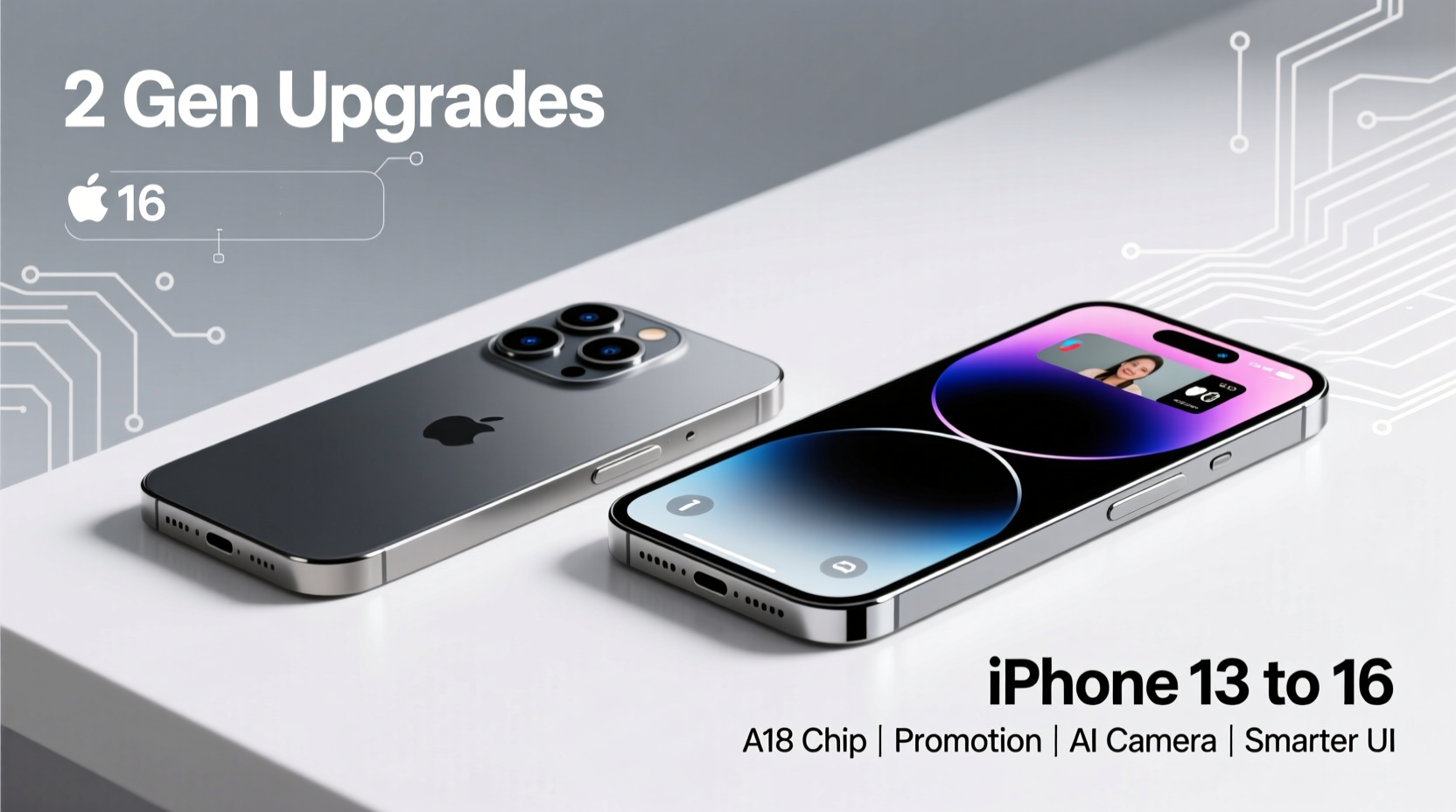
The heart of any smartphone is its processor. The iPhone 13 runs on the A15 Bionic chip—a powerhouse in its time. Even today, it handles everyday tasks, gaming, and multitasking with ease. However, the iPhone 16 is expected to launch with the A18 Pro chip, built on a 3nm process, offering significantly higher efficiency and performance.
Benchmarks suggest the A18 could deliver up to 35% faster CPU performance and 45% better GPU performance than the A15. Real-world benefits include smoother app launches, faster photo and video rendering, and improved AR experiences. For users who edit videos on their phones or rely on intensive productivity apps, this leap matters.
But for casual users—those who browse, message, and stream—the iPhone 13 remains more than sufficient. iOS optimization ensures older devices run smoothly for years. Unless you’re pushing your phone to its limits, the performance gains may feel subtle rather than transformative.
Camera Evolution: From Great to Pro-Level
The iPhone 13 introduced computational photography features like Cinematic Mode and Photographic Styles. Its dual-camera system (wide and ultra-wide) delivers vibrant, accurate photos in most lighting conditions. However, the iPhone 16 is rumored to bring significant camera upgrades:
- Larger sensors for improved low-light performance
- Advanced AI processing for real-time scene optimization
- New tetraprism telephoto lens with up to 5x optical zoom
- ProRAW and ProRes enhancements for creators
For photography enthusiasts, these changes are compelling. Night mode shots will be sharper, portraits more detailed, and zoomed images less pixelated. Video recording may support higher bitrates and adaptive frame rates, making the iPhone 16 a serious tool for vloggers and indie filmmakers.
Yet, if your primary use is social media snapshots or family photos, the iPhone 13 still produces excellent results. The difference in daylight photos between the two models may be barely noticeable without side-by-side comparison.
“Camera hardware improvements are now matched by intelligent software tuning. The iPhone 16 could redefine what a smartphone camera can do.” — David Lin, Mobile Imaging Analyst at TechScope
Battery Life and Efficiency Gains
Battery degradation is a key reason users upgrade after three years. The iPhone 13 offered solid endurance—around 10–12 hours of mixed usage. The iPhone 16, thanks to the energy-efficient A18 chip and larger battery capacity, could push that to 15+ hours.
Real-world impact? Less anxiety about charging during travel, longer 5G streaming sessions, and better standby performance. Apple may also introduce optimized background app refresh using on-device AI, reducing unnecessary power drain.
Additionally, charging speeds could improve. While the iPhone 13 maxes out at around 20W wired charging, rumors suggest the iPhone 16 might support up to 35W, cutting full charge time to under 45 minutes.
Estimated Battery and Charging Comparison
| Feature | iPhone 13 | iPhone 16 (Expected) |
|---|---|---|
| Battery Capacity | ~3,240 mAh | ~4,000 mAh |
| Video Playback Time | Up to 19 hours | Up to 28 hours |
| Fast Charging Max Speed | ~50% in 30 mins (20W) | ~70% in 30 mins (35W) |
| Standby Optimization | Standard iOS management | AI-powered background suppression |
Design and Durability: Subtle Refinements
Externally, both phones share a similar design language: flat edges, Ceramic Shield front, and aerospace-grade aluminum. The iPhone 16 may feature slightly thinner bezels and a reinforced titanium frame on Pro models, improving drop resistance.
A notable change could be the removal of the physical charging port. While the base iPhone 16 might retain USB-C, higher-end variants could go fully wireless, relying on MagSafe and Qi2 for charging and data transfer. This shift would align with Apple’s long-term vision of a portless future—but could frustrate users who prefer wired reliability.
Durability ratings are expected to improve. The iPhone 16 may offer IP68 dust/water resistance with deeper submersion tolerance (up to 6 meters for 30 minutes), a slight edge over the iPhone 13’s 6-meter/30-minute rating.
Software and Future-Proofing
This is where skipping two generations pays off. Apple typically supports iPhones with iOS updates for 5–6 years. An iPhone 13, released in 2021, will likely receive updates until 2027. The iPhone 16, launching in 2024, could stay supported until 2030 or beyond.
More importantly, new iOS features increasingly rely on advanced hardware. On-device AI, such as live transcription, photo search by context (“show me pictures of my dog at the beach”), and predictive text actions, requires powerful neural engines. The A18 chip in the iPhone 16 will handle these seamlessly, while the A15 in the iPhone 13 may struggle or lack compatibility.
If you value being at the forefront of iOS innovation, upgrading now ensures you won’t miss out on upcoming AI-centric features expected in iOS 18 and beyond.
Mini Case Study: Sarah’s Upgrade Dilemma
Sarah has used her iPhone 13 since 2021. She’s a freelance photographer who shoots reels for clients and edits on her phone. By mid-2024, she notices her phone slowing down during 4K exports and struggling with new AI photo tools in Lightroom. Her battery drops 40% during a full shoot day.
She considers waiting for iPhone 15 prices to drop but realizes that even the 15 lacks the telephoto range and processing speed she needs. When the iPhone 16 launches with enhanced ProRAW support, faster export pipelines, and extended battery life, she upgrades immediately. The jump from 13 to 16 saves her hours in post-production and eliminates mid-day charging stress.
For Sarah, skipping two generations wasn’t excessive—it was necessary for her workflow.
Checklist: Should You Upgrade from iPhone 13 to iPhone 16?
Answer these questions to determine if the upgrade makes sense:
- Do you currently experience lag with apps or photo/video editing? → Yes = Stronger case for upgrade
- Are you interested in AI-powered photo organization or voice transcription? → Yes = iPhone 16 better equipped
- Is your iPhone 13 battery health below 80%? → Yes = Degraded performance justifies move
- Do you want to keep your next phone for 4+ years? → Yes = Newer model offers longer support
- Are you excited by new camera capabilities like 5x zoom or low-light video boosts? → Yes = Noticeable improvement
Frequently Asked Questions
Will the iPhone 16 work better with Apple Vision Pro?
Potentially. Rumors suggest tighter integration between iPhone 16 and spatial computing devices. Enhanced hand tracking sync, faster data relay, and shared AR environments could make the iPhone 16 a better companion for Vision Pro users.
Can I save money by upgrading to iPhone 15 instead?
Yes, financially. The iPhone 15 (especially discounted post-iPhone-16 launch) offers a middle ground. It has USB-C, Dynamic Island, and the A16 chip—improving on the 13 without the premium price of the 16. However, you’ll miss out on AI features and long-term software leadership.
Is the iPhone 13 obsolete in 2024?
No. The iPhone 13 remains a reliable daily driver. It runs iOS 17 smoothly and will support iOS 18. Unless you need cutting-edge features, there’s no urgency to replace it solely based on age.
Conclusion: Weighing Value Against Innovation
Skipping from iPhone 13 to iPhone 16 isn’t automatically wasteful—it depends on your usage. For power users, creatives, and those planning a long ownership cycle, the advancements in performance, camera, battery, and AI readiness make the jump worthwhile. The extra investment buys not just better specs, but several additional years of seamless updates and modern functionality.
For casual users, however, the iPhone 13 continues to deliver. The differences, while measurable, may not translate into meaningful daily improvements. In such cases, waiting for iPhone 17 or opting for a refurbished iPhone 15 might offer better value.




 浙公网安备
33010002000092号
浙公网安备
33010002000092号 浙B2-20120091-4
Comments
No comments yet. Why don't you start the discussion?