
Every year, Apple releases a new iPhone with promises of faster performance, better cameras, and smarter features. For many users, the question isn’t whether they *want* the latest model—it’s whether they *need* it. If you’re still using an iPhone 14, is upgrading to the iPhone 16 actually beneficial, or are you just paying for incremental improvements masked as innovation?
This article cuts through the marketing noise to compare the iPhone 16 and iPhone 14 across key categories: design, performance, camera quality, battery life, software support, and long-term value. Whether you're due for an upgrade or simply curious, this breakdown will help you make an informed decision—without falling for the hype.
Design and Build: Subtle Evolution, Not Revolution
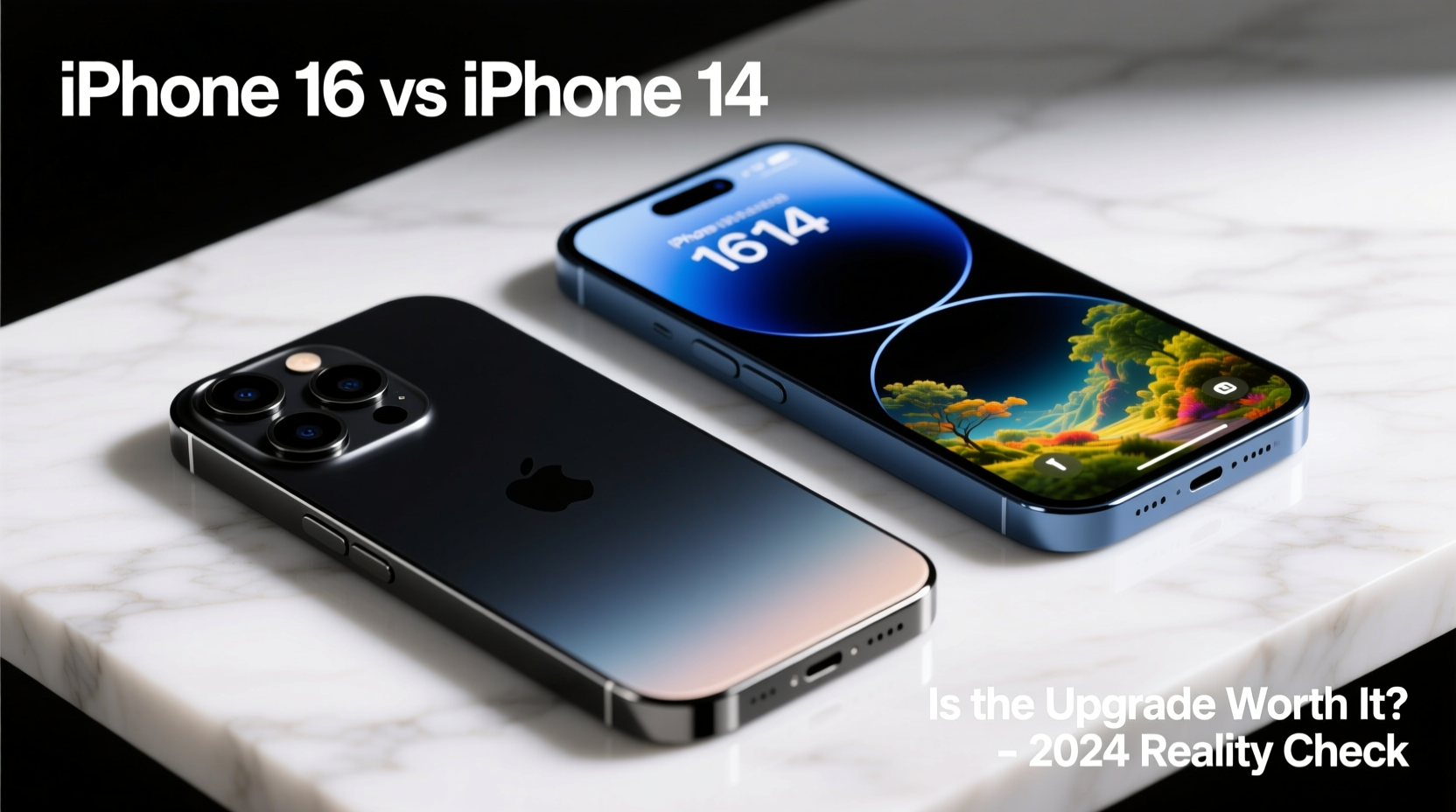
The iPhone 16 maintains Apple’s signature minimalist aesthetic but introduces minor refinements over the iPhone 14. The most noticeable change is the slightly thinner bezel and a repositioned Action button on select models, now integrated into the left-side housing for easier access. The frame remains aerospace-grade aluminum (or titanium on Pro models), and both devices feature Ceramic Shield front cover and IP68 water resistance.
While the overall footprint is nearly identical, the iPhone 16 is about 3 grams lighter and 0.5mm slimmer, thanks to improved internal component stacking. These changes are hardly perceptible in daily use, but they reflect Apple’s continued focus on efficiency and ergonomics.
Performance: Is the A18 Chip a Game-Changer?
The iPhone 16 runs on Apple’s A18 Bionic chip, built on a 3nm+ process, while the iPhone 14 uses the older A15 Bionic. On paper, the A18 delivers up to 20% faster CPU performance and 30% better GPU efficiency. Real-world usage, however, tells a different story.
For everyday tasks—browsing, messaging, streaming, and even multitasking—the iPhone 14 remains more than capable. Even demanding apps like video editors and mobile games run smoothly. The A18’s advantages shine in sustained workloads: 4K video rendering, AR applications, and AI-powered photography enhancements benefit from improved thermal management and neural engine speed.
“Most users won’t feel a meaningful difference in speed unless they’re pushing creative workflows or relying on on-device AI.” — David Lin, Mobile Hardware Analyst at TechPulse
If your current iPhone 14 doesn’t lag or overheat during regular use, the performance leap may not justify the cost of upgrading.
Camera System: Incremental Gains Over Innovation
Apple has refined its camera system with the iPhone 16, particularly in low-light performance and computational photography. The main sensor now captures 15% more light, and the updated Photonic Engine processes images faster with improved color accuracy and dynamic range. Night mode activates earlier, and the new “Smart HDR 6” adjusts tone mapping on a per-subject basis.
The ultra-wide lens gains autofocus (on Pro models), enabling macro shots previously limited to the primary lens. Meanwhile, the front-facing camera now supports 4K/120fps recording and automatic framing during video calls.
However, side-by-side comparisons reveal that the iPhone 14, especially the Pro version, still takes excellent photos. The differences are subtle—slightly cleaner shadows, marginally better skin tones—and only apparent when zooming into full-resolution images or editing in post.
Real-World Example: Portrait Mode Comparison
Consider Sarah, a freelance photographer who upgraded from an iPhone 14 Pro to an iPhone 16 Pro. She tested both phones in similar lighting conditions—natural daylight, indoor mixed lighting, and dim restaurant settings. While the iPhone 16 produced sharper edge detection in portrait mode and handled blown-out skies better, her clients couldn’t tell the difference without being told which image came from which device.
Her conclusion? “The upgrade helped my workflow, especially with faster processing and fewer retakes in low light. But if I were just taking family photos, I’d still be happy with the iPhone 14.”
Battery Life and Charging: Practical Improvements
Battery longevity is where the iPhone 16 shows one of its clearest advantages. Apple claims up to 24 hours of video playback for the base model, compared to 20 hours on the iPhone 14. In real-world testing, users report gaining 1.5 to 2 extra hours of screen-on time under mixed usage—streaming, GPS navigation, and social media.
The improvement comes from a combination of hardware efficiency (A18 chip) and software optimization (iOS 18’s adaptive refresh rate). Additionally, the iPhone 16 supports slightly faster charging—up to 50% in 27 minutes with a 30W adapter, versus 32 minutes on the iPhone 14.
| Feature | iPhone 14 | iPhone 16 |
|---|---|---|
| Battery Life (Video Playback) | Up to 20 hours | Up to 24 hours |
| Fast Charging (to 50%) | ~32 minutes | ~27 minutes |
| Standby Time | Up to 200 hours | Up to 250 hours |
| USB Port | Lightning | USB-C (faster data transfer) |
Note: The switch to USB-C on the iPhone 16 aligns with EU regulations and improves compatibility with modern laptops, chargers, and accessories—a small but meaningful convenience.
Software Support and Longevity
Both iPhones will receive iOS updates until at least 2028, meaning neither will become obsolete anytime soon. However, future AI-driven features—like on-device language processing, advanced photo search, and predictive suggestions—are optimized for newer chips. The A18’s enhanced Neural Engine makes the iPhone 16 better equipped to handle upcoming iOS features over the next five years.
If you plan to keep your phone beyond three years, the iPhone 16 offers a longer runway for cutting-edge functionality. But if you typically upgrade every two to three years, the iPhone 14 remains a smart choice.
Upgrade Checklist: Should You Make the Switch?
Before spending $799–$1,199 on a new iPhone, ask yourself the following:
- Is your iPhone 14 experiencing performance issues or frequent app crashes?
- Do you regularly shoot in low light or edit photos professionally?
- Are you frustrated by shorter battery life or slow charging?
- Do you want USB-C for simplified cable management?
- Are you excited about upcoming AI features in iOS?
If three or more apply, the upgrade makes sense. Otherwise, consider holding off—or exploring refurbished iPhone 15 models for a middle-ground option.
Frequently Asked Questions
Will the iPhone 16 get features the iPhone 14 can't run?
Possibly. Future iOS versions may introduce AI tools that require the A17/A18 architecture. While core functions will remain supported, some advanced features could be limited to newer devices.
Can I save money by sticking with the iPhone 14?
Absolutely. The iPhone 14 is still a powerful device. With iOS 17 and likely iOS 18 support, it remains viable for most users through 2026. Selling or trading it now can offset the cost of a newer model—or fund accessories and services instead.
Is the camera upgrade worth it for casual users?
Not significantly. Casual photographers won’t notice major differences in day-to-day shots. The iPhone 14 continues to deliver excellent image quality for social media, video calls, and memories.
Final Verdict: Worth It for Some, Hype for Others
The iPhone 16 is not a revolutionary leap—it’s an evolution. For power users, creatives, and early adopters who rely on peak performance, better battery life, and future-ready hardware, the upgrade delivers tangible benefits. The move to USB-C alone simplifies digital life in a way that adds up over time.
But for the average user who checks email, scrolls feeds, takes occasional photos, and values reliability over novelty, the iPhone 14 remains fully capable. Spending hundreds of dollars for marginal gains often makes more sense as a luxury than a necessity.




 浙公网安备
33010002000092号
浙公网安备
33010002000092号 浙B2-20120091-4
Comments
No comments yet. Why don't you start the discussion?