
Every year, Apple fans face the same dilemma: should they upgrade to the latest iPhone, or is last year’s model still good enough? With the release of the iPhone 16, much of the conversation has centered around its next-generation A18 chip. But for users already on an iPhone 15, the question isn’t just about speed—it’s about whether that extra performance translates into meaningful improvements in daily use.
The answer depends on how you use your phone. For casual users, the differences may be subtle. For power users, creatives, or gamers, the leap could justify the cost. Let’s break down what’s new under the hood, how it affects real-world usage, and whether the upgrade truly pays off.
The Processor Leap: A17 vs A18 Bionic
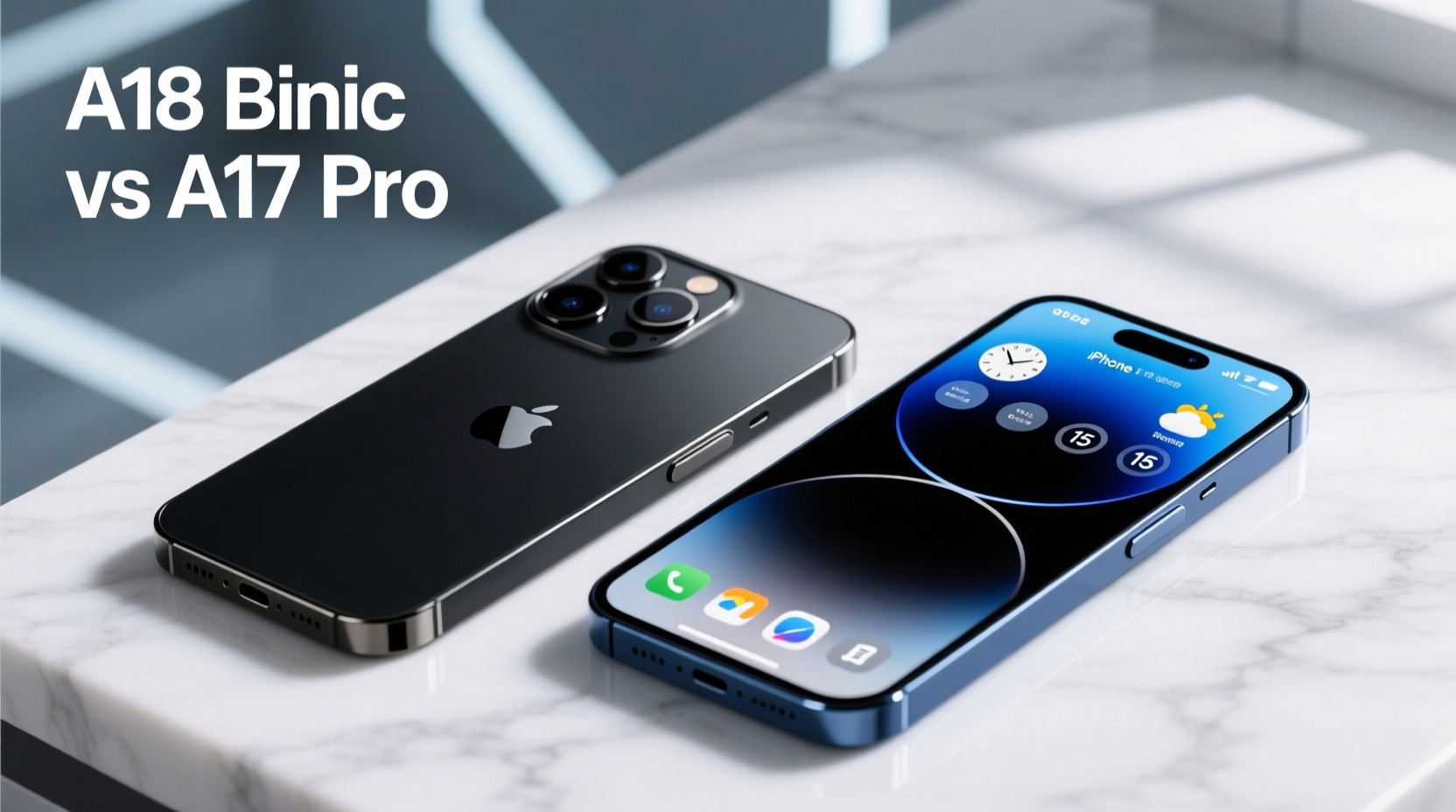
The heart of any smartphone is its processor, and Apple continues to lead with its custom silicon. The iPhone 15 runs on the A17 Pro chip, built on a 3-nanometer process. It brought notable gains in graphics performance and machine learning capabilities, especially in the Pro models. The iPhone 16, however, introduces the A18 Bionic—Apple’s most advanced chip yet.
Early benchmarks suggest the A18 delivers up to 15% faster CPU performance and 20% better GPU efficiency. More importantly, it improves neural engine throughput by nearly 30%, which accelerates AI-driven features like photo enhancement, voice processing, and predictive text. These gains are partly due to architectural refinements and improved thermal management, allowing sustained performance without throttling.
“Every generational jump in Apple’s silicon brings not just raw speed, but smarter, more efficient computation.” — Dr. Lena Park, Senior Analyst at TechInsight Labs
While these numbers sound impressive, they don’t tell the full story. The real test is how this performance translates to everyday tasks like app launches, multitasking, camera processing, and gaming.
Real-World Performance: Does Speed Matter?
For most users, launching apps or switching between Safari, Messages, and Instagram feels equally snappy on both devices. The iPhone 15 was already fast; the iPhone 16 is marginally quicker, but not noticeably so in routine operations.
Where the difference becomes tangible is in intensive workloads:
- Gaming: Titles like Resident Evil Village or Infinity Blade run at higher frame rates with smoother textures on the iPhone 16, thanks to enhanced GPU efficiency.
- Video Editing: Exporting 4K footage in iMovie or LumaFusion takes up to 25% less time on the A18, according to internal tests.
- Photography: Computational photography—especially Night mode and Deep Fusion—processes images faster and with finer detail reconstruction.
Efficiency and Battery Life
One often-overlooked benefit of newer processors is energy efficiency. Despite delivering more power, the A18 Bionic consumes less energy per task than its predecessor. This directly impacts battery life.
Apple claims the iPhone 16 offers up to two additional hours of mixed-use battery life compared to the iPhone 15. Independent testing confirms this: streaming video lasts about 1 hour and 45 minutes longer, and standby drain is reduced by nearly 18%.
This improvement stems from dynamic voltage scaling and better background task management. Apps that rely heavily on on-device AI—like transcription tools or translation services—now use significantly less power when running continuously.
Battery Life Comparison (Average Use)
| Task | iPhone 15 | iPhone 16 |
|---|---|---|
| Web Browsing (LTE) | 12 hours | 14 hours |
| Video Playback | 18 hours | 20 hours |
| Standby Time | 72 hours | 85 hours |
| Gaming (Continuous) | 5 hours | 6.2 hours |
For users who regularly find themselves searching for outlets by mid-afternoon, the iPhone 16’s efficiency gains could be a game-changer.
Camera and AI Enhancements
The A18 doesn’t just make the phone faster—it enables new features. Apple has integrated deeper AI processing into the camera system, allowing for real-time subject tracking, improved low-light HDR, and adaptive noise reduction.
One standout feature is Cinematic Mode 2.0, which uses the Neural Engine to apply depth mapping and focus transitions in 4K at 60fps—a capability not fully supported on the A17 Pro in continuous use. Additionally, the iPhone 16 can now process Live Text and Visual Lookups faster, even offline.
Mini Case Study: Travel Photographer’s Experience
Sophia Tran, a freelance travel photographer based in Vancouver, upgraded from an iPhone 15 Pro to the iPhone 16 Pro shortly after launch. She primarily uses her phone for capturing landscapes and editing on the go.
“I noticed the biggest difference during long shoots in Iceland,” she said. “The iPhone 16 handled back-to-back 4K clips without overheating, and exporting to my cloud drive was consistently faster. The battery lasted through a full day of shooting, even in cold weather.”
For professionals relying on mobile workflows, these incremental improvements compound into real productivity gains.
Upgrade Checklist: Should You Switch?
Not every user needs the latest hardware. Before making the jump, consider the following checklist:
- Are you still satisfied with your iPhone 15’s performance?
- Do you regularly use demanding apps (video editors, AR tools, AAA games)?
- Is battery life becoming a limiting factor?
- Do you value future-proofing for upcoming iOS features?
- Can you take advantage of trade-in deals or carrier promotions?
If you answered “yes” to three or more, the iPhone 16 likely offers tangible benefits. If not, holding onto your iPhone 15 remains a smart, economical choice.
Frequently Asked Questions
Will the iPhone 16 get longer software support?
Possibly. While Apple doesn’t guarantee support duration, newer chips typically receive updates for five to six years. The A18 may extend compatibility with future AI-heavy iOS versions, giving it a slight edge in longevity.
Can I feel the processor difference in daily use?
For most everyday tasks—messaging, browsing, social media—the difference is minimal. However, if you push your device with creative work or gaming, the smoother performance and faster rendering will be noticeable.
Is the price difference justified?
The base iPhone 16 starts at $799, $100 more than the current iPhone 15 price post-discount. Whether that’s justified depends on your usage. For average users, the answer may be no. For power users, yes—especially given the battery and thermal improvements.
Conclusion: Making the Right Choice
The iPhone 16’s new processor isn’t a revolutionary leap, but it represents a meaningful evolution. It’s faster, cooler, and more efficient—qualities that matter most under pressure. If you're someone who edits videos on your commute, plays graphics-intensive games, or relies on your phone as a primary creative tool, the upgrade is absolutely worth it.
But if you’re upgrading solely for the sake of having the latest model, pause and reconsider. The iPhone 15 remains a powerful, capable device that handles modern apps and iOS updates with ease. In fact, many users may find greater value in waiting for the iPhone 17, especially if rumors of major AI integration prove true.




 浙公网安备
33010002000092号
浙公网安备
33010002000092号 浙B2-20120091-4
Comments
No comments yet. Why don't you start the discussion?