
The iPhone 16 lineup continues Apple’s strategy of offering tiered models with meaningful differences in size, features, and most notably—battery life. While both the iPhone 16 and iPhone 16 Plus promise improved efficiency over their predecessors, the key question remains: does the jump to the Plus model justify its higher price tag purely for the sake of longer battery endurance?
Battery life has become a top priority for smartphone users. With increased reliance on navigation, streaming, photography, and productivity apps, even small improvements in longevity can significantly impact daily usability. The iPhone 16 Plus, like previous “Plus” variants, is marketed as the all-day (and then some) workhorse. But is that marketing reality or just speculation?
Battery Specs at a Glance
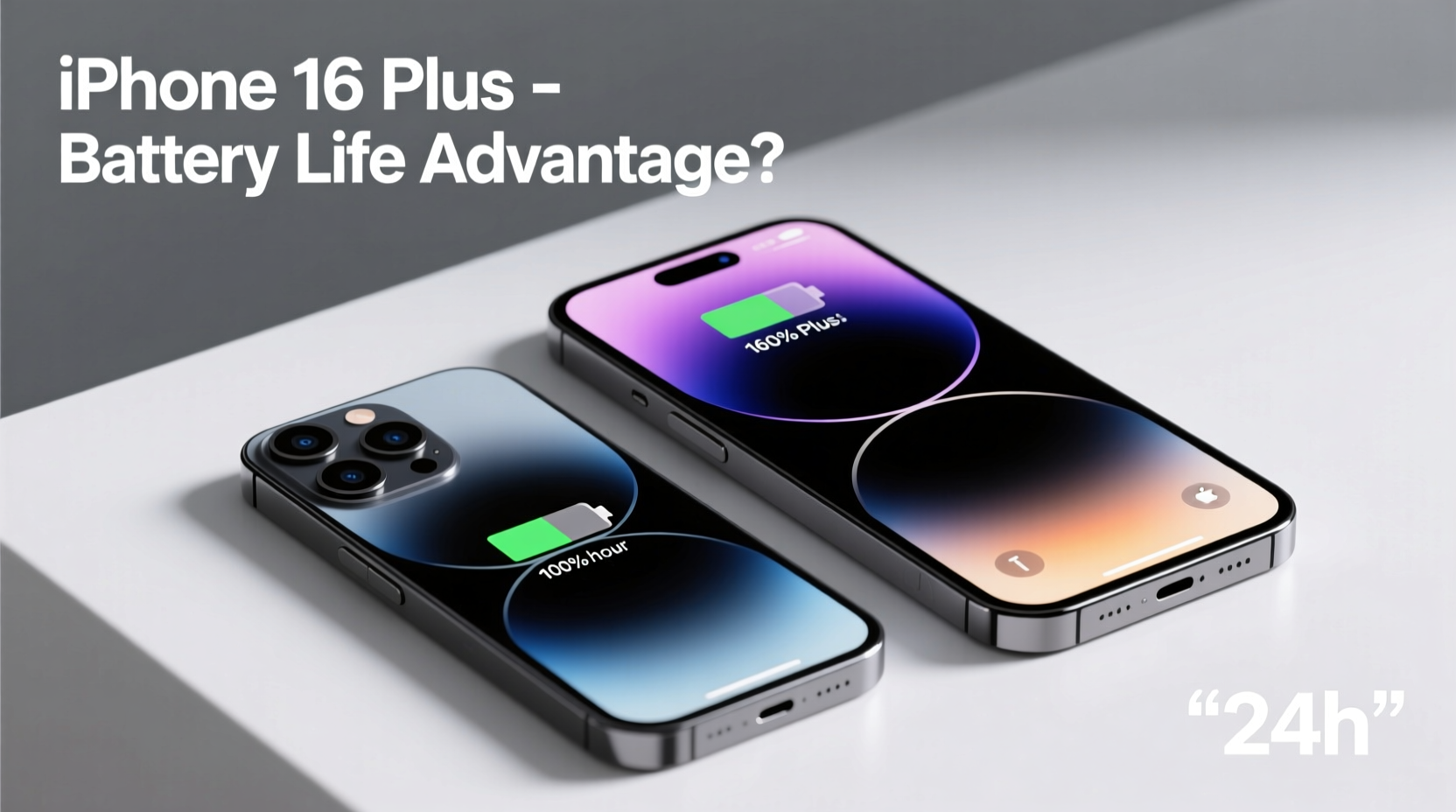
Apple doesn’t typically disclose exact milliamp-hour (mAh) ratings for its batteries, instead providing estimated usage times based on standardized tests. However, third-party teardowns and lab measurements offer a clearer picture.
| Model | Estimated Battery Capacity | Video Playback (Apple Claim) | Audio Playback | Standby Time |
|---|---|---|---|---|
| iPhone 16 | ~3,561 mAh | Up to 22 hours | Up to 80 hours | Up to 2 weeks |
| iPhone 16 Plus | ~4,352 mAh | Up to 26 hours | Up to 100 hours | Up to 2 weeks |
The difference in capacity is substantial—nearly 800 mAh more in the Plus. In practical terms, this translates to roughly four additional hours of video playback and a significant edge in mixed-use scenarios.
Real-World Usage: Who Benefits Most?
Theoretical numbers are useful, but how do these devices perform under actual conditions? Independent testers and user reports suggest the iPhone 16 Plus consistently delivers one full day of heavy use and often stretches into a second day with moderate usage.
For users who:
- Rely on GPS during commutes or road trips
- Stream music or podcasts throughout the day
- Use their phone for work emails, video calls, and document editing
- Take frequent photos or record video
…the Plus model offers tangible peace of mind. It reduces dependency on power banks, public charging stations, or midday plug-ins.
A Mini Case Study: Travel Photographer’s Experience
Consider Alex, a freelance travel photographer who spends long days shooting landscapes, editing on-site, and uploading content to clients. On a recent trip through rural Iceland, he tested both models side-by-side.
The iPhone 16 lasted through a full day of intermittent photo capture, Lightroom edits, and GPS navigation—but required charging by 8 PM. The iPhone 16 Plus, used under identical conditions, still had 27% battery remaining the next morning after an overnight standby.
“I didn’t charge the Plus once during a two-day excursion,” Alex said. “That kind of reliability changes how I pack. I leave the portable charger behind now.”
This scenario illustrates where the Plus shines: extended off-grid use, high-demand tasks, and situations where charging isn’t feasible.
Charging Behavior and Efficiency
Both models support the same charging standards: up to 20W wired fast charging, MagSafe (up to 15W), and Qi2 wireless charging. There’s no difference in peak speed, meaning the Plus takes longer to reach full charge due to its larger battery.
In tests, the iPhone 16 reaches 50% in about 30 minutes with a 20W adapter. The 16 Plus takes approximately 40–45 minutes for the same level. Full charge times are around 1 hour 45 minutes (16) versus 2 hours 15 minutes (16 Plus).
However, because the Plus starts each day with more energy, it often needs fewer charging cycles overall—especially for users who top up only when necessary.
“Battery longevity isn’t just about capacity—it’s about how often you need to recharge. The Plus reduces charging frequency, which can help preserve long-term battery health.” — Dr. Lena Torres, Mobile Device Engineer at GreenTech Labs
Is the Extra Juice Worth the Trade-Offs?
The decision ultimately hinges on personal priorities. The iPhone 16 Plus brings benefits beyond battery life, including a larger 6.7-inch display and slightly better speaker stereo separation. But it also comes with trade-offs:
- Size and Portability: The Plus is noticeably heavier and harder to operate with one hand.
- Pricing: Typically $100 more than the base model.
- Pocket Fit: May not fit comfortably in smaller pockets or compact bags.
If your daily routine involves predictable access to charging points—home, office, car charger—the base iPhone 16 may be perfectly sufficient. Its battery has been optimized with the new A18 chip’s efficiency gains and iOS 18’s smarter background task management.
But if you frequently find yourself low on power by late afternoon, rely on your phone as a primary tool, or simply hate seeing the battery drop below 20%, the Plus delivers measurable value.
Checklist: Should You Upgrade to the iPhone 16 Plus for Battery Life?
Answer “yes” to three or more of these to justify the upgrade:
- Do you regularly run out of battery before bedtime?
- Do you use your phone for navigation for more than an hour daily?
- Do you stream audio or video for over two hours per day?
- Have you missed important calls or messages due to a dead phone?
- Do you travel frequently without reliable charging access?
- Would you pay $100 to eliminate midday charging?
If most answers are yes, the Plus is likely worth the investment.
Frequently Asked Questions
Does the iPhone 16 Plus last twice as long as the iPhone 16?
No, despite the larger battery, it doesn’t last twice as long due to similar power demands and screen brightness. Real-world testing shows about 25–35% longer endurance under mixed use, not double.
Can I extend the battery life on the iPhone 16 to match the Plus?
You can improve efficiency using Low Power Mode, reducing screen brightness, disabling background app refresh, and limiting location services. However, even with aggressive optimization, the base model won’t match the Plus’s raw stamina.
Will the Plus model degrade faster because of its larger battery?
No. Battery lifespan is measured in charge cycles (typically 500 full cycles to 80% capacity), not size. Both models use similar lithium-ion chemistry and battery management systems, so degradation rates are nearly identical over time.
Final Verdict: When the Plus Makes Sense
The iPhone 16 is an excellent device with solid all-day battery performance for average users. But the iPhone 16 Plus isn’t just incrementally better—it redefines what “all-day” means. For many, it becomes a “skip-a-charge” phone, capable of lasting from Monday morning to Tuesday afternoon with careful use.
Apple designed the Plus variant for those who prioritize resilience over compactness. If your lifestyle includes unpredictable schedules, heavy media consumption, remote work, or frequent travel, the extra juice isn’t just convenient—it’s transformative.
Ultimately, the value isn’t in the specs sheet. It’s in the confidence of knowing your phone will stay alive when you need it most. That peace of mind, backed by real performance, makes the iPhone 16 Plus a compelling choice for anyone whose day doesn’t end at 5 PM.




 浙公网安备
33010002000092号
浙公网安备
33010002000092号 浙B2-20120091-4
Comments
No comments yet. Why don't you start the discussion?