
For years, the smartphone market has been split between two dominant forces: Apple’s iPhone and Samsung’s Galaxy lineup. If you’re currently using a Galaxy S22 Ultra and are considering switching to the newly released iPhone 16, the decision isn’t as simple as comparing specs on paper. Real-world usability, long-term software support, ecosystem integration, and personal preference all play crucial roles.
The Galaxy S22 Ultra remains a powerhouse device, especially for Android enthusiasts who value flexibility, customization, and productivity features like the built-in S Pen. Meanwhile, the iPhone 16 brings refined AI capabilities, improved camera systems, and deeper integration with Apple’s expanding ecosystem. But does that justify leaving behind a phone that still performs exceptionally well?
Performance and Hardware: Raw Power vs Longevity
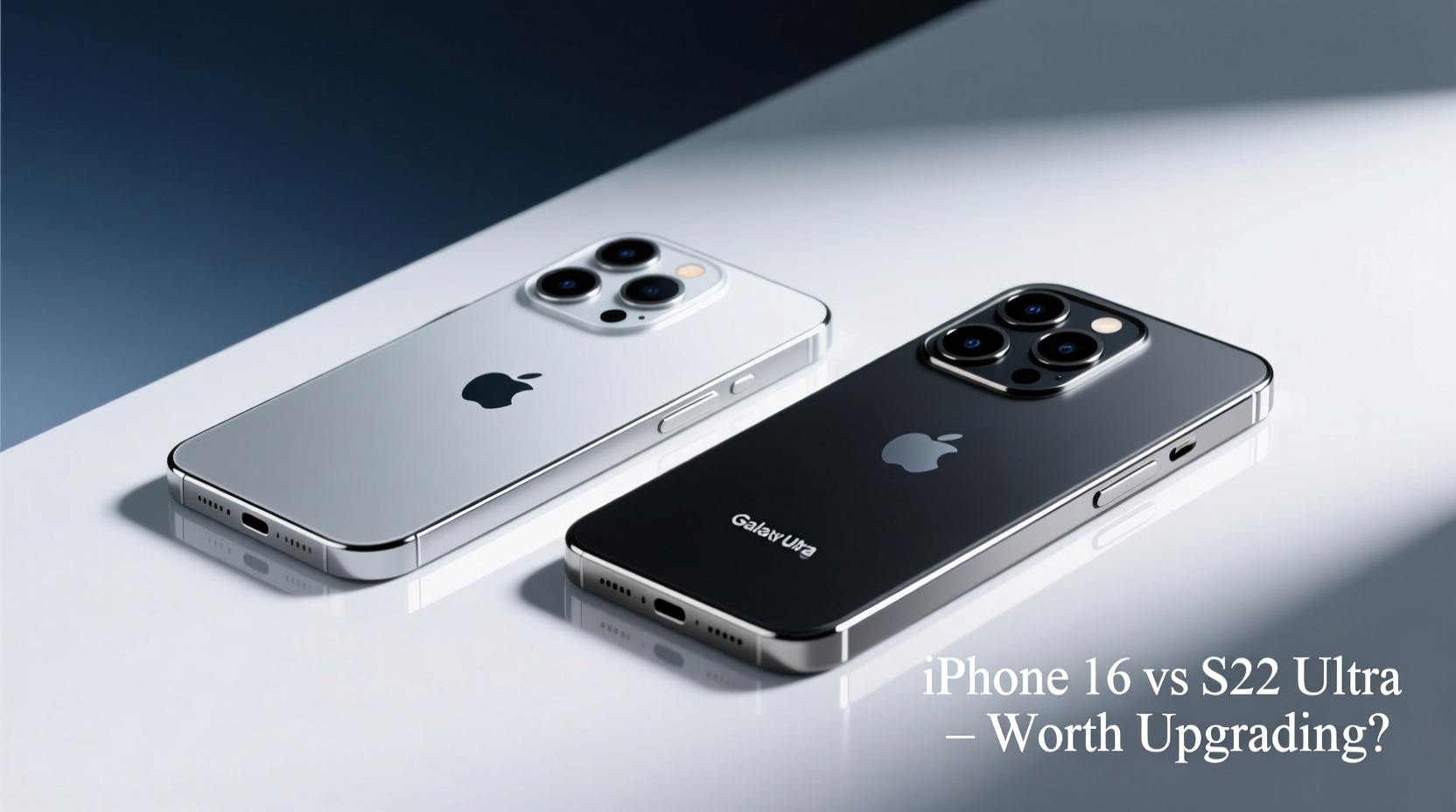
At launch, the Galaxy S22 Ultra was equipped with the Snapdragon 8 Gen 1 (or Exynos 2200 in select regions), delivering top-tier performance for its time. Even today, it handles multitasking, gaming, and media consumption without breaking a sweat. However, newer chipsets have surpassed it in both efficiency and thermal management.
The iPhone 16, powered by the A18 Bionic chip, introduces next-gen neural engine capabilities optimized for on-device AI processing. Benchmarks suggest up to 25% faster CPU performance and 35% better GPU efficiency compared to the A17 Pro found in the iPhone 15 Pro Max. This leap translates into smoother augmented reality experiences, faster photo editing, and enhanced machine learning tasks like real-time language translation.
While the S22 Ultra still runs most apps smoothly, users may notice occasional stutters during prolonged use or when running memory-intensive applications. iOS, on the other hand, is known for maintaining responsiveness over longer periods due to tighter hardware-software integration.
Camera Comparison: Consistency vs Innovation
The S22 Ultra boasts a quad-camera system headlined by a 108MP main sensor, dual telephoto lenses (3x and 10x optical zoom), and advanced AI-powered night mode. Its versatility shines in zoom photography and high-resolution stills, making it ideal for travel and wildlife shots.
The iPhone 16 advances computational photography with a new 48MP main sensor featuring larger pixels and sensor-shift stabilization. Apple has also introduced \"Photographic Styles 2.0,\" allowing more natural color grading across lighting conditions. The biggest innovation lies in its AI-enhanced video recording—supporting cinematic mode at 4K/120fps and automatic subject tracking even in low light.
In side-by-side tests, the S22 Ultra captures more detail in daylight zoom scenarios, but the iPhone 16 produces more consistent results across varying conditions, particularly in dynamic range and skin tone accuracy. For social media creators and vloggers, the iPhone’s seamless video workflow within iMovie and Final Cut Pro offers a compelling edge.
“Apple’s focus on computational photography ensures reliable output regardless of environment—ideal for users who want great photos without manual tweaking.” — David Lin, Mobile Imaging Analyst at TechScope Weekly
Ecosystem Integration: The Hidden Factor
This is where the decision becomes deeply personal. If you're invested in the Samsung ecosystem—using Galaxy Buds, a Galaxy Watch, DeX for desktop productivity, or Samsung Notes—the S22 Ultra functions as a central hub. Features like Quick Share, Link to Windows, and cross-device clipboard enhance productivity across Windows PCs and Android tablets.
Conversely, the iPhone 16 unlocks seamless interaction within Apple’s tightly integrated world. Handoff, AirDrop, Universal Clipboard, and Continuity Camera create frictionless transitions between iPhone, iPad, Mac, and Apple Watch. iCloud+ subscribers benefit from end-to-end encrypted backups, Private Relay, and HomeKit automation.
Switching ecosystems means re-purchasing apps (if not cross-platform), migrating data, and relearning workflows. For professionals relying on specific tools—such as Samsung Dex for presentations or Apple’s Stage Manager on iPadOS—the transition could disrupt daily routines.
Long-Term Value and Software Support
Samsung promises four major Android OS upgrades and five years of security patches for the S22 series. As of 2024, the S22 Ultra has already received three OS updates (One UI 5, 6, and 7) and will likely receive one more before reaching end-of-life around 2026.
Apple typically supports iPhones for five to six years with full OS updates. The iPhone 16 is expected to receive iOS updates through at least 2030. Given that many users keep phones for 3–4 years, this extended lifecycle often translates to better resale value and lower long-term cost per year.
Battery degradation is another consideration. After three years of use, the S22 Ultra’s 5,000mAh battery may retain only 75–80% of its original capacity, leading to noticeable midday charging needs. The iPhone 16 includes optimized charging algorithms and a slightly smaller but more efficient battery, aiming for 80% health retention after 1,000 cycles.
| Feature | Galaxy S22 Ultra | iPhone 16 |
|---|---|---|
| Launch Year | 2022 | 2024 |
| Expected OS Support Until | 2026 | 2030+ |
| Chipset | Snapdragon 8 Gen 1 / Exynos 2200 | A18 Bionic |
| Main Camera | 108MP, f/1.8 | 48MP, f/1.6, sensor-shift |
| Zoom Capability | 10x optical, 100x digital | 5x optical, 25x digital |
| Battery Life (Video Playback) | Up to 12 hours | Up to 14 hours |
| Ecosystem Strengths | S Pen, DeX, Android flexibility | iCloud, Continuity, iOS exclusives |
Real-World Decision Making: A Mini Case Study
Take the example of Maya, a freelance photographer and part-time YouTuber based in Austin. She’s used her S22 Ultra since early 2022 and loves the 100x Space Zoom for capturing distant landscapes. However, she recently purchased a MacBook Pro for video editing and found herself constantly transferring files via cloud services or USB-C cables.
After testing an iPhone 15 Pro Max at a friend’s house, she experienced how effortlessly videos moved from iPhone to Mac using AirDrop and how iMovie automatically organized clips by date and location. When the iPhone 16 launched with improved Log video recording and ProRes over 5G upload, she decided the ecosystem synergy outweighed her loyalty to Samsung’s zoom capabilities.
Her switch wasn’t about raw specs—it was about reducing friction in her creative workflow. For her, the upgrade made sense despite the S22 Ultra still being functional.
When to Upgrade: A Practical Checklist
Before making the leap, consider these factors:
- Is your current phone slowing down? Frequent app crashes or lag indicate hardware limitations.
- Are you missing key features? Night mode improvements, AI editing, or satellite SOS might be compelling.
- Do you use Apple devices regularly? Owning a Mac or iPad increases iPhone value.
- Can you transfer critical data easily? Check compatibility of notes, passwords, and two-factor apps.
- What’s your budget? iPhone 16 starts at $799; trade-ins can offset cost if your S22 Ultra is in good condition.
Frequently Asked Questions
Can I use my Galaxy Buds with an iPhone?
Yes, but with limited functionality. Basic audio playback works, but features like ANC toggling, firmware updates, and seamless switching require the Galaxy Wearable app, which isn’t available on iOS.
Will my S22 Ultra become obsolete after switching?
No. It can serve as a backup device, dedicated camera, or be passed down. Samsung continues to provide security updates, ensuring safe usage for secondary roles.
Does the iPhone 16 support expandable storage?
No. Unlike the S22 Ultra, which supports microSD cards (in certain regions), iPhones rely solely on internal storage. Choose your model carefully—128GB minimum is recommended for heavy media users.
Final Verdict: To Switch or Not?
The Galaxy S22 Ultra remains a capable flagship nearly three years after release. Unless you’re experiencing performance issues, battery degradation, or feel constrained by Android’s update cycle, there’s no urgent need to replace it.
However, if you value ecosystem cohesion, prioritize video quality, or plan to stay in the Apple universe for the next several years, the iPhone 16 offers meaningful advancements—not just in hardware, but in long-term usability and software refinement.
Ultimately, the best upgrade is one that aligns with how you actually use your phone, not just what the spec sheet says.




 浙公网安备
33010002000092号
浙公网安备
33010002000092号 浙B2-20120091-4
Comments
No comments yet. Why don't you start the discussion?