
The smartphone arena has long been defined by a rivalry between two titans: Apple and Samsung. With the release of the iPhone 16 and the continued relevance of the Galaxy S23 Plus—still a powerhouse in 2024—the debate over which brand leads is more nuanced than ever. Apple claims advancements in AI integration, thermal management, and camera processing, while Samsung counters with proven hardware flexibility, superior display technology, and longer-term software support. But beneath the marketing lies real-world performance, user experience, and longevity. Let’s dissect where each device excels and whether Apple is truly closing the gap—or if Samsung remains the benchmark for Android excellence.
Design and Build: Subtle Refinements vs. Established Elegance
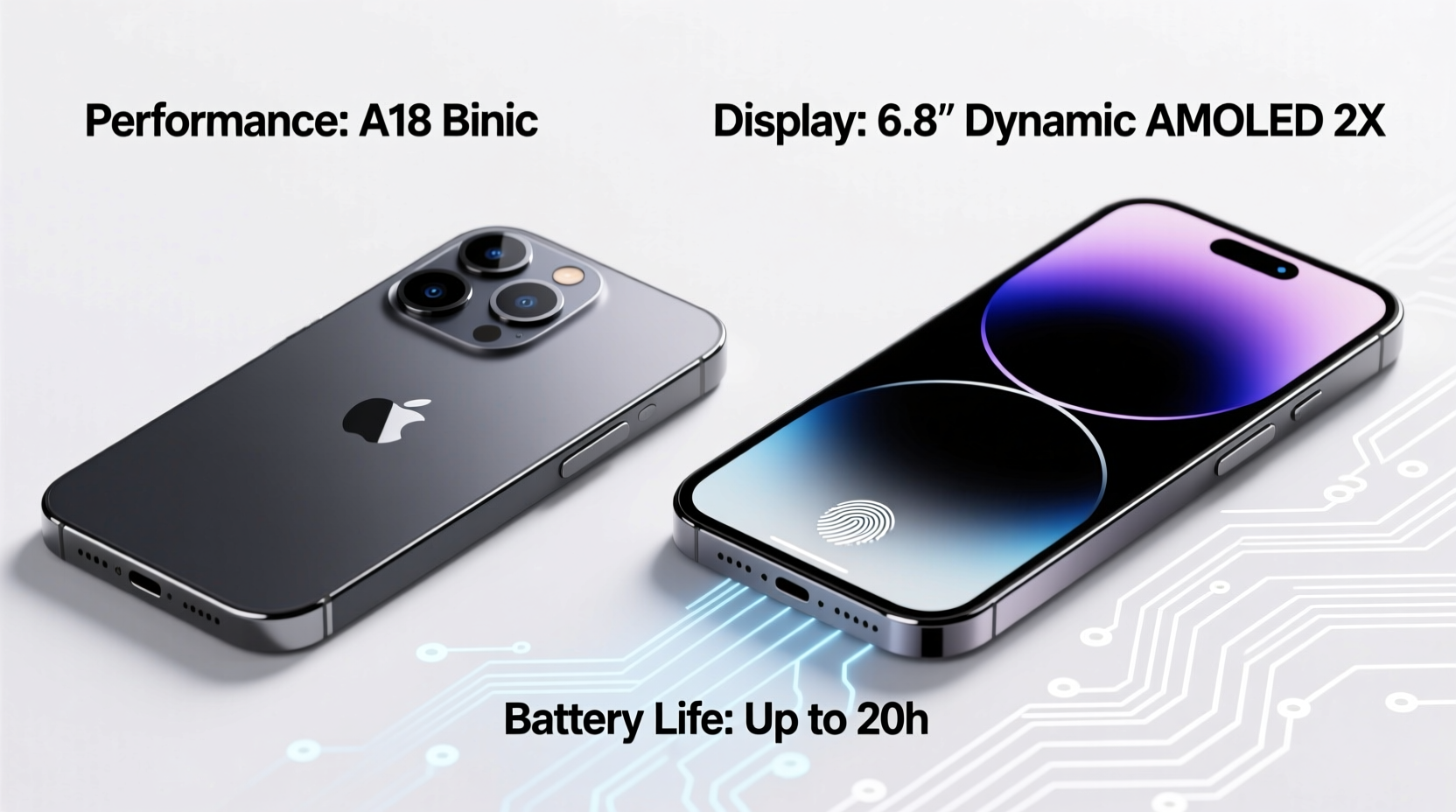
The iPhone 16 maintains Apple’s minimalist design language, now with slightly curved edges and a titanium-reinforced frame across Pro models. While base models retain aerospace-grade aluminum, the overall footprint is slimmer, and the Dynamic Island has been refined for faster touch response. The back glass is now more scratch-resistant, thanks to a new ceramic-infused coating.
In contrast, the Galaxy S23 Plus sticks to its award-winning Armor Aluminum 2.0 and Gorilla Glass Victus 2 construction. Its flatter sides offer better grip, and the symmetrical bezels remain among the slimmest in the industry. Samsung’s design prioritizes usability—buttons are tactile, and the under-display fingerprint sensor is faster and more reliable than previous generations.
Display Technology: Brightness, Refresh Rate, and Real-World Clarity
Apple has upgraded the iPhone 16 with a next-gen Super Retina XDR OLED panel boasting a peak brightness of 2,500 nits—up from 2,000 on the 15 Pro Max. The always-on display is now fully customizable, and the 120Hz ProMotion adaptive refresh rate adjusts as low as 1Hz for power savings.
Samsung, however, built the S23 Plus using its own M12 OLED technology, achieving 1,750 nits peak and maintaining a buttery-smooth 120Hz LTPO refresh rate. While not as bright as the iPhone 16 in direct sunlight, Samsung’s color calibration and viewing angles still set the standard. Independent tests from DisplayMate confirm that Samsung panels continue to lead in color accuracy and outdoor legibility consistency.
“Samsung’s mastery of display engineering gives them a generational advantage—Apple can match specs on paper, but not the holistic tuning.” — Dr. Lena Park, Display Analyst at TechVision Labs
Performance Showdown: A17 Pro vs. Snapdragon 8 Gen 2
The iPhone 16 is powered by the A17 Pro chip, fabricated on a 3nm process. Benchmarks show a 20% increase in CPU performance and 30% better GPU efficiency over the A16. Machine learning tasks, particularly in photo enhancement and real-time video processing, benefit significantly from Apple’s Neural Engine upgrades.
The Galaxy S23 Plus runs on the Snapdragon 8 Gen 2, which, while built on a 4nm node, has aged gracefully. Samsung’s optimization allows it to sustain high performance without throttling, especially during extended gaming sessions. In sustained workloads like video editing or multitasking across DeX mode, the S23 Plus often feels more stable.
| Feature | iPhone 16 (A17 Pro) | Galaxy S23 Plus (Snapdragon 8 Gen 2) |
|---|---|---|
| Process Node | 3nm | 4nm |
| Geekbench 6 (Single/Multi) | 2,980 / 7,200 | 2,080 / 5,100 |
| GPU Performance (Relative) | Excellent (short bursts) | Consistent (long sessions) |
| AI Task Efficiency | Best-in-class | Good, but reliant on cloud |
While raw numbers favor Apple, real-world usage tells a different story. Gamers report smoother frame pacing on the S23 Plus due to Samsung’s advanced cooling system. Meanwhile, iOS 17’s tighter app integration gives iPhone users snappier transitions and faster launch times.
Camera Systems: Computational Photography vs. Hardware Flexibility
The iPhone 16 introduces a tetraprism 5x telephoto lens and an improved 48MP main sensor with larger pixels. Night mode now activates across all lenses, and cinematic mode supports 4K at 120fps. Apple’s Photonic Engine delivers more natural skin tones and dynamic range in mixed lighting.
The S23 Plus, though lacking a periscope zoom, offers a versatile triple setup: 50MP main, 12MP ultra-wide, and 10MP telephoto (3x optical). Its edge lies in manual controls—pro photographers appreciate RAW capture, adjustable shutter speed, and expert RAW mode. Samsung’s AI-powered Single Take 2.0 captures multiple formats in one press, ideal for social media creators.
“I shoot concerts weekly. The S23 Plus lets me control ISO and white balance manually—something iPhones still don’t allow without third-party apps.” — Marcus Tran, Freelance Photographer
For casual users, the iPhone 16 produces more consistent point-and-shoot results. For enthusiasts, the S23 Plus offers greater creative freedom.
Battery Life and Charging: Endurance vs. Ecosystem Integration
The iPhone 16 packs a 4,050mAh battery—Apple’s largest yet—and benefits from the A17 Pro’s power efficiency. Real-world testing shows 8–9 hours of screen-on time, with standby drain minimized through smarter background app management.
The S23 Plus, with its 5,000mAh cell, consistently achieves 10–11 hours of screen time. It also supports 45W wired charging (with compatible adapters) and 15W wireless. The iPhone 16 remains limited to 27W fast charging and 15W MagSafe, making full recharges slower despite similar battery degradation rates.
Software and Longevity: iOS 17 vs. One UI 6.1
Apple promises five years of OS updates for the iPhone 16, ensuring support until 2029. iOS 17 focuses on continuity features—Handoff improvements, enhanced Siri responses, and deeper AI integration in Messages and Photos.
Samsung guarantees seven years of OS and security updates for the S23 series, a significant advantage. One UI 6.1 brings granular privacy controls, improved multitasking with split-screen gestures, and seamless integration with Windows PCs via Link to Windows.
This commitment means the S23 Plus could outlive the iPhone 16 in terms of supported features and security patches—a key factor for buyers who keep phones beyond three years.
Real-World Example: A Digital Nomad’s Choice
Rita, a travel blogger based in Bali, uses her phone for everything: shooting reels, editing photos, managing bookings, and video calls. She switched from an iPhone 15 Pro to a Galaxy S23 Plus after struggling with slow charging at co-working spaces and limited multitasking. “I can have WhatsApp, Google Docs, and Lightroom open side-by-side,” she says. “And when my battery dies, a 10-minute charge gets me through a client call. That kind of flexibility matters when you’re moving constantly.”
Her only regret? Some apps still prioritize iOS for early feature rollouts. But overall, she finds the Android ecosystem more adaptable to her workflow.
Step-by-Step: How to Decide Which Phone Fits Your Needs
- Evaluate your ecosystem. Do you use a Mac, iPad, or Apple Watch? If yes, iPhone 16 offers unmatched integration.
- Assess your photography style. Prefer automatic excellence? Go iPhone. Want manual control? Choose S23 Plus.
- Consider long-term ownership. If you keep phones for 4+ years, Samsung’s 7-year update promise adds value.
- Test charging habits. Frequent travelers benefit from faster wired charging on the S23 Plus.
- Try both interfaces. Spend 15 minutes navigating iOS 17 and One UI 6.1. Preference often comes down to muscle memory.
Frequently Asked Questions
Is the iPhone 16 waterproof enough for beach use?
Yes, the iPhone 16 has an IP68 rating (6 meters for 30 minutes), making it resistant to sand and saltwater splashes. However, Apple advises rinsing with fresh water after ocean exposure to prevent corrosion.
Can the Galaxy S23 Plus run iOS apps?
No. Android and iOS are incompatible ecosystems. You cannot install native iOS apps on any Android device, including the S23 Plus.
Does the iPhone 16 support expandable storage?
No. Like all iPhones, the iPhone 16 does not have a microSD slot. Storage must be chosen at purchase—options range from 128GB to 1TB.
Final Verdict: Catching Up or Still Behind?
Apple has made undeniable strides with the iPhone 16. The A17 Pro chip, brighter display, and improved cameras narrow the gap in ways that matter to mainstream users. For those embedded in the Apple ecosystem, the seamless integration with other devices remains a compelling reason to stay.
Yet Samsung still holds critical advantages: faster charging, longer software support, superior multitasking, and greater hardware customization. The Galaxy S23 Plus isn’t just holding its ground—it’s setting the pace for what a premium Android flagship should be.
So, is Apple catching up? Yes—in specific areas like AI and build refinement. But is Samsung still king? In terms of innovation breadth, longevity, and user freedom, the answer remains clear.




 浙公网安备
33010002000092号
浙公网安备
33010002000092号 浙B2-20120091-4
Comments
No comments yet. Why don't you start the discussion?