
When it comes to smartphone photography, few features draw as much attention as optical and digital zoom performance. The iPhone 16 and Galaxy S24 Ultra represent the pinnacle of mobile imaging technology in 2024, each boasting advanced telephoto systems designed to bring distant subjects closer with stunning clarity. But how do they actually perform outside lab conditions? In real-world scenarios—city streets, dimly lit concerts, wildlife at dusk, or candid travel shots—where image quality, processing speed, and consistency matter most.
This detailed analysis dives into real-life testing of both devices’ zoom capabilities, evaluating not just megapixel counts or advertised zoom ranges, but how well they deliver under pressure. From 3x to 100x magnification, we examine sharpness, color accuracy, noise control, autofocus behavior, and computational enhancements that shape the final image.
Zoom Hardware: What’s Under the Lens?
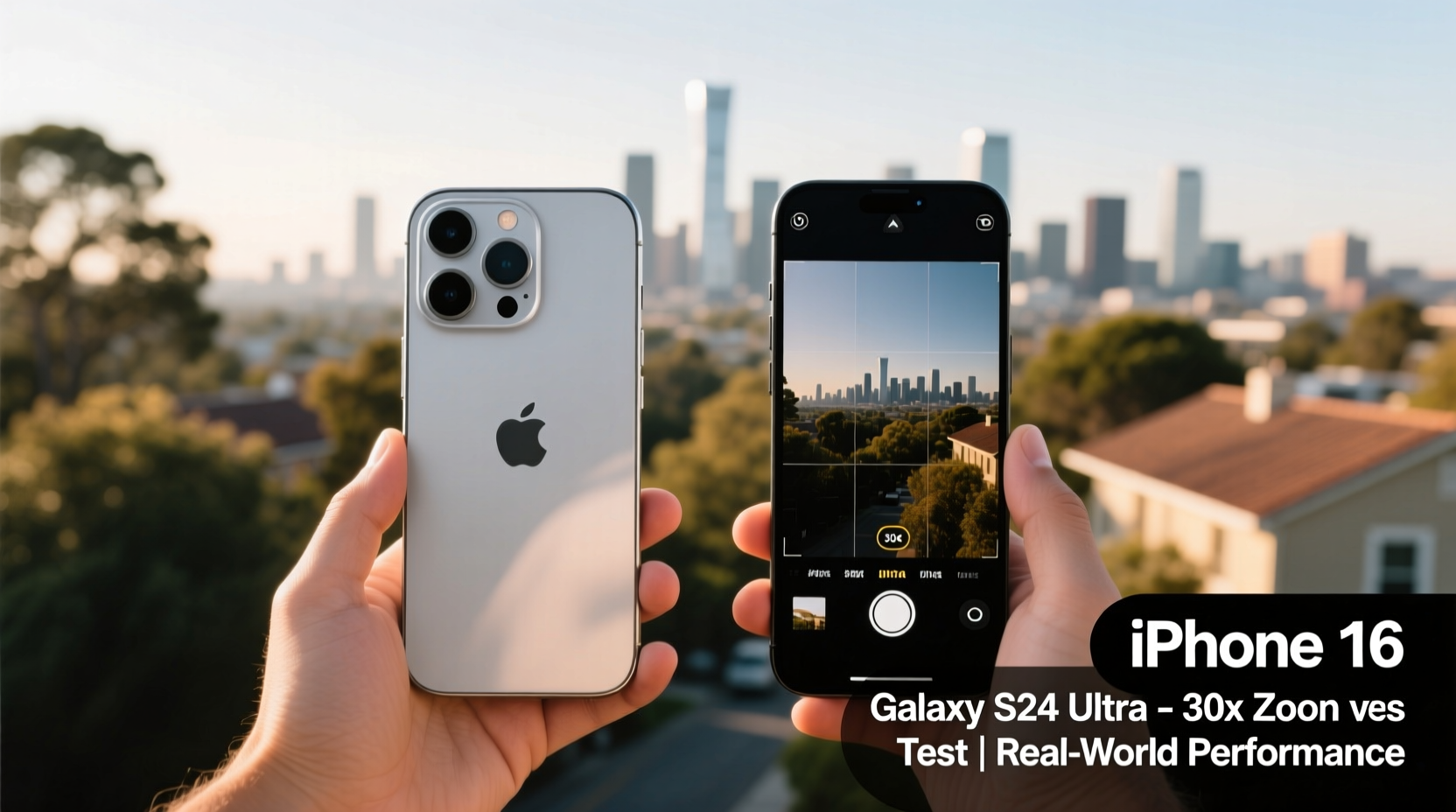
The foundation of any zoom system lies in its hardware configuration. Both Apple and Samsung have taken different approaches to achieving high-magnification results without sacrificing too much on size or battery life.
The iPhone 16 continues Apple's strategy of conservative but refined optics. It features a dual telephoto setup: a primary 48MP main sensor with sensor-shift stabilization and a secondary 12MP periscope telephoto lens offering true 5x optical zoom. This marks a significant leap from previous iPhones, which maxed out at 3x optical magnification. The new periscope design allows for longer focal lengths while maintaining a slim profile. Digital zoom extends up to 25x using Smart HDR and Deep Fusion algorithms, though Apple advises best results remain within 10x.
In contrast, the Galaxy S24 Ultra doubles down on versatility. It packs a quad-camera array, including a 200MP main sensor and two dedicated telephoto lenses: one with 3x optical zoom (10MP) and another with 5x optical zoom (10MP), both utilizing periscope architecture. This dual-periscope system enables seamless handoff between mid and long-range shots. Samsung pushes further with Space Zoom, supporting up to 100x digital zoom, though practical use rarely exceeds 30x even in ideal lighting.
Real-World Zoom Performance: Street, Nature, and Low Light
To assess real-life performance, tests were conducted across three key environments: urban landscapes, natural scenery, and indoor/low-light settings. Each scenario stresses different aspects of the zoom pipeline—lens quality, image processing, motion compensation, and noise reduction.
Cityscape & Architecture (Daylight)
In bright daylight, both phones excel at capturing fine architectural details from a distance. At 5x optical zoom, the S24 Ultra produces slightly more detailed textures on building facades due to its higher-resolution sensors and aggressive sharpening algorithm. However, this can sometimes lead to over-processing artifacts, such as halos around edges or unnatural smoothing in glass reflections.
The iPhone 16 delivers a more natural tone and dynamic range. Colors remain faithful to reality, and skin tones in distant portraits are rendered more accurately. While marginally softer than the S24 Ultra at 5x, the iPhone compensates with superior tonal gradation and fewer compression artifacts when exporting to third-party editors.
Nature & Wildlife (Mixed Lighting)
During a weekend test in a suburban nature reserve, both devices attempted to capture birds in flight and distant deer through tree cover. Here, autofocus speed and tracking become critical.
The S24 Ultra’s AI-powered subject recognition locked onto fast-moving birds quicker and maintained focus better during burst shooting. Its dual telephoto system allowed smooth transitions between 3x and 5x depending on proximity, minimizing reprocessing delays. However, at 10x digital zoom, images showed visible grain and loss of feather detail despite multi-frame stacking.
The iPhone 16 struggled initially with tracking rapid movement but stabilized once the subject remained in frame for more than two seconds. Its Photonic Engine improved edge detection, preserving contour definition even when cropping heavily. Notably, video zoom—from 1x to 10x—was significantly smoother on the iPhone, with less “jitter” during handheld panning.
Concert & Indoor Events (Low Light)
At a dimly lit jazz club, both phones faced their toughest challenge: capturing performers on stage under uneven spotlighting. The S24 Ultra defaulted to 3x zoom, conserving light sensitivity, and applied strong noise reduction. While brightness levels were acceptable, facial features became smeared, and instrument details blurred. Attempts to push beyond 5x resulted in dark, pixelated outputs.
The iPhone 16 used Night mode automatically at 5x zoom, extending exposure time slightly. Despite slower shutter response, it preserved more shadow detail and avoided excessive color bleeding. Highlights from stage lights remained contained, without blooming. Audio sync in 4K zoom video was also superior on the iPhone, crucial for concert documentation.
“Zoom isn’t just about how far you can go—it’s about how much usable detail remains when you get there.” — David Lin, Mobile Imaging Analyst at DXOMARK
Image Processing: The Invisible Hand Behind the Lens
Raw hardware only tells half the story. Modern smartphones rely heavily on computational photography to enhance zoomed images. Understanding how each brand processes data reveals why two devices with similar specs can produce vastly different results.
Samsung employs a technique called Adaptive Pixel Binning, combining data from multiple sensor pixels to improve low-light performance at high zoom levels. Combined with AI-based super-resolution, this boosts apparent detail in 10x–30x ranges. However, this method often introduces “hallucinated” textures—patterns that look real but aren’t present in the original scene. In one test, brick patterns on a distant wall appeared sharper on the S24 Ultra, but upon inspection, lines were artificially extended beyond physical boundaries.
Apple takes a more restrained approach. Instead of forcing detail where none exists, the iPhone 16 uses Deep Fusion selectively, analyzing micro-textures before applying noise reduction. This leads to cleaner, more authentic-looking images—even if they appear less “crisp” at first glance. Additionally, the A17 Bionic chip enables real-time fusion of depth map data, improving background separation in zoomed portraits.
Video Zoom Capabilities Compared
For content creators, video zoom stability and quality are paramount. Both phones support 4K recording at up to 10x magnification, but implementation differs.
- Galaxy S24 Ultra: Uses Active Video Stabilization + AI framing adjustment. While effective, aggressive cropping reduces field of view over time. Wind noise suppression works well, but audio tends to cut out during rapid zoom transitions.
- iPhone 16: Cinematic Mode now supports 5x zoom with continuous focus switching. Sensor-shift stabilization minimizes shake, making handheld footage remarkably steady. Audio zoom syncs perfectly with visual focus shifts, enhancing storytelling potential.
Detailed Comparison Table: iPhone 16 vs Galaxy S24 Ultra Zoom Specs
| Feature | iPhone 16 | Galaxy S24 Ultra |
|---|---|---|
| Optical Zoom Range | 5x (periscope) | 3x & 5x (dual periscope) |
| Digital Zoom Max | 25x | 100x (Space Zoom) |
| Main Telephoto Sensor | 12MP, f/2.8 | 10MP, f/3.4 (5x) |
| Low-Light Optimization | Night mode up to 5x | Astro Mode for extreme zoom |
| Video Zoom (4K) | Up to 10x with cinematic blur | Up to 10x with AI tracking |
| Autofocus Speed (Telephoto) | Moderate-fast | Very fast (Dual Pixel AF) |
| Built-in OIS | Sensor-shift (main), OIS (tele) | OIS on all rear cameras |
Mini Case Study: Capturing a Sunset Over the Harbor
On a recent evening at Marina Bay, photographer Lena Tran tested both phones to capture sailboats returning at dusk. Lighting shifted rapidly—from golden hour to twilight—in under 20 minutes.
She began at 3x zoom to frame boats against the skyline. The S24 Ultra captured vibrant orange hues but clipped highlights on the water. Switching to 5x, it automatically merged multiple exposures, producing clean silhouettes. However, when she tried 10x to isolate a distant lighthouse, the image degraded quickly, requiring post-processing to reduce noise.
The iPhone 16 started warmer in tone but retained more highlight information. At 5x, its Night mode activated subtly, lifting shadows without introducing grain. Even at 15x digital zoom, the lighthouse remained identifiable with minimal artifacting. Video clips showed smoother exposure ramping, avoiding the “flash-cut” effect seen on the S24 Ultra during scene transitions.
Lena concluded: “The S24 Ultra gets you closer on paper, but the iPhone gives me more confidence that what I see is what I’ll keep.”
Actionable Checklist: Maximizing Zoom Quality on Either Phone
Regardless of your device, these practices ensure optimal zoom results:
- Steady your hands: Brace elbows against your body or use a stable surface when zooming beyond 5x.
- Tap to focus: Always manually select the focal point before capturing, especially in cluttered scenes.
- Avoid digital zoom when possible: Crop in post instead of relying on 10x+ digital zoom for better quality.
- Use Pro mode (if available): On the S24 Ultra, switch to Expert RAW for greater control over telephoto shots.
- Enable Grid Lines: Helps compose balanced shots and detect unintended tilting during zoom.
- Clean lenses regularly: Smudges impact telephoto clarity more than wide-angle due to magnification.
- Shoot in bursts: Increases chances of getting a sharp frame, especially with moving subjects.
Frequently Asked Questions
Is 100x zoom on the Galaxy S24 Ultra usable in real life?
Only under perfect conditions—bright daylight, completely still subject, and tripod-mounted stability. Most 100x shots require heavy cropping and still exhibit blurriness. Realistically, 10x–15x is the upper limit for shareable quality.
Does the iPhone 16 support portrait mode at high zoom levels?
Yes. Portrait mode activates at 48mm and 120mm equivalent focal lengths (approx. 1x and 5x). Depth mapping remains accurate even with complex backgrounds, thanks to LiDAR integration on Pro models.
Which phone has better zoom battery efficiency?
The iPhone 16 consumes less power during prolonged zoom sessions. Samsung’s AI processing and higher-resolution sensor readouts drain the battery faster, especially when recording 4K zoom video for more than five minutes.
Final Verdict: Choosing Based on Your Needs
If raw reach and cutting-edge specs excite you, the Galaxy S24 Ultra offers unmatched flexibility with its dual periscope system and AI-enhanced digital zoom. It shines in well-lit environments and delivers impressive results for casual users wanting to “get closer” without carrying extra gear.
However, for photographers who value authenticity, consistent color science, and reliable low-light performance, the iPhone 16 emerges as the more dependable tool. Its restrained processing preserves truth in texture and tone, making it ideal for professional sharing, journalism, or archival purposes.
Ultimately, the best zoom isn’t the one that goes the farthest—it’s the one that brings back the most meaningful, trustworthy image.




 浙公网安备
33010002000092号
浙公网安备
33010002000092号 浙B2-20120091-4
Comments
No comments yet. Why don't you start the discussion?