
For millions of iPhone users, the upgrade cycle feels both inevitable and exhausting. Every year brings new models with bolder claims, sleeker designs, and higher price tags. If you're still using an iPhone 12 Pro — a device that was once at the pinnacle of Apple’s engineering — the arrival of the iPhone 16 raises a critical question: is upgrading truly worthwhile, or are you simply paying for incremental changes wrapped in marketing hype?
The answer isn’t as simple as checking specs on a comparison chart. It depends on how you use your phone, what you value in a device, and whether the improvements align with your daily needs. Let’s examine the real differences between the iPhone 16 and iPhone 12 Pro to help you make a smart, informed decision.
Performance: A Quantum Leap or Just Faster?
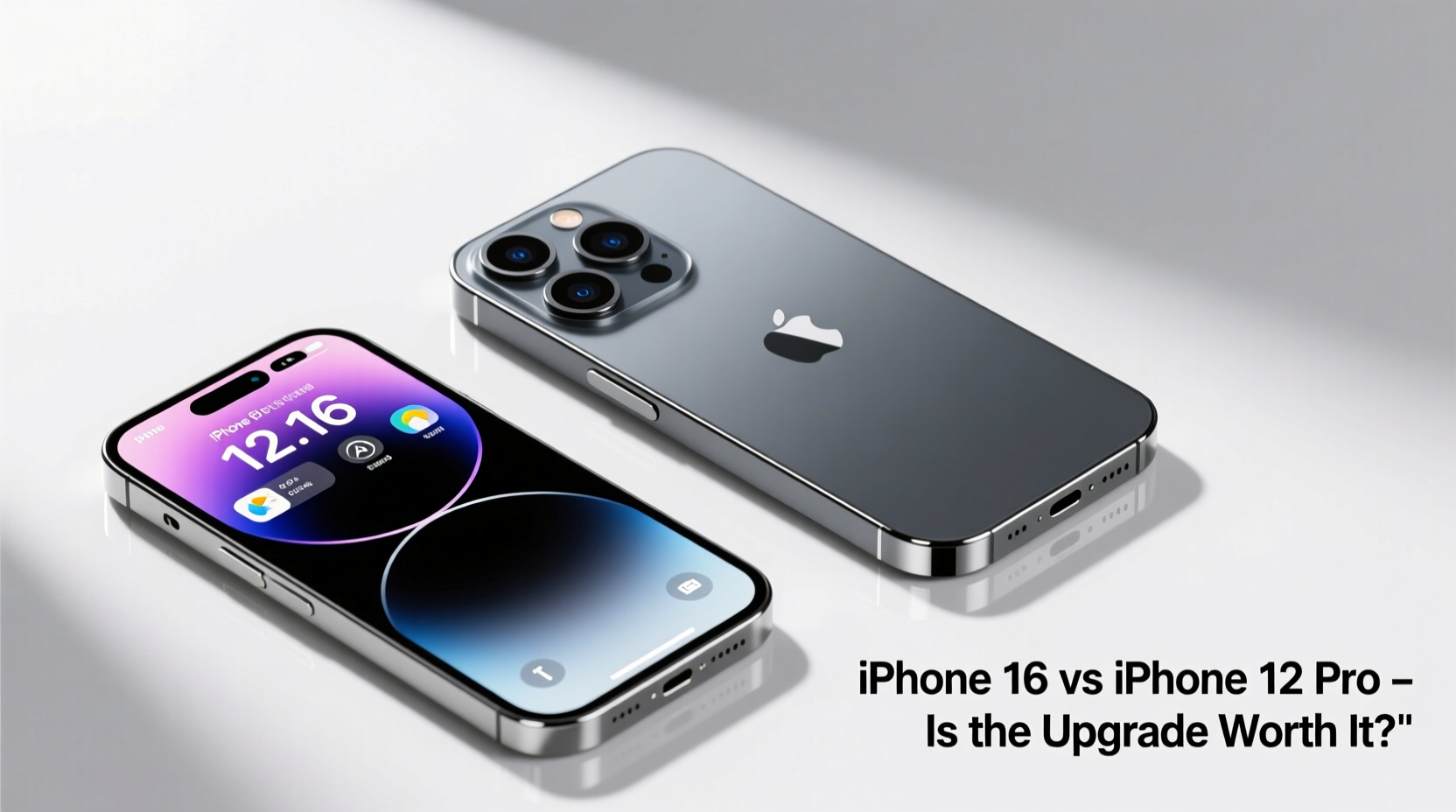
The iPhone 12 Pro launched with the A14 Bionic chip — powerful for its time but now two full generations behind the latest A18 chip in the iPhone 16. The leap from A14 to A18 represents more than just speed; it's about efficiency, AI capabilities, and long-term software support.
The A18 chip uses a 3nm process, delivering up to 40% faster CPU performance and 50% better GPU efficiency than the A14. Real-world impact? Apps launch quicker, multitasking is smoother, and demanding tasks like video editing or AR gaming feel effortless. But for most everyday users — those who browse, message, take photos, and stream media — the iPhone 12 Pro still handles these tasks without lag.
However, future-proofing matters. iOS updates grow more demanding each year. While the iPhone 12 Pro will likely receive updates until 2025 or 2026, the iPhone 16 will stay supported until at least 2031. That extra five years of security patches and feature updates can be a decisive factor for some users.
Camera Evolution: From Great to Exceptional
The iPhone 12 Pro introduced Apple’s first triple-lens system: wide, ultra-wide, and telephoto with 2x optical zoom. It set a high bar for mobile photography. Fast forward to the iPhone 16, and the camera system has evolved significantly.
- Sensor Size: Larger sensors across all lenses, especially the main sensor, capture more light and reduce noise in low-light conditions.
- Computational Photography: The A18 enables advanced AI-powered processing, including real-time HDR optimization, improved Night mode, and enhanced portrait segmentation.
- Zoom Capabilities: The iPhone 16 offers 5x optical zoom (up from 2x) and digital zoom up to 25x with minimal quality loss.
- Video: Now supports 4K recording at 120fps with Dolby Vision across all lenses — a major leap for creators.
“Smartphone cameras aren’t just about megapixels anymore — they’re about intelligence. The iPhone 16’s fusion of hardware and AI sets a new standard.” — David Lin, Mobile Imaging Analyst at TechSight
If you frequently shoot in dim lighting, record professional-grade videos, or rely on zoom, the iPhone 16 delivers noticeable improvements. But if your photography is casual — social media posts, family moments, daylight shots — the iPhone 12 Pro still produces excellent results.
Battery Life and Charging: Real Gains in Daily Use
Battery life is one of the most tangible upgrades. The iPhone 12 Pro offered around 12–14 hours of mixed usage. The iPhone 16, thanks to a larger battery and far more efficient chipset, pushes that to 18–22 hours under similar conditions.
This means fewer midday charges, longer travel endurance, and less anxiety when you’re away from a power source. For heavy users — those constantly streaming, gaming, or using GPS — this difference is significant.
Additionally, the iPhone 16 introduces USB-C charging with faster peak speeds (up to 35W), cutting full charge time to under 40 minutes. The iPhone 12 Pro, limited to Lightning and 20W max, takes nearly twice as long.
| Feature | iPhone 12 Pro | iPhone 16 |
|---|---|---|
| Chipset | A14 Bionic | A18 Bionic |
| Rear Cameras | Triple 12MP (2x zoom) | Triple 48MP (5x zoom) |
| Display | 6.1\" OLED, 60Hz | 6.1\" OLED, 120Hz ProMotion |
| Battery Life (video) | 17 hours | 28 hours |
| Charging | Lightning, 20W max | USB-C, 35W max |
| iOS Support Until | ~2025–2026 | ~2031+ |
| Starting Price (new) | $999 (2020) | $1,099 (2024) |
Design and Display: Subtle Refinements, Not Revolution
Externally, both phones share a similar flat-edge stainless steel design language. However, the iPhone 16 features a slightly thinner bezel, a brighter 2000-nit peak brightness display, and a 120Hz ProMotion refresh rate — a feature absent on the 12 Pro.
The 120Hz screen makes scrolling, animations, and gaming noticeably smoother. It’s not essential, but once experienced, it’s hard to go back. Additionally, the iPhone 16 uses stronger titanium framing and improved water resistance (IP68 up to 6 meters).
One often-overlooked change: the switch from Lightning to USB-C. This simplifies cable clutter if you own other USB-C devices (MacBooks, iPads, Android accessories). Travelers and multi-device users benefit most from this shift.
Real-World Example: Sarah’s Upgrade Dilemma
Sarah has used her iPhone 12 Pro since December 2020. She’s a busy parent and part-time photographer who documents local events. Her phone still works well, but she’s noticed slower app launches and shorter battery life during weekend outings.
She considered upgrading last year but held off. This year, after trying a friend’s iPhone 16, she was struck by how much smoother the interface felt and how quickly the camera focused in low light. She also appreciated being able to charge her phone and iPad with the same cable.
After calculating the cost and factoring in trade-in value ($270 for her iPhone 12 Pro), she decided the upgrade was justified — not because she needed it, but because the quality-of-life improvements added up over time.
Upgrade Checklist: Is the iPhone 16 Right for You?
Before hitting “buy,” ask yourself the following:
- Is my current phone struggling with basic tasks (sluggish performance, frequent crashes)?
- Do I regularly run out of battery before the day ends?
- Am I interested in better low-light photos or advanced video features?
- Do I want longer software support (5+ more years)?
- Would USB-C compatibility simplify my tech setup?
- Can I afford the upgrade without financial strain?
If you answered “yes” to three or more, the upgrade makes practical sense. If not, you might be chasing marginal gains.
Frequently Asked Questions
Will the iPhone 12 Pro become obsolete soon?
No. Apple typically supports iPhones for 5–6 years after release. The iPhone 12 Pro will continue receiving iOS updates, security patches, and app compatibility through at least 2026. It remains a capable device for everyday use.
Is the camera upgrade worth $500+?
Only if photography is a core need. Casual users won’t notice dramatic differences in daylight. But professionals, content creators, or night photographers will benefit from improved dynamic range, zoom, and AI processing.
Does the iPhone 16 have any new features the 12 Pro lacks?
Yes. Key additions include: 120Hz ProMotion display, USB-C port, A18 chip with on-device AI processing, 5x optical zoom, enhanced battery life, and satellite emergency SOS via two-way messaging.
Conclusion: Value Over Hype
Upgrading from the iPhone 12 Pro to the iPhone 16 isn’t a necessity — it’s a choice based on lifestyle, priorities, and budget. The improvements are real: faster performance, superior cameras, longer battery life, and future-ready features. But they come at a premium.
If you rely on your phone for work, creativity, or travel, and you value longevity and convenience, the iPhone 16 delivers meaningful enhancements. But if your iPhone 12 Pro still meets your needs, there’s no shame in waiting. Technology evolves fast, but value is measured in utility, not novelty.




 浙公网安备
33010002000092号
浙公网安备
33010002000092号 浙B2-20120091-4
Comments
No comments yet. Why don't you start the discussion?