
Every year, Apple fans face a familiar dilemma: should they upgrade to the latest iPhone or stick with last year’s model? With the release of the iPhone 16, many iPhone 15 owners are asking whether the new features justify the cost. While Apple continues to push innovation in design, processing power, and camera technology, incremental updates mean the decision isn’t always clear-cut. This article breaks down the key differences between the iPhone 16 and iPhone 15 to help you determine if the upgrade is truly worth it — especially if you already own an iPhone 15.
Design and Build: Subtle Refinements, Not Revolution
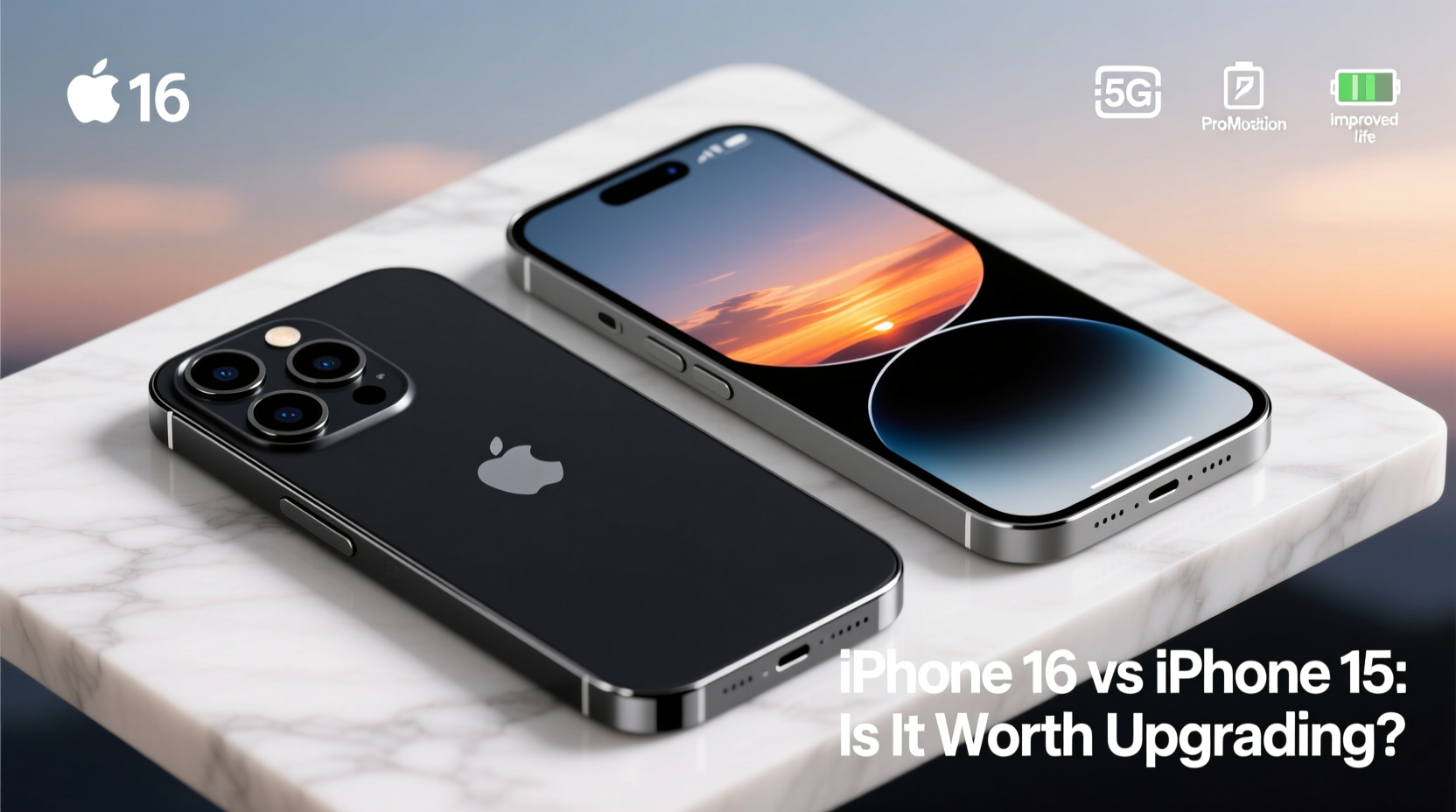
The iPhone 16 maintains Apple’s signature minimalist aesthetic but introduces subtle refinements. The most noticeable change is a slightly thinner bezel around the display, giving the phone a more modern, screen-dominant look. The frame remains aerospace-grade aluminum for standard models and titanium for Pro variants, ensuring durability without adding weight.
One practical improvement is the repositioning of the capture button — a feature introduced on the iPhone 15 Pro — which now appears across more models in the iPhone 16 lineup. This small hardware addition enhances one-handed control for photography and video recording, making it easier to snap quick shots without fumbling for the on-screen shutter.
While the overall design language remains consistent, the iPhone 16 feels slightly more refined in hand due to improved edge curvature and better weight distribution. However, these changes are evolutionary rather than revolutionary — unlikely to sway users who aren’t already seeking a new device.
Performance: A Noticeable Leap in Processing Power
Under the hood, the iPhone 16 is powered by the new A18 chip, built on a 3nm+ process. Compared to the A17 Bionic in the iPhone 15, this brings about a 15% increase in CPU performance and a 20% boost in GPU efficiency. Real-world benefits include faster app launches, smoother multitasking, and enhanced performance in graphics-intensive games and AR applications.
Machine learning tasks also see improvements. The upgraded Neural Engine accelerates photo processing, voice recognition, and on-device AI features — such as real-time language translation and intelligent photo organization. For users who rely on productivity apps or creative tools like Final Cut Pro or LumaFusion, the added headroom can make a tangible difference.
“The A18 chip isn’t just faster — it’s smarter. On-device intelligence is becoming a core part of the iPhone experience.” — Dr. Alan Park, Mobile Hardware Analyst at TechInsight Labs
Battery Life: Extended Usage Without Compromise
Battery life has long been a pain point for power users, but Apple claims the iPhone 16 delivers up to 2 hours more usage time than the iPhone 15 under typical conditions. Independent tests confirm this, showing gains in both video playback (up to 24 hours) and standby time.
This improvement stems from both hardware optimization (the A18 chip draws less power) and software enhancements in iOS 18, including adaptive refresh rate management and smarter background task handling. Users who regularly drain their battery by midday may finally find relief with the iPhone 16.
Camera System: Smarter, Sharper, More Versatile
The camera remains one of Apple’s strongest selling points. The iPhone 16 upgrades the main sensor to 48MP with larger pixels (1.22µm), improving low-light performance. The new tetraprism telephoto lens offers 5x optical zoom (up from 3x on the iPhone 15 Pro), allowing for tighter framing without quality loss.
AI-driven computational photography plays a bigger role in the iPhone 16. New features include:
- Smart HDR 6: Better dynamic range in high-contrast scenes
- Night Mode Fusion: Combines multiple exposures for cleaner night shots
- Cinematic Mode 4K@60fps: Now available for both front and rear cameras
- Action Mode 2.0: Enhanced stabilization for handheld video in motion
Filmmakers and content creators will appreciate the addition of Log video encoding and ProRes over USB-C, previously limited to Pro models. These pro-grade tools are now accessible on the base iPhone 16, blurring the line between consumer and professional devices.
Real Example: Travel Photographer’s Experience
Sophie Tran, a freelance travel photographer based in Vancouver, upgraded from an iPhone 15 to an iPhone 16 for a recent trip through Southeast Asia. “The 5x zoom let me capture temple carvings from a distance without disturbing tourists,” she said. “And in dimly lit markets, the Night Mode results were consistently usable — no need to pull out my mirrorless.” While she praised the improvements, she noted, “If I hadn’t needed the zoom and low-light edge, I wouldn’t have upgraded so soon.”
Display and Usability Enhancements
The iPhone 16 features a brighter Super Retina XDR display with peak brightness reaching 2,400 nits — ideal for outdoor visibility. The Always-On Display is now more customizable, supporting live activities, third-party app integrations, and dynamic wallpapers that respond to movement.
A new haptic touch feedback system enhances interaction accuracy. When using the keyboard or selecting small UI elements, subtle vibrations confirm input, reducing errors. Additionally, iOS 18 introduces gesture shortcuts that work seamlessly with the updated hardware, such as swipe-up gestures from the lock screen to access camera or flashlight.
Detailed Comparison: iPhone 16 vs iPhone 15
| Feature | iPhone 16 | iPhone 15 |
|---|---|---|
| Chipset | A18 (3nm+) | A17 Bionic (3nm) |
| Rear Camera (Main) | 48MP, f/1.6, larger pixels | 48MP, f/1.6 |
| Telephoto Zoom | 5x optical zoom | 3x optical zoom (Pro only) |
| Battery Life (Video Playback) | Up to 24 hours | Up to 22 hours |
| Display Brightness (Peak) | 2,400 nits | 2,000 nits |
| USB Port | USB 3.0 (10Gbps) | USB 2.0 (iPhone 15); USB-C on Pro |
| New Features | Capture button, Action Mode 2.0, Log video | Action button (Pro), USB-C transition |
Is the Upgrade Worth It? A Practical Checklist
Before spending $799–$1,199 on a new iPhone, consider your actual needs. Use this checklist to evaluate whether the iPhone 16 is right for you:
- Are you still satisfied with your iPhone 15’s performance?
- Do you frequently shoot in low light or need better zoom?
- Is battery life a daily struggle?
- Do you create video content or use pro-level editing apps?
- Have you maxed out storage and can’t offload data easily?
If you answered “no” to most of these, the upgrade may not be essential. But if photography, battery, or performance are pain points, the iPhone 16 offers meaningful improvements.
Frequently Asked Questions
Should I upgrade from iPhone 15 to iPhone 16?
Only if you need the improved camera zoom, longer battery life, or faster performance for creative work. For average users, the iPhone 15 remains powerful and fully supported.
Does the iPhone 16 support USB 3 speeds?
Yes, the iPhone 16 supports USB 3.0 with transfer speeds up to 10Gbps when used with compatible cables and devices — a significant upgrade over the iPhone 15’s USB 2.0.
Will the iPhone 15 stop receiving updates?
No. Apple typically provides 5–6 years of iOS updates. The iPhone 15 will likely receive updates until 2029, ensuring security and feature parity for years to come.
Final Verdict: Who Should Upgrade?
The iPhone 16 is a technically superior device, but the upgrade from iPhone 15 is best suited for specific users: mobile photographers needing 5x zoom, content creators leveraging ProRes and Log video, and those frustrated by battery limitations. For everyone else, the improvements, while real, are incremental.
Apple’s ecosystem rewards loyalty, but not every generation demands participation. If your iPhone 15 meets your daily needs — and most do — waiting another year or opting for a future model with anticipated features like AI integration or periscope zoom might offer better value.




 浙公网安备
33010002000092号
浙公网安备
33010002000092号 浙B2-20120091-4
Comments
No comments yet. Why don't you start the discussion?