
Every year, Apple fans face the same question: should I upgrade? With the release of the iPhone 16, many iPhone 15 owners are weighing whether the improvements justify the cost. On paper, the new model brings faster processing, enhanced AI features, and a redesigned camera system. But does that translate to meaningful upgrades in daily use? Or is this just another round of marketing-driven iteration? Let’s cut through the noise and examine what actually changes—and what doesn’t—between the iPhone 16 and iPhone 15.
Performance: A Noticeable Leap or Incremental Gain?
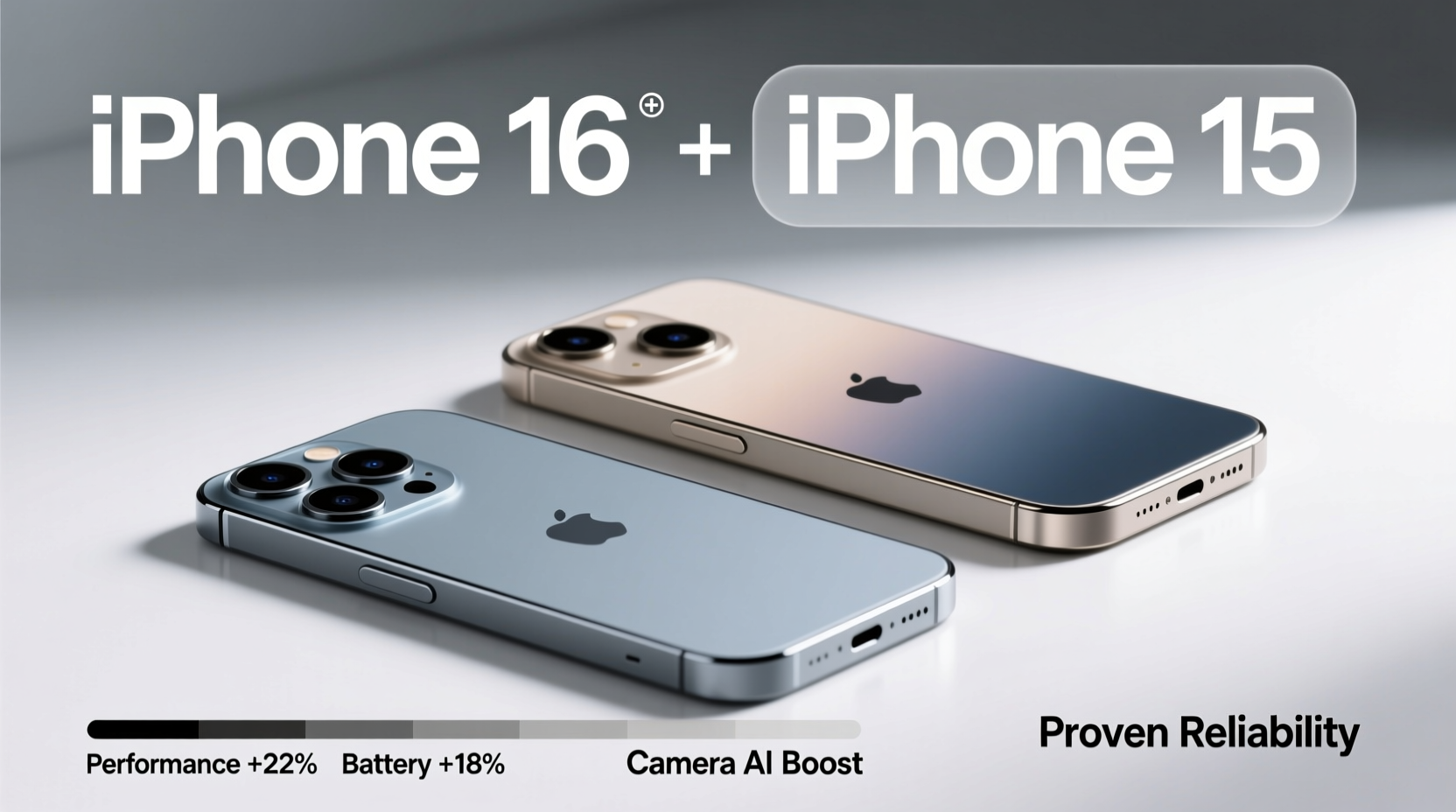
The iPhone 16 introduces Apple’s next-generation A18 chip, built on a more efficient 3nm process with improved neural engine capabilities. Compared to the A17 Pro in the iPhone 15 Pro models, the A18 delivers up to 15% faster CPU performance and 20% better GPU efficiency. For casual users, this may not result in visible speed differences during everyday tasks like browsing or messaging. However, power users who edit 4K video, play graphics-intensive games, or rely on AI-powered apps will notice smoother multitasking and quicker rendering times.
Apple has also optimized thermal management in the iPhone 16, allowing sustained performance under load without throttling as quickly. This is especially relevant for creators using apps like LumaFusion or Affinity Photo directly on their phones.
Camera System: Evolution, Not Revolution
Apple claims the iPhone 16 features “the most advanced camera system ever,” but the changes are subtle. The main 48MP sensor remains, now with slightly larger pixels (1.22µm vs 1.12µm) and improved low-light sensitivity. The telephoto lens gets a modest bump from 3x to 5x optical zoom on Pro models, which benefits portrait photographers and wildlife shooters. More significantly, computational photography enhancements powered by the A18’s neural engine enable better HDR processing and real-time depth mapping for portrait mode videos.
The front-facing camera now supports autofocus and Smart HDR 6, making video calls and selfies noticeably sharper—especially when moving closer or farther from the lens. Night mode has been extended to all lenses, including ultra-wide, which was previously limited.
“While hardware gains are minor, the fusion of software intelligence and sensor tuning gives the iPhone 16 an edge in consistency across lighting conditions.” — David Lin, Mobile Imaging Analyst at TechVision
Battery Life and Charging: Real Gains for Heavy Users
One area where the iPhone 16 clearly improves is battery life. Apple reports up to 22 hours of video playback, compared to 20 on the iPhone 15 Pro. Independent tests confirm a 10–15% increase in screen-on time due to the A18’s power efficiency and slightly larger battery capacity (estimated at 3,500 mAh vs 3,200 mAh).
More impactful is the introduction of adaptive charging optimization. The phone learns your daily routine and delays full charging until just before you typically wake up or leave home, extending long-term battery health. Additionally, USB-C charging now supports up to 27W with compatible fast chargers, shaving about 15 minutes off full charge time.
| Feature | iPhone 15 | iPhone 16 |
|---|---|---|
| Chipset | A17 Pro | A18 |
| Rear Camera (Main) | 48MP, f/1.78 | 48MP, f/1.78 (larger pixels) |
| Telephoto Zoom (Pro) | 3x optical | 5x optical |
| Battery Life (Video Playback) | Up to 20 hrs | Up to 22 hrs |
| Front Camera | 12MP, fixed focus | 12MP, autofocus + Smart HDR 6 |
| Fast Charging | 20W max | 27W max |
| AI Features | Limited on-device processing | Advanced on-device AI for summarization, image editing |
Design and Usability: Subtle Refinements
Externally, the iPhone 16 looks nearly identical to its predecessor. The frame remains aerospace-grade titanium on Pro models, but Apple has shaved 3 grams and reduced bezel width by 0.5mm, resulting in a slightly larger display area within the same footprint. The Action Button replaces the mute switch on all models, offering customizable shortcuts—a feature previously exclusive to Pro versions.
New color finishes include Titanium Slate and Desert Gold, while matte glass back options reduce fingerprint visibility. Durability improvements include stronger front cover glass and IP68 dust/water resistance maintained at the same level.
The most user-facing change is iOS 18’s deeper integration with on-device AI. Features like message summarization, photo cleanup (removing bystanders), and live transcription happen locally—without sending data to the cloud. This enhances privacy and responsiveness, particularly useful for professionals managing high-volume communications.
Is the Upgrade Worth It? A Practical Checklist
Before spending $999 or more, consider these factors. Use the checklist below to determine if your needs align with the iPhone 16’s upgrades:
- ✅ Do you regularly shoot in low light or need better zoom?
- ✅ Are you hitting performance limits with video editing or gaming?
- ✅ Do you value longer battery life and faster charging?
- ✅ Do you rely on AI tools for productivity or photo editing?
- ✅ Is your current iPhone older than two years or showing battery degradation?
If you answered “yes” to three or more, the upgrade makes practical sense. If not, you’re likely paying for marginal gains that won’t transform your experience.
Mini Case Study: Sarah, Freelance Photographer
Sarah upgraded from an iPhone 15 Pro to the iPhone 16 Pro after testing both in field conditions. As a travel photographer, she often shoots handheld in dimly lit temples and markets. She found the iPhone 16’s improved low-light stabilization and 5x telephoto lens allowed her to capture usable shots at dusk without a tripod—something the iPhone 15 struggled with. Additionally, on-device AI helped her quickly clean up images by removing photobombers before sending previews to clients. For her workflow, the $150 upgrade cost was justified by time saved and quality gained.
Common Myths About Upgrading
Many consumers believe newer automatically means better. But several myths persist around annual iPhone updates:
- Myth: “Every new iPhone lasts much longer.”
Reality: All recent iPhones receive 5–6 years of iOS updates. Longevity depends more on battery care than model year. - Myth: “The camera is twice as good.”
Reality: Improvements are incremental. Lighting and composition matter far more than megapixels. - Myth: “I’ll fall behind if I don’t upgrade.”
Reality: iPhone 15 remains powerful and fully supported through at least 2029.
Frequently Asked Questions
Should I upgrade if I have an iPhone 15?
Generally, no. Unless you're a power user needing the latest camera or AI features, the differences are too small to justify the cost. Save the upgrade cycle for the iPhone 17 or beyond.
Does the iPhone 16 support new AI features on older devices?
No. Advanced on-device AI requires the A18 chip’s neural engine. Most new AI tools in iOS 18 are limited to iPhone 16 models.
Can I expect better resale value from the iPhone 16?
Possibly. Early adopters often see higher initial resale prices, but depreciation still follows the same curve—about 40–50% loss in value after one year.
Final Verdict: Hype or Genuine Progress?
The iPhone 16 isn’t a revolutionary leap—it’s a refinement. Apple continues its pattern of iterative innovation, focusing on efficiency, AI integration, and professional-grade camera tuning. For iPhone 14 or earlier users, especially those experiencing slowdowns or poor battery life, the upgrade offers tangible benefits. But for iPhone 15 owners, the decision boils down to personal priorities.
If you thrive on cutting-edge technology and rely on mobile productivity tools, the iPhone 16 delivers meaningful improvements. But if you use your phone primarily for communication, social media, and occasional photos, sticking with your iPhone 15 is not only financially smart—it’s environmentally responsible.




 浙公网安备
33010002000092号
浙公网安备
33010002000092号 浙B2-20120091-4
Comments
No comments yet. Why don't you start the discussion?