
In the battle of flagship smartphones, camera performance remains one of the most decisive factors for consumers. Apple’s iPhone 16 and Google’s Pixel 8 Pro represent two distinct philosophies in computational photography—Apple favoring natural color science and consistency, Google leaning into AI-driven enhancements and dynamic range mastery. For everyday photography—spontaneous moments, family snapshots, street scenes, food shots, and casual portraits—these differences become especially apparent. This comparison dives deep into how each device handles real-life conditions, focusing on usability, color accuracy, low-light behavior, video quality, and post-capture flexibility.
Philosophy Behind the Lens: Apple vs Google
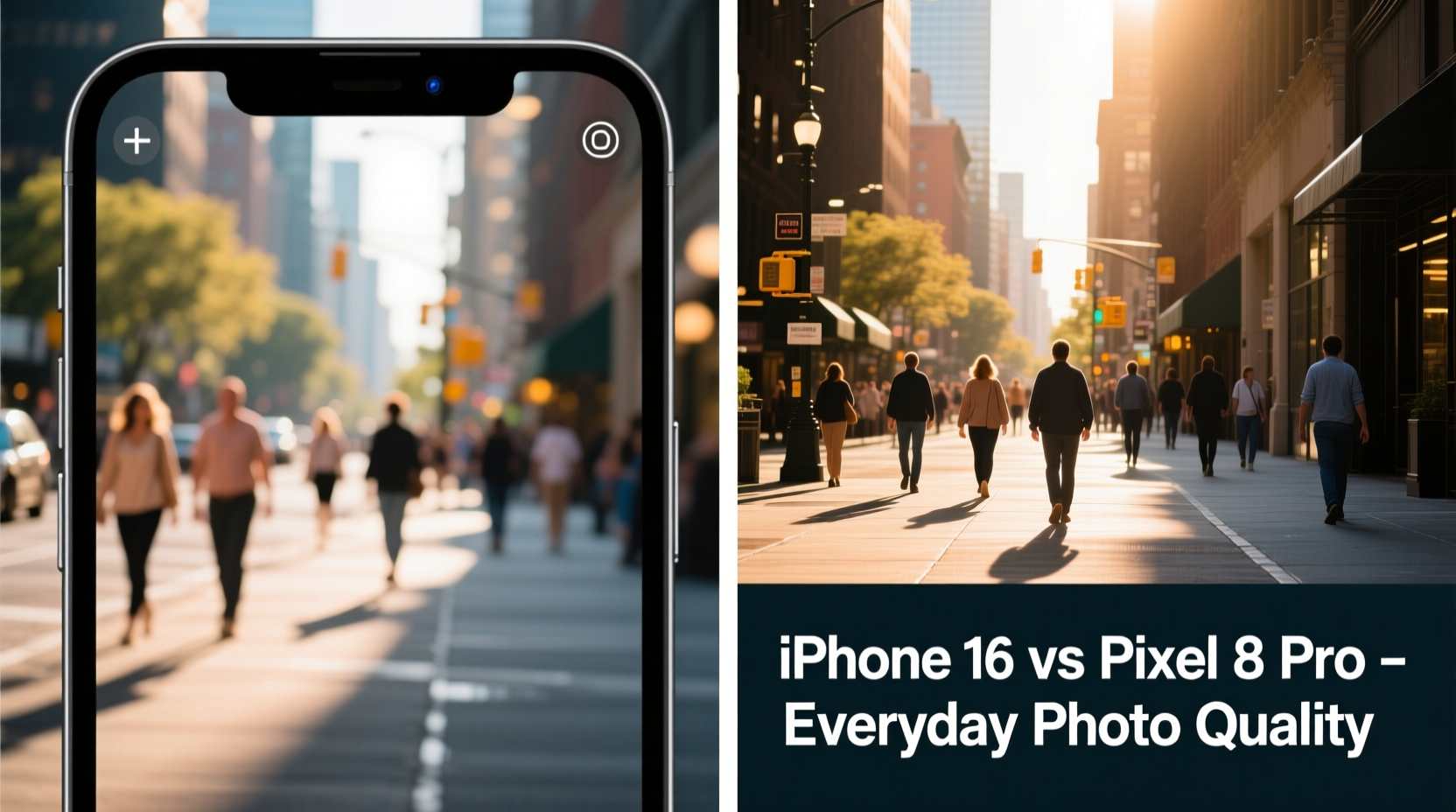
The fundamental difference between the iPhone 16 and Pixel 8 Pro lies not just in hardware but in photographic intent. Apple designs its cameras to capture what the human eye sees—true-to-life colors, balanced contrast, and minimal digital manipulation. The company prioritizes consistency across lighting environments, ensuring that a photo taken at noon looks like it was taken at noon, without exaggerated saturation or artificial sharpening.
Google takes a different path. The Pixel 8 Pro leverages advanced machine learning models—like HDR+ with Dual Exposure Fusion and Super Res Zoom—to reconstruct images beyond the sensor’s native capabilities. Its goal is to produce the “best possible” photo, even if that means altering reality slightly. Skin tones may be softened, skies deepened, and shadows lifted aggressively to ensure detail retention.
“Google isn’t trying to replicate vision—they’re trying to improve upon it. Apple wants you to remember the moment as it happened.” — David Kim, Mobile Imaging Analyst at TechLens Insights
This divergence shapes every photo these phones take. A sunset might look warmer and more dramatic on the Pixel, while the iPhone preserves the subtle gradient of fading light. Neither approach is inherently superior; preference depends on whether you value authenticity or enhancement.
Hardware Overview: Sensors, Lenses, and Processing
Under the hood, both devices feature high-end multi-camera systems, though their configurations reflect different priorities.
| Feature | iPhone 16 (Pro Model Assumed) | Pixel 8 Pro |
|---|---|---|
| Main Sensor | 48MP, f/1.78, sensor-shift OIS | 50MP, f/1.65, dual-pixel OIS |
| Ultra-Wide | 48MP, f/2.2, autofocus | 48MP, f/2.2, macro support |
| Telephoto | 12MP, 5x optical zoom (tetraprism) | 48MP, 5x optical zoom, up to 30x Super Res Zoom |
| Front Camera | 12MP, f/1.9, autofocus | 10.5MP, f/2.2, fixed focus |
| Video Capabilities | 4K Dolby Vision HDR, Cinematic Mode | 4K HDR, Magic Editor, Audio Erase |
| Image Processing | Photonic Engine + Neural Engine | Tensor G3 + HDR+ with AI tuning |
The iPhone 16 benefits from Apple’s tighter integration between hardware and software. Its new Photonic Engine enhances low-light performance earlier in the pipeline, preserving texture and reducing noise without over-smoothing. The inclusion of autofocus on the ultra-wide lens—a carryover from recent Pro models—makes it far more versatile for close-up shots and macro-style photography.
The Pixel 8 Pro counters with Google’s Tensor G3 chip, purpose-built for imaging tasks. While its main sensor has a slight edge in aperture, the real advantage comes in post-processing. Features like Best Take and Magic Editor allow users to swap faces or remove distractions after capture—an unprecedented level of control for mobile photography.
Everyday Photo Quality: Real-World Performance
For most users, camera decisions are made not in studios but in unpredictable, fleeting moments. How do these phones perform when you pull them out quickly to capture a child’s laugh, a meal at a dimly lit restaurant, or a cityscape during golden hour?
Daylight Performance
In well-lit conditions, both phones deliver excellent results. The iPhone 16 produces images with accurate white balance and smooth tonal transitions. Greens appear natural, whites stay clean, and skin tones remain consistent across shots. Dynamic range is strong, though highlights in very bright skies can occasionally clip.
The Pixel 8 Pro often pushes contrast and saturation slightly higher. This makes photos \"pop\" more on social media feeds, but sometimes at the expense of realism. Blues may lean toward cyan, and reds can appear oversaturated in certain lighting. However, Google’s adaptive tone mapping ensures that shadow details remain visible even in harsh midday sun.
Low-Light and Night Sight
This is where the Pixel traditionally shines—and the Pixel 8 Pro continues that legacy. Its Night Sight mode activates earlier and more aggressively than the iPhone’s Night mode. In dimly lit indoor spaces or nighttime streets, the Pixel often captures brighter, cleaner images with better color fidelity in dark areas.
The iPhone 16 improves significantly here with its next-gen sensor and faster aperture, but it still applies heavier noise reduction, which can lead to a loss of fine detail—especially in fabric textures or hair. The Pixel, by contrast, retains more micro-detail, though sometimes introduces a slight glow around bright lights.
Portrait Mode and Subject Recognition
Both phones offer reliable portrait mode functionality with depth sensing via LiDAR (iPhone) and machine learning (Pixel). The iPhone 16 edges ahead in edge detection accuracy, particularly around complex contours like frizzy hair or glasses frames. It also applies a more natural bokeh simulation, avoiding the artificial “cut-out” look.
The Pixel 8 Pro compensates with creative tools. Its Face Unblur feature can salvage a shot where the subject moved slightly, and the new Photo Unblur works on any moving object in low light. These AI-powered fixes are unique to the Pixel ecosystem and can turn otherwise unusable shots into keepers.
Zoom and Telephoto Use
With both offering 5x optical zoom, telephoto performance is comparable. The iPhone’s tetraprism design delivers crisp results up to 5x, with smooth transition into digital zoom up to 15x. Beyond that, detail degrades quickly.
The Pixel 8 Pro leverages its higher-resolution sensor and Super Res Zoom algorithm to maintain usable quality up to 20x in good light. In practical terms, this means clearer shots of distant signs, stage performers, or wildlife—though grain becomes noticeable past 10x.
Video: Stability, Color, and Usability
For everyday videography—recording kids playing, travel vlogs, or quick social clips—both phones excel, but in different ways.
The iPhone 16 maintains Apple’s leadership in video stabilization and audio capture. Its cinematic mode now supports 4K HDR with real-time depth mapping, allowing focus transitions during or after recording. Dolby Vision HDR provides exceptional dynamic range, making videos look professional when viewed on compatible screens.
The Pixel 8 Pro offers solid stabilization and introduces innovative editing features directly in the gallery app. You can erase background noise, adjust framing with Magic Editor, or enhance dull footage using AI-powered Tune Image. However, its video color grading tends to run cooler, and rolling shutter is slightly more pronounced during fast pans.
Workflow and Post-Capture Flexibility
Apple’s ecosystem encourages a seamless workflow from capture to edit. Photos sync instantly across devices via iCloud, and the built-in editor preserves non-destructive adjustments. Live Photos add interactivity, letting you choose the perfect frame after shooting.
Google integrates tightly with its AI suite. The Pixel 8 Pro allows users to edit months-old photos with new tools like Magic Editor, which can reposition subjects or expand backgrounds intelligently. While powerful, these edits require cloud processing and aren’t always instantaneous.
Mini Case Study: A Day in the Life of Two Phones
Sophie, a freelance photographer and mother of two, tested both phones over a weekend trip to San Francisco. Her goal: document daily moments without carrying extra gear.
Morning at Crissy Field: She captured her kids running along the shore. The iPhone 16 rendered the foggy bay accurately, with muted grays and soft highlights. The Pixel boosted contrast and warmed the sand, making the scene feel sunnier than it was. Sophie preferred the iPhone’s version for memory preservation but shared the Pixel’s shot on Instagram for its visual impact.
Lunch at a dimly lit café: Food photos were brighter and more detailed on the Pixel thanks to Night Sight activating automatically. The iPhone required manual Night mode engagement and produced a darker, moodier plate presentation—accurate, but less appetizing online.
Evening Golden Gate Bridge view: Backlit silhouettes came out cleaner on the Pixel, with facial details recovered in shadow. The iPhone preserved more highlight detail in the sky but lost some subject clarity. Sophie used the Pixel’s Best Take to fix a blink in the final group photo.
Her verdict? “I’d keep the Pixel for social content and the iPhone for personal archives.”
Actionable Checklist: Choosing Based on Your Needs
Use this checklist to determine which phone aligns best with your everyday photography style:
- Choose the iPhone 16 if:
- You prioritize color accuracy and consistency
- You record a lot of video or use external mics
- You already own other Apple devices
- You dislike heavily processed or “AI-altered” photos
- You value long-term software support (up to 6–7 years)
- Choose the Pixel 8 Pro if:
- You want the brightest, most detailed low-light photos
- You edit photos frequently and appreciate AI tools
- You share often on social media and want “pop”
- You value post-capture editing like object removal or face swaps
- You prefer stock Android and monthly security updates
Frequently Asked Questions
Which phone has better battery life when taking lots of photos?
Both perform well, but the iPhone 16 generally lasts longer under heavy camera use due to more efficient hardware-software integration. Continuous shooting and 4K video drain the Pixel 8 Pro faster, especially when using AI features that rely on cloud processing.
Can I manually control camera settings on both phones?
The iPhone 16 offers limited manual controls in the native Camera app, but third-party apps like Halide provide full RAW, ISO, and shutter speed access. The Pixel 8 Pro includes a Pro mode in its default camera app, allowing direct adjustment of exposure, white balance, and focus—ideal for enthusiasts who want more control without switching apps.
Do both phones support RAW photography?
Yes. The iPhone 16 saves Apple ProRAW files (up to 48MP), giving photographers extensive editing headroom. The Pixel 8 Pro supports DNG (Digital Negative) format through Pro mode, though file sizes are smaller (~12–14MB) compared to Apple’s large ProRAW outputs (~25MB).
Final Verdict: Which Is Better for Everyday Use?
There is no universal winner. The iPhone 16 wins on consistency, video excellence, and natural rendering—making it ideal for users who want their memories preserved as they occurred. It’s the choice for those who value reliability, longevity, and seamless integration within a broader tech ecosystem.
The Pixel 8 Pro excels in intelligence and adaptability. It turns challenging lighting into opportunities, rescues flawed shots, and empowers creativity through AI. It’s the tool for storytellers, social sharers, and anyone who wants their phone to do more than just capture—enhance, refine, and reimagine.
If your everyday photos are meant to be lived in—scrolled through years later with emotional clarity—the iPhone 16 may be the better companion. If they’re meant to be seen—shared, liked, admired—the Pixel 8 Pro gives you an edge.
“The best camera is the one that matches your intention, not just your environment.” — Lena Torres, Mobile Photography Instructor at Bay Area Media School
Take Action: Define Your Photo Priorities
Before choosing, ask yourself: What kind of memories do I want to keep? Do I value truth or impact? Simplicity or power? Try exporting a typical day’s photos from your current phone and imagine them enhanced—or restrained—by either system.
Consider borrowing both devices for a side-by-side test. Take the same shot with each, then compare not just pixels, but feelings. Which version feels more like the moment you remember?




 浙公网安备
33010002000092号
浙公网安备
33010002000092号 浙B2-20120091-4
Comments
No comments yet. Why don't you start the discussion?