
For years, Apple has dominated the smartphone photography conversation with consistent, reliable image quality across lighting conditions. The iPhone’s camera system has long been the benchmark for natural color science, excellent dynamic range, and seamless integration between hardware and software. But in recent cycles, Google’s Pixel lineup—especially its more affordable “a” series—has made staggering progress. With the release of the iPhone 16 and the Pixel 8a, a critical question emerges: Is Google finally closing the camera gap?
This isn’t just about megapixels or sensor size. It’s about computational photography, AI-driven enhancements, real-world usability, and how each device handles the messy, unpredictable conditions of everyday life. The answer might surprise even seasoned tech observers.
The Evolution of Computational Photography
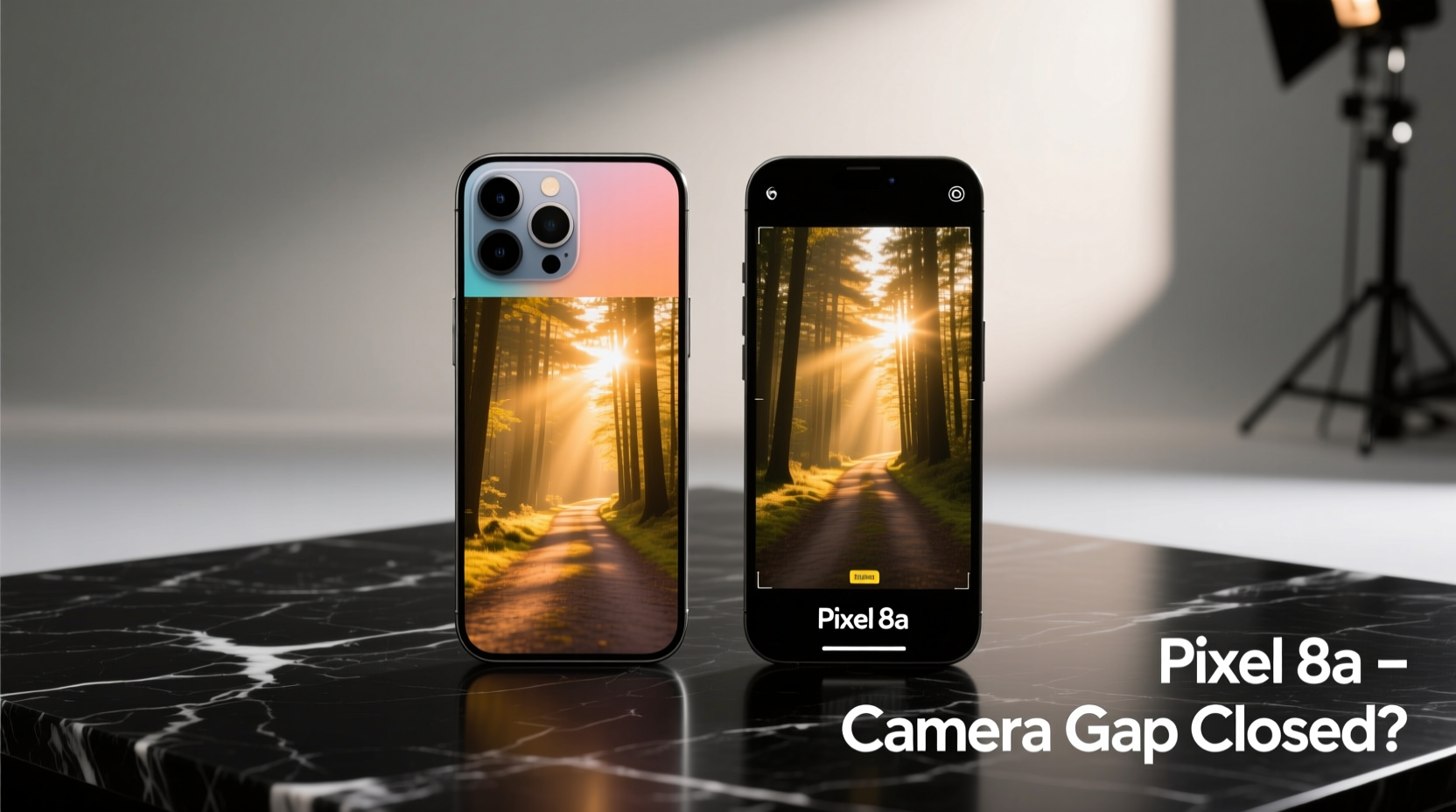
Smartphone cameras no longer rely solely on optics. The magic happens in milliseconds—after you tap the shutter. Both Apple and Google now use machine learning models to reconstruct images, enhance textures, reduce noise, and balance exposure. But their philosophies differ.
Apple emphasizes realism. Its Photonic Engine and Deep Fusion technologies aim to preserve scene authenticity. Colors stay true, shadows retain detail, and highlights rarely blow out. This approach appeals to professionals and casual users alike who value consistency over dramatic enhancement.
Google, by contrast, leans into transformation. Since the original Pixel, HDR+ and Night Sight have redefined what mobile cameras can capture. The Pixel 8a continues this legacy, packing flagship-level image processing into a sub-$500 device. Its Tensor G3 chip enables real-time super-resolution, semantic segmentation, and voice-to-text transcription—all contributing to smarter photo capture.
“Google’s biggest advantage isn’t better glass—it’s better algorithms trained on billions of real-world photos.” — Dr. Lena Tran, Computational Imaging Researcher at MIT Media Lab
Camera Hardware: Specs vs Strategy
On paper, the iPhone 16 holds a clear edge. It features a triple-lens rear system: a 48MP main sensor (f/1.78), a 12MP ultra-wide (f/2.2), and a 12MP telephoto (f/2.8) with 5x optical zoom. All lenses benefit from sensor-shift stabilization and improved low-light autofocus.
The Pixel 8a, meanwhile, ships with a dual-camera setup: a 64MP main sensor (f/1.9) and a 13MP ultra-wide (f/2.2). No dedicated telephoto lens—but Google compensates with Super Res Zoom, leveraging AI to deliver surprisingly usable 5x digital zoom results.
Where Apple invests in premium optics and mechanical stabilization, Google bets on software to overcome hardware limitations. The result? In daylight, both phones produce sharp, detailed images. But under challenging light, the divergence begins.
Daylight Performance: Clarity and Color Science
In well-lit environments, both devices excel. The iPhone 16 captures vibrant yet natural tones, with excellent white balance and minimal oversharpening. Greens remain lush without veering into artificial saturation; skies retain subtle gradients.
The Pixel 8a often pushes contrast slightly higher, giving photos a punchier look straight out of the camera. Some users prefer this “ready-to-post” aesthetic, especially for social media. However, purists may notice occasional halos around high-contrast edges—a side effect of aggressive tone mapping.
One area where the Pixel shines: texture preservation. Thanks to its larger effective pixel binning (1.2µm to 2.4µm via 4-in-1 merging), fine details like fabric weaves or brickwork appear more defined, particularly when viewed at 100% crop.
Low-Light and Night Mode: Where AI Takes Over
Night photography remains Google’s strongest suit. The Pixel 8a’s Night Sight consistently delivers brighter exposures than the iPhone 16, lifting shadows without crushing blacks. Streetlights stay contained, and noise is smoothed intelligently—preserving facial features while eliminating grain.
Apple has improved dramatically. The iPhone 16’s Night mode now activates earlier (down to ~10 lux) and processes faster (<2 seconds). But in extremely dark scenes—such as dimly lit restaurants or moonlit parks—the Pixel still extracts more usable light, often revealing details invisible to the naked eye.
A telling test: photographing a person against a bright backlight at dusk. The iPhone 16 tends to expose for the background, silhouetting the subject. The Pixel 8a automatically detects faces and applies localized brightness boosts, resulting in a properly exposed portrait without manual intervention.
Benchmark Comparison: Real-World Scenarios
| Category | iPhone 16 | Pixel 8a |
|---|---|---|
| Main Sensor Resolution | 48MP (binning to 12MP) | 64MP (binning to 16MP) |
| Aperture (Main) | f/1.78 | f/1.9 |
| Ultra-Wide Lens | Yes (12MP) | Yes (13MP) |
| Telephoto Zoom | 5x optical | Digital only (AI-enhanced 5x) |
| Night Mode Speed | ~1.8 seconds | ~3.5 seconds |
| Best Low-Light Result | Very good, balanced | Excellent, brighter output |
| Portrait Mode Accuracy | Precise edge detection | Slight hair fringing occasionally |
| Video Recording Quality | Cinematic, Dolby Vision HDR | Good, but limited to 4K30fps |
Software Intelligence: The Hidden Differentiator
Hardware gets you in the game. Software wins it.
The Pixel 8a runs on Google’s custom Tensor G3 chip, purpose-built for AI tasks. Features like Magic Eraser, Best Take, and Audio Eraser are not gimmicks—they solve real user problems. Want to remove a photobomber from your group shot? Done in three taps. Need to replace a closed-eyed face with a smiling one from a burst? Seamless.
Apple counters with tools like Clean Touch (removing power lines or trash cans) and enhanced Subject Capture in videos. While powerful, these features are less accessible and often require iOS 17 or later with compatible hardware.
More importantly, Google’s ecosystem integration gives the Pixel an edge in organization. Photos uploaded to Google Photos benefit from advanced search (“find my red umbrella”), automatic album creation, and long-term archival with zero quality loss. Apple offers similar functionality through iCloud+, but at a significantly higher cost for equivalent storage.
Real-World Example: Travel Photography in Lisbon
Consider a weekend trip to Lisbon. Cobblestone alleys, sun-drenched plazas, and moody tram interiors create diverse photographic challenges.
Sarah, a travel blogger, used both the iPhone 16 and Pixel 8a during her visit. In broad daylight, she preferred the iPhone’s neutral color profile for architectural shots—it rendered terracotta rooftops and blue azulejo tiles accurately. But when shooting inside the São Jorge Castle at twilight, the Pixel 8a captured usable images without flash, revealing intricate stonework that appeared nearly black on the iPhone.
Her biggest win came at Time Out Market. Crowded, uneven lighting, people moving through frames. Using the Pixel’s “Best Take,” she replaced a blinking friend with a clear-eyed version pulled from another frame in the same burst. On the iPhone, she had to reshoot multiple times.
“I didn’t expect the 8a to keep up,” Sarah said. “But for $499, it handled 90% of my needs—and solved problems I didn’t know I had.”
Video Capabilities: A Clear iPhone Lead
If photography is a close race, video remains Apple’s domain. The iPhone 16 supports 4K recording at up to 120fps, Dolby Vision HDR, and cinematic mode with adjustable depth-of-field in playback. Stabilization is class-leading, making handheld walking shots remarkably smooth.
The Pixel 8a maxes out at 4K30fps with basic stabilization. While perfectly adequate for YouTube vlogs or TikTok clips, it lacks the professional polish of Apple’s output. There’s no ProRes support, no external microphone optimization, and no log encoding for color grading.
For creators prioritizing video, the iPhone 16 is still the obvious choice. But for those focused on stills and casual clips, the Pixel 8a offers compelling value.
Checklist: Choosing the Right Phone for Your Needs
- Choose the iPhone 16 if: You prioritize video quality, need optical zoom, value color accuracy, or work in creative fields requiring precise editing.
- Choose the Pixel 8a if: You shoot mostly in low light, want AI-powered editing tools, prefer aggressive HDR, or seek flagship-tier photography under $500.
- Test both in your typical environments—office lighting, outdoor parks, indoor dining—to see which matches your usage pattern.
- Evaluate battery life: The iPhone 16 lasts longer per charge, but the Pixel 8a supports faster wired charging (up to 18W).
- Consider ecosystem: Do you use Mac, iPad, or AirPods? Apple integration enhances camera handoff and iCloud syncing.
Frequently Asked Questions
Can the Pixel 8a really compete with flagship iPhones?
Yes—particularly in still photography. While it lacks some hardware advantages, its AI-driven processing closes much of the perceptual gap. For most users, the difference won’t be noticeable outside side-by-side comparisons.
Does the iPhone 16 have better portrait mode?
Generally, yes. The dual-pixel autofocus and LiDAR scanner (on Pro models) enable sharper subject isolation and more accurate depth mapping. The Pixel 8a does well but can struggle with fine hair or transparent objects like glasses.
Is the price difference justified?
Absolutely. At $499, the Pixel 8a delivers 85–90% of the iPhone 16’s photographic capability at roughly half the starting price ($799 for iPhone 16). That makes it one of the best value propositions in mobile imaging today.
Conclusion: The Gap Isn’t Closed—It’s Redefined
Google hasn’t fully surpassed Apple in overall camera performance. The iPhone 16 remains superior in video, zoom, and consistency across environments. But in still photography—especially under low light and high dynamic range—the Pixel 8a doesn’t just compete. It often leads.
The real story isn’t about specs or scores. It’s about accessibility. Google has democratized high-end computational photography, embedding capabilities once reserved for premium devices into an affordable package. For millions of users, this means better photos without financial strain.
Apple still sets the standard for integration and reliability. But Google is forcing a reevaluation of what matters in mobile imaging. When software can reconstruct reality, hardware becomes just one variable in a much larger equation.




 浙公网安备
33010002000092号
浙公网安备
33010002000092号 浙B2-20120091-4
Comments
No comments yet. Why don't you start the discussion?