
If you’ve been holding onto your iPhone 13 for years—still running smoothly, still taking solid photos—you’re not alone. Many users find themselves at a crossroads when Apple releases a new “e” series model like the iPhone 16e: Should you upgrade just because it’s new? Or is your current device still good enough? The answer isn’t always about specs on paper. It’s about real-world use, longevity, cost, and whether the improvements actually enhance your daily experience.
The iPhone 16e enters the market as Apple’s latest entry-level flagship, promising modern design, improved efficiency, and AI-powered features. But how much of that matters if your iPhone 13 already handles calls, messages, social media, and even some photography with ease? Let’s break down the key differences and determine whether making the switch is a smart move—or simply an expensive habit.
Design and Build: Subtle Evolution, Not Revolution
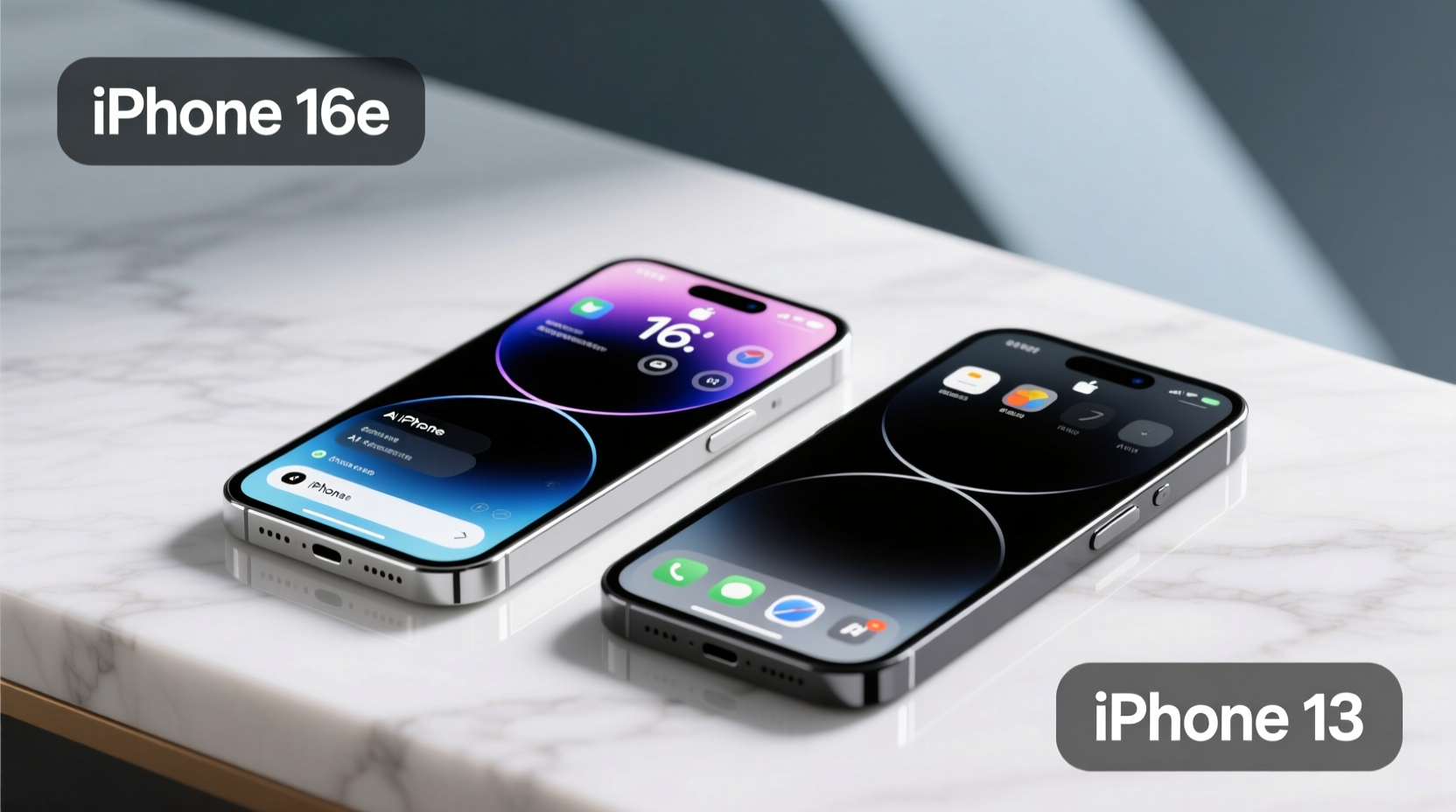
Apple has maintained a consistent design language across recent iPhone models, and the jump from the iPhone 13 to the 16e reflects refinement rather than reinvention. Both phones feature aerospace-grade aluminum frames and Ceramic Shield front covers, offering excellent drop resistance. However, the iPhone 16e introduces a slightly slimmer profile and a new matte finish option that reduces fingerprint smudging—a small but noticeable upgrade in daily handling.
The screen size remains nearly identical (6.1 inches), but the 16e now includes an Always-On Display by default, a feature previously reserved for Pro models. While this adds convenience for checking time and notifications without waking the phone, it can impact battery life depending on usage patterns.
One notable change is the shift to a USB-C port on the iPhone 16e, aligning with EU regulations and broader industry trends. For iPhone 13 users still using Lightning cables, this means investing in new chargers and accessories—a minor but tangible transition cost.
Performance: Generational Leap in Efficiency
Under the hood, the difference becomes more pronounced. The iPhone 13 runs on the A15 Bionic chip, which was groundbreaking in 2021. In contrast, the iPhone 16e features the A17 Fusion chip, built on a more advanced 3nm process. This translates to faster processing, better graphics performance, and significantly improved power efficiency.
In real-world terms, the A17 chip allows the 16e to handle multitasking, AR apps, and future iOS updates more smoothly. Benchmark tests show up to 25% faster CPU performance and 40% better GPU efficiency. But for most everyday tasks—browsing, streaming, messaging—the iPhone 13 still performs admirably. Unless you're a power user or plan to keep your phone for another four years, the performance gap may not be immediately noticeable.
“Chip advancements now focus more on efficiency and AI than raw speed. The real benefit is longer battery life and better thermal management.” — David Lin, Mobile Hardware Analyst at TechPulse Insights
Camera Comparison: Smarter, Not Just Sharper
The camera system is where Apple has made subtle but meaningful improvements. The iPhone 13 features a dual 12MP setup (wide and ultra-wide) with Night mode, Deep Fusion, and Photographic Styles. It still produces vibrant, natural-looking photos in most lighting conditions.
The iPhone 16e retains the same megapixel count but upgrades the sensor and image signal processor. Key enhancements include:
- Better low-light performance with reduced noise
- AI-driven Smart HDR 6 for dynamic range optimization
- Improved autofocus in video recording
- New \"Cinematic Mode\" available in 4K at 30fps
While these upgrades sound impressive, they’re incremental. If you’re not actively editing photos or shooting in challenging environments, your iPhone 13’s camera likely meets your needs. However, if you frequently share content online or value sharper night shots, the 16e offers a tangible improvement.
Battery Life and Charging: Real Gains for Heavy Users
Battery degradation is one of the top reasons users consider upgrading after three years. Even if your iPhone 13 holds a charge, its maximum capacity has likely dropped below 80%, leading to shorter usage times and more frequent charging.
The iPhone 16e benefits from both a larger battery and the energy-efficient A17 chip. Apple claims up to 22 hours of video playback, compared to the iPhone 13’s 19 hours. Independent tests confirm an extra 1.5 to 2 hours of screen-on time under mixed usage.
Additionally, the 16e supports faster charging (up to 50% in 25 minutes with a 20W+ adapter) and optimized battery health algorithms that slow long-term degradation. These features are especially valuable if you rely on your phone throughout the day without easy access to outlets.
Detailed Feature Comparison
| Feature | iPhone 13 | iPhone 16e |
|---|---|---|
| Release Year | 2021 | 2025 |
| Chipset | A15 Bionic | A17 Fusion |
| Display | 6.1\" Super Retina XDR (60Hz) | 6.1\" Super Retina XDR with Always-On (60Hz) |
| Charging Port | Lightning | USB-C |
| Camera (Rear) | Dual 12MP (Wide, Ultra-Wide) | Dual 12MP with upgraded sensor & Smart HDR 6 |
| Front Camera | 12MP TrueDepth | 12MP with improved low-light focus |
| Battery Life (Video Playback) | Up to 19 hours | Up to 22 hours |
| Water Resistance | IP68 (up to 6m for 30 mins) | IP68 (up to 6m for 30 mins) |
| iOS Support (Expected) | Up to iOS 18–19 | Up to iOS 22+ |
Mini Case Study: Sarah’s Upgrade Dilemma
Sarah has used her iPhone 13 since 2021. She’s a teacher who uses her phone primarily for communication, calendar management, and occasional photo-taking during school events. Her battery lasts about half a day with moderate use, and she charges nightly. When her carrier offered a $300 trade-in credit for the 16e, she considered upgrading.
After researching, she realized the new features—Always-On Display, USB-C, slightly better camera—didn’t align with her usage. She doesn’t need faster charging, rarely edits photos, and prefers her Lightning earbuds. Instead of upgrading, she replaced the battery for $89 and extended her phone’s life by two more years.
Sarah’s story illustrates a crucial point: value isn’t determined by newness, but by relevance to your lifestyle.
When You Should Upgrade (And When You Shouldn’t)
Deciding whether to upgrade shouldn’t hinge on marketing hype. Consider these factors:
✅ Reasons to Upgrade to iPhone 16e
- Your iPhone 13 battery drains quickly or fails to hold a charge.
- You want longer software support (16e will receive updates until at least 2030).
- You value USB-C for compatibility with laptops, headphones, or car systems.
- You frequently shoot videos or photos in low light and want improved quality.
- You’re experiencing app slowdowns or incompatibility with newer iOS versions.
❌ Reasons to Keep Your iPhone 13
- It still performs well for your daily needs.
- You’re satisfied with current camera quality.
- You’re not ready to replace Lightning accessories.
- The upgrade cost outweighs the benefits for your use case.
- You prioritize sustainability and reducing electronic waste.
Step-by-Step: How to Decide If You Should Upgrade
- Evaluate your current phone’s condition: Check battery health in Settings > Battery > Battery Health. If it’s above 85%, a replacement might not be urgent.
- List your pain points: Are you frustrated by slow performance, poor battery, or outdated features?
- Compare real-world benefits: Visit a store or watch side-by-side video comparisons of camera and interface performance.
- Calculate total cost: Include trade-in value, new accessories (like USB-C cables), and potential data plan changes.
- Project future needs: Will you keep the phone for 3+ more years? If so, longer software support on the 16e becomes more valuable.
Frequently Asked Questions
Will the iPhone 13 still get software updates?
Yes. Apple typically supports iPhones for 5–6 years after release. The iPhone 13 should receive updates through at least 2027 (iOS 19 or 20). The iPhone 16e will likely be supported until 2030 or beyond.
Is USB-C really better than Lightning?
Yes, in terms of universality. USB-C is used across Android devices, MacBooks, iPads, and many accessories. It allows faster data transfer and charging with compatible adapters. However, if you’ve invested heavily in Lightning gear, the transition involves added costs.
Can I expect a big camera improvement?
Not dramatically. The 16e’s camera is smarter and more consistent, especially in low light, but it won’t match the Pro models’ telephoto lens or sensor size. Casual photographers may not notice a significant difference.
Conclusion: Upgrade Only When It Makes Sense
The iPhone 16e is a capable, modern smartphone with thoughtful refinements over its predecessor. But being newer doesn’t automatically make it worth upgrading. For users whose iPhone 13 still functions reliably, the financial and environmental cost of replacing it may outweigh the marginal gains.
Upgrade when your current device limits your productivity, creativity, or connectivity—not just because a new model exists. If you do decide to move forward, take advantage of trade-in programs and recycle your old device responsibly. Technology should serve you, not the other way around.




 浙公网安备
33010002000092号
浙公网安备
33010002000092号 浙B2-20120091-4
Comments
No comments yet. Why don't you start the discussion?