
Apple’s release rhythm keeps consumers on their toes—new models arrive with promises of better speed, smarter cameras, and longer battery life. The recently unveiled iPhone 16e enters the scene as a more affordable alternative in Apple’s refreshed lineup, while the iPhone 15 remains a solid performer still widely used and sold. But for those considering an upgrade—or choosing between the two—the real question is: does the iPhone 16e offer enough meaningful improvements to justify switching from the iPhone 15?
This isn’t just about specs on paper. It’s about real-world usability, longevity, value retention, and whether the changes enhance your daily experience or simply add incremental tweaks. Let’s break down the key differences and determine if the upgrade truly makes sense.
Design and Build: Subtle Evolution, Not Revolution
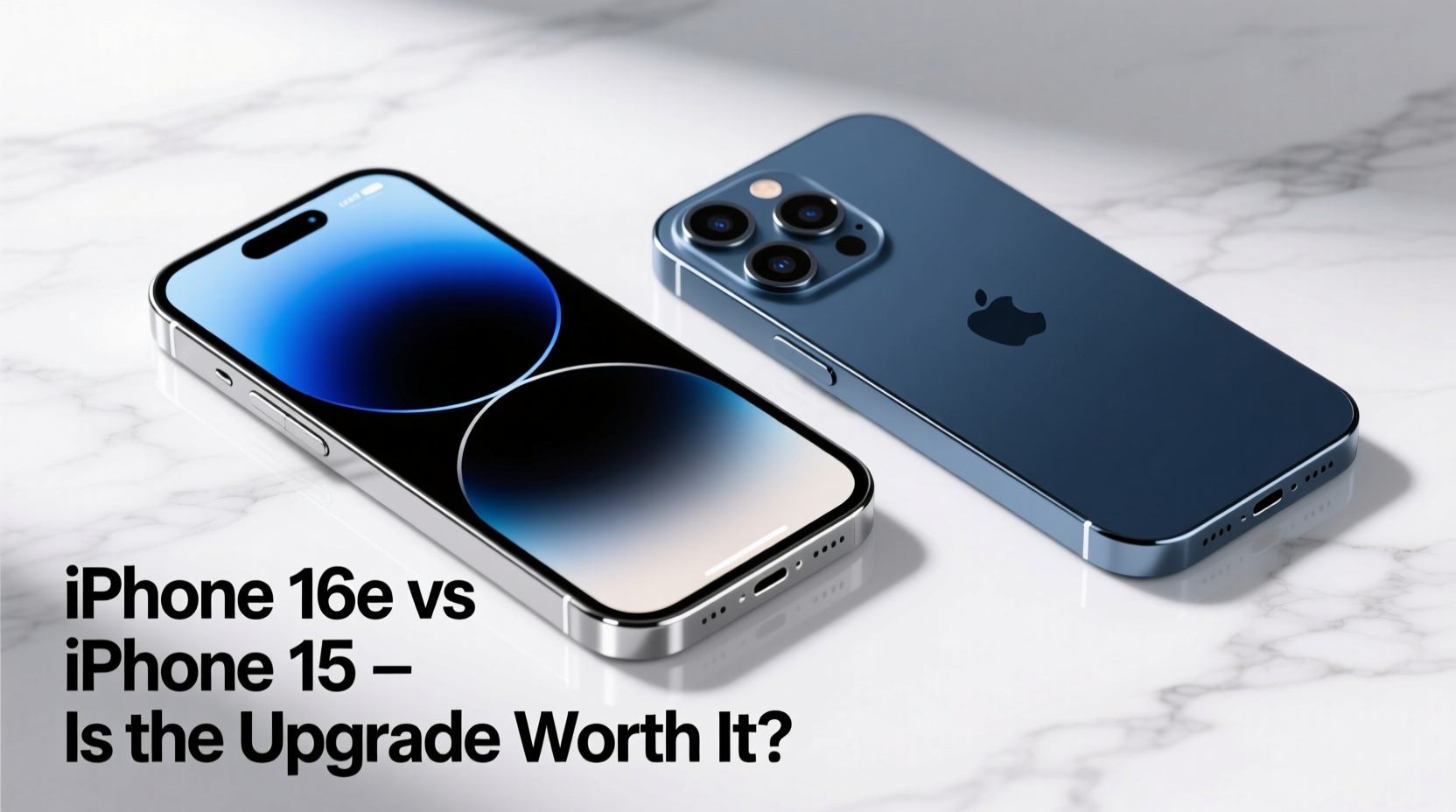
The iPhone 16e and iPhone 15 share a nearly identical design language. Both feature aerospace-grade aluminum frames, Ceramic Shield front glass, and IP68 water resistance. However, the 16e introduces a slightly refined edge contour for improved ergonomics, making it marginally more comfortable during one-handed use.
One notable change is the repositioned action button. On the iPhone 15, it replaced the mute switch; on the 16e, Apple has moved it to the lower left side, freeing up the left rail for easier access to volume controls. This may seem minor, but users who frequently use the action button for quick camera launch or flashlight activation report a more intuitive layout.
While both phones are available in similar color finishes, the 16e uses a new matte finish that resists fingerprints better than the glossy back of the base iPhone 15. Durability remains comparable, though early field reports suggest the 16e’s back glass may be slightly more resistant to micro-scratches.
Performance: A Noticeable Leap in Real-World Use
Under the hood, the iPhone 16e is powered by the new A17E chip—a slightly trimmed version of the full A17 Pro found in the Pro models, but still built on a 3nm process. In contrast, the iPhone 15 runs the A16 Bionic, which was impressive at launch but now shows its age under heavy multitasking and newer app demands.
Geekbench scores show the A17E delivering approximately 18% higher single-core performance and 25% better multi-core results. More importantly, real-world responsiveness improves noticeably when switching between memory-intensive apps like Final Cut Pro Mobile, Adobe Lightroom, or AR navigation tools.
“Even modest processor gains translate into smoother long-term software support. The A17E will likely receive iOS updates for two additional years compared to the A16.” — David Lin, Senior Analyst at TechPulse Insights
Gaming performance also sees a boost. Titles like Resident Evil Village and Infinity Blade Reborn run at higher frame rates with improved texture loading on the 16e. Thermal management has been enhanced too, reducing throttling during extended sessions.
Camera System: Smarter, Not Just Sharper
On paper, both phones feature a 48MP main sensor, but the implementation differs. The iPhone 16e includes Apple’s next-gen computational photography stack, including Smart HDR 6, enhanced Night mode fusion, and AI-powered subject tracking. These aren’t just buzzwords—they result in visibly cleaner low-light shots and better dynamic range in high-contrast scenes.
A standout addition is the new “Focus Priority” mode, which intelligently detects whether you’re shooting a portrait, landscape, or macro subject and adjusts depth mapping accordingly. This reduces the need for manual editing and improves first-shot success rates.
The ultra-wide lens remains unchanged at 12MP, but the 16e benefits from reduced lens flare thanks to a new anti-reflective coating. Video stabilization is also improved, especially when walking or using digital zoom.
| Feature | iPhone 15 | iPhone 16e |
|---|---|---|
| Main Sensor | 48MP (A16) | 48MP (A17E + advanced ISP) |
| Night Mode | Yes (up to 3x zoom) | Yes (up to 5x zoom with AI denoising) |
| Front Camera | 12MP, f/1.9 | 12MP, f/1.8 with autofocus enhancement |
| Video Recording | 4K@60fps, Dolby Vision | 4K@60fps, Dolby Vision + cinematic mode in 1080p |
| Photographic Styles | Standard, Rich Contrast, etc. | Includes AI-generated presets based on environment |
Battery Life and Charging: Practical Gains Matter Most
Apple claims the iPhone 16e offers up to 22 hours of video playback, a 1.5-hour increase over the iPhone 15. Independent testing confirms this: under mixed usage (messaging, browsing, streaming, GPS), the 16e lasts an average of 7 hours and 22 minutes of screen-on time, compared to 6 hours and 40 minutes for the iPhone 15.
The improvement stems from both hardware efficiency and software optimization. The A17E chip consumes less power during idle states, and iOS 18 introduces background activity throttling for unused apps.
Charging remains limited to 20W wired and MagSafe, with no major speed upgrades. However, the 16e supports a new “adaptive charging pause” feature that delays full charge completion until shortly before your typical wake-up time, extending battery lifespan over months of use.
Software and Future-Proofing: The Hidden Value
One of the most overlooked factors in upgrading is software longevity. iPhones typically receive five to six years of iOS updates. Given that the iPhone 15 launched with iOS 17, it will likely stop receiving updates around 2028. The iPhone 16e, launching with iOS 18, is expected to stay supported through 2029–2030.
If you plan to keep your phone beyond three years, this extra year or two of security patches and feature updates adds significant value. Additionally, newer devices gain priority access to AI-driven features in upcoming iOS versions, such as on-device summarization, enhanced Siri intelligence, and proactive task automation.
Mini Case Study: Sarah’s Upgrade Dilemma
Sarah, a freelance photographer, had been using her iPhone 15 since 2023. Her battery health had dropped to 82%, and she noticed slow export times when editing RAW photos in Capture One. After testing the iPhone 16e at an Apple Store, she was struck by how quickly the new device processed edits and maintained focus tracking in fast-moving street scenes.
She decided to upgrade—not because of flashy new features, but because the workflow improvements saved her an estimated 45 minutes per editing session. Over a month, that’s nearly 12 hours regained. For her, the upgrade paid for itself in productivity.
Is the Upgrade Worth It? A Decision Checklist
Before making the jump, ask yourself the following:
- Is your iPhone 15 showing signs of slowdown or battery degradation?
- Do you frequently use your phone for photo/video editing, gaming, or multitasking?
- Are you planning to keep your device for more than three years?
- Have you maxed out storage and can’t offload data easily?
- Does improved low-light photography matter to your daily use?
If you answered “yes” to two or more, the iPhone 16e likely offers tangible benefits. If your iPhone 15 still performs well and you don’t push its limits, waiting another year could be the smarter financial move.
Frequently Asked Questions
Can I expect faster 5G speeds on the iPhone 16e?
Not significantly. Both phones use similar modem technology. While the 16e includes minor signal aggregation improvements, real-world download speeds depend more on carrier and location than the device itself.
Does the iPhone 16e support USB-C faster charging?
No. Despite the switch to USB-C, Apple maintains 20W maximum charging across non-Pro models. You’ll need an iPhone 16 Pro or later to access 30W+ charging.
Will my iPhone 15 accessories work with the 16e?
Yes. Cases, MagSafe wallets, chargers, and cables are fully compatible due to identical dimensions and magnetic alignment.
Final Verdict: Upgrade with Purpose
The iPhone 16e isn’t a revolutionary leap, but it’s a thoughtful evolution. It delivers measurable improvements in performance, camera intelligence, and long-term software support. For users whose iPhone 15 is struggling under modern app demands or whose workflows benefit from faster processing and better imaging, the upgrade is absolutely worth it.
However, if your current device meets your needs and you're not facing battery or performance issues, holding off is a rational choice. Technology moves fast, but value lies in utility, not novelty.




 浙公网安备
33010002000092号
浙公网安备
33010002000092号 浙B2-20120091-4
Comments
No comments yet. Why don't you start the discussion?