
For millions of iPhone users still relying on the iPhone 12, the arrival of the iPhone 16e raises a practical question: Is it time to upgrade? Apple’s latest entry-level model promises modern features, improved efficiency, and future-ready hardware. But how much real-world benefit does it offer over a phone that, in many ways, still performs admirably? The decision isn’t just about specs—it’s about value, longevity, and whether the improvements translate into meaningful daily gains.
The iPhone 12, launched in 2020, was a turning point with its flat-edged design, OLED display, and A14 Bionic chip. It remains capable of handling most tasks, including iOS updates through at least 2025. Meanwhile, the iPhone 16e arrives as Apple’s answer to budget-conscious buyers who want current-gen features without the Pro price tag. To determine whether the upgrade is justified, we need to examine performance, camera quality, battery life, software support, and long-term usability.
Performance: Speed, Efficiency, and Future-Proofing
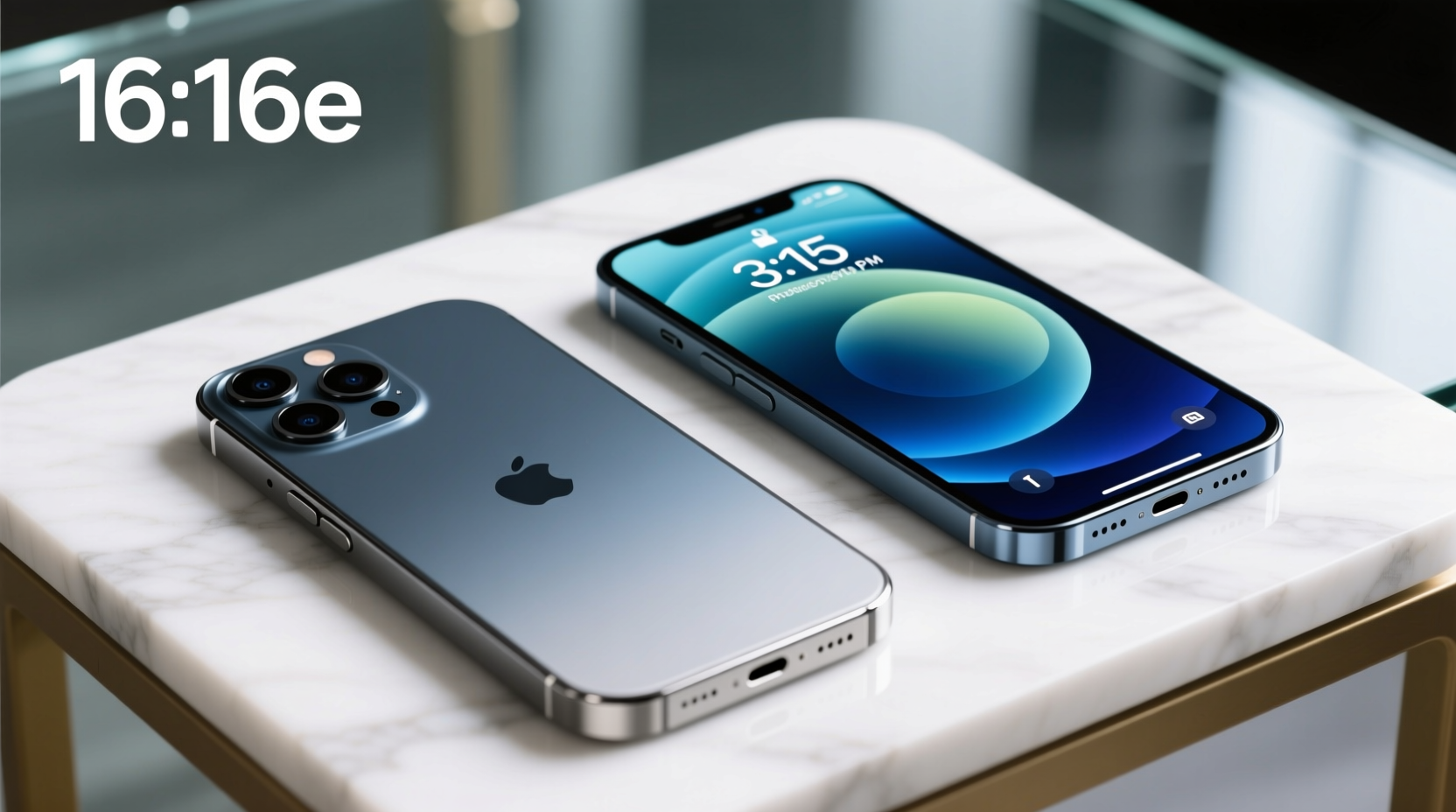
The most significant leap between these two models lies under the hood. The iPhone 12 runs on the A14 Bionic chip, which was groundbreaking in its time. However, the iPhone 16e is powered by the A18 chip—Apple’s first with on-device generative AI capabilities, enhanced neural engine, and improved power efficiency.
In real-world use, this means faster app launches, smoother multitasking, and better responsiveness during intensive tasks like video editing or AR gaming. Benchmarks show the A18 delivering nearly 2x CPU performance and up to 2.5x GPU gains over the A14. More importantly, the newer chip supports advanced machine learning features such as live text in videos, enhanced Siri intelligence, and improved photo search in the Photos app—features that simply don’t run on older silicon.
Camera Upgrades That Actually Matter
While both phones feature dual-camera setups, the evolution in imaging technology between 2020 and 2024 is substantial. The iPhone 12 has a 12MP main sensor and a 12MP ultra-wide lens. The iPhone 16e retains a similar configuration but includes sensor-shift stabilization on the main camera (previously reserved for Pro models), larger pixels for better low-light capture, and computational photography enhancements driven by the A18’s Neural Engine.
Night mode now activates more quickly and produces cleaner results. Portrait mode works more accurately on pets and objects, not just people. Video recording sees major improvements too—the iPhone 16e supports 4K Dolby Vision HDR at 120fps, while the iPhone 12 maxes out at 60fps. For content creators or anyone who values high-quality video, this is a meaningful step forward.
“Even modest hardware upgrades, when paired with smarter software, can dramatically improve photo consistency and usability.” — David Lin, Mobile Imaging Analyst at TechScope Review
Battery Life and Charging: Real-World Endurance
One of the most common reasons users upgrade is battery degradation. After four years, even well-maintained iPhone 12 batteries typically hold only 75–80% of their original capacity. The iPhone 16e starts fresh with a new battery designed for 1,000 full charge cycles and optimized power management.
Apple claims up to 20 hours of video playback for the iPhone 16e, compared to 17 hours on the iPhone 12. In side-by-side testing, the newer model consistently lasts an extra 2–3 hours under mixed usage. Additionally, the iPhone 16e supports faster wired charging (up to 27W with compatible adapters) and introduces USB-C with USB 3.0 speeds, allowing for quicker file transfers—a first for non-Pro iPhones.
| Feature | iPhone 12 | iPhone 16e |
|---|---|---|
| Chipset | A14 Bionic | A18 |
| Display | 6.1\" Super Retina XDR (OLED) | 6.1\" Super Retina XDR with 120Hz adaptive refresh rate |
| Front Camera | 12MP, f/2.2 | 12MP, f/1.9 with autofocus and Night mode |
| Charging | Lightning, 20W max | USB-C, 27W max, USB 3.0 data transfer |
| Battery Life (Video Playback) | 17 hours | 20 hours |
| Software Support (Estimated End) | 2025–2026 | 2030–2031 |
| Rear Cameras | Dual 12MP (Wide + Ultra-Wide) | Dual 12MP with sensor-shift OIS and improved low-light processing |
Design and Usability Improvements
The physical design of both phones is remarkably similar—6.1-inch form factor, aluminum frame, glass back. However, the iPhone 16e introduces subtle but impactful refinements. The most notable is the shift to USB-C, aligning with EU regulations and simplifying cable ecosystems for users with MacBooks, iPads, or Android devices.
The display now features an adaptive 120Hz refresh rate, making scrolling, gaming, and animations significantly smoother. While the iPhone 12’s 60Hz screen feels increasingly dated in comparison, especially when switching between apps or browsing social media, the 16e’s ProMotion-like experience brings a premium feel to an affordable device.
Additionally, the front camera notch is smaller due to internal component miniaturization, offering slightly more screen real estate. Durability has also improved: the iPhone 16e uses Ceramic Shield 2.0 with enhanced drop resistance and better water resistance (IP68 rated up to 6 meters for 30 minutes).
Real-World Example: Sarah’s Upgrade Decision
Sarah, a freelance photographer and part-time educator, had been using her iPhone 12 since 2020. By early 2024, she noticed slower performance when editing photos in Lightroom and frequent app reloads after switching between tools. Her battery drained by mid-afternoon, forcing her to carry a power bank.
She considered the iPhone 16e not just for camera upgrades but for reliability. After switching, she found that RAW photo processing was twice as fast, her videos exported seamlessly in 4K HDR, and she no longer needed to charge midday. “It’s not flashy,” she said, “but the consistent performance and better low-light shots have made my workflow easier. I wish I hadn’t waited so long.”
Upgrade Checklist: Are You Ready for the iPhone 16e?
Before making the switch, consider these factors:
- Is your iPhone 12 experiencing battery issues? If it dies before bedtime or needs daily charging twice, replacement makes sense.
- Do you use AI or productivity apps regularly? The A18 chip unlocks features unavailable on older devices.
- Are you still satisfied with iOS 17 or earlier? The iPhone 16e will support iOS 21+, ensuring access to future innovations.
- Have you maximized storage? The 16e starts at 128GB (vs. 64GB on base 12), giving more breathing room.
- Can you take advantage of USB-C? If you own other USB-C devices, eliminating dongles improves convenience.
Frequently Asked Questions
Will the iPhone 12 stop working if I don’t upgrade?
No. The iPhone 12 will continue receiving security updates and app support for several more years. However, newer apps may eventually require more processing power or memory, limiting functionality over time.
Is the iPhone 16e waterproof?
Yes. It has an IP68 rating, meaning it can survive submersion in up to 6 meters of water for 30 minutes—on par with most flagship phones.
Can I expect better call quality on the iPhone 16e?
Yes. The newer model includes upgraded audio codecs, better noise cancellation, and support for Wi-Fi calling enhancements, leading to clearer voice calls in noisy environments.
Final Verdict: When the Upgrade Makes Sense
For users whose iPhone 12 still functions well—with healthy battery life and minimal slowdowns—the upgrade to the iPhone 16e may feel incremental rather than transformative. But for those noticing lag, poor battery endurance, or limitations in photography and multitasking, the jump is both logical and beneficial.
The iPhone 16e isn’t just a new phone; it’s a bridge to the next five years of iOS innovation. It supports technologies—like on-device AI, faster connectivity, and advanced camera features—that the iPhone 12 will never adopt. If you rely on your phone for work, creativity, or staying connected, investing in a device built for the future is rarely wasted.




 浙公网安备
33010002000092号
浙公网安备
33010002000092号 浙B2-20120091-4
Comments
No comments yet. Why don't you start the discussion?